Martín-Rodríguez Alberto J, González-Orive Alejandro, Hernández-Creus Alberto, Morales Araceli, Dorta-Guerra Roberto, Norte Manuel, Martín Víctor S, Fernández José J
Institute for Bio-Organic Chemistry "Antonio González", Center for Biomedical Research of the Canary Islands (CIBICAN), University of La Laguna, Avenida Astrofísico Francisco Sánchez 2, La Laguna, Tenerife 38206, Spain.
BMC Microbiol. 2014 Apr 23;14:102. doi: 10.1186/1471-2180-14-102.
A variety of conditions (culture media, inocula, incubation temperatures) are employed in antifouling tests with marine bacteria. Shewanella algae was selected as model organism to evaluate the effect of these parameters on: bacterial growth, biofilm formation, the activity of model antifoulants, and the development and nanomechanical properties of the biofilms.The main objectives were: 1) To highlight and quantify the effect of these conditions on relevant parameters for antifouling studies: biofilm morphology, thickness, roughness, surface coverage, elasticity and adhesion forces. 2) To establish and characterise in detail a biofilm model with a relevant marine strain.
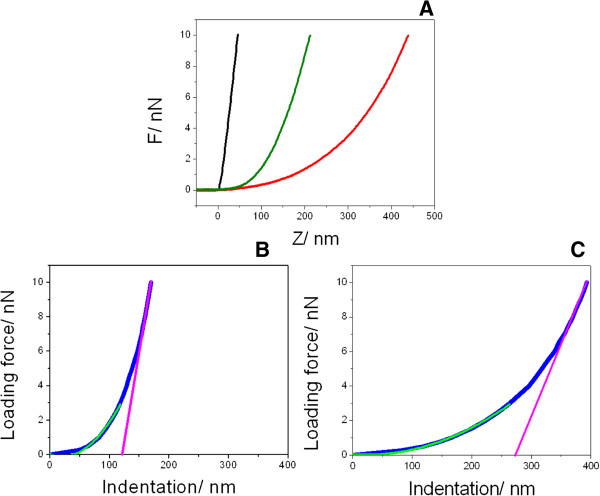
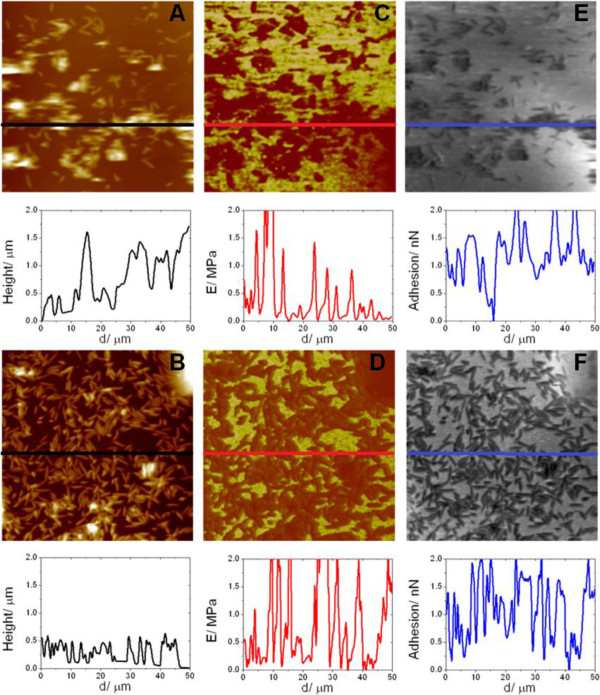
Both the medium and the temperature significantly influenced the total cell densities and biofilm biomasses in 24-hour cultures. Likewise, the IC50 of three antifouling standards (TBTO, tralopyril and zinc pyrithione) was significantly affected by the medium and the initial cell density. Four media (Marine Broth, MB; 2% NaCl Mueller-Hinton Broth, MH2; Luria Marine Broth, LMB; and Supplemented Artificial Seawater, SASW) were selected to explore their effect on the morphological and nanomechanical properties of 24-h biofilms. Two biofilm growth patterns were observed: a clear trend to vertical development, with varying thickness and surface coverage in MB, LMB and SASW, and a horizontal, relatively thin film in MH2. The Atomic Force Microscopy analysis showed the lowest Young modulii for MB (0.16 ± 0.10 MPa), followed by SASW (0.19 ± 0.09 MPa), LMB (0.22 ± 0.13 MPa) and MH2 (0.34 ± 0.16 MPa). Adhesion forces followed an inverted trend, being higher in MB (1.33 ± 0.38 nN) and lower in MH2 (0.73 ± 0.29 nN).
All the parameters significantly affected the ability of S. algae to grow and form biofilms, as well as the activity of antifouling molecules. A detailed study has been carried out in order to establish a biofilm model for further assays. The morphology and nanomechanics of S. algae biofilms were markedly influenced by the nutritional environments in which they were developed. As strategies for biofilm formation inhibition and biofilm detachment are of particular interest in antifouling research, the present findings also highlight the need for a careful selection of the assay conditions.
在海洋细菌防污测试中采用了多种条件(培养基、接种物、培养温度)。选择嗜冷栖热袍菌作为模式生物,以评估这些参数对以下方面的影响:细菌生长、生物膜形成、模式防污剂的活性以及生物膜的发育和纳米力学性能。主要目标是:1)突出并量化这些条件对防污研究相关参数的影响:生物膜形态、厚度、粗糙度、表面覆盖率、弹性和粘附力。2)详细建立并表征具有相关海洋菌株的生物膜模型。
培养基和温度均显著影响24小时培养物中的总细胞密度和生物膜生物量。同样,三种防污标准品(三丁基锡氧化物、氟吡菌酰胺和吡啶硫酮锌)的半数抑制浓度(IC50)受培养基和初始细胞密度的显著影响。选择了四种培养基(海洋肉汤,MB;2%氯化钠穆勒-欣顿肉汤,MH2;鲁氏海洋肉汤,LMB;以及补充人工海水,SASW)来探究它们对24小时生物膜的形态和纳米力学性能的影响。观察到两种生物膜生长模式:一种明显的垂直生长趋势,MB、LMB和SASW中的厚度和表面覆盖率各不相同,另一种是MH2中水平的、相对较薄的膜。原子力显微镜分析显示,MB的杨氏模量最低(0.16±0.10兆帕),其次是SASW(0.19±0.09兆帕)、LMB(0.22±0.13兆帕)和MH2(0.34±0.16兆帕)。粘附力呈现相反的趋势,MB中的粘附力较高(1.33±0.38纳牛),MH2中的较低(0.73±0.29纳牛)。
所有参数均显著影响嗜冷栖热袍菌的生长和形成生物膜的能力,以及防污分子的活性。已开展详细研究以建立用于进一步检测的生物膜模型。嗜冷栖热袍菌生物膜的形态和纳米力学受其生长所处营养环境的显著影响。由于生物膜形成抑制和生物膜脱离策略在防污研究中尤为重要,本研究结果还突出了仔细选择检测条件的必要性。