Allan Andrea M, Goggin Samantha L, Caldwell Kevin K
Department of Neurosciences, School of Medicine, University of New Mexico Health Sciences Center, Albuquerque, New Mexico, United States of America.
PLoS One. 2014 Apr 22;9(4):e96200. doi: 10.1371/journal.pone.0096200. eCollection 2014.
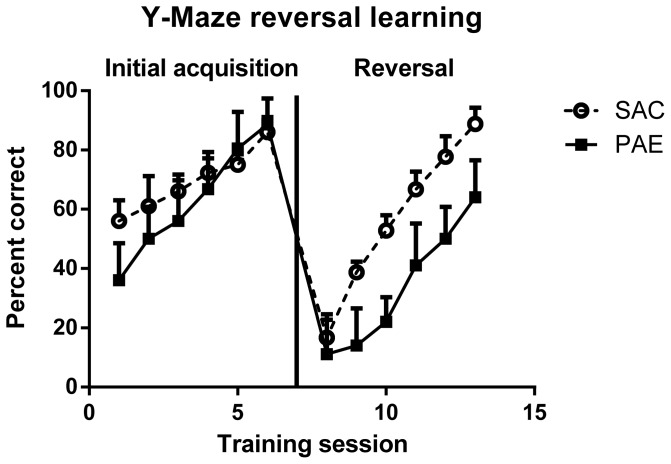
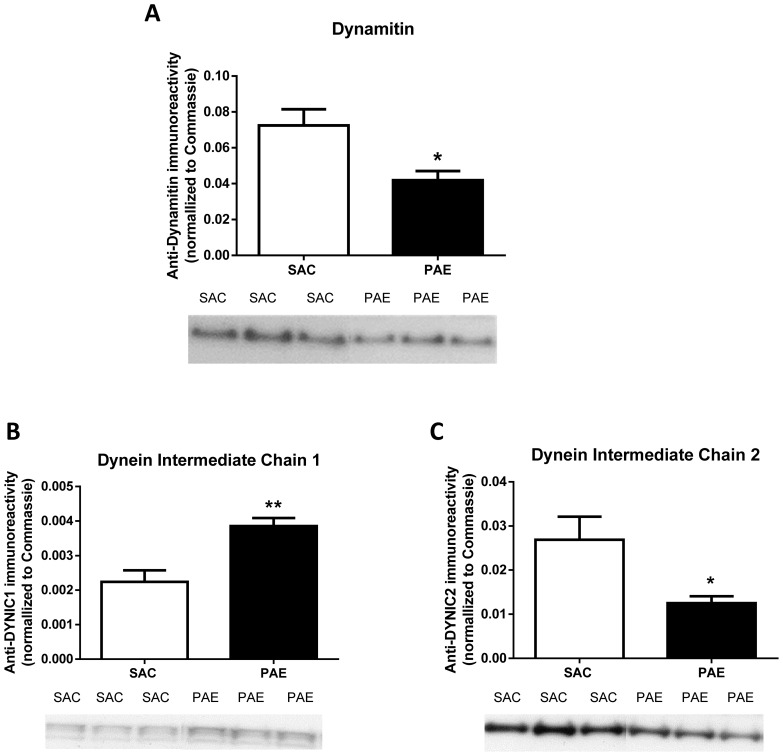
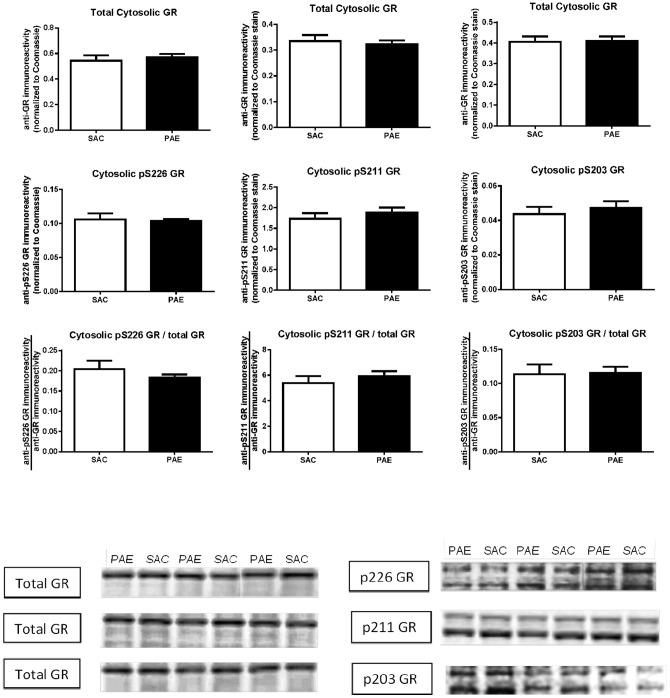
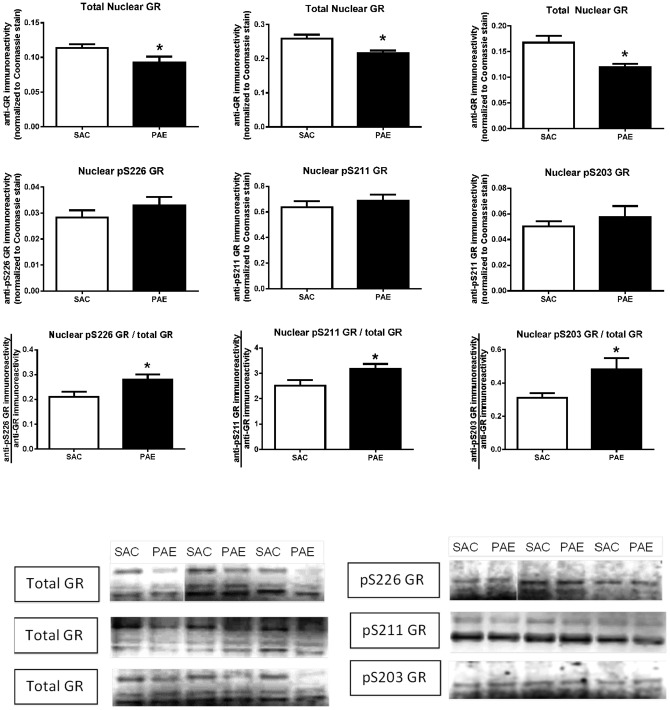
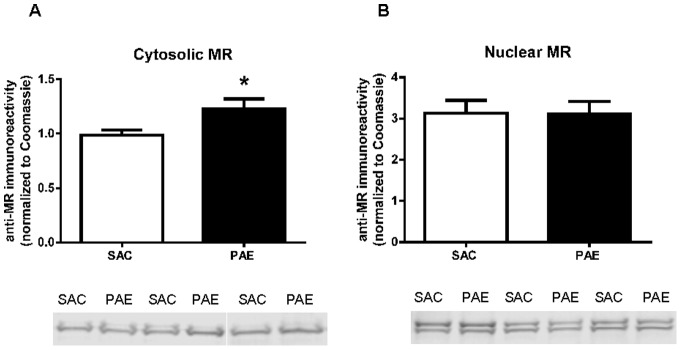
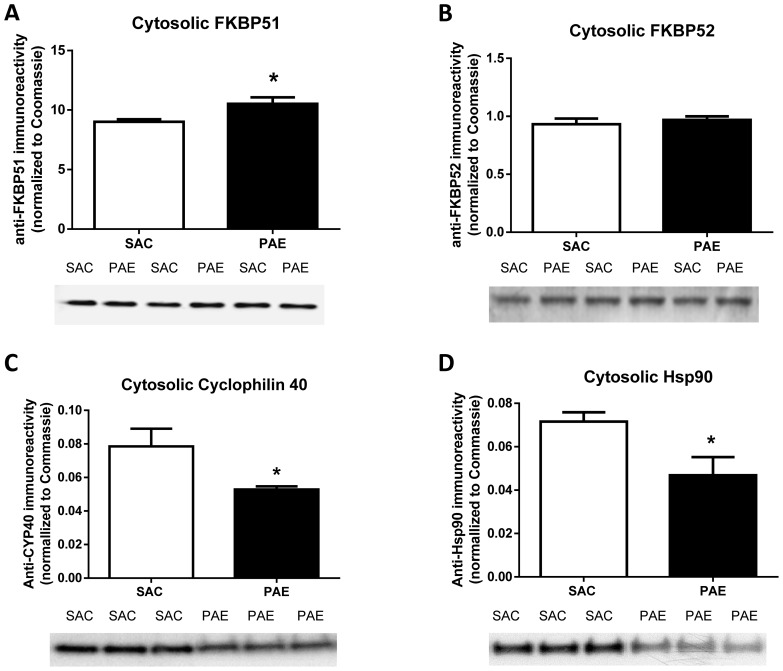
Prenatal alcohol exposure (PAE) has been shown to impair learning, memory and executive functioning in children. Perseveration, or the failure to respond adaptively to changing contingencies, is a hallmark on neurobehavioral assessment tasks for human fetal alcohol spectrum disorder (FASD). Adaptive responding is predominantly a product of the medial prefrontal cortex (mPFC) and is regulated by corticosteroids. In our mouse model of PAE we recently reported deficits in hippocampal formation-dependent learning and memory and a dysregulation of hippocampal formation glucocorticoid receptor (GR) subcellular distribution. Here, we examined the effect of PAE on frontal cortical-dependent behavior, as well as mPFC GR subcellular distribution and the levels of regulators of intracellular GR transport. PAE mice displayed significantly reduced response flexibility in a Y-maze reversal learning task. While the levels of total nuclear GR were reduced in PAE mPFC, levels of GR phosphorylated at serines 203, 211 and 226 were not significantly changed. Cytosolic, but not nuclear, MR levels were elevated in the PAE mPFC. The levels of critical GR trafficking proteins, FKBP51, Hsp90, cyclophilin 40, dynamitin and dynein intermediate chain, were altered in PAE mice, in favor of the exclusion of GR from the nucleus, indicating dysregulation of GR trafficking. Our findings suggest that there may be a link between a deficit in GR nuclear localization and frontal cortical learning deficits in prenatal alcohol-exposed mice.
产前酒精暴露(PAE)已被证明会损害儿童的学习、记忆和执行功能。持续性反应,即无法对变化的意外情况做出适应性反应,是人类胎儿酒精谱系障碍(FASD)神经行为评估任务的一个标志。适应性反应主要是内侧前额叶皮质(mPFC)的产物,并受皮质类固醇调节。在我们的PAE小鼠模型中,我们最近报告了海马结构依赖性学习和记忆的缺陷以及海马结构糖皮质激素受体(GR)亚细胞分布的失调。在这里,我们研究了PAE对额叶皮质依赖性行为的影响,以及mPFC GR亚细胞分布和细胞内GR转运调节因子的水平。PAE小鼠在Y迷宫逆向学习任务中表现出明显降低的反应灵活性。虽然PAE mPFC中总核GR的水平降低,但丝氨酸203、211和226磷酸化的GR水平没有显著变化。PAE mPFC中胞质而非核内的MR水平升高。PAE小鼠中关键的GR转运蛋白FKBP51、Hsp90、亲环蛋白40、动力蛋白和动力蛋白中间链的水平发生了改变,有利于GR从细胞核中排除,表明GR转运失调。我们的研究结果表明,产前酒精暴露小鼠的GR核定位缺陷与额叶皮质学习缺陷之间可能存在联系。