Department of Surgery, University of Michigan Medical School, Ann Arbor, Michigan, United States of America.
Department of Internal Medicine, University of Michigan Medical School, Ann Arbor, Michigan, United States of America.
PLoS One. 2014 Apr 24;9(4):e96023. doi: 10.1371/journal.pone.0096023. eCollection 2014.
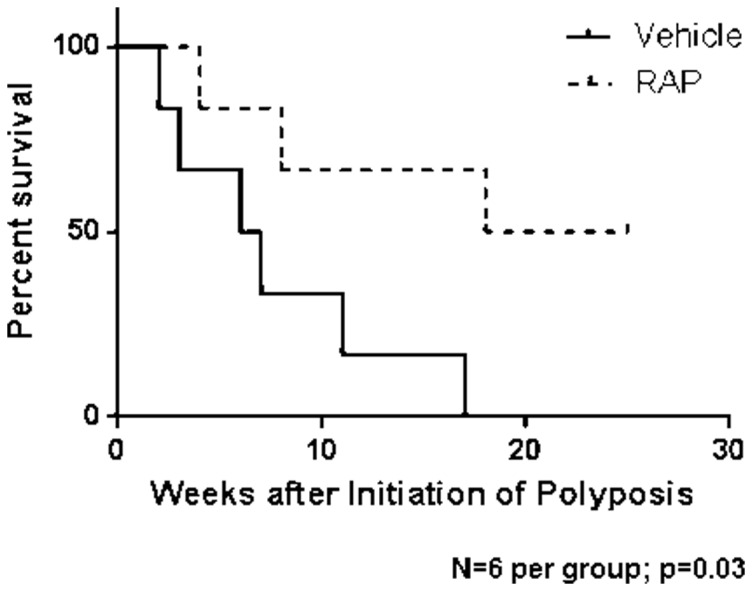
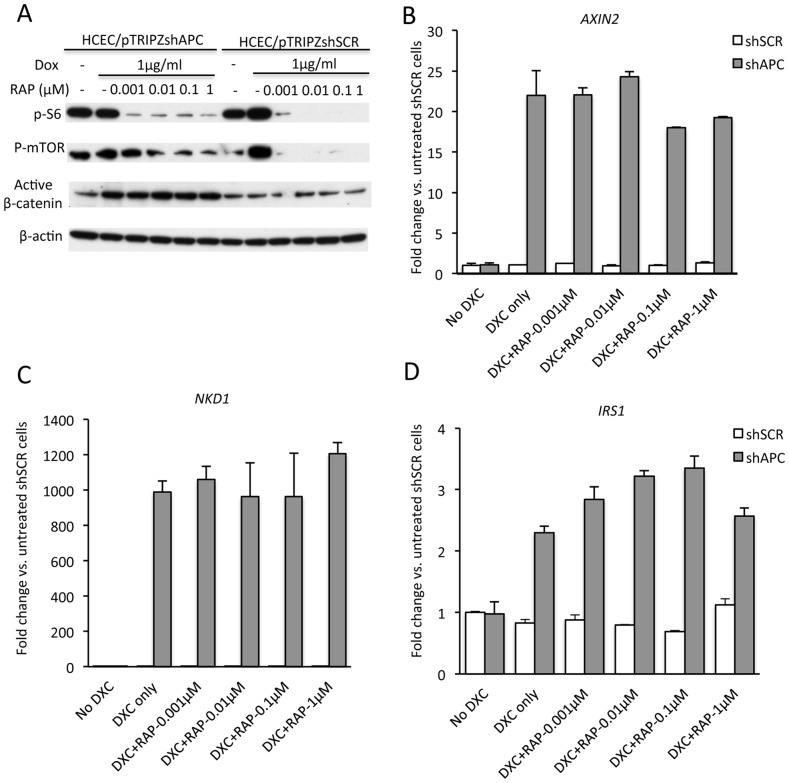
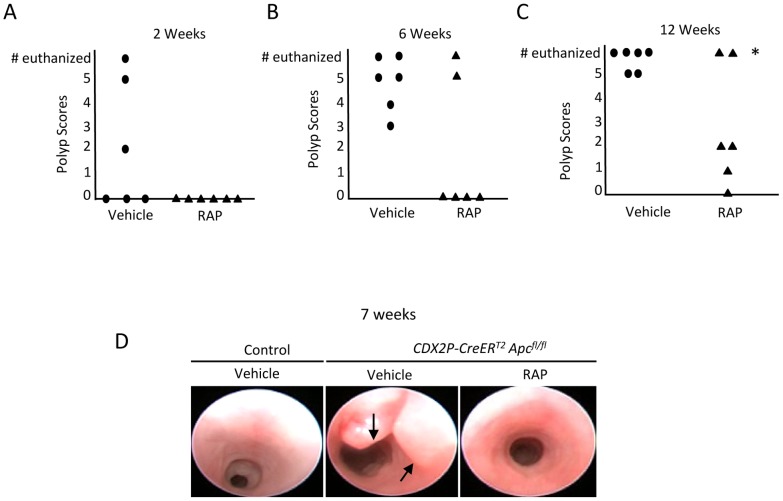
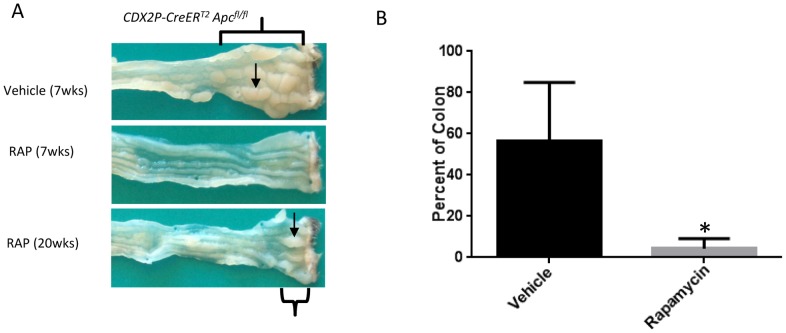
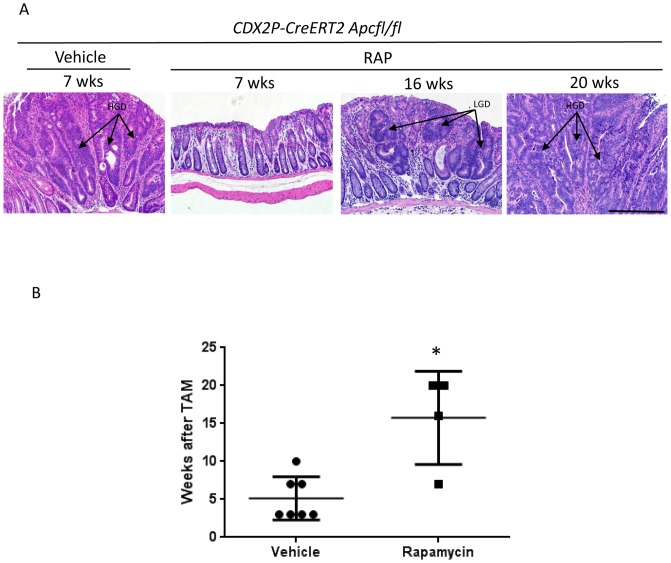
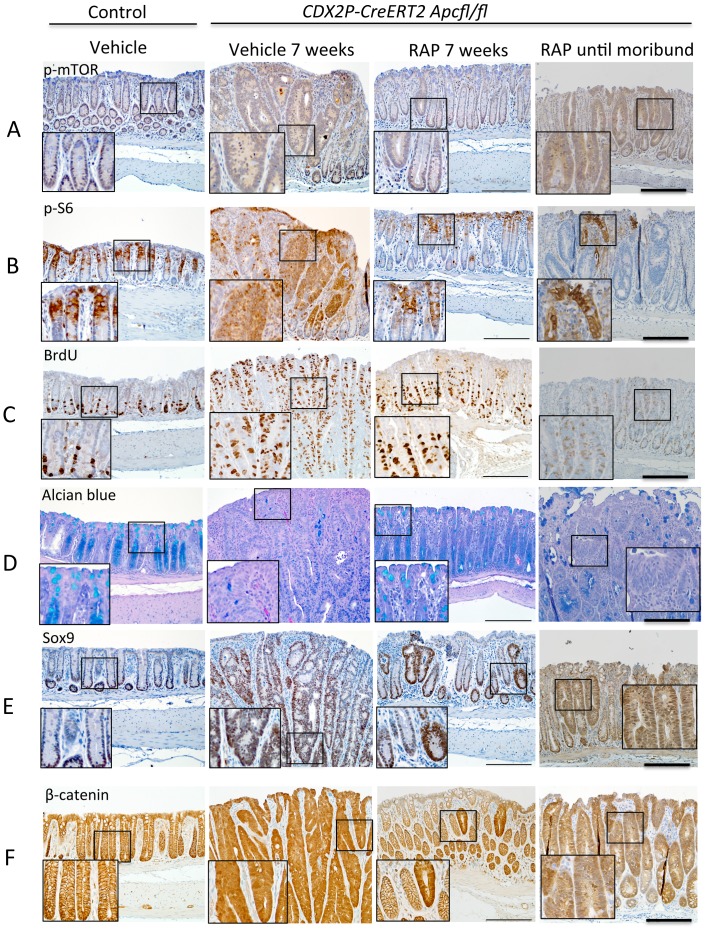
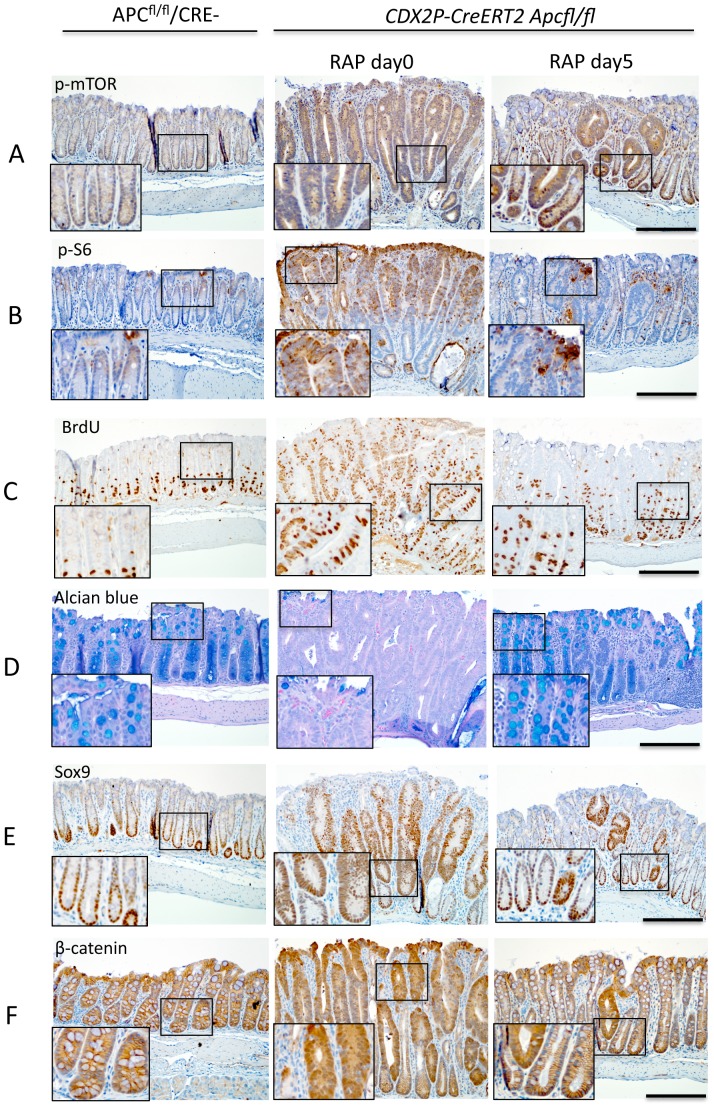
Familial adenomatous polyposis (FAP) is often due to adenomatous polyposis coli (APC) gene germline mutations. Somatic APC defects are found in about 80% of colorectal cancers (CRCs) and adenomas. Rapamycin inhibits mammalian target of rapamycin (mTOR) protein, which is often expressed in human adenomas and CRCs. We sought to assess the effects of rapamycin in a mouse polyposis model in which both Apc alleles were conditionally inactivated in colon epithelium. Two days after inactivating Apc, mice were given rapamycin or vehicle in cycles of two weeks on and two weeks off. Polyps were scored endoscopically. Mice were euthanized at time points or when moribund, and tissue analyses were performed. In other studies, mice with demonstrable Apc-defective colon polyps were given rapamycin, followed by analysis of their colon tissues. The median survival of mice receiving rapamycin treatment cycles was 21.5 versus 6.5 weeks in control mice (p = 0.03), and rapamycin-treated mice had a significantly lower percentage of their colon covered with polyps (4.3+/- 2 vs 56.5+/- 10.8 percent, p = 0.001). Mice with Apc-deficient colon tissues that developed high grade dysplasia treated with rapamycin underwent treatment for significantly longer than mice treated with vehicle (15.8 vs 5.1 weeks, p = 0.003). In Apc-defective colon tissues, rapamycin treatment was linked to decreased levels of β-catenin and Sox9 at 7 weeks. Other effects of rapamycin in Apc-defectivecolon tissues included decreased proliferation and increased numbers of differentiated goblet cells at 7 weeks. Rapamycin did not affect β-catenin-regulated gene expression in cultured intestinal epithelial cells. Rapamycin has potent inhibitory effects in a mouse colon polyposis model, and mTOR inhibition is linked to decreased proliferation and increased expression of differentiation markers in Apc-mutant colon epithelium and delays development of dysplasia. Our findings highlight the possibility that mTOR inhibitors may have relevance for polyposis inhibition approaches in FAP patients.
家族性腺瘤性息肉病(FAP)通常归因于腺瘤性结肠息肉病(APC)基因的种系突变。在大约 80%的结直肠癌(CRC)和腺瘤中发现体细胞 APC 缺陷。雷帕霉素抑制哺乳动物雷帕霉素靶蛋白(mTOR)蛋白,该蛋白通常在人类腺瘤和 CRC 中表达。我们试图在一种小鼠息肉模型中评估雷帕霉素的效果,其中 APC 等位基因在结肠上皮细胞中条件性失活。APC 失活后两天,用雷帕霉素或载体进行两周一次的循环处理。通过内窥镜检查对息肉进行评分。当达到时间点或出现病危时,处死小鼠并进行组织分析。在其他研究中,给予有明显 APC 缺陷结肠息肉的小鼠雷帕霉素,并分析其结肠组织。接受雷帕霉素治疗周期的小鼠的中位生存时间为 21.5 周,而对照组为 6.5 周(p=0.03),并且雷帕霉素处理的小鼠结肠上有息肉的比例显著降低(4.3+/-2%对 56.5+/-10.8%,p=0.001)。患有 APC 缺陷结肠组织并发展为高级别异型增生的小鼠用雷帕霉素治疗的时间明显长于用载体治疗的小鼠(15.8 周对 5.1 周,p=0.003)。在 APC 缺陷结肠组织中,雷帕霉素治疗与 7 周时β-连环蛋白和 Sox9 水平降低有关。雷帕霉素在 APC 缺陷结肠组织中的其他作用包括 7 周时增殖减少和分化杯状细胞数量增加。雷帕霉素对培养的肠上皮细胞中β-连环蛋白调节的基因表达没有影响。雷帕霉素在小鼠结肠息肉模型中具有很强的抑制作用,mTOR 抑制与 APC 突变结肠上皮细胞增殖减少和分化标志物表达增加以及异型增生发展延迟有关。我们的发现强调了 mTOR 抑制剂可能与 FAP 患者的息肉抑制方法有关。