Tseng Ying-Tzu, Wang Shiu-Mei, Huang Kuo-Jung, Wang Chin-Tien
Department of Medical Research, Taipei Veterans General Hospital, 201, Sec, 2, Shih-Pai Road, Taipei 11217, Taiwan.
J Biomed Sci. 2014 Apr 27;21(1):34. doi: 10.1186/1423-0127-21-34.
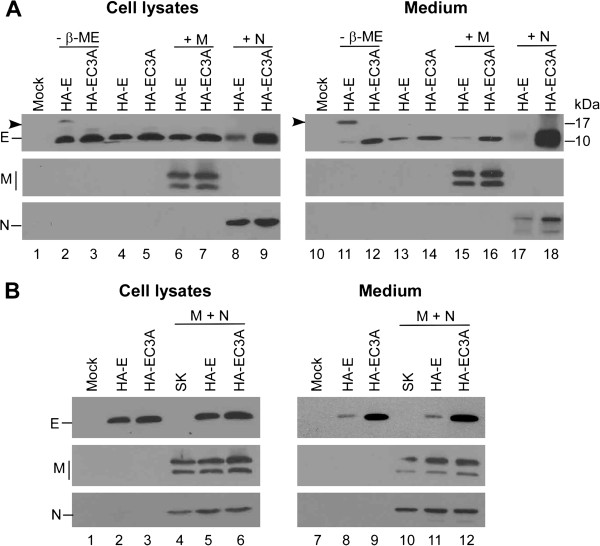
Coronavirus membrane (M) proteins are capable of interacting with nucleocapsid (N) and envelope (E) proteins. Severe acute respiratory syndrome coronavirus (SARS-CoV) M co-expression with either N or E is sufficient for producing virus-like particles (VLPs), although at a lower level compared to M, N and E co-expression. Whether E can release from cells or E/N interaction exists so as to contribute to enhanced VLP production is unknown. It also remains to be determined whether E palmitoylation or disulfide bond formation plays a role in SARS-CoV virus assembly.
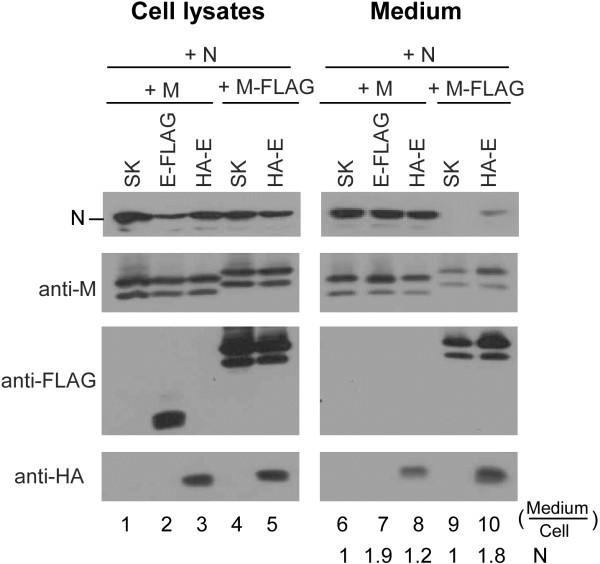
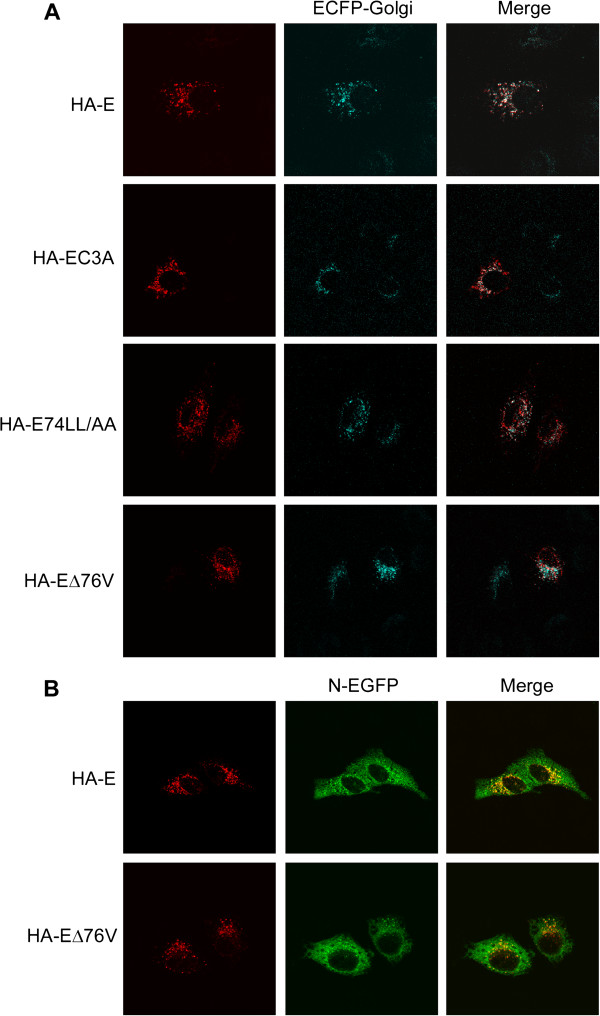
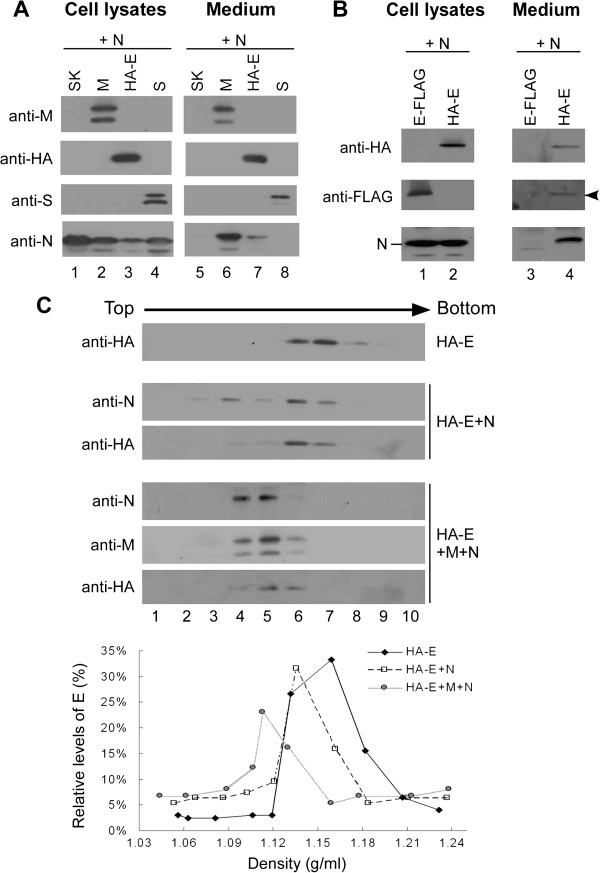
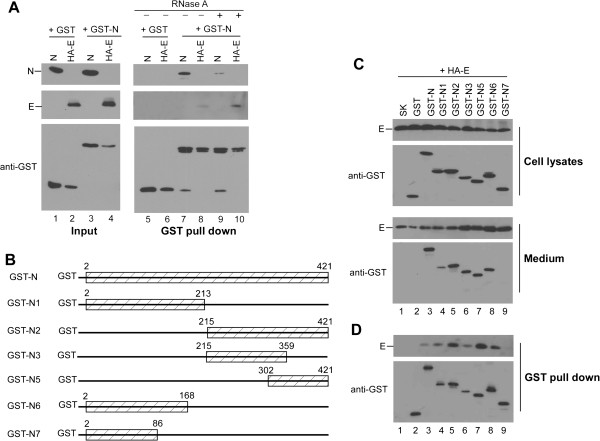
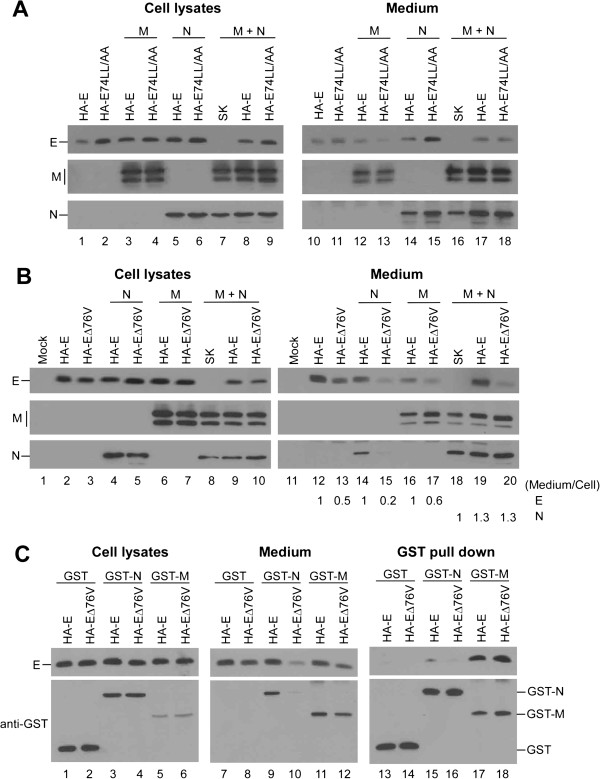
SARS-CoV N is released from cells through an association with E protein-containing vesicles. Further analysis suggests that domains involved in E/N interaction are largely located in both carboxyl-terminal regions. Changing all three E cysteine residues to alanines did not exert negative effects on E release, E association with N, or E enhancement of VLP production, suggesting that E palmitoylation modification or disulfide bond formation is not required for SARS-CoV virus assembly. We found that removal of the last E carboxyl-terminal residue markedly affected E release, N association, and VLP incorporation, but did not significantly compromise the contribution of E to efficient VLP production.
The independence of the SARS-CoV E enhancement effect on VLP production from its viral packaging capacity suggests a distinct SARS-CoV E role in virus assembly.
冠状病毒膜(M)蛋白能够与核衣壳(N)蛋白和包膜(E)蛋白相互作用。严重急性呼吸综合征冠状病毒(SARS-CoV)的M蛋白与N蛋白或E蛋白共表达足以产生病毒样颗粒(VLP),尽管与M、N和E蛋白共表达相比,产量较低。E蛋白是否能从细胞中释放出来,或者是否存在E/N相互作用从而有助于提高VLP产量尚不清楚。E蛋白的棕榈酰化或二硫键形成在SARS-CoV病毒组装中是否起作用也有待确定。
SARS-CoV的N蛋白通过与含有E蛋白的囊泡结合而从细胞中释放。进一步分析表明,参与E/N相互作用的结构域主要位于两个羧基末端区域。将E蛋白的所有三个半胱氨酸残基都替换为丙氨酸,对E蛋白的释放、E蛋白与N蛋白的结合或E蛋白对VLP产量的提高均没有负面影响,这表明SARS-CoV病毒组装不需要E蛋白的棕榈酰化修饰或二硫键形成。我们发现,去除E蛋白最后一个羧基末端残基会显著影响E蛋白的释放、与N蛋白的结合以及VLP的掺入,但不会显著损害E蛋白对高效VLP产量的贡献。
SARS-CoV的E蛋白对VLP产量的增强作用与其病毒包装能力无关,这表明E蛋白在病毒组装中具有独特的作用。