Rodrigues Simey de Lima Lopes, Ferraz Neto Jose Ben-Hur de Escobar, Sardinha Luiz Antonio da Costa, Araujo Sebastião, Zambelli Helder Jose Lessa, Boin Ilka de Fátima Santana Ferreira, Athayde Maria Valeria de Omena, Montone Eliete Bombarda Bachega, Panunto Marcia Raquel
Serviço de Procura de Órgãos e Tecidos, Hospital de Clínicas, Universidade Estadual de Campinas, Campinas, SP, Brasil.
Instituto do Fígado, Real e Benemérita Associação Portuguesa de Beneficência, São Paulo, SP, Brasil.
Rev Bras Ter Intensiva. 2014 Jan-Mar;26(1):21-7. doi: 10.5935/0103-507x.20140004.
To characterize the profile of effective organ and tissue donors and to understand which organs and tissues were donated for transplantation.
This was a quantitative, descriptive, exploratory, retrospective study that analyzed clinical data from 305 donors between January 2006 to December 2010. The data were then analyzed using descriptive analyses, generating frequency tables, measures of position (mean, minimum and maximum) and measures of dispersion (standard deviation) for data that was social and clinical in nature.
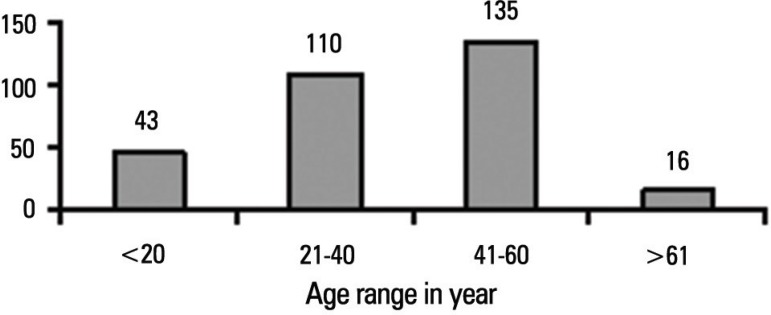
There was an overall predominance of white (72%) and male (55%) individuals between the ages of 41 and 60 years (44%). The primary cause of brain death was cerebrovascular accident (55%). In the patient history, 31% of the patients were classified as overweight, 27% as hypertensive and only 4.3% as having diabetes mellitus. Vasoactive drugs were used in 92.7% of the donors, and the main drug of choice was noradrenaline (81.6%). Hyperglycemia and hypernatremia were diagnosed in 78% and 71% of the donors, respectively.
Significant hemodynamic changes were found, and the results indicate that the use of vasoactive drugs was the main strategy used to control these changes. Furthermore, most donors presented with hyperglycemia and hypernatremia, which were frequently reported in association with brain death. The persistent nature of these findings suggests that the organ donors were inadequately maintained.
描述有效器官和组织捐赠者的特征,并了解哪些器官和组织被用于移植。
这是一项定量、描述性、探索性的回顾性研究,分析了2006年1月至2010年12月期间305名捐赠者的临床数据。然后使用描述性分析对数据进行分析,生成频率表、位置测量值(均值、最小值和最大值)以及针对具有社会和临床性质的数据的离散度测量值(标准差)。
41至60岁的个体中,白人(72%)和男性(55%)总体占主导(44%)。脑死亡的主要原因是脑血管意外(55%)。在患者病史中,31%的患者被归类为超重,27%为高血压,只有4.3%患有糖尿病。92.7%的捐赠者使用了血管活性药物,主要选择的药物是去甲肾上腺素(81.6%)。分别有78%和71%的捐赠者被诊断为高血糖和高钠血症。
发现了显著的血流动力学变化,结果表明使用血管活性药物是控制这些变化的主要策略。此外,大多数捐赠者出现高血糖和高钠血症,这在脑死亡患者中经常被报道。这些发现的持续性表明器官捐赠者未得到充分的维持。