Viana Marina Verçoza, Moraes Rafael Barberena, Fabbrin Amanda Rodrigues, Santos Manoella Freitas, Gerchman Fernando
Serviço de Terapia Intensiva, Hospital de Clínicas de Porto Alegre, Porto Alegre, Brasil.
Faculdade de Medicina, Universidade Federal do Rio Grande do Sul, Porto Alegre, RS, Brasil.
Rev Bras Ter Intensiva. 2014 Jan-Mar;26(1):71-6. doi: 10.5935/0103-507x.20140011.
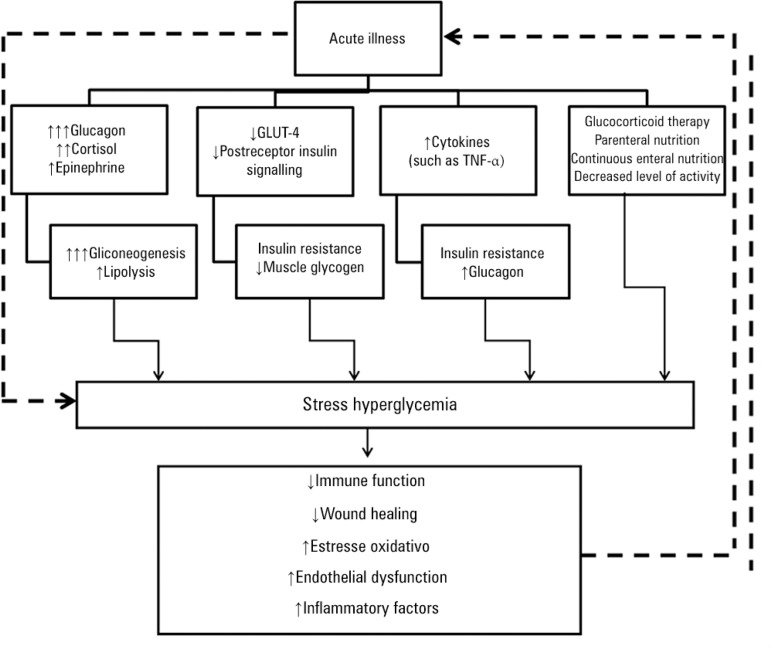
Hyperglycemia is a commonly encountered issue in critically ill patients in the intensive care setting. The presence of hyperglycemia is associated with increased morbidity and mortality, regardless of the reason for admission (e.g., acute myocardial infarction, status post-cardiovascular surgery, stroke, sepsis). However, the pathophysiology and, in particular, the treatment of hyperglycemia in the critically ill patient remain controversial. In clinical practice, several aspects must be taken into account in the management of these patients, including blood glucose targets, history of diabetes mellitus, the route of nutrition (enteral or parenteral), and available monitoring equipment, which substantially increases the workload of providers involved in the patients' care. This review describes the epidemiology, pathophysiology, management, and monitoring of hyperglycemia in the critically ill adult patient.
高血糖是重症监护病房中重症患者常见的问题。无论入院原因如何(如急性心肌梗死、心血管手术后状态、中风、脓毒症),高血糖的存在都与发病率和死亡率增加相关。然而,重症患者高血糖的病理生理学,尤其是其治疗方法仍存在争议。在临床实践中,管理这些患者时必须考虑几个方面,包括血糖目标、糖尿病病史、营养途径(肠内或肠外)以及可用的监测设备,这大大增加了参与患者护理的医护人员的工作量。本综述描述了成年重症患者高血糖的流行病学、病理生理学、管理和监测。