Faculty of Life Sciences, The University of Manchester, Michael Smith Building, Manchester M13 9PT, UK.
School of Science and Technology, Middlesex University, London NW4 4BT, UK.
Nat Commun. 2014 Apr 29;5:3742. doi: 10.1038/ncomms4742.
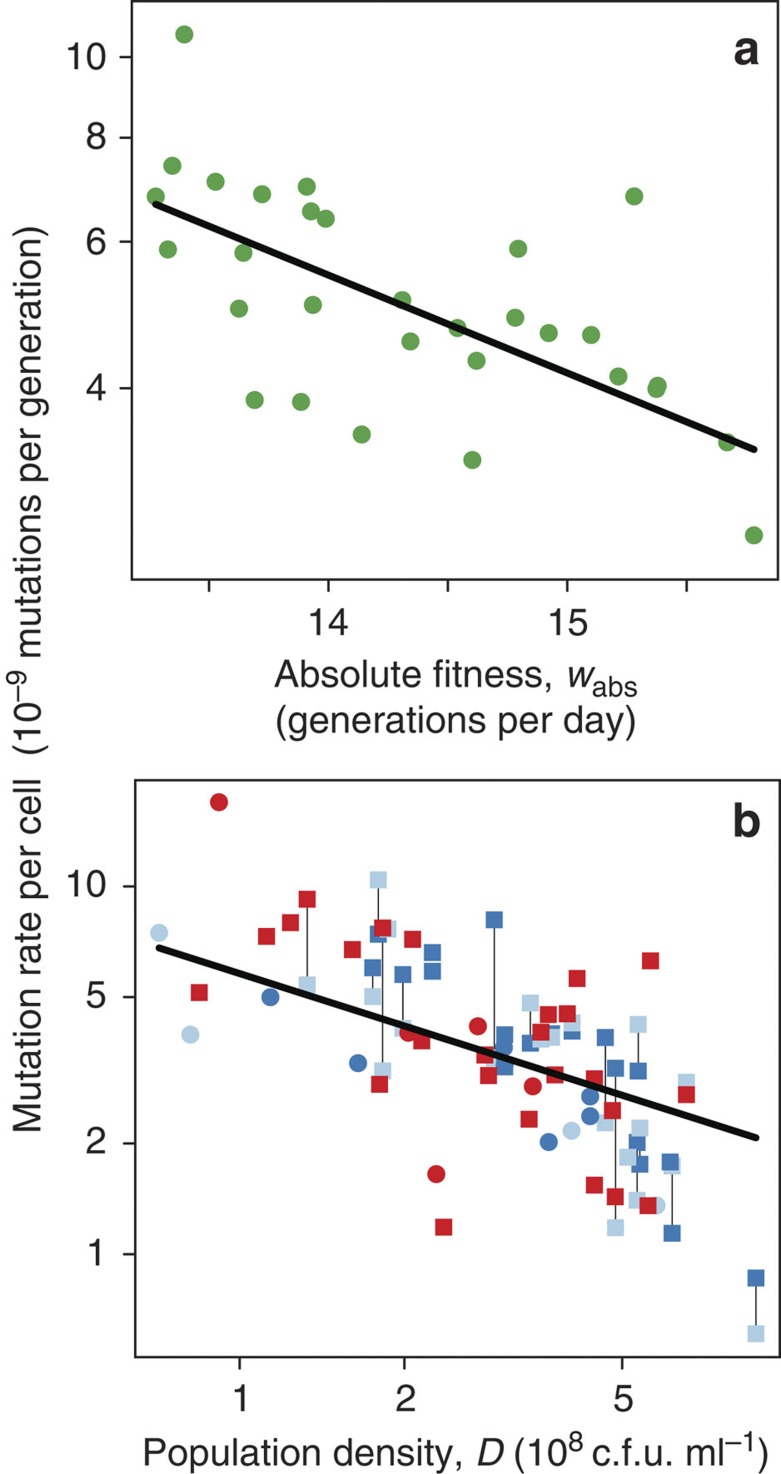
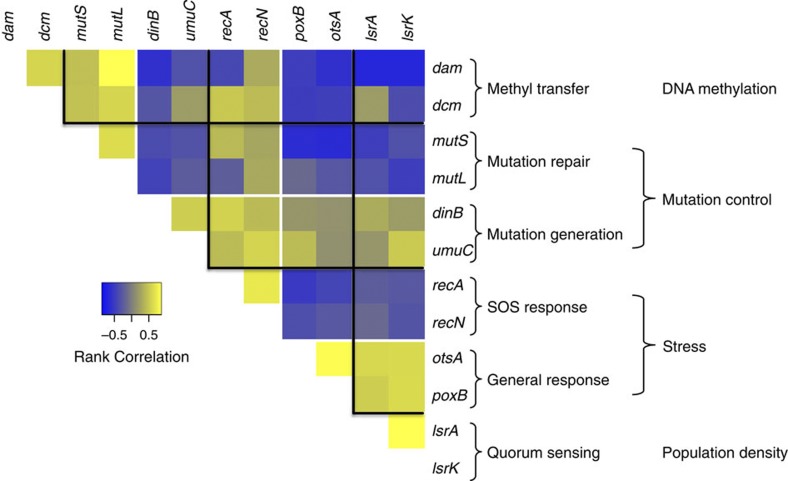
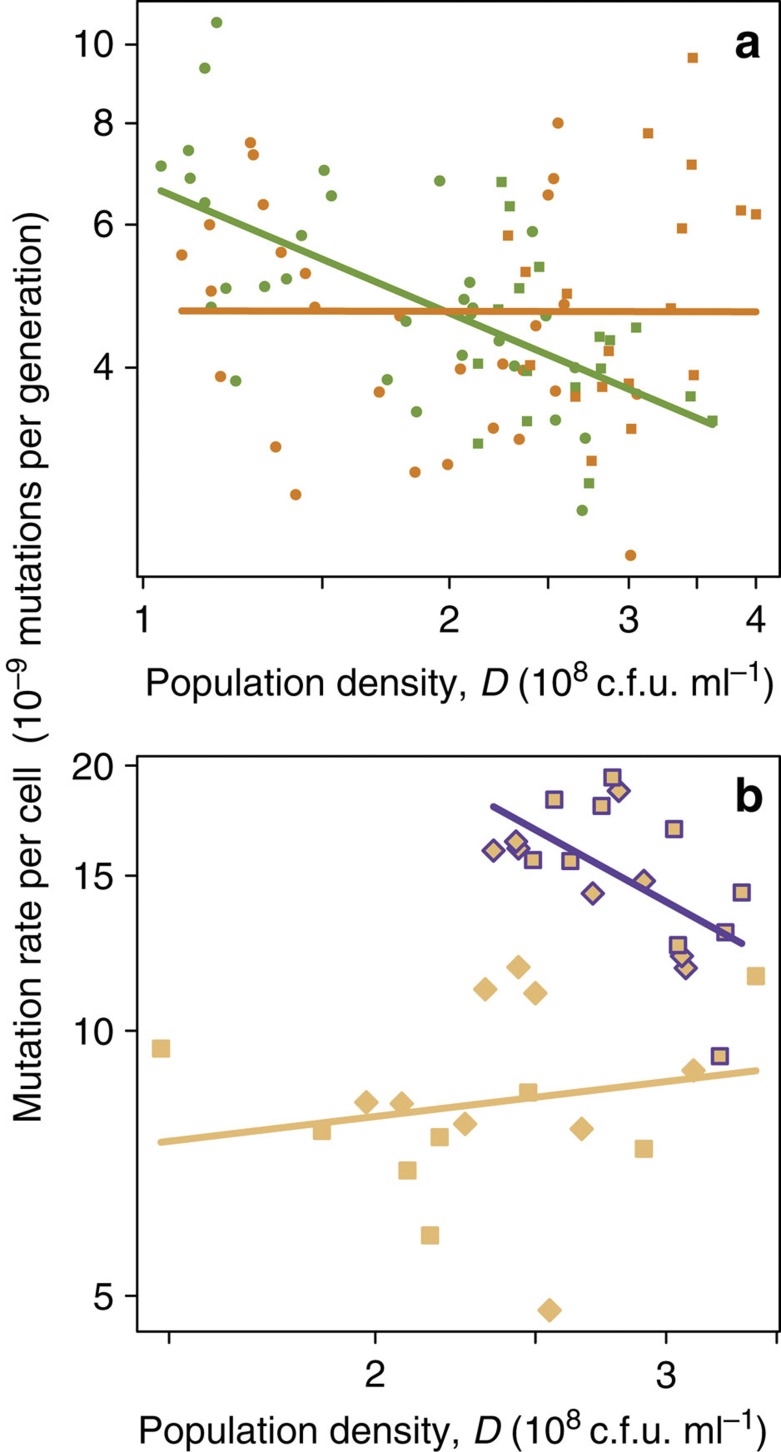
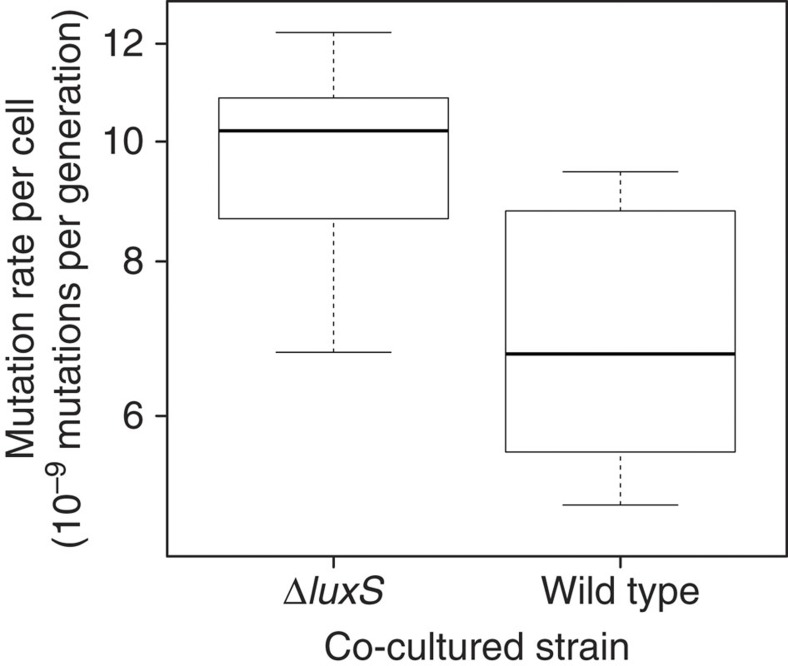
Variation of mutation rate at a particular site in a particular genotype, in other words mutation rate plasticity (MRP), can be caused by stress or ageing. However, mutation rate control by other factors is less well characterized. Here we show that in wild-type Escherichia coli (K-12 and B strains), the mutation rate to rifampicin resistance is plastic and inversely related to population density: lowering density can increase mutation rates at least threefold. This MRP is genetically switchable, dependent on the quorum-sensing gene luxS--specifically its role in the activated methyl cycle--and is socially mediated via cell-cell interactions. Although we identify an inverse association of mutation rate with fitness under some circumstances, we find no functional link with stress-induced mutagenesis. Our experimental manipulation of mutation rates via the social environment raises the possibility that such manipulation occurs in nature and could be exploited medically.
特定基因型特定位置突变率的变化,换句话说,即突变率可塑性(MRP),可能由压力或衰老引起。然而,其他因素对突变率的控制还不太清楚。在这里,我们表明在野生型大肠杆菌(K-12 和 B 株)中,对利福平耐药性的突变率是可塑的,并且与种群密度呈反比:降低密度至少可以使突变率增加三倍。这种 MRP 在遗传上是可切换的,依赖于群体感应基因 luxS--特别是其在激活甲基循环中的作用--并且通过细胞-细胞相互作用进行社会介导。尽管我们在某些情况下确定了突变率与适应性之间的反比关系,但我们没有发现与应激诱导的诱变之间存在功能联系。我们通过社会环境对突变率的实验操作提出了这样一种可能性,即在自然界中可能会发生这种操作,并且可以在医学上加以利用。