Gilani Ankit A, Dash Ranjeet Prasad, Jivrajani Mehul N, Thakur Sandeep Kumar, Nivsarkar Manish
Department of Pharmacology and Toxicology, National Institute of Pharmaceutical Education and Research, C/O-B. V. Patel Pharmaceutical Education and Research Development (PERD) Centre, S. G. Highway, Thaltej, Ahmedabad, Gujarat 380054, India.
Department of Pharmacology and Toxicology, B. V. Patel Pharmaceutical Education and Research Development (PERD) Centre, S. G. Highway, Thaltej, Ahmedabad, Gujarat 380054, India.
Adv Pharmacol Sci. 2014;2014:632376. doi: 10.1155/2014/632376. Epub 2014 Mar 20.
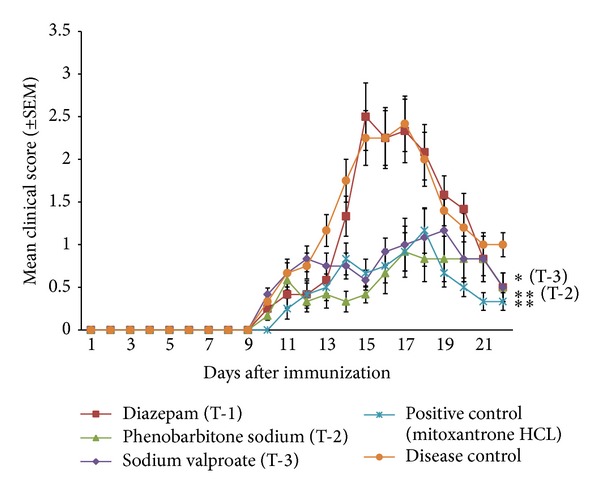
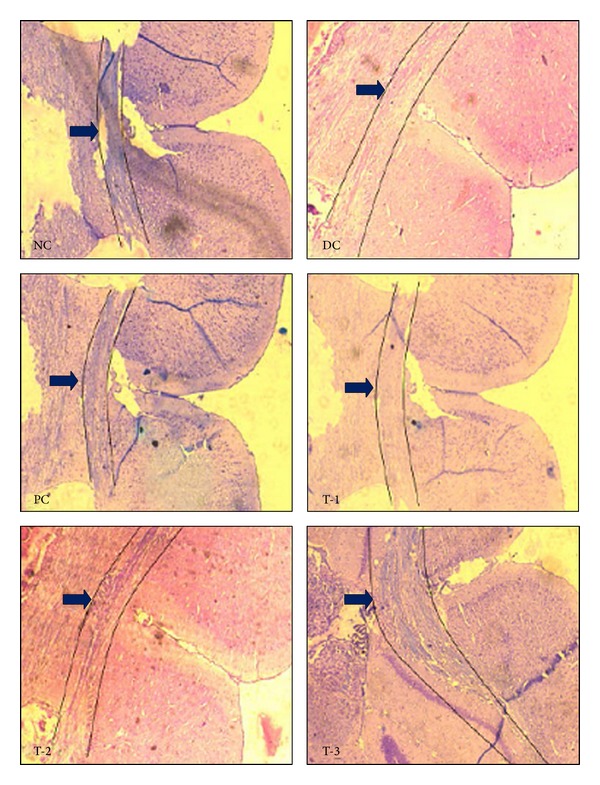
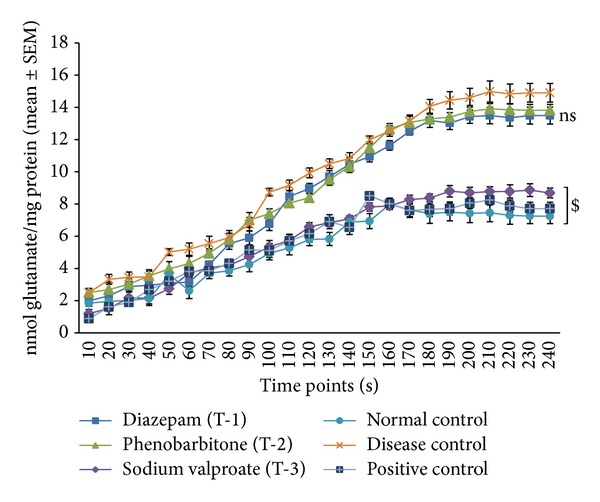
Multiple sclerosis (MS) is an autoimmune inflammatory disease of the central nervous system (CNS) where the communication ability of nerve cells in the brain and spinal cord with each other gets impaired. Some current findings suggest the role of glutamate excitotoxicity in the development and progression of MS. An excess release of glutamate leads to the activation of ionotropic and metabotropic receptors, thus resulting in accumulation of toxic cytoplasmic Ca(2+) and cell death. However, it has been observed that gamma-aminobutyric acid-A (GABAA) receptors located in the nerve terminals activate presynaptic Ca(2+)/calmodulin-dependent signaling to inhibit depolarization-evoked Ca(2+) influx and glutamate release from isolated nerve terminals, which suggest a potential implication of GABAA receptor in management of MS. With this proof of concept, we tried to explore the potential of selective GABAA receptor agonists or positive allosteric modulators (diazepam and phenobarbitone sodium) and GABAA level enhancer (sodium valproate) for management of MS by screening them for their activity in experimental autoimmune encephalomyelitis (EAE) model in rats and cuprizone-induced demyelination model in mice. In this study, sodium valproate was found to show the best activity in the animal models whereas phenobarbitone sodium showed moderate activity. However, diazepam was found to be ineffective.
多发性硬化症(MS)是一种中枢神经系统(CNS)的自身免疫性炎症疾病,其中脑和脊髓中神经细胞之间的通讯能力受损。目前的一些研究结果表明谷氨酸兴奋性毒性在MS的发生和发展中起作用。谷氨酸的过量释放导致离子型和代谢型受体的激活,从而导致有毒的细胞质Ca(2+)积累和细胞死亡。然而,已经观察到位于神经末梢的γ-氨基丁酸-A(GABAA)受体激活突触前Ca(2+)/钙调蛋白依赖性信号传导,以抑制去极化诱发的Ca(2+)内流和离体神经末梢的谷氨酸释放,这表明GABAA受体在MS治疗中具有潜在意义。基于这一概念验证,我们试图通过在大鼠实验性自身免疫性脑脊髓炎(EAE)模型和小鼠铜螯合剂诱导的脱髓鞘模型中筛选它们的活性,来探索选择性GABAA受体激动剂或正变构调节剂(地西泮和苯巴比妥钠)以及GABAA水平增强剂(丙戊酸钠)治疗MS的潜力。在本研究中,发现丙戊酸钠在动物模型中表现出最佳活性而苯巴比妥钠表现出中等活性。然而,发现地西泮无效。