Fehres Cynthia M, Unger Wendy W J, Garcia-Vallejo Juan J, van Kooyk Yvette
Department of Molecular Cell Biology and Immunology, VU University Medical Center , Amsterdam , Netherlands.
Front Immunol. 2014 Apr 8;5:149. doi: 10.3389/fimmu.2014.00149. eCollection 2014.
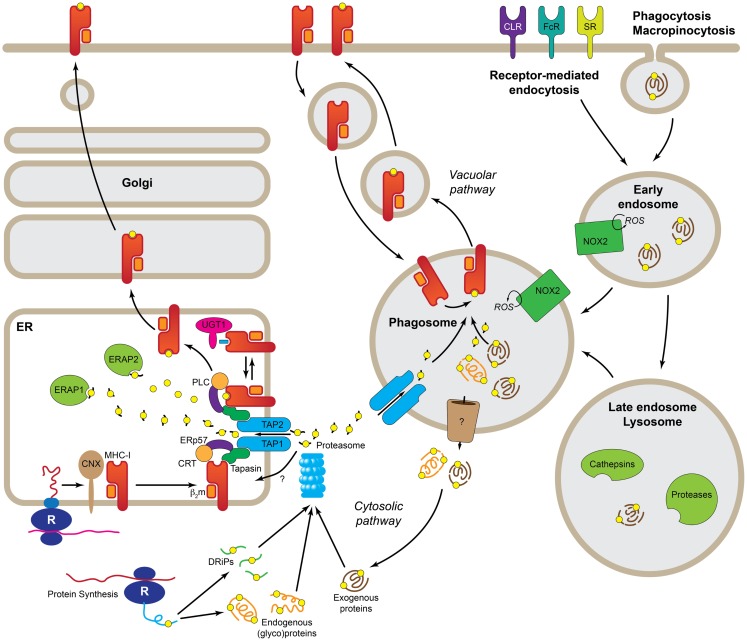
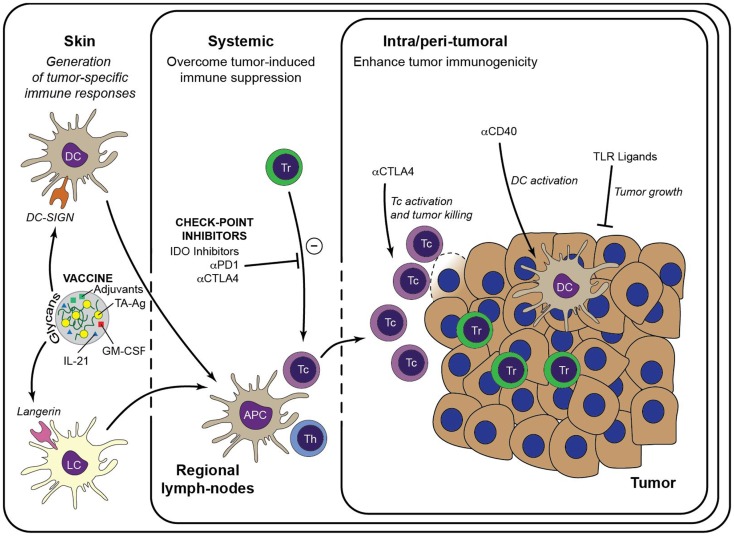
Antigen cross-presentation, the process in which exogenous antigens are presented on MHC class I molecules, is crucial for the generation of effector CD8(+) T cell responses. Although multiple cell types are being described to be able to cross-present antigens, in vivo this task is mainly carried out by certain subsets of dendritic cells (DCs). Aspects such as the internalization route, the pathway of endocytic trafficking, and the simultaneous activation through pattern-recognition receptors have a determining influence in how antigens are handled for cross-presentation by DCs. In this review, we will summarize new insights in factors that affect antigen cross-presentation of human DC subsets, and we will discuss the possibilities to exploit antigen cross-presentation for immunotherapy against cancer.
抗原交叉呈递是指外源性抗原在MHC I类分子上呈递的过程,对于效应性CD8(+) T细胞反应的产生至关重要。尽管多种细胞类型被描述为能够交叉呈递抗原,但在体内这项任务主要由特定亚群的树突状细胞(DC)执行。内化途径、内吞运输途径以及通过模式识别受体的同时激活等方面,对DC如何处理抗原以进行交叉呈递具有决定性影响。在本综述中,我们将总结影响人类DC亚群抗原交叉呈递的因素的新见解,并讨论利用抗原交叉呈递进行癌症免疫治疗的可能性。