Stanley Watson Biogeochemistry Laboratory, Marine Chemistry and Geochemistry Department, Woods Hole Oceanographic Institution Woods Hole, MA, USA ; Department of Earth Atmospheric and Planetary Science, Massachusetts Institute of Technology Cambridge, MA, USA.
Stanley Watson Biogeochemistry Laboratory, Marine Chemistry and Geochemistry Department, Woods Hole Oceanographic Institution Woods Hole, MA, USA.
Front Chem. 2013 Oct 30;1:25. doi: 10.3389/fchem.2013.00025. eCollection 2013.
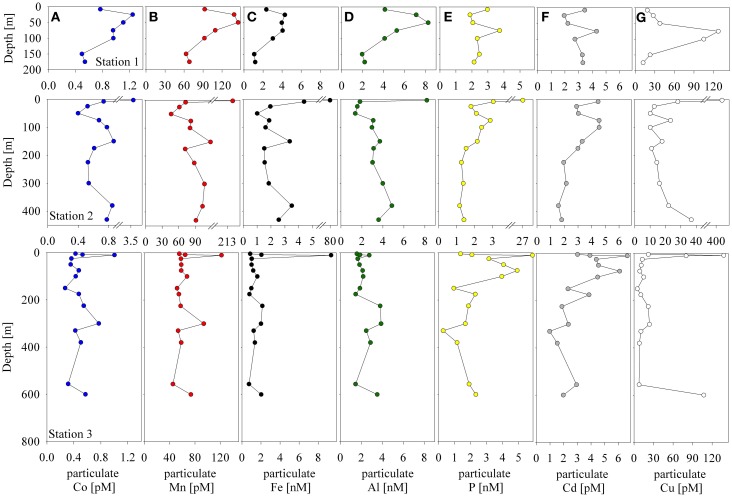
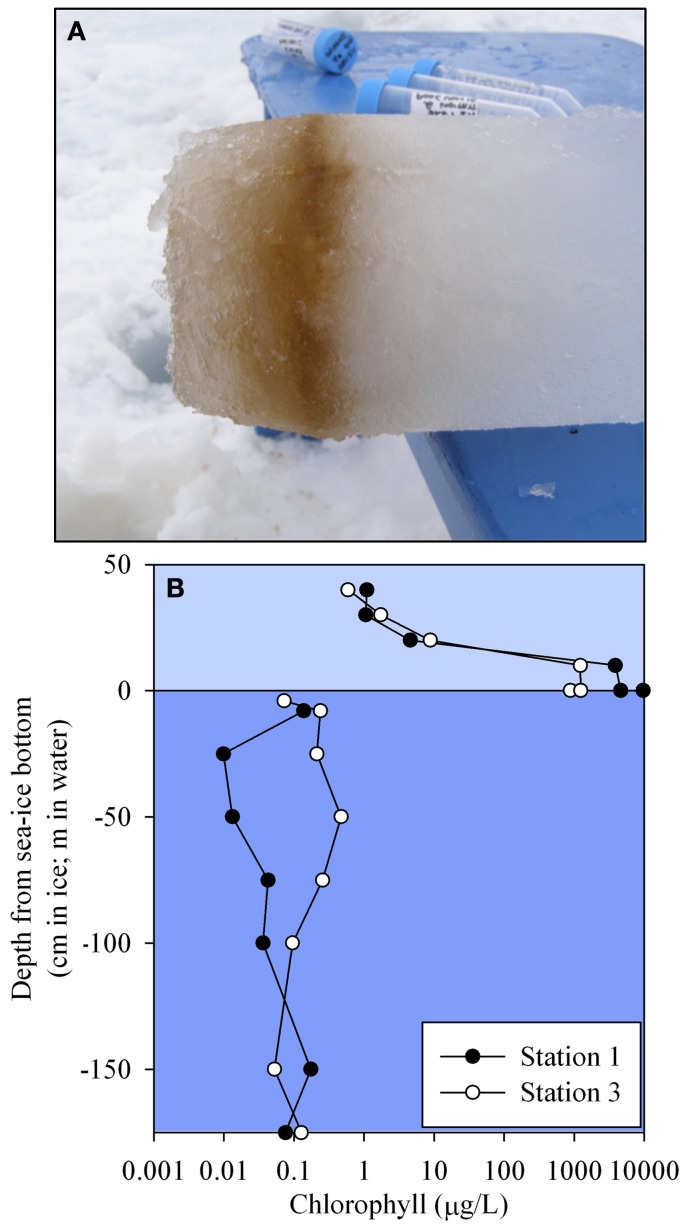
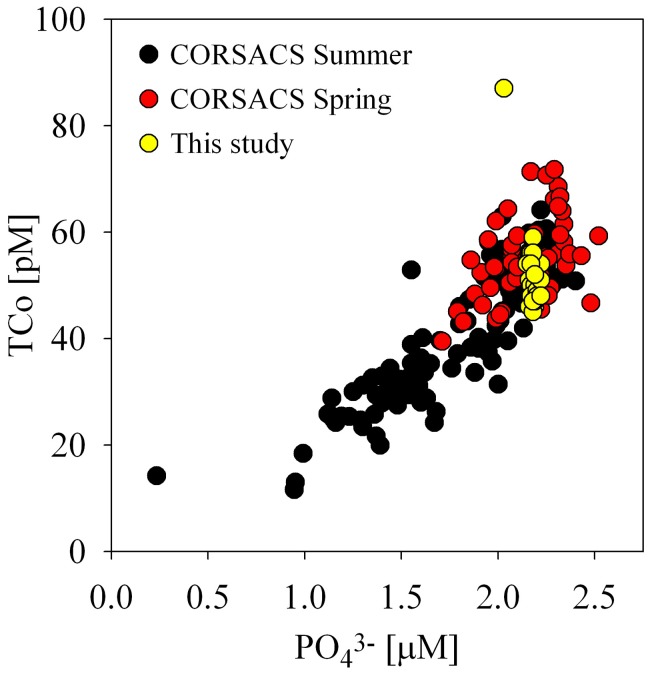
Dissolved and particulate metal concentrations are reported from three sites beneath and at the base of the McMurdo Sound seasonal sea ice in the Ross Sea of Antarctica. This dataset provided insight into Co and Mn biogeochemistry, supporting a previous hypothesis for water column mixing occurring faster than scavenging. Three observations support this: first, Mn-containing particles with Mn/Al ratios in excess of the sediment were present in the water column, implying the presence of bacterial Mn-oxidation processes. Second, dissolved and labile Co were uniform with depth beneath the sea ice after the winter season. Third, dissolved Co:PO(3-) 4 ratios were consistent with previously observed Ross Sea stoichiometry, implying that over-winter scavenging was slow relative to mixing. Abundant dissolved Fe and Mn were consistent with a winter reserve concept, and particulate Al, Fe, Mn, and Co covaried, implying that these metals behaved similarly. Elevated particulate metals were observed in proximity to the nearby Islands, with particulate Fe/Al ratios similar to that of nearby sediment, consistent with a sediment resuspension source. Dissolved and particulate metals were elevated at the shallowest depths (particularly Fe) with elevated particulate P/Al and Fe/Al ratios in excess of sediments, demonstrating a sea ice biomass source. The sea ice biomass was extremely dense (chl a >9500 μg/L) and contained high abundances of particulate metals with elevated metal/Al ratios. A hypothesis for seasonal accumulation of bioactive metals at the base of the McMurdo Sound sea ice by the basal algal community is presented, analogous to a capacitor that accumulates iron during the spring and early summer. The release and transport of particulate metals accumulated at the base of the sea ice by sloughing is discussed as a potentially important mechanism in providing iron nutrition during polynya phytoplankton bloom formation and could be examined in future oceanographic expeditions.
本研究报告了南极罗斯海麦克默多海峡季节性海冰底部和底部三个地点的溶解态和颗粒态金属浓度。该数据集深入了解了 Co 和 Mn 的生物地球化学,支持了先前关于水柱混合速度快于吸持的假说。有三个观测结果支持这一假说:首先,水柱中存在 Mn/Al 比值超过沉积物的含 Mn 颗粒,表明存在细菌 Mn 氧化过程。其次,冬季过后,海冰下方的溶解态和易变 Co 在整个水柱中具有均匀的深度分布。第三,溶解态 Co:PO(3-) 4 比值与先前观察到的罗斯海化学计量学一致,表明与混合相比,过冷期吸持较慢。大量的溶解态 Fe 和 Mn 与冬季储备概念一致,而颗粒态 Al、Fe、Mn 和 Co 则呈共变关系,表明这些金属的行为相似。在附近岛屿附近观察到颗粒态金属升高,颗粒态 Fe/Al 比值与附近沉积物相似,与沉积物再悬浮源一致。在最浅的深度(特别是 Fe)观察到溶解态和颗粒态金属升高,颗粒态 P/Al 和 Fe/Al 比值升高超过沉积物,表明存在海冰生物量源。海冰生物量非常密集(chl a >9500 μg/L),含有大量颗粒态金属,金属/Al 比值升高。提出了一个假设,即麦克默多海峡海冰底部的底层藻类群落在季节性积累生物活性金属,类似于在春季和初夏期间积累铁的电容器。通过剥落释放和输送在海冰底部积累的颗粒态金属被认为是在冰间湖浮游植物大量繁殖形成期间提供铁营养的一个潜在重要机制,可以在未来的海洋考察中进行检验。