Tagliabue Alessandro, Hawco Nicholas J, Bundy Randelle M, Landing William M, Milne Angela, Morton Peter L, Saito Mak A
School of Environmental Sciences University of Liverpool Liverpool UK.
MIT-WHOI Joint Program in Oceanography/Applied Ocean Science and Engineering, Department of Marine Chemistry and Geochemistry Woods Hole Oceanographic Institution Woods Hole MA USA.
Global Biogeochem Cycles. 2018 Apr;32(4):594-616. doi: 10.1002/2017GB005830. Epub 2018 Apr 16.
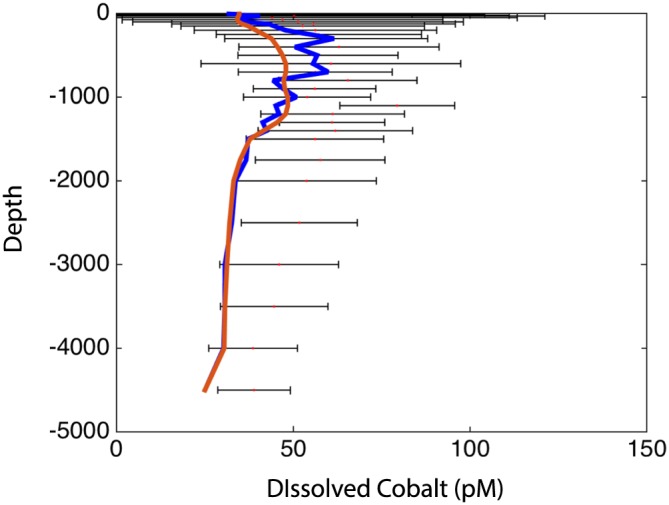
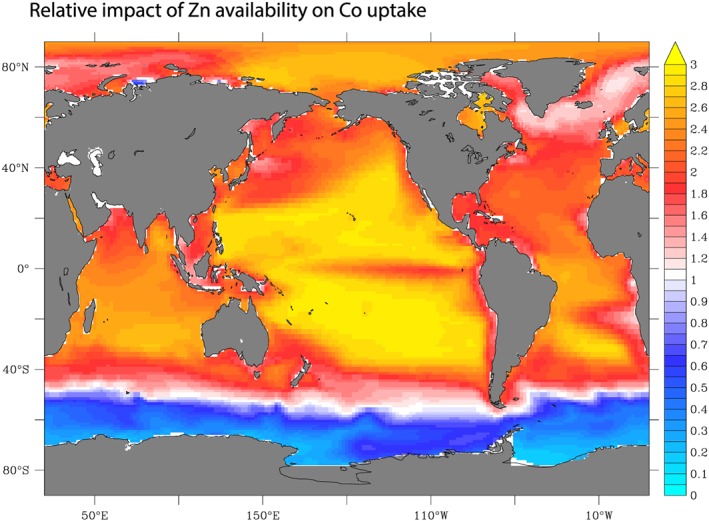
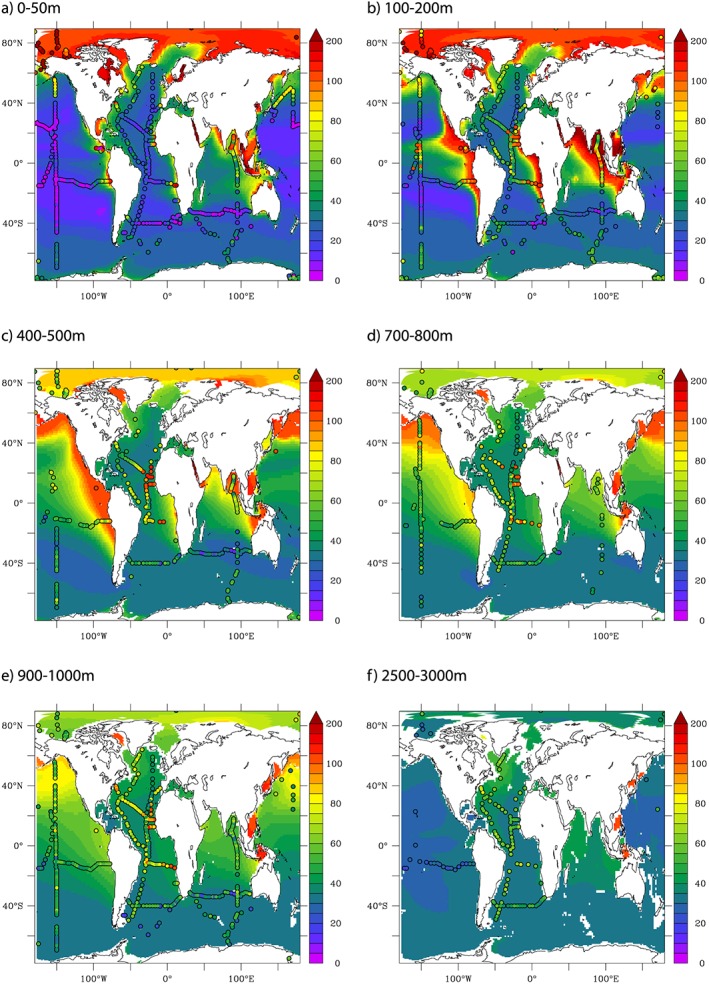
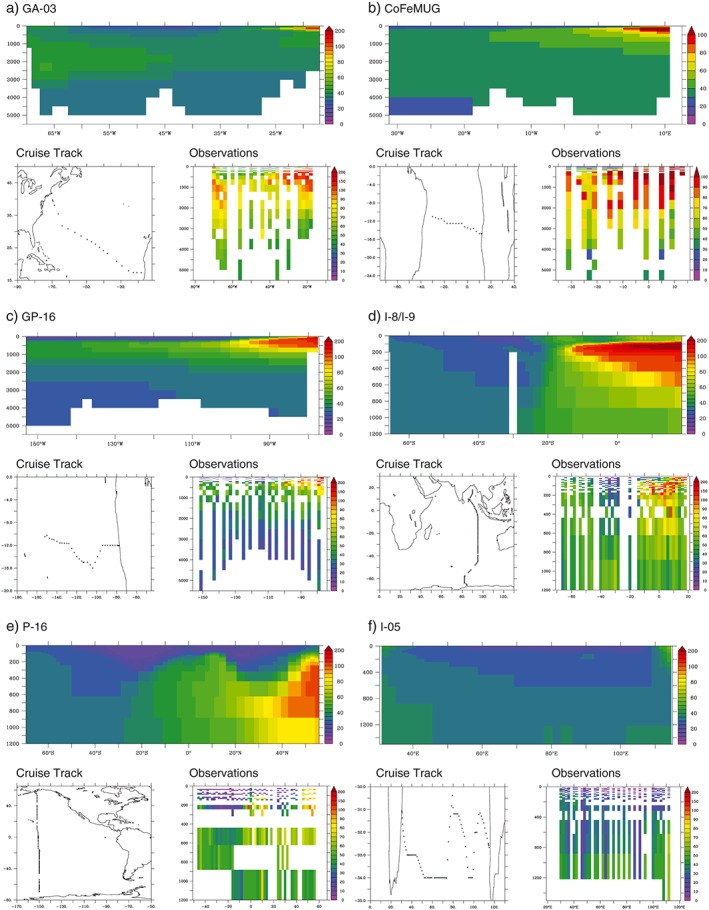
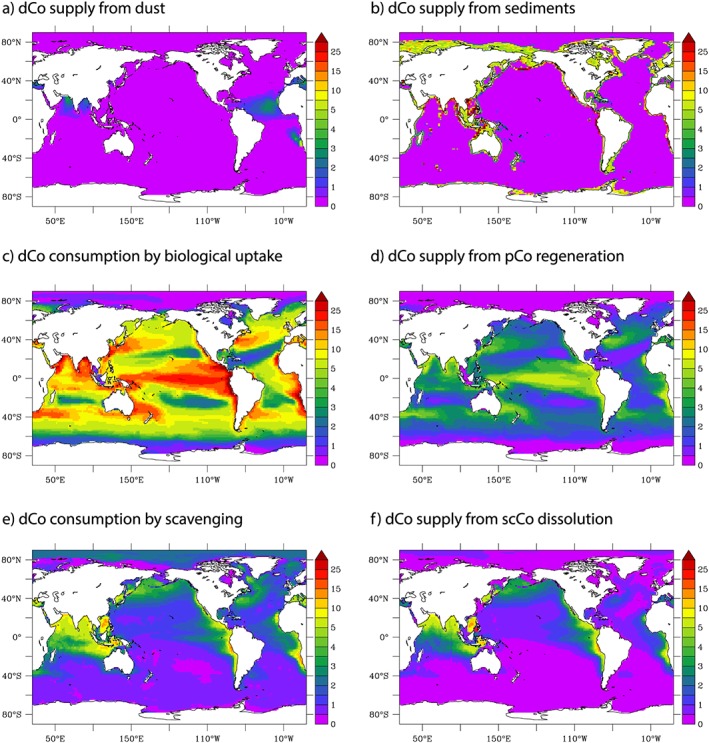
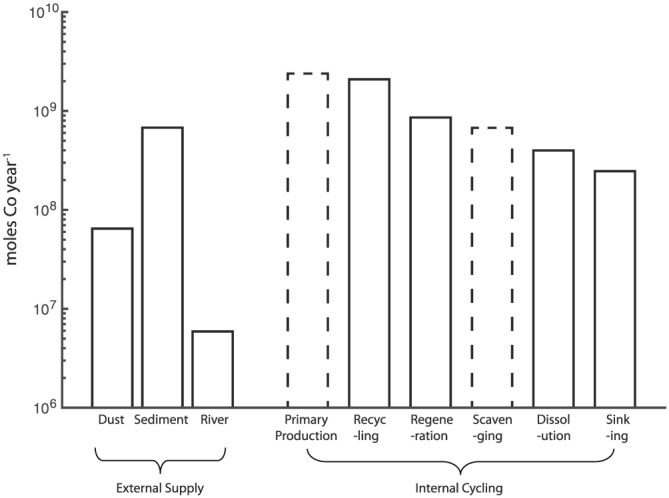
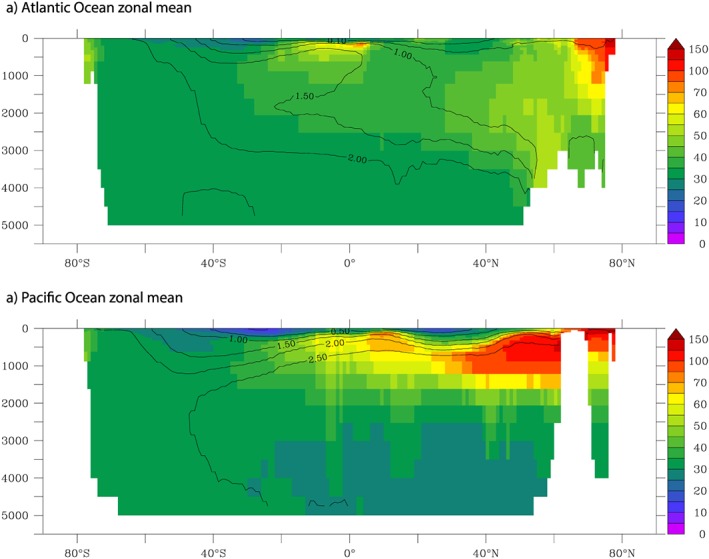
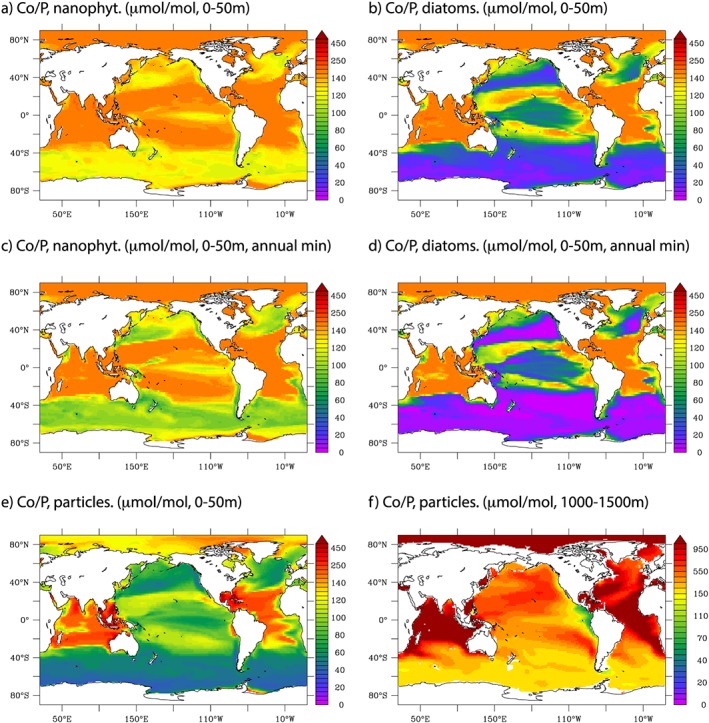
Cobalt is an important micronutrient for ocean microbes as it is present in vitamin B and is a co-factor in various metalloenzymes that catalyze cellular processes. Moreover, when seawater availability of cobalt is compared to biological demands, cobalt emerges as being depleted in seawater, pointing to a potentially important limiting role. To properly account for the potential biological role for cobalt, there is therefore a need to understand the processes driving the biogeochemical cycling of cobalt and, in particular, the balance between external inputs and internal cycling. To do so, we developed the first cobalt model within a state-of-the-art three-dimensional global ocean biogeochemical model. Overall, our model does a good job in reproducing measurements with a correlation coefficient of >0.7 in the surface and >0.5 at depth. We find that continental margins are the dominant source of cobalt, with a crucial role played by supply under low bottom-water oxygen conditions. The basin-scale distribution of cobalt supplied from margins is facilitated by the activity of manganese-oxidizing bacteria being suppressed under low oxygen and low temperatures, which extends the residence time of cobalt. Overall, we find a residence time of 7 and 250 years in the upper 250 m and global ocean, respectively. Importantly, we find that the dominant internal resupply process switches from regeneration and recycling of particulate cobalt to dissolution of scavenged cobalt between the upper ocean and the ocean interior. Our model highlights key regions of the ocean where biological activity may be most sensitive to cobalt availability.
钴是海洋微生物的一种重要微量营养素,因为它存在于维生素B中,并且是催化细胞过程的各种金属酶中的一种辅助因子。此外,当将海水中钴的可利用量与生物需求进行比较时,会发现海水中的钴出现了消耗,这表明其可能具有重要的限制作用。因此,为了正确认识钴的潜在生物学作用,有必要了解驱动钴生物地球化学循环的过程,特别是外部输入和内部循环之间的平衡。为此,我们在一个先进的三维全球海洋生物地球化学模型中开发了首个钴模型。总体而言,我们的模型在再现测量结果方面表现出色,表层的相关系数>0.7,深层的相关系数>0.5。我们发现大陆边缘是钴的主要来源,在低底层水氧条件下的供应起着关键作用。边缘供应的钴在盆地尺度上的分布因锰氧化细菌在低氧和低温条件下活性受到抑制而得到促进,这延长了钴的停留时间。总体而言,我们发现钴在上层海洋250米和全球海洋中的停留时间分别为7年和250年。重要的是,我们发现主要的内部再供应过程从颗粒态钴的再生和循环转变为上层海洋与海洋内部之间被清除钴的溶解。我们的模型突出了海洋中生物活动可能对钴的可利用性最为敏感的关键区域。