Plant Science Center (Center for Sustainable Resource Science), RIKEN, Yokohama, Kanagawa, 230-0045, Japan.
Plant Mol Biol. 2014 Jul;85(4-5):411-28. doi: 10.1007/s11103-014-0194-9. Epub 2014 May 3.
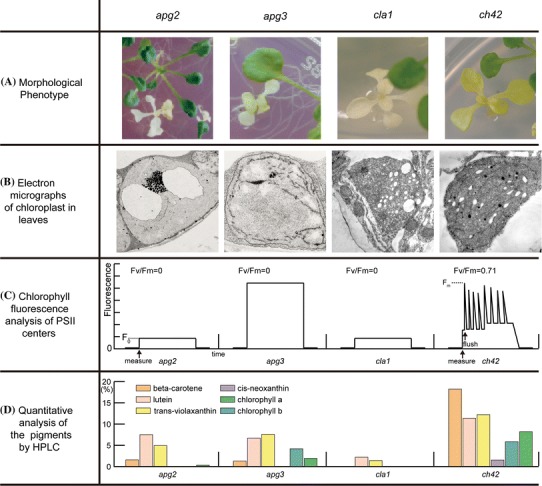
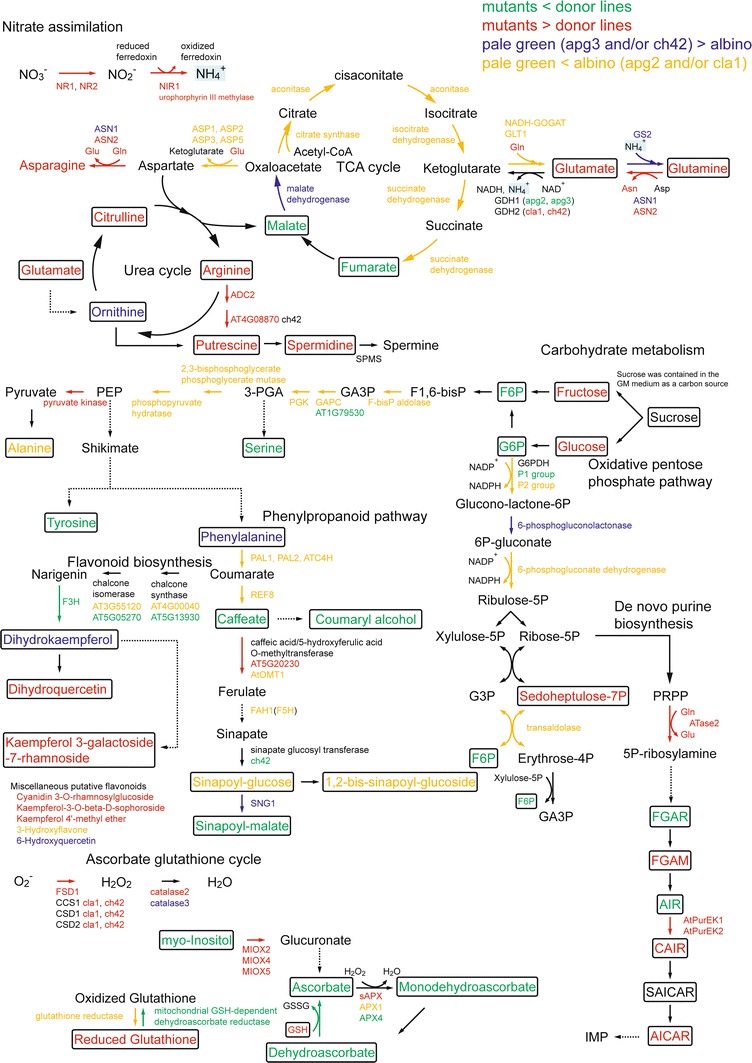
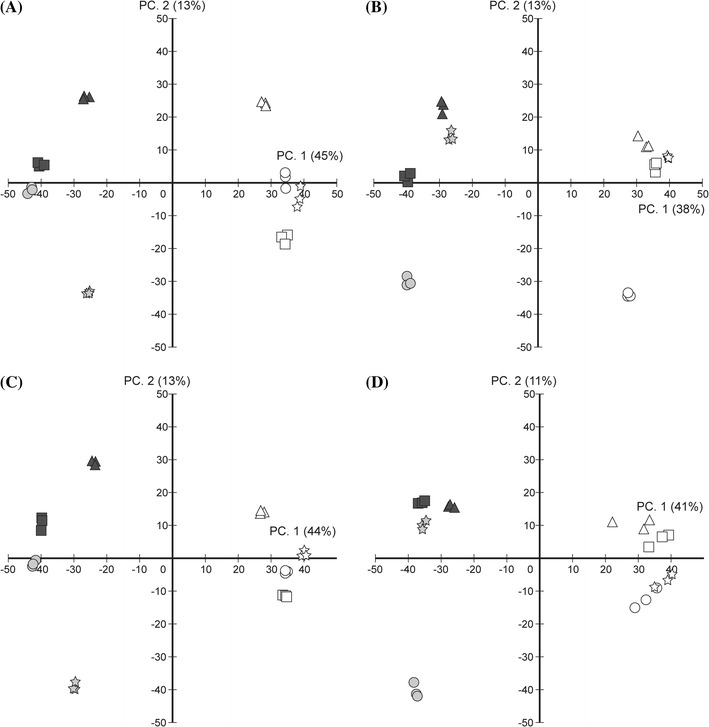
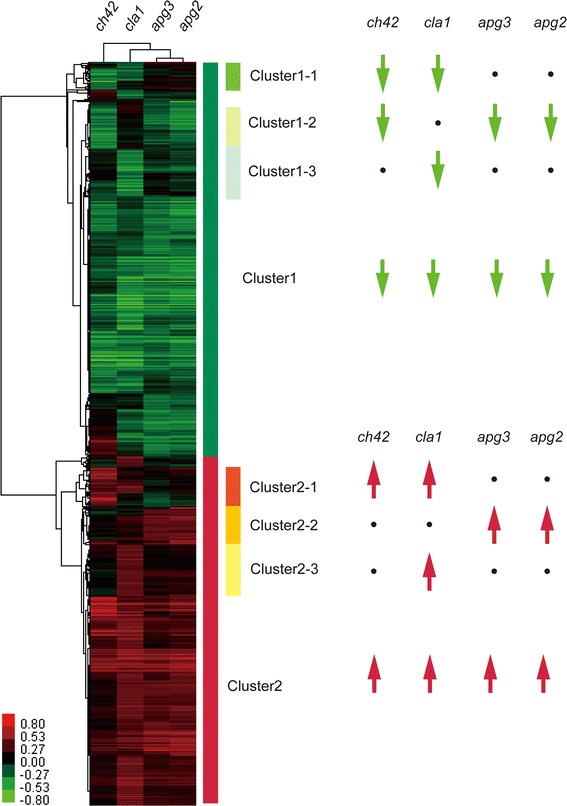
We used four mutants having albino or pale green phenotypes with disrupted nuclear-encoded chloroplast proteins to analyze the regulatory system of metabolites in chloroplast. We performed an integrated analyses of transcriptomes and metabolomes of the four mutants. Transcriptome analysis was carried out using the Agilent Arabidopsis 2 Oligo Microarray, and metabolome analysis with two mass spectrometers; a direct-infusion Fourier transform ion cyclotron resonance mass spectrometer (FT-ICR/MS) and a gas chromatograph-time of flight mass spectrometer. Among approximately 200 known metabolites detected by the FT-ICR/MS, 71 metabolites showed significant changes in the mutants when compared with controls (Ds donor plants). Significant accumulation of several amino acids (glutamine, glutamate and asparagine) was observed in the albino and pale green mutants. Transcriptome analysis revealed altered expressions of genes in several metabolic pathways. For example, genes involved in the tricarboxylic acid cycle, the oxidative pentose phosphate pathway, and the de novo purine nucleotide biosynthetic pathway were up-regulated. These results suggest that nitrogen assimilation is constitutively promoted in the albino and pale green mutants. The accumulation of ammonium ions in the albino and pale green mutants was consistently higher than in Ds donor lines. Furthermore, genes related to pyridoxin accumulation and the de novo purine nucleotide biosynthetic pathway were up-regulated, which may have occurred as a result of the accumulation of glutamine in the albino and pale green mutants. The difference in metabolic profiles seems to be correlated with the disruption of chloroplast internal membrane structures in the mutants. In albino mutants, the alteration of metabolites accumulation and genes expression is stronger than pale green mutants.
我们使用四个具有白化或浅绿色表型且核编码叶绿体蛋白被破坏的突变体来分析叶绿体中代谢物的调控系统。我们对四个突变体的转录组和代谢组进行了综合分析。使用安捷伦拟南芥 2 寡核苷酸微阵列进行转录组分析,使用两台质谱仪进行代谢组分析;直接进样傅里叶变换离子回旋共振质谱仪(FT-ICR/MS)和气相色谱-飞行时间质谱仪。在 FT-ICR/MS 检测到的大约 200 种已知代谢物中,71 种代谢物在突变体中与对照(Ds 供体植物)相比表现出显著变化。在白化和浅绿色突变体中观察到几种氨基酸(谷氨酰胺、谷氨酸和天冬酰胺)的显著积累。转录组分析显示,几个代谢途径中的基因表达发生了改变。例如,参与三羧酸循环、氧化戊糖磷酸途径和从头嘌呤核苷酸生物合成途径的基因上调。这些结果表明,氮同化在白化和浅绿色突变体中持续受到促进。白化和浅绿色突变体中铵离子的积累始终高于 Ds 供体系。此外,与吡哆醇积累和从头嘌呤核苷酸生物合成途径相关的基因上调,这可能是由于白化和浅绿色突变体中谷氨酰胺的积累所致。代谢谱的差异似乎与突变体中叶绿体内部膜结构的破坏有关。在白化突变体中,代谢物积累和基因表达的改变强于浅绿色突变体。