Linck Richard, Fu Xiaofeng, Lin Jianfeng, Ouch Christna, Schefter Alexandra, Steffen Walter, Warren Peter, Nicastro Daniela
From the Department of Genetics, Cell Biology and Development, University of Minnesota, Minneapolis, Minnesota 55455,
the Biology Department and Rosenstiel Basic Medical Sciences Research Center, Brandeis University, Waltham, Massachusetts 02454, and.
J Biol Chem. 2014 Jun 20;289(25):17427-44. doi: 10.1074/jbc.M114.568949. Epub 2014 May 2.
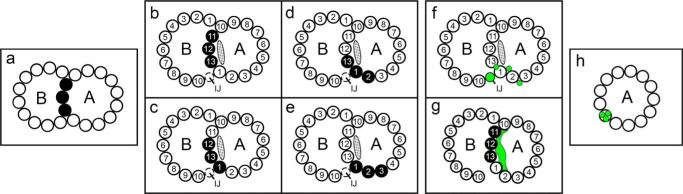
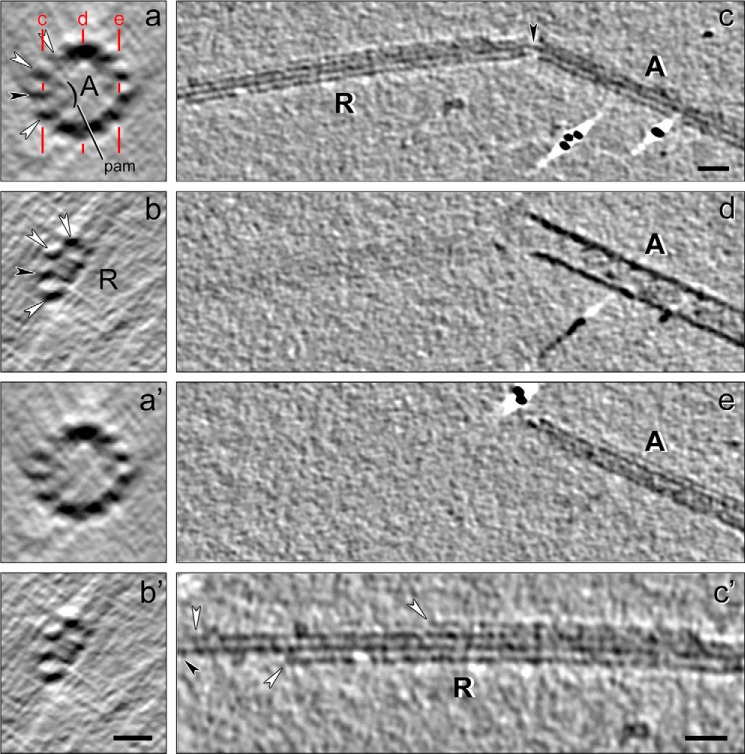
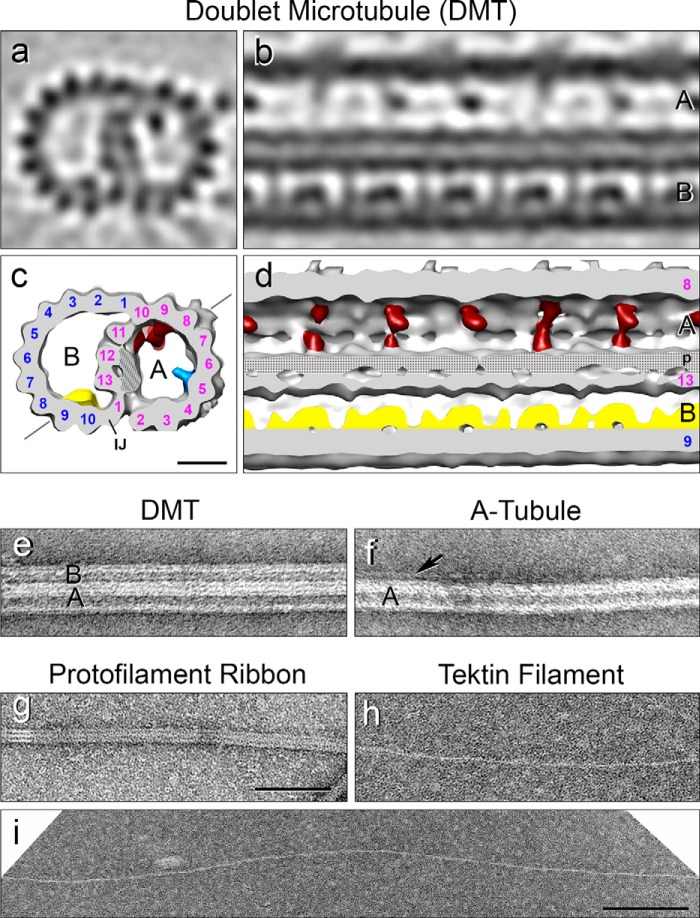
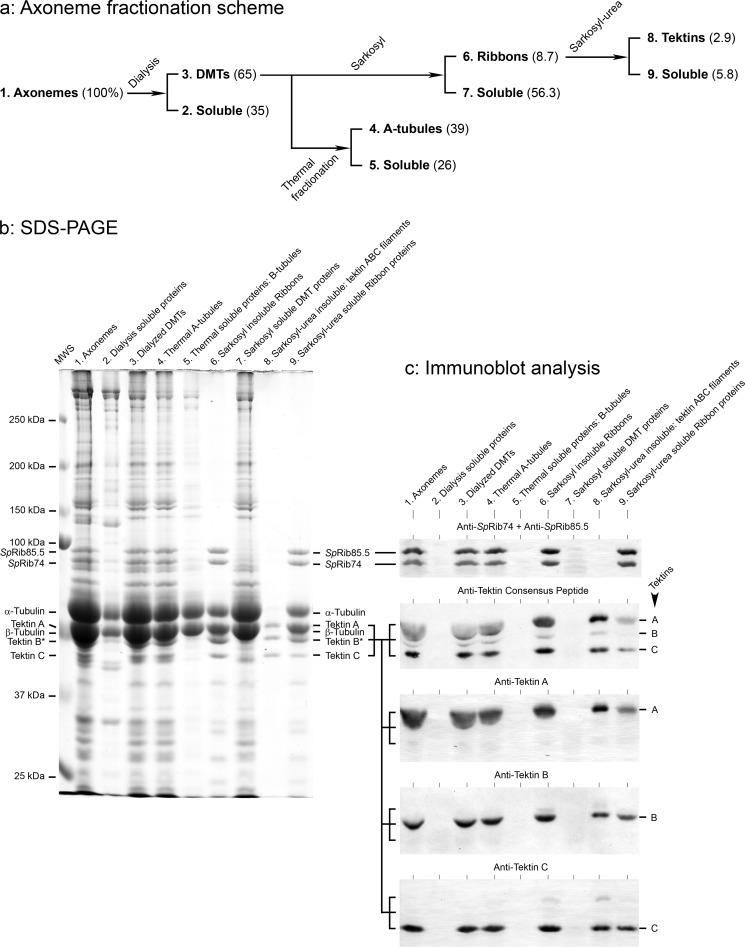
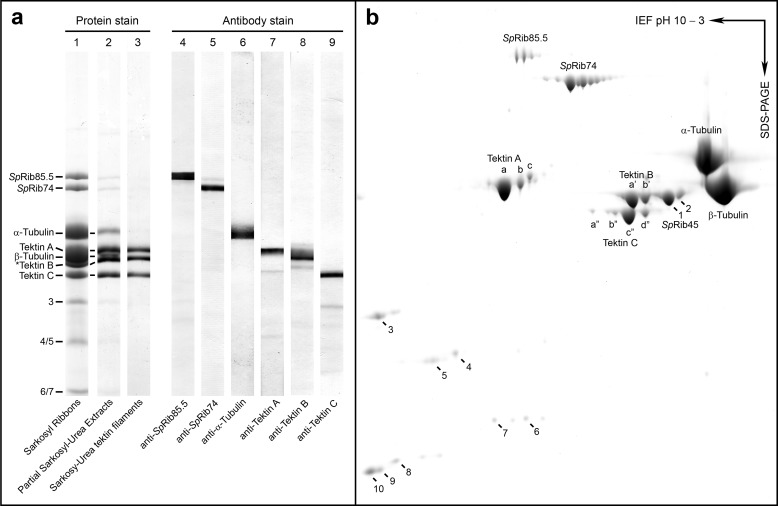
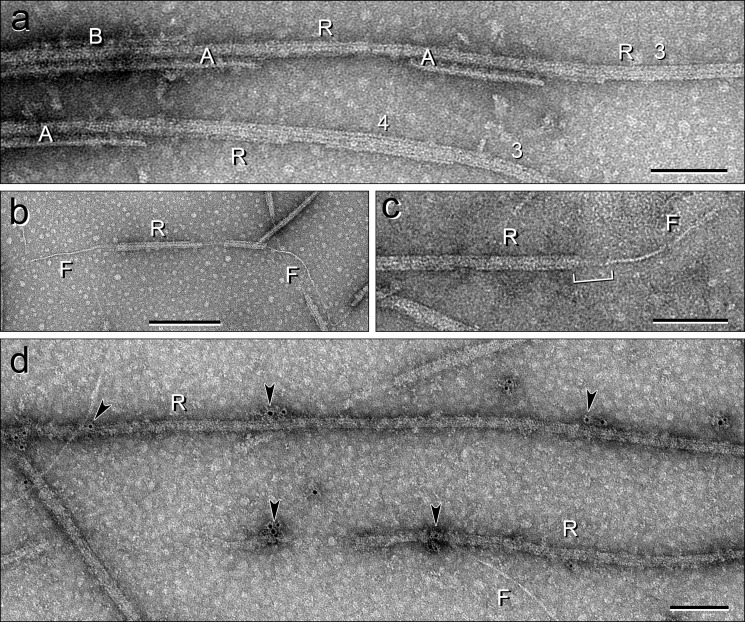
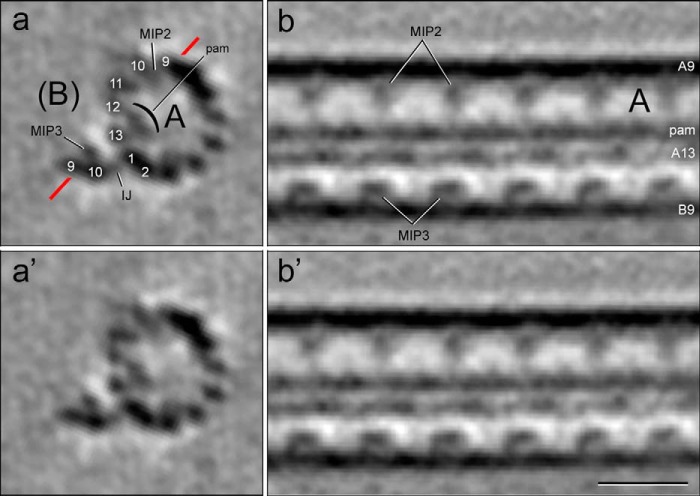
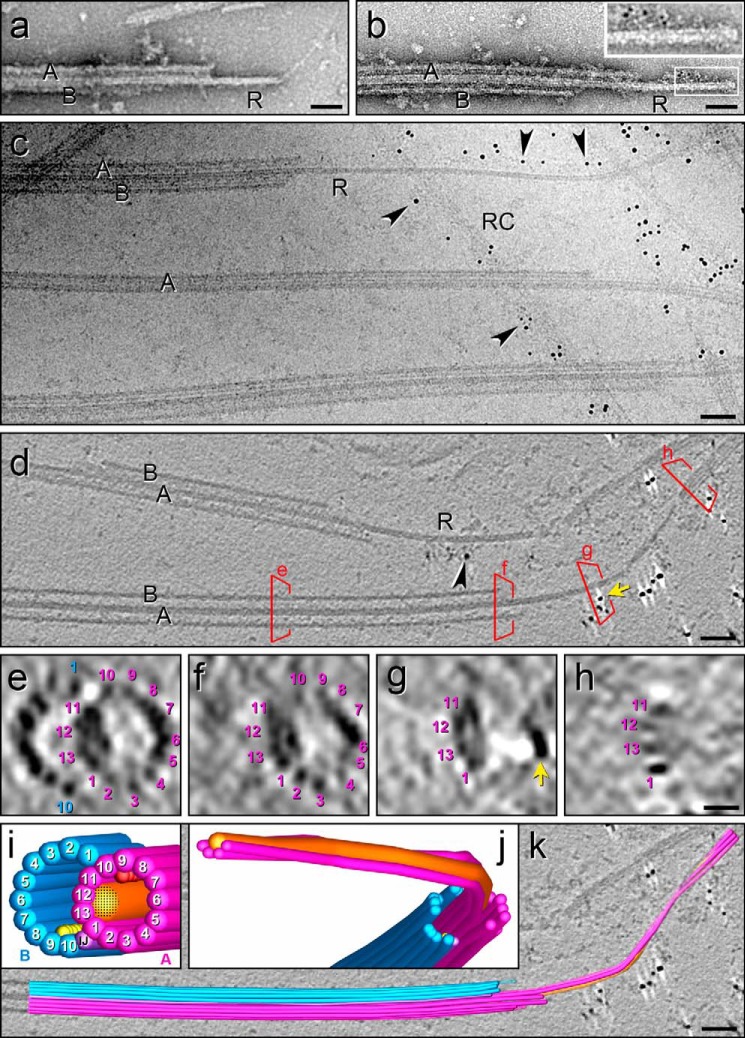
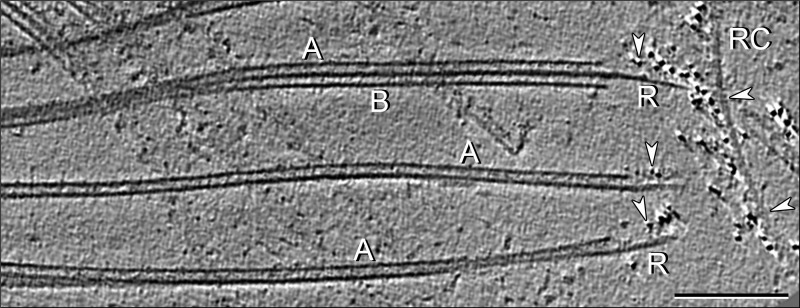
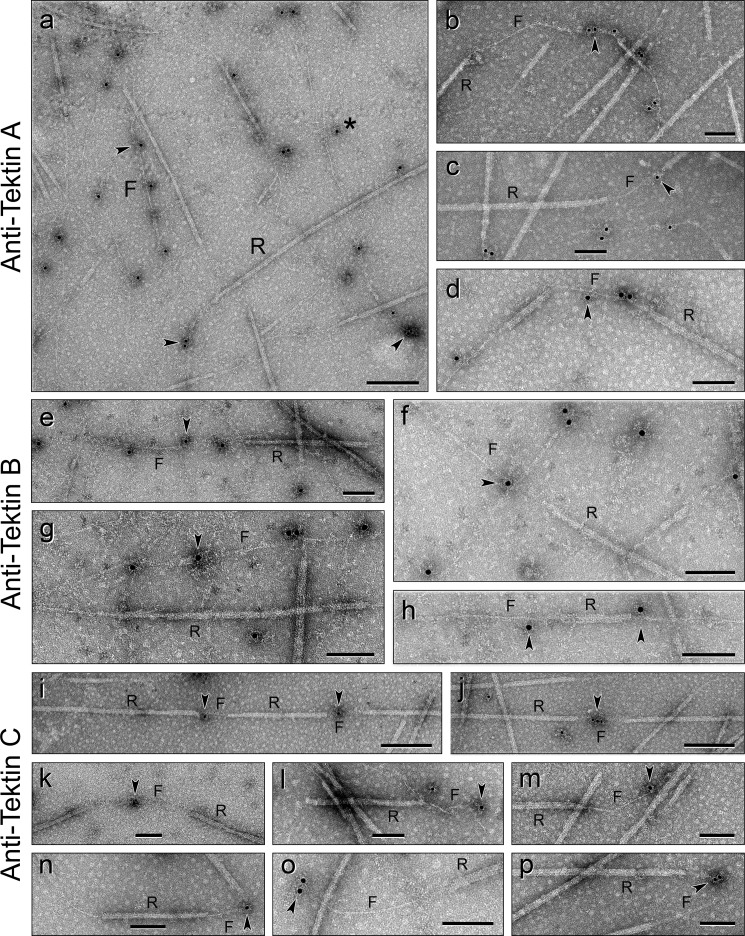
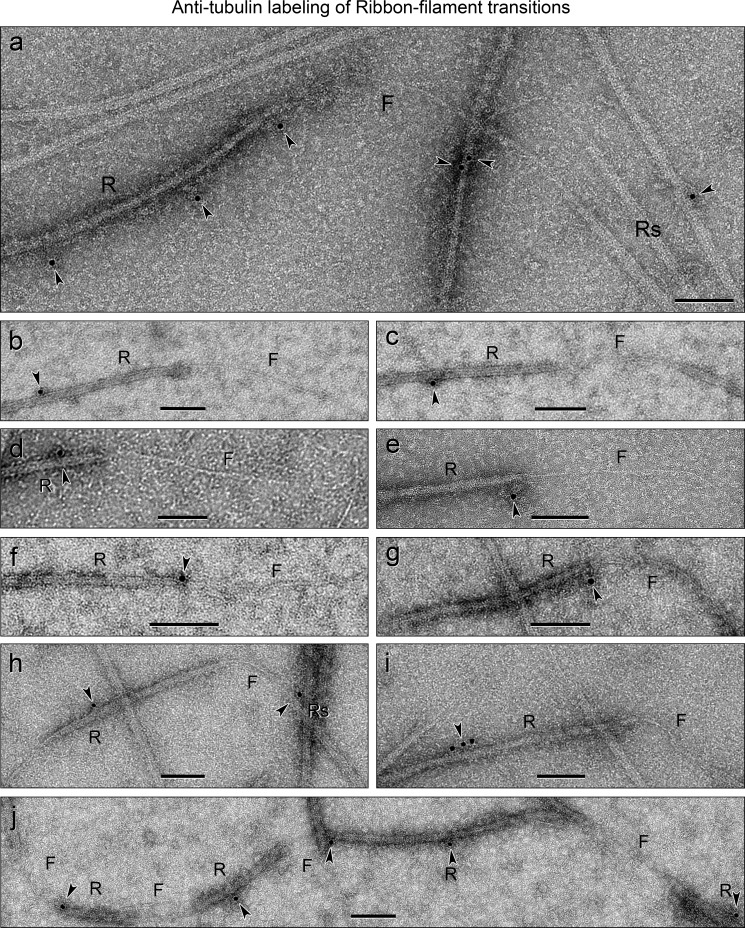
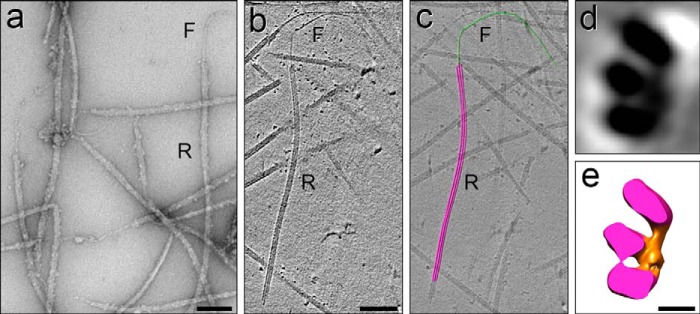
Cilia and flagella are conserved, motile, and sensory cell organelles involved in signal transduction and human disease. Their scaffold consists of a 9-fold array of remarkably stable doublet microtubules (DMTs), along which motor proteins transmit force for ciliary motility and intraflagellar transport. DMTs possess Ribbons of three to four hyper-stable protofilaments whose location, organization, and specialized functions have been elusive. We performed a comprehensive analysis of the distribution and structural arrangements of Ribbon proteins from sea urchin sperm flagella, using quantitative immunobiochemistry, proteomics, immuno-cryo-electron microscopy, and tomography. Isolated Ribbons contain acetylated α-tubulin, β-tubulin, conserved protein Rib45, >95% of the axonemal tektins, and >95% of the calcium-binding proteins, Rib74 and Rib85.5, whose human homologues are related to the cause of juvenile myoclonic epilepsy. DMTs contain only one type of Ribbon, corresponding to protofilaments A11-12-13-1 of the A-tubule. Rib74 and Rib85.5 are associated with the Ribbon in the lumen of the A-tubule. Ribbons contain a single ∼5-nm wide filament, composed of equimolar tektins A, B, and C, which interact with the nexin-dynein regulatory complex. A summary of findings is presented, and the functions of Ribbon proteins are discussed in terms of the assembly and stability of DMTs, ciliary motility, and other microtubule systems.
纤毛和鞭毛是保守的、可运动的感觉细胞器,参与信号转导和人类疾病。它们的支架由9重排列的非常稳定的双联微管(DMT)组成,运动蛋白沿着这些微管传递力量以实现纤毛运动和鞭毛内运输。DMT拥有由三到四条超稳定原纤维组成的带,其位置、组织和特殊功能一直难以捉摸。我们使用定量免疫生物化学、蛋白质组学、免疫冷冻电子显微镜和断层扫描技术,对海胆精子鞭毛中带蛋白的分布和结构排列进行了全面分析。分离出的带包含乙酰化α-微管蛋白、β-微管蛋白、保守蛋白Rib45、超过95%的轴丝tektin蛋白,以及超过95%的钙结合蛋白Rib74和Rib85.5,它们的人类同源物与青少年肌阵挛性癫痫的病因有关。DMT仅包含一种类型的带,对应于A微管的原纤维A11-12-13-1。Rib74和Rib85.5与A微管腔内的带相关联。带包含一条约5纳米宽的细丝,由等摩尔的tektin蛋白A、B和C组成,它们与连接蛋白-动力蛋白调节复合体相互作用。本文总结了研究结果,并从DMT的组装和稳定性、纤毛运动及其他微管系统方面讨论了带蛋白的功能。