Le Pichon Claire E, Chesler Alexander T
National Institute of Neurological Disorders and Stroke, National Institutes of Health Bethesda, MD, USA.
Intramural Pain Program, Section on Sensory Cells and Circuits, National Center for Complementary and Alternative Medicine, National Institutes of Health Bethesda, MD, USA.
Front Neuroanat. 2014 Apr 22;8:21. doi: 10.3389/fnana.2014.00021. eCollection 2014.
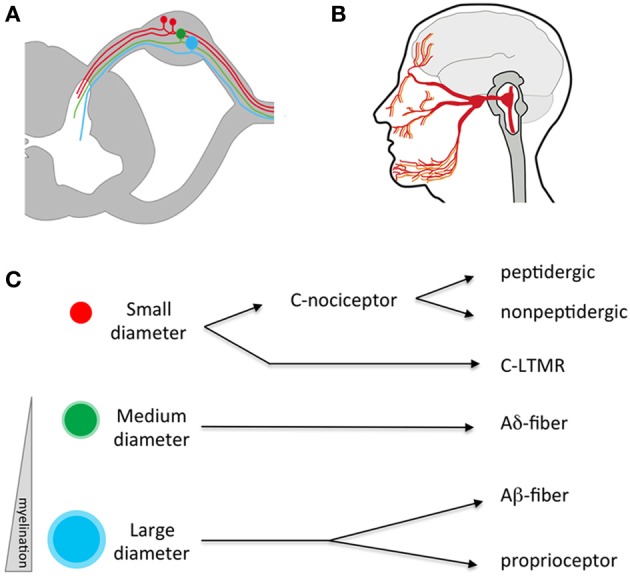
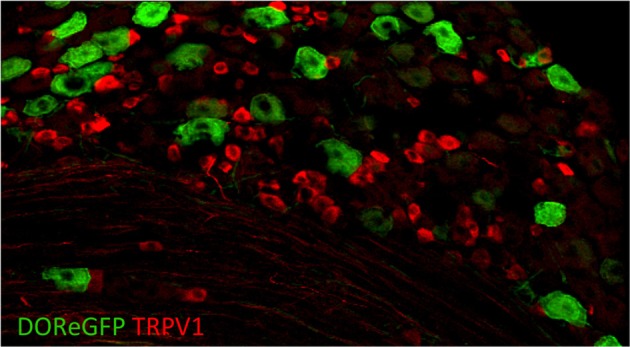
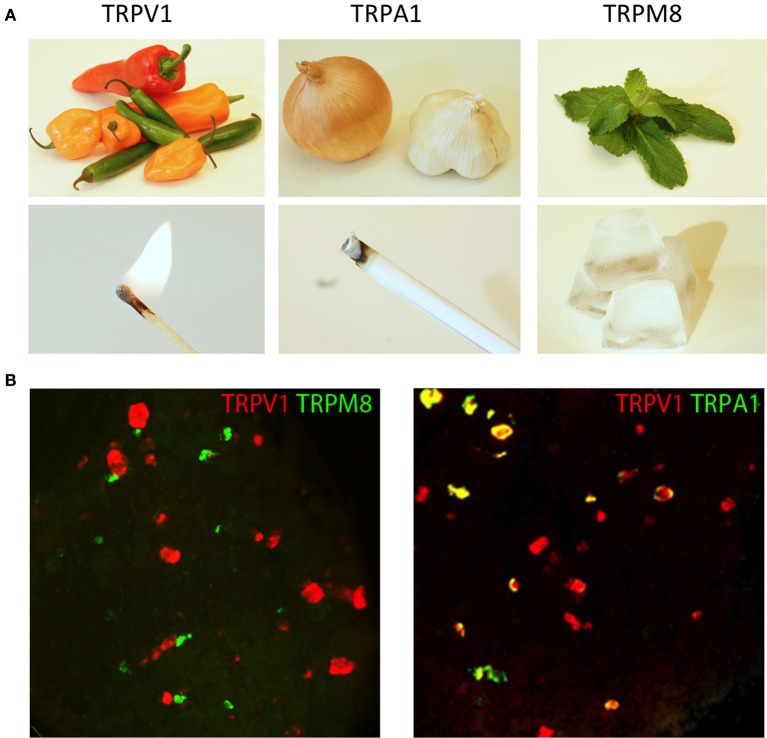
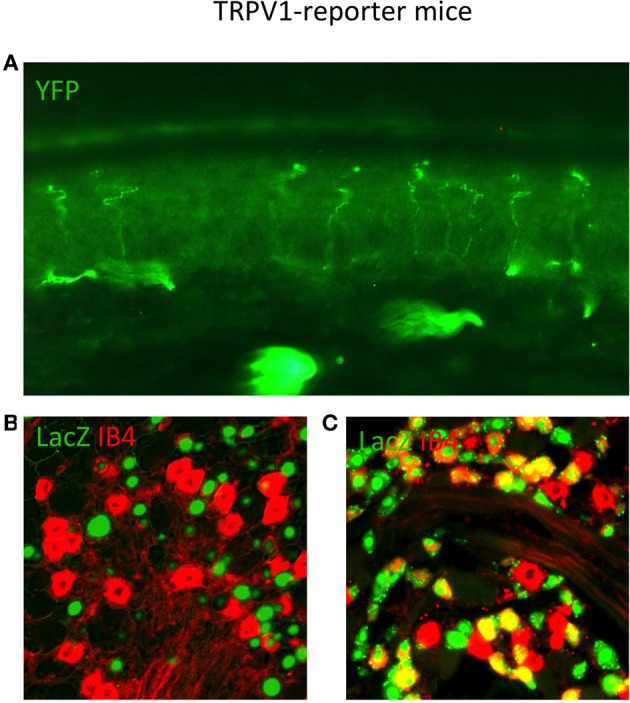
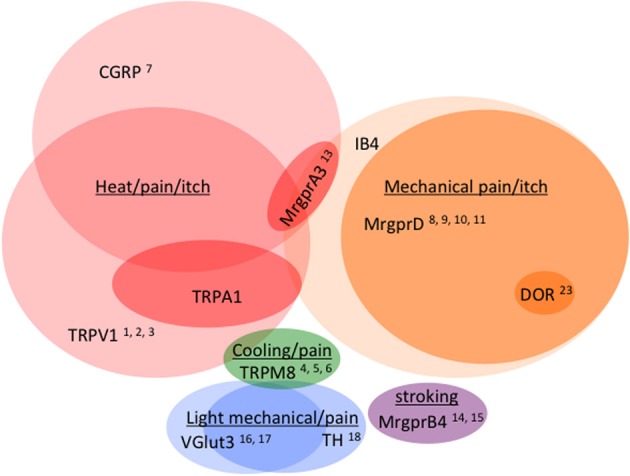
The word somatosensation comes from joining the Greek word for body (soma) with a word for perception (sensation). Somatosensory neurons comprise the largest sensory system in mammals and have nerve endings coursing throughout the skin, viscera, muscle, and bone. Their cell bodies reside in a chain of ganglia adjacent to the dorsal spinal cord (the dorsal root ganglia) and at the base of the skull (the trigeminal ganglia). While the neuronal cell bodies are intermingled within the ganglia, the somatosensory system is in reality composed of numerous sub-systems, each specialized to detect distinct stimuli, such as temperature and touch. Historically, somatosensory neurons have been classified using a diverse host of anatomical and physiological parameters, such as the size of the cell body, degree of myelination, histological labeling with markers, specialization of the nerve endings, projection patterns in the spinal cord and brainstem, receptive tuning, and conduction velocity of their action potentials. While useful, the picture that emerged was one of heterogeneity, with many markers at least partially overlapping. More recently, by capitalizing on advances in molecular techniques, researchers have identified specific ion channels and sensory receptors expressed in subsets of sensory neurons. These studies have proved invaluable as they allow genetic access to small subsets of neurons for further molecular dissection. Data being generated from transgenic mice favor a model whereby an array of dedicated neurons is responsible for selectively encoding different modalities. Here we review the current knowledge of the different sensory neuron subtypes in the mouse, the markers used to study them, and the neurogenetic strategies used to define their anatomical projections and functional roles.
躯体感觉这个词源于将希腊语中表示身体的词(soma)与表示感知的词(sensation)组合在一起。躯体感觉神经元构成了哺乳动物中最大的感觉系统,其神经末梢分布于皮肤、内脏、肌肉和骨骼各处。它们的细胞体位于与脊髓背侧相邻的一串神经节(背根神经节)以及颅骨底部(三叉神经节)。虽然神经元细胞体在神经节内相互交织,但躯体感觉系统实际上由众多子系统组成,每个子系统专门用于检测不同的刺激,如温度和触觉。从历史上看,躯体感觉神经元一直是根据多种解剖学和生理学参数进行分类的,例如细胞体的大小、髓鞘化程度、用标记物进行的组织学标记、神经末梢的特化、在脊髓和脑干中的投射模式、感受调谐以及其动作电位的传导速度。虽然这些方法很有用,但呈现出的却是一幅异质性的图景,许多标记至少部分重叠。最近,利用分子技术的进展,研究人员已经确定了在感觉神经元亚群中表达的特定离子通道和感觉受体。这些研究已被证明具有极高的价值,因为它们使得能够通过基因手段研究小部分神经元,以便进行进一步的分子剖析。从小鼠转基因实验中获得的数据支持这样一种模型,即一系列专门的神经元负责选择性地编码不同的感觉模态。在这里,我们综述了关于小鼠不同感觉神经元亚型的当前知识、用于研究它们的标记物,以及用于确定其解剖投射和功能作用的神经遗传学策略。