Department of Molecular and Cellular Biochemistry, College of Medicine, The Ohio State University , Columbus, OH , USA ; Comprehensive Cancer Center, The Ohio State University , Columbus, OH , USA.
Comprehensive Cancer Center, The Ohio State University , Columbus, OH , USA.
Front Oncol. 2014 Apr 23;4:87. doi: 10.3389/fonc.2014.00087. eCollection 2014.
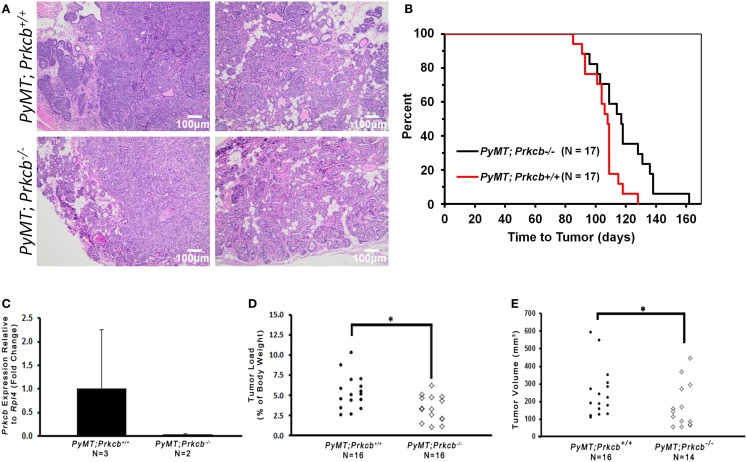
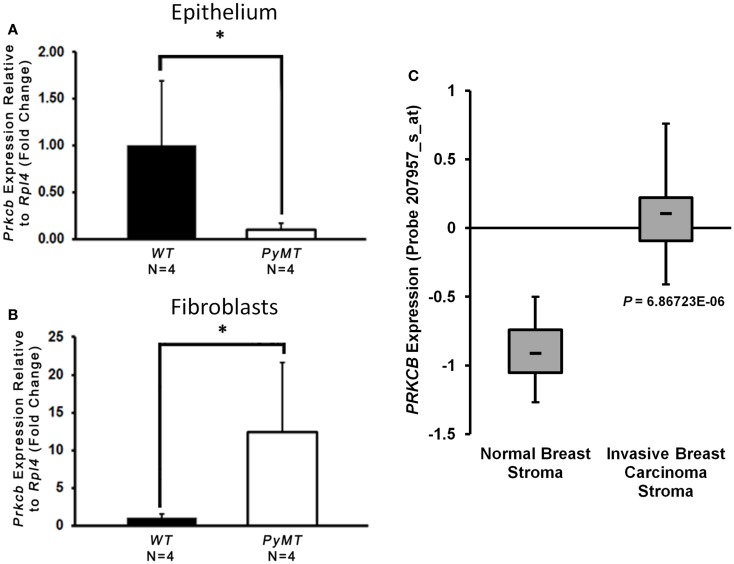
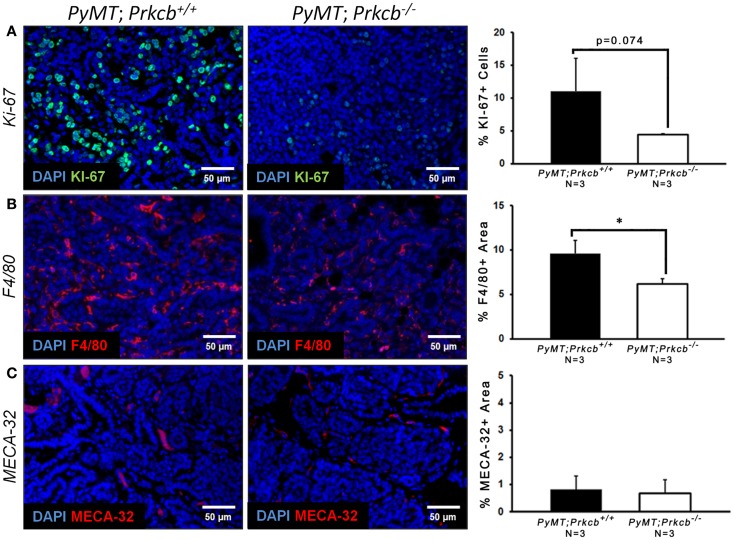
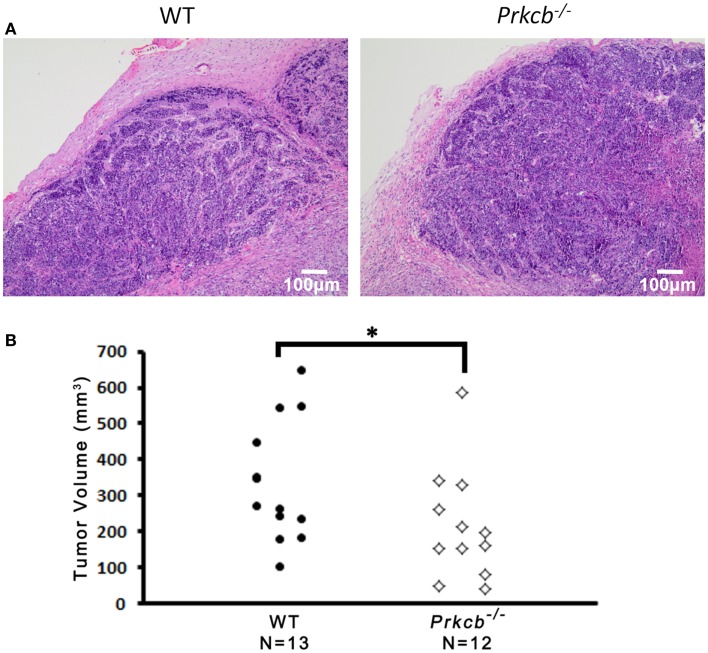
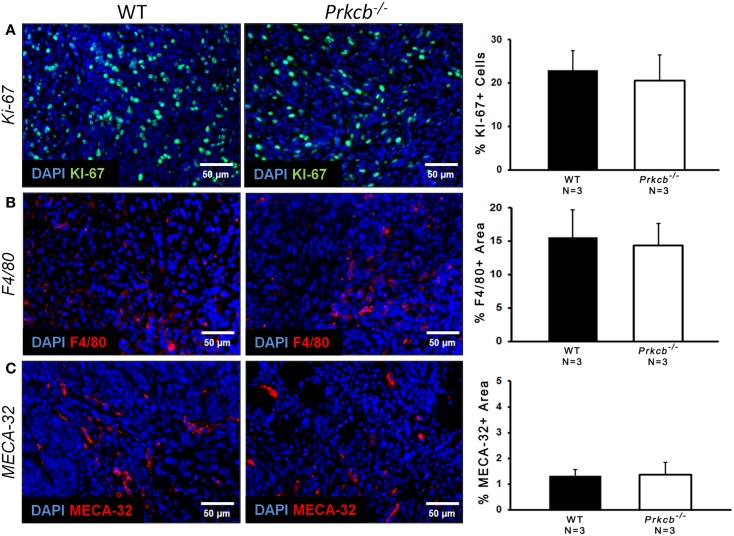
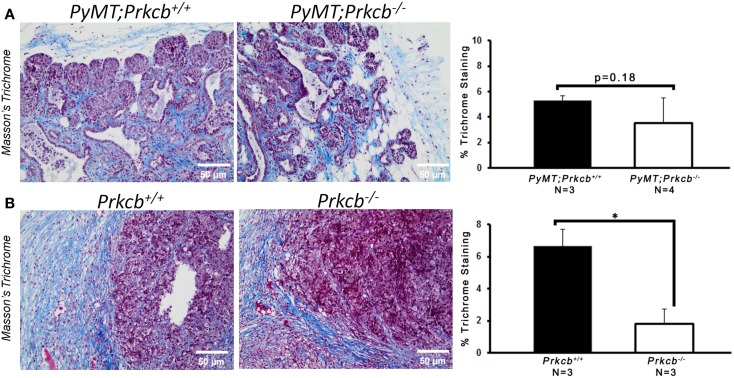
Protein kinase C beta (PKCβ) expression in breast cancer is associated with a more aggressive tumor phenotype, yet the mechanism for how PKCβ is pro-tumorigenic in this disease is still unclear. Interestingly, while it is known that PKCβ mediates angiogenesis, immunity, fibroblast function and adipogenesis, all components of the mammary tumor microenvironment (TME), no study to date has investigated whether stromal PKCβ is functionally relevant in breast cancer. Herein, we evaluate mouse mammary tumor virus-polyoma middle T-antigen (MMTV-PyMT) induced mammary tumorigenesis in the presence and absence of PKCβ. We utilize two model systems: one where PKCβ is deleted in both the epithelial and stromal compartments to test the global requirement for PKCβ on tumor formation, and second, where PKCβ is deleted only in the stromal compartment to test its role in the TME. MMTV-PyMT mice globally lacking PKCβ live longer and develop smaller tumors with decreased proliferation and decreased macrophage infiltration. Similarly, when PKCβ is null exclusively in the stroma, PyMT-driven B6 cells form smaller tumors with diminished collagen deposition. These experiments reveal for the first time a tumor promoting role for stromal PKCβ in MMTV-PyMT tumorigenesis. In corroboration with these results, PKCβ mRNA (Prkcb) is increased in fibroblasts isolated from MMTV-PyMT tumors. These data were confirmed in a breast cancer patient cohort. Combined these data suggest the continued investigation of PKCβ in the mammary TME is necessary to elucidate how to effectively target this signaling pathway in breast cancer.
蛋白激酶 Cβ(PKCβ)在乳腺癌中的表达与更具侵袭性的肿瘤表型相关,但 PKCβ 在这种疾病中促进肿瘤发生的机制仍不清楚。有趣的是,虽然已知 PKCβ介导血管生成、免疫、成纤维细胞功能和脂肪生成,这些都是乳腺肿瘤微环境(TME)的组成部分,但迄今为止没有研究调查基质 PKCβ在乳腺癌中是否具有功能相关性。在此,我们评估了鼠乳腺肿瘤病毒-多瘤病毒中 T 抗原(MMTV-PyMT)在存在和不存在 PKCβ 的情况下诱导的乳腺肿瘤发生。我们利用了两种模型系统:一种是 PKCβ 在上皮和基质细胞中都被删除,以测试 PKCβ 对肿瘤形成的整体需求;另一种是 PKCβ 仅在基质细胞中被删除,以测试其在 TME 中的作用。缺乏 PKCβ 的 MMTV-PyMT 小鼠寿命更长,肿瘤体积更小,增殖减少,巨噬细胞浸润减少。同样,当 PKCβ 在基质中完全缺失时,PyMT 驱动的 B6 细胞形成的肿瘤体积较小,胶原沉积减少。这些实验首次揭示了基质 PKCβ在 MMTV-PyMT 肿瘤发生中的促肿瘤作用。与这些结果一致的是,从 MMTV-PyMT 肿瘤中分离出的成纤维细胞中 PKCβ mRNA(Prkcb)增加。在乳腺癌患者队列中证实了这些数据。这些数据表明,有必要继续研究 PKCβ 在乳腺 TME 中的作用,以阐明如何有效靶向乳腺癌中的这种信号通路。