Department of Oncohematology, Ospedale Pediatrico Bambino Gesù, IRCCS, Roma, Italy.
Stanley Scott Cancer Center, Louisiana State University Health Sciences Center and Louisiana Cancer Research Consortium, New Orleans, Louisiana, United States of America.
PLoS One. 2014 May 5;9(5):e96238. doi: 10.1371/journal.pone.0096238. eCollection 2014.
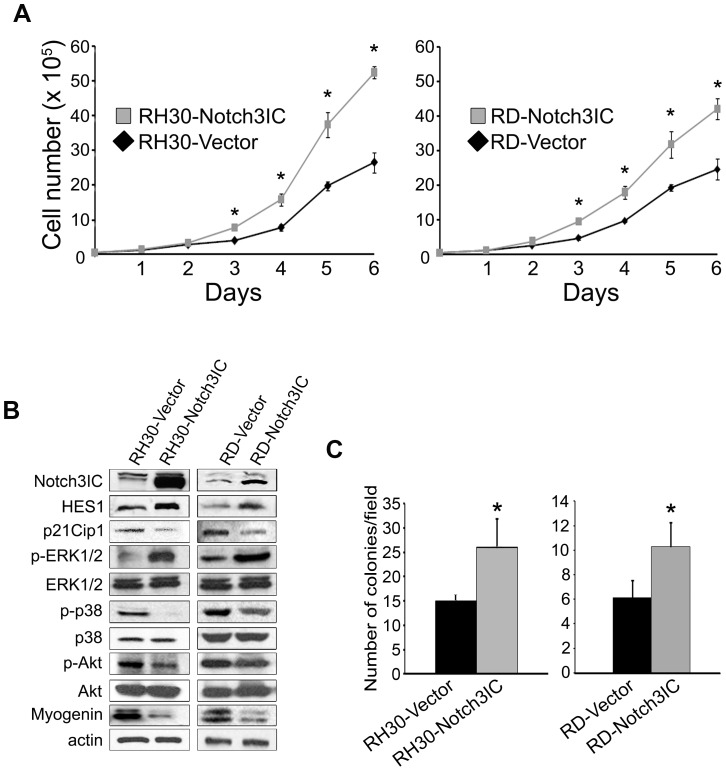
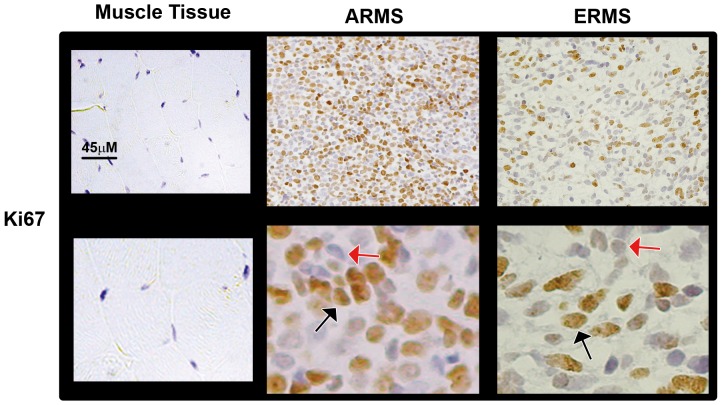
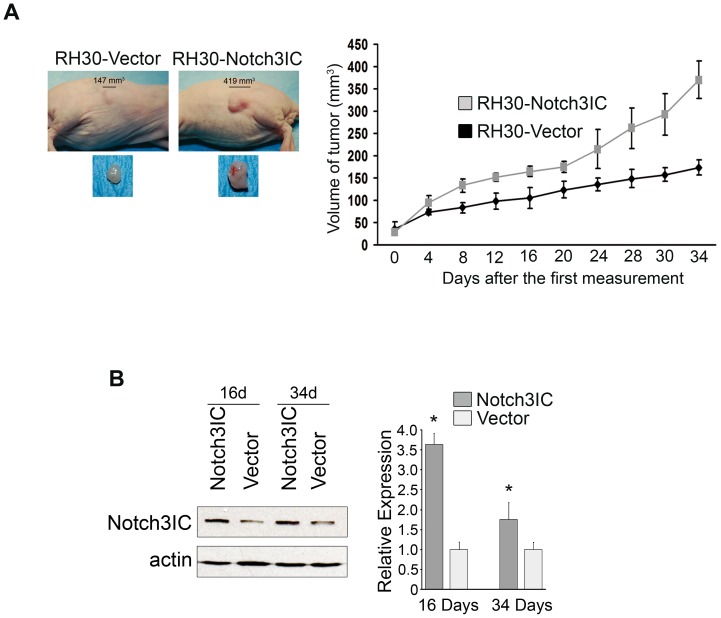
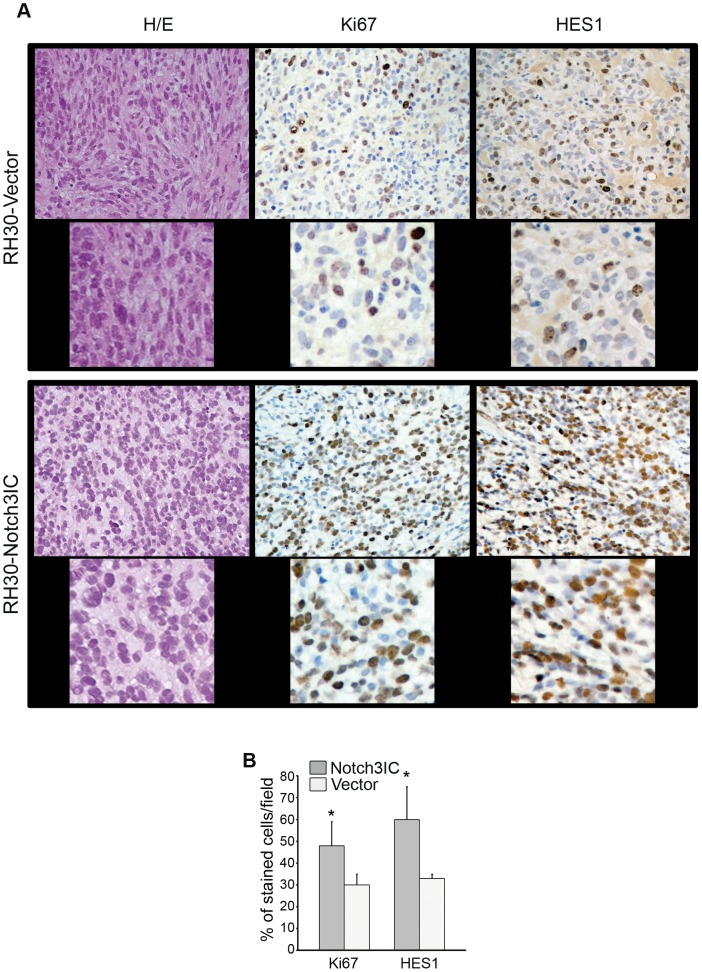
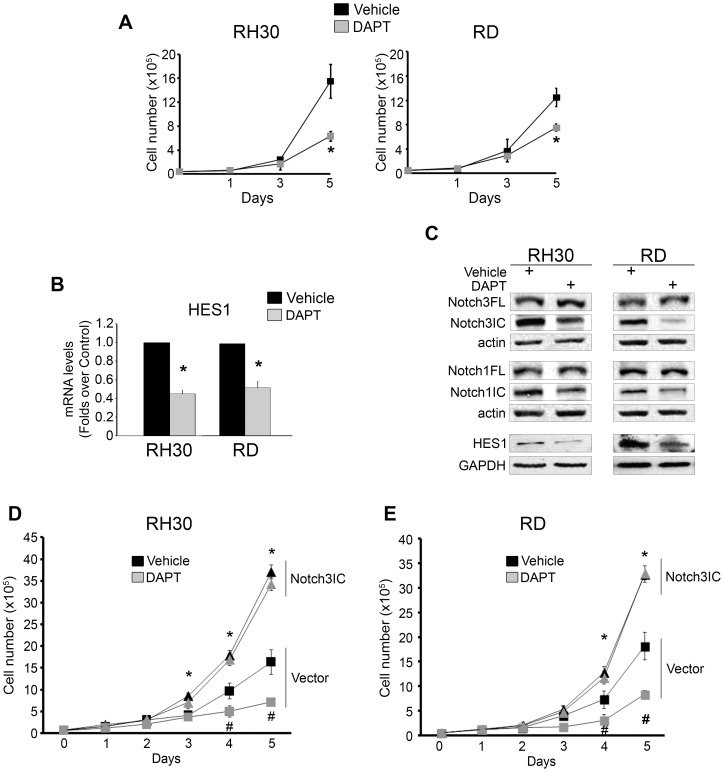
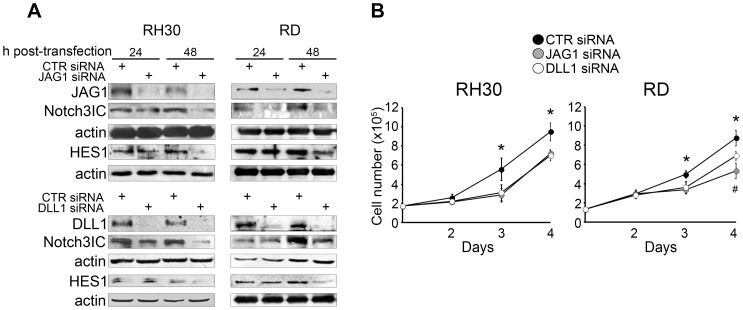
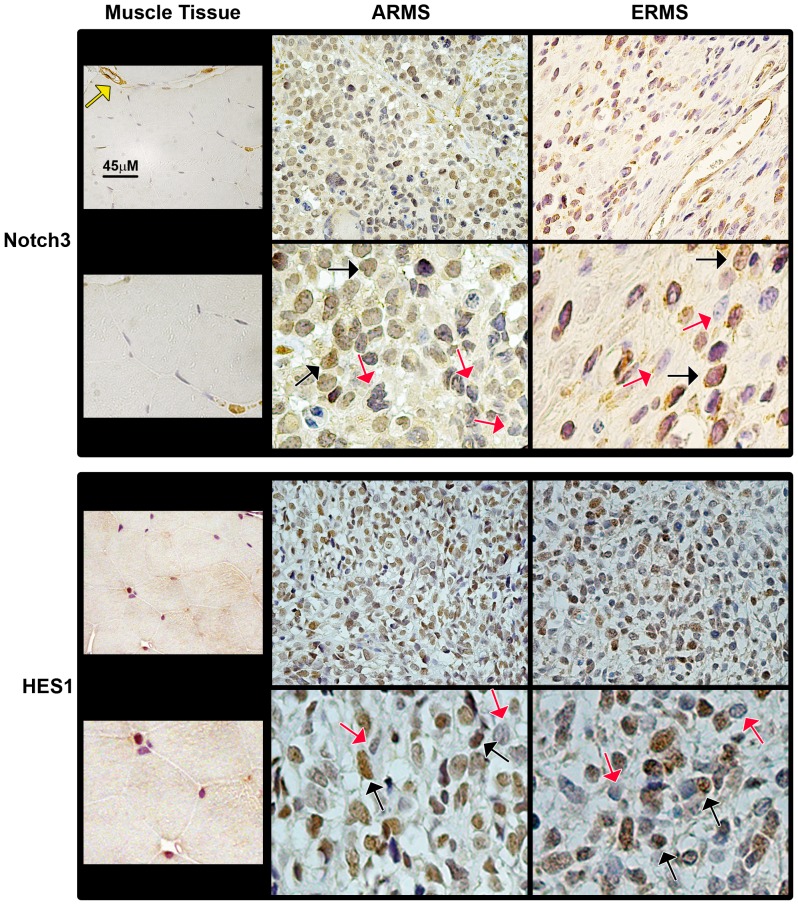
Rhabdomyosarcoma (RMS) is a pediatric myogenic-derived soft tissue sarcoma that includes two major histopathological subtypes: embryonal and alveolar. The majority of alveolar RMS expresses PAX3-FOXO1 fusion oncoprotein, associated with the worst prognosis. RMS cells show myogenic markers expression but are unable to terminally differentiate. The Notch signaling pathway is a master player during myogenesis, with Notch1 activation sustaining myoblast expansion and Notch3 activation inhibiting myoblast fusion and differentiation. Accordingly, Notch1 signaling is up-regulated and activated in embryonal RMS samples and supports the proliferation of tumor cells. However, it is unable to control their differentiation properties. We previously reported that Notch3 is activated in RMS cell lines, of both alveolar and embryonal subtype, and acts by inhibiting differentiation. Moreover, Notch3 depletion reduces PAX3-FOXO1 alveolar RMS tumor growth in vivo. However, whether Notch3 activation also sustains the proliferation of RMS cells remained unclear. To address this question, we forced the expression of the activated form of Notch3, Notch3IC, in the RH30 and RH41 PAX3-FOXO1-positive alveolar and in the RD embryonal RMS cell lines and studied the proliferation of these cells. We show that, in all three cell lines tested, Notch3IC over-expression stimulates in vitro cell proliferation and prevents the effects of pharmacological Notch inhibition. Furthermore, Notch3IC further increases RH30 cell growth in vivo. Interestingly, knockdown of Notch canonical ligands JAG1 or DLL1 in RMS cell lines decreases Notch3 activity and reduces cell proliferation. Finally, the expression of Notch3IC and its target gene HES1 correlates with that of the proliferative marker Ki67 in a small cohort of primary PAX-FOXO1 alveolar RMS samples. These results strongly suggest that high levels of Notch3 activation increase the proliferative potential of RMS cells.
横纹肌肉瘤(RMS)是一种儿科肌源性软组织肉瘤,包括两种主要的组织病理学亚型:胚胎型和肺泡型。大多数肺泡型 RMS 表达 PAX3-FOXO1 融合癌蛋白,与最差的预后相关。RMS 细胞表达成肌细胞标志物,但不能终末分化。Notch 信号通路是肌发生过程中的主要调控因子,Notch1 的激活维持成肌细胞的扩增,而 Notch3 的激活抑制成肌细胞的融合和分化。因此,Notch1 信号在胚胎型 RMS 样本中上调和激活,支持肿瘤细胞的增殖。然而,它无法控制其分化特性。我们之前报道 Notch3 在 RMS 细胞系中被激活,包括肺泡型和胚胎型,并且通过抑制分化起作用。此外,Notch3 的耗竭减少了 PAX3-FOXO1 肺泡型 RMS 肿瘤在体内的生长。然而,Notch3 的激活是否也维持 RMS 细胞的增殖仍不清楚。为了解决这个问题,我们在 RH30 和 RH41 PAX3-FOXO1 阳性肺泡型以及 RD 胚胎型 RMS 细胞系中强制表达激活型 Notch3(Notch3IC),并研究这些细胞的增殖情况。我们发现,在所有三种测试的细胞系中,Notch3IC 的过表达刺激体外细胞增殖,并阻止了 Notch 抑制的作用。此外,Notch3IC 进一步增加了 RH30 细胞在体内的生长。有趣的是,在 RMS 细胞系中敲低 Notch 经典配体 JAG1 或 DLL1 会降低 Notch3 的活性并减少细胞增殖。最后,Notch3IC 的表达及其靶基因 HES1 与一小部分原发性 PAX-FOXO1 肺泡型 RMS 样本中增殖标志物 Ki67 的表达相关。这些结果强烈表明,高水平的 Notch3 激活增加了 RMS 细胞的增殖潜力。