Weiss Aner, Herman Talia, Giladi Nir, Hausdorff Jeffrey M
Laboratory for Gait & Neurodynamics, Movement Disorders Unit, Department of Neurology, Tel-Aviv Sourasky Medical Center, Tel-Aviv, Israel.
Laboratory for Gait & Neurodynamics, Movement Disorders Unit, Department of Neurology, Tel-Aviv Sourasky Medical Center, Tel-Aviv, Israel; Department of Neurology, Sackler Faculty of Medicine, Tel-Aviv University, Tel-Aviv, Israel; Sagol School of Neuroscience, Tel-Aviv University, Tel-Aviv, Israel.
PLoS One. 2014 May 6;9(5):e96675. doi: 10.1371/journal.pone.0096675. eCollection 2014.
Patients with Parkinson's disease (PD) suffer from a high fall risk. Previous approaches for evaluating fall risk are based on self-report or testing at a given time point and may, therefore, be insufficient to optimally capture fall risk. We tested, for the first time, whether metrics derived from 3 day continuous recordings are associated with fall risk in PD.
107 patients (Hoehn & Yahr Stage: 2.6±0.7) wore a small, body-fixed sensor (3D accelerometer) on lower back for 3 days. Walking quantity (e.g., steps per 3-days) and quality (e.g., frequency-derived measures of gait variability) were determined. Subjects were classified as fallers or non-fallers based on fall history. Subjects were also followed for one year to evaluate predictors of the transition from non-faller to faller.
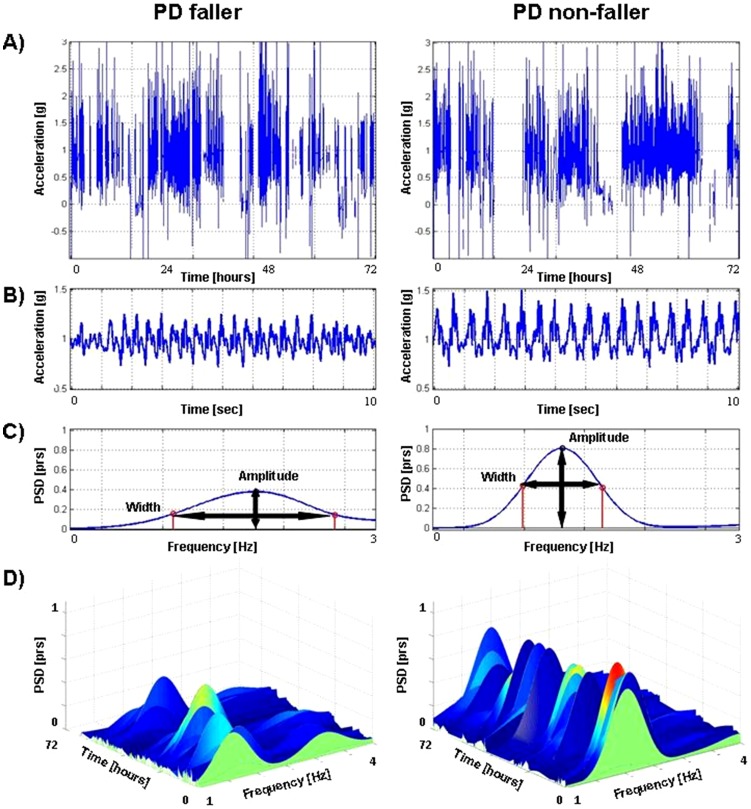
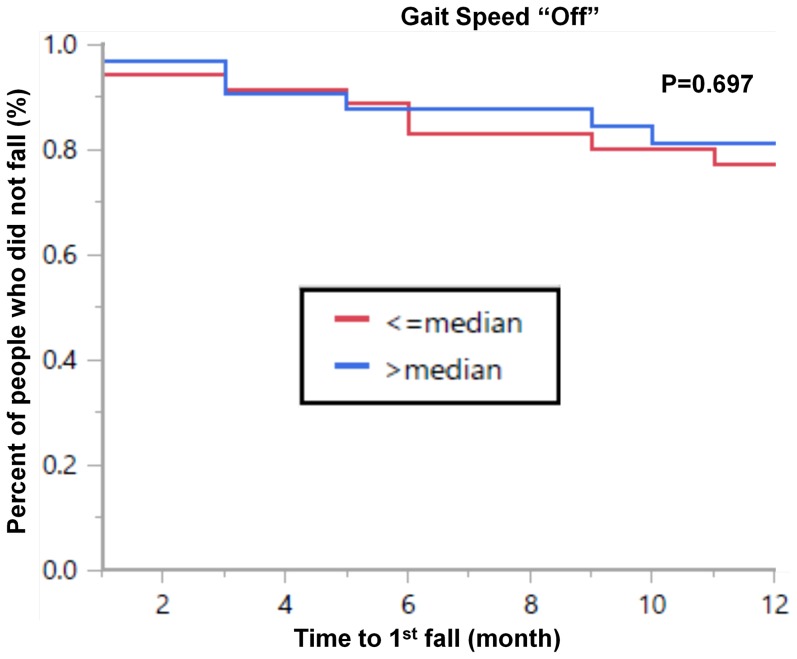
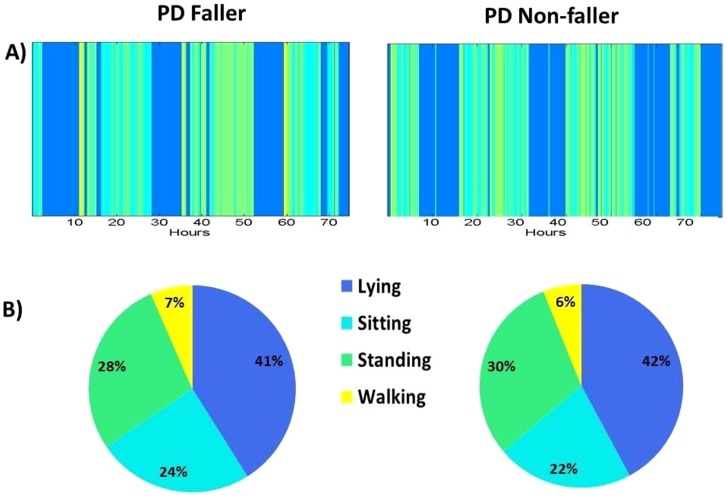
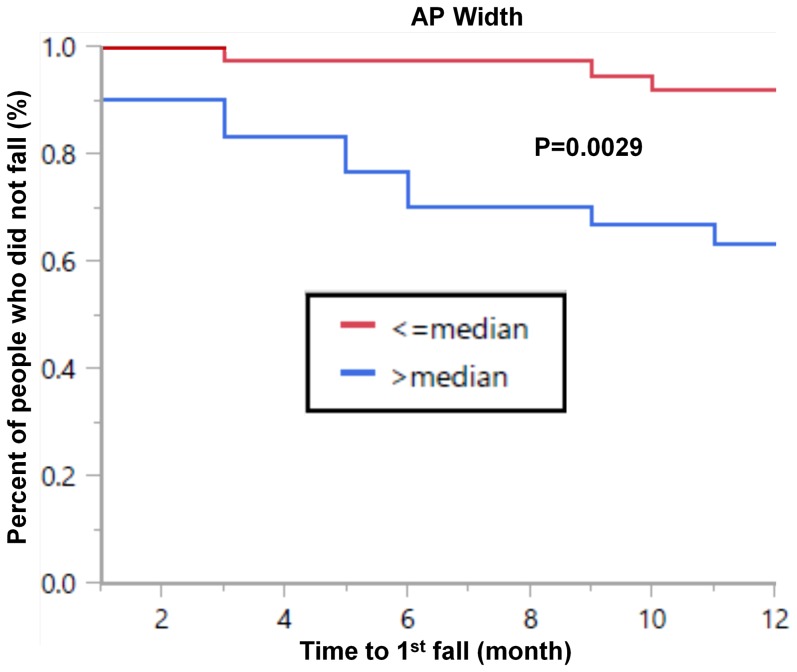
The 3 day acceleration derived measures were significantly different in fallers and non-fallers and were significantly correlated with previously validated measures of fall risk. Walking quantity was similar in the two groups. In contrast, the fallers walked with higher step-to-step variability, e.g., anterior-posterior width of the dominant frequency was larger (p = 0.012) in the fallers (0.78 ± 0.17 Hz) compared to the non-fallers (0.71 ± 0.07 Hz). Among subjects who reported no falls in the year prior to testing, sensor-derived measures predicted the time to first fall (p = 0.0034), whereas many traditional measures did not. Cox regression analysis showed that anterior-posterior width was significantly (p = 0.0039) associated with time to fall during the follow-up period, even after adjusting for traditional measures.
CONCLUSIONS/SIGNIFICANCE: These findings indicate that a body-fixed sensor worn continuously can evaluate fall risk in PD. This sensor-based approach was able to identify transition from non-faller to faller, whereas many traditional metrics were not successful. This approach may facilitate earlier detection of fall risk and may in the future, help reduce high costs associated with falls.
帕金森病(PD)患者跌倒风险较高。以往评估跌倒风险的方法基于自我报告或特定时间点的测试,因此可能不足以最佳地捕捉跌倒风险。我们首次测试了从3天连续记录中得出的指标是否与PD患者的跌倒风险相关。
107例患者(Hoehn & Yahr分期:2.6±0.7)在下背部佩戴一个小型的、固定在身体上的传感器(三维加速度计),持续3天。确定步行量(例如,每3天的步数)和质量(例如,步态变异性的频率衍生测量)。根据跌倒史将受试者分为跌倒者和非跌倒者。对受试者进行了为期一年的随访,以评估从非跌倒者转变为跌倒者的预测因素。
跌倒者和非跌倒者的3天加速度衍生测量结果存在显著差异,并且与先前验证的跌倒风险测量结果显著相关。两组的步行量相似。相比之下,跌倒者行走时步间变异性更高,例如,跌倒者(0.78±0.17Hz)的主导频率前后宽度比非跌倒者(0.71±0.07Hz)更大(p = 0.012)。在测试前一年报告无跌倒的受试者中,传感器衍生测量可预测首次跌倒时间(p = 0.0034),而许多传统测量方法则不能。Cox回归分析表明,即使在调整了传统测量方法后,前后宽度与随访期间的跌倒时间仍显著相关(p = 0.0039)。
结论/意义:这些发现表明,持续佩戴的身体固定传感器可评估PD患者的跌倒风险。这种基于传感器的方法能够识别从非跌倒者到跌倒者的转变,而许多传统指标则未成功。这种方法可能有助于更早地检测跌倒风险,并可能在未来有助于降低与跌倒相关的高昂成本。