Lou Yunwei, Zhang Guizhong, Geng Minghong, Zhang Wenqian, Cui Jian, Liu Suxia
Department of Immunology, Shandong University School of Medicine, Ji'nan, P.R. China.
PLoS One. 2014 May 7;9(5):e96508. doi: 10.1371/journal.pone.0096508. eCollection 2014.
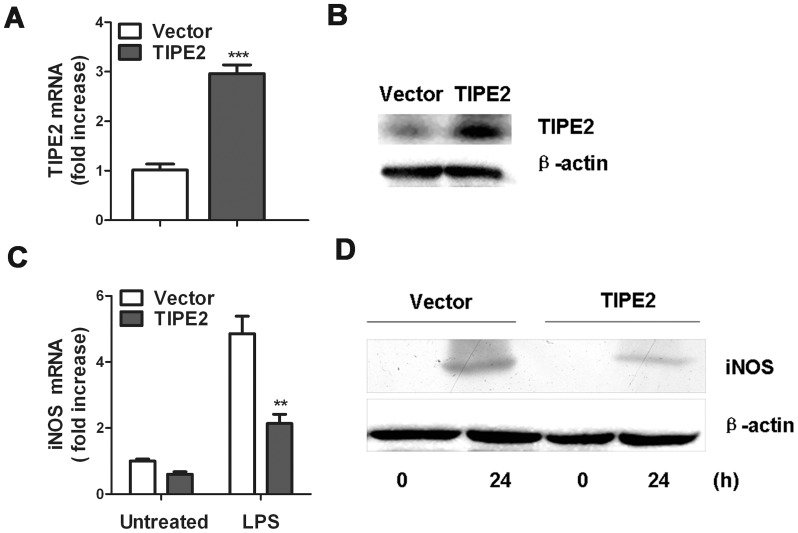
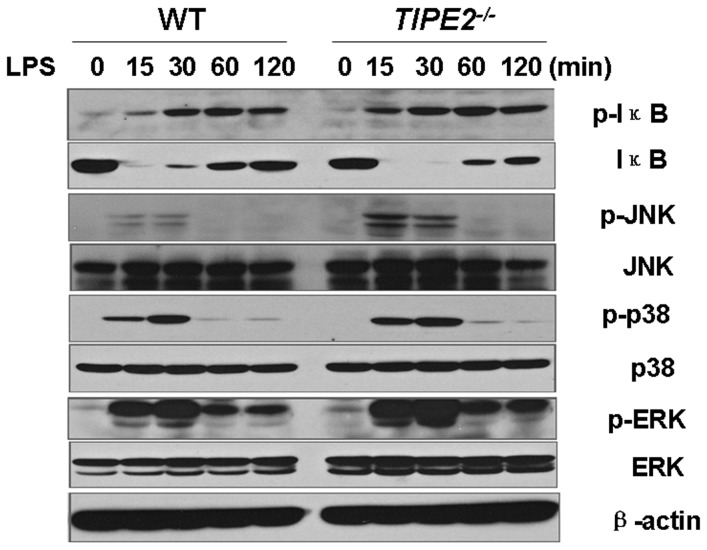
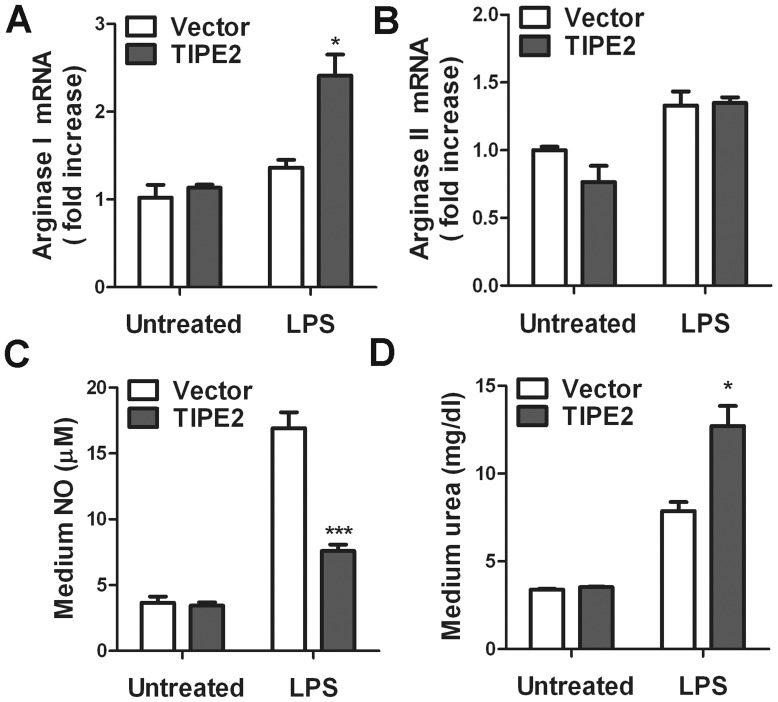
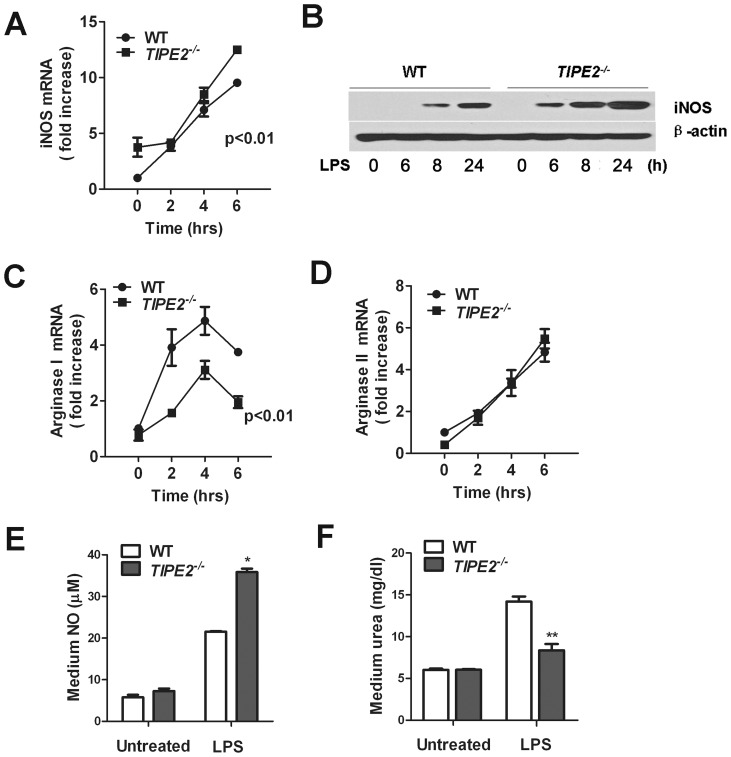
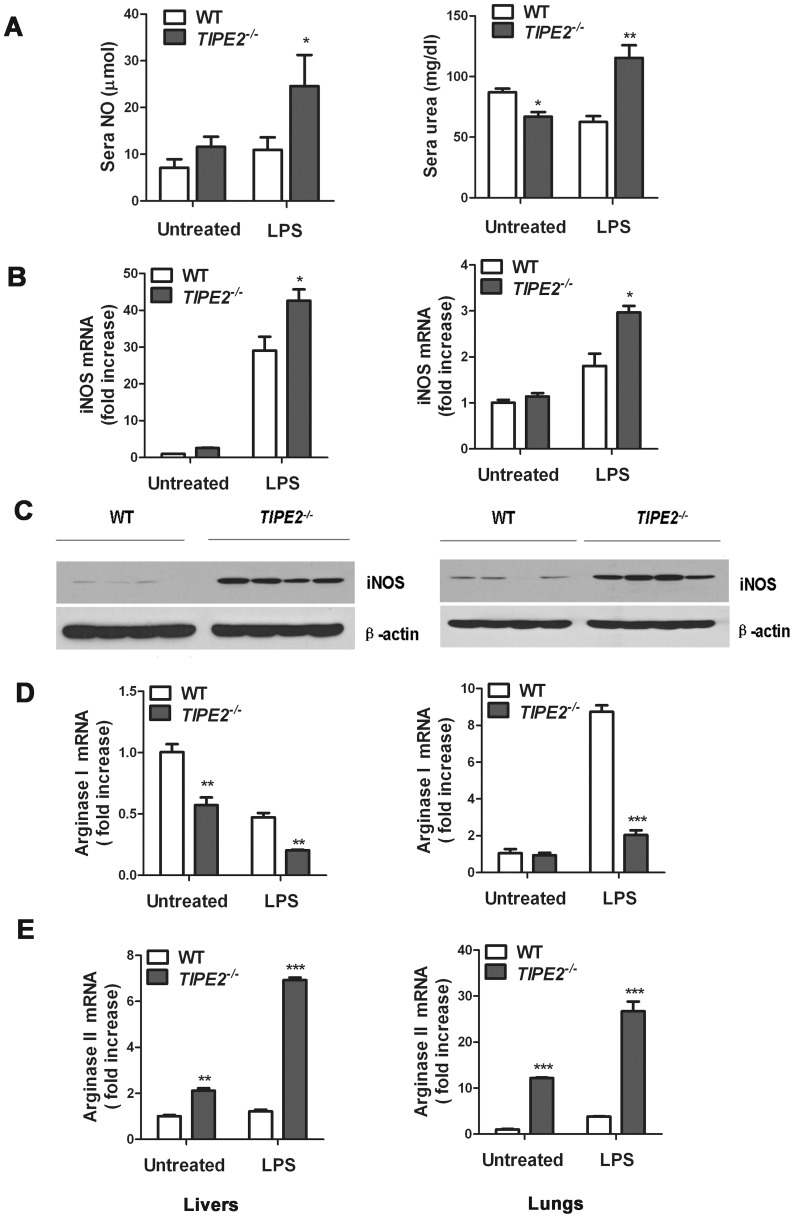
TIPE2, the tumor necrosis factor (TNF)-alpha-induced protein 8-like 2 (TNFAIP8L2), plays an essential role in maintaining immune homeostasis. It is highly expressed in macrophages and negatively regulates inflammation through inhibiting Toll-like receptor signaling. In this paper, we utilized RAW264.7 cells stably transfected with a TIPE2 expression plasmid, as well as TIPE2-deficient macrophages to study the roles of TIPE2 in LPS-induced nitric oxide (NO) and urea production. The results showed that TIPE2-deficiency significantly upregulated the levels of iNOS expression and NO production in LPS-stimulated macrophages, but decreased mRNA levels of arginase I and urea production. However, TIPE2 overexpression in macrophages was capable of downregulating protein levels of LPS-induced iNOS and NO, but generated greater levels of arginase I and urea production. Furthermore, TIPE2-/- mice had higher iNOS protein levels in lung and liver and higher plasma NO concentrations, but lower levels of liver arginase I compared to LPS-treated WT controls. Interestingly, significant increases in IκB degradation and phosphorylation of JNK, p38, and IκB were observed in TIPE2-deficient macrophages following LPS challenge. These results strongly suggest that TIPE2 plays an important role in shifting L-arginase metabolism from production of NO to urea, during host inflammatory response.
TIPE2,即肿瘤坏死因子(TNF)-α诱导蛋白8样2(TNFAIP8L2),在维持免疫稳态中发挥着至关重要的作用。它在巨噬细胞中高度表达,并通过抑制Toll样受体信号传导来负向调节炎症。在本文中,我们利用稳定转染了TIPE2表达质粒的RAW264.7细胞以及TIPE2缺陷型巨噬细胞,来研究TIPE2在脂多糖(LPS)诱导的一氧化氮(NO)和尿素生成中的作用。结果表明,TIPE2缺陷显著上调了LPS刺激的巨噬细胞中诱导型一氧化氮合酶(iNOS)的表达水平和NO生成,但降低了精氨酸酶I的mRNA水平和尿素生成。然而,巨噬细胞中TIPE2的过表达能够下调LPS诱导的iNOS和NO的蛋白水平,但产生更高水平的精氨酸酶I和尿素生成。此外,与LPS处理的野生型对照相比,TIPE2基因敲除小鼠的肺和肝脏中iNOS蛋白水平更高,血浆NO浓度更高,但肝脏精氨酸酶I水平更低。有趣的是,在LPS刺激后,TIPE2缺陷型巨噬细胞中IκB的降解以及JNK、p38和IκB的磷酸化显著增加。这些结果有力地表明,在宿主炎症反应期间,TIPE2在将L-精氨酸代谢从NO生成转变为尿素生成过程中发挥着重要作用。