Macossay-Castillo Mauricio, Kosol Simone, Tompa Peter, Pancsa Rita
Vlaams Instituut voor Biotechnologie (VIB) Department of Structural Biology, Vrije Universiteit Brussel, Brussels, Belgium.
Vlaams Instituut voor Biotechnologie (VIB) Department of Structural Biology, Vrije Universiteit Brussel, Brussels, Belgium; Institute of Enzymology, Research Centre for Natural Sciences, Hungarian Academy of Sciences, Budapest, Hungary.
PLoS Comput Biol. 2014 May 8;10(5):e1003607. doi: 10.1371/journal.pcbi.1003607. eCollection 2014 May.
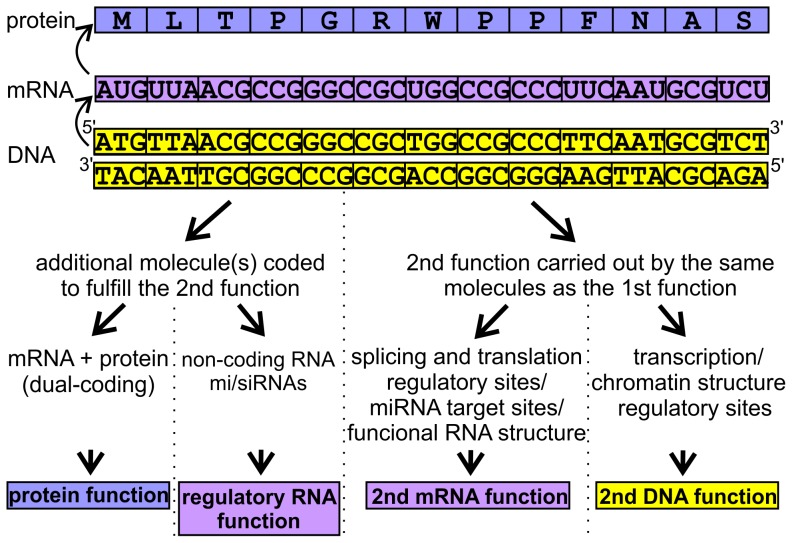
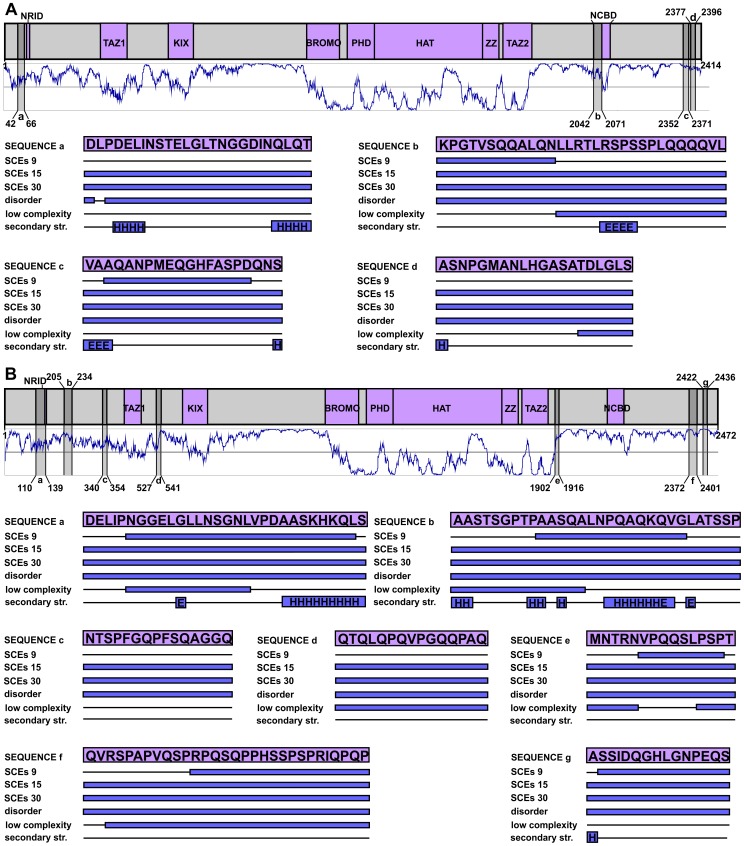
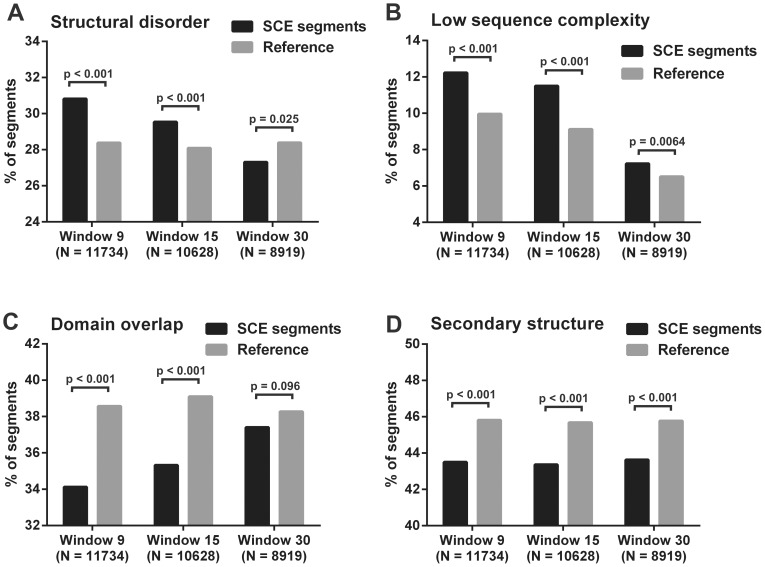
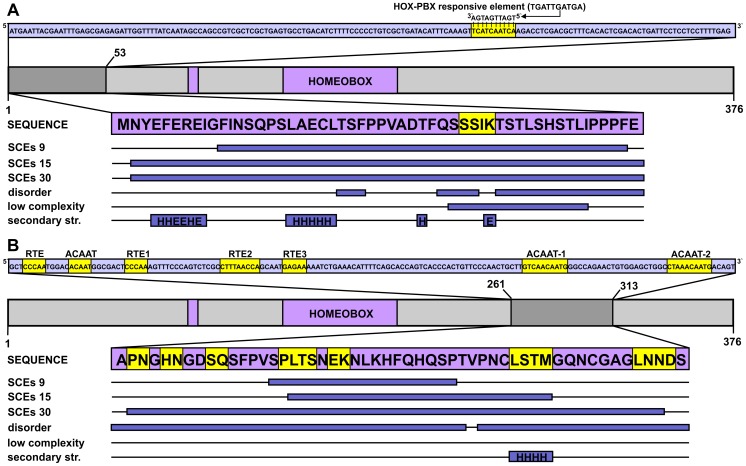
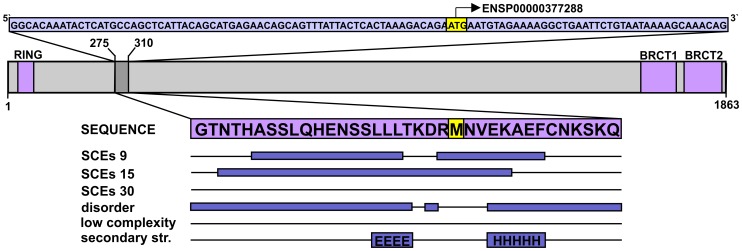
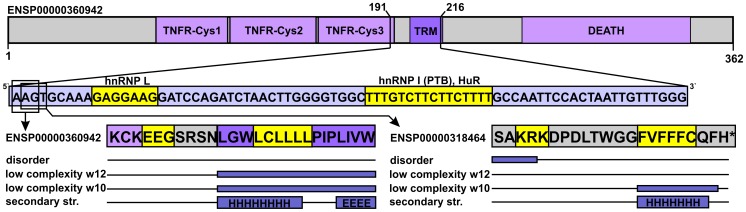
Synonymous constraint elements (SCEs) are protein-coding genomic regions with very low synonymous mutation rates believed to carry additional, overlapping functions. Thousands of such potentially multi-functional elements were recently discovered by analyzing the levels and patterns of evolutionary conservation in human coding exons. These elements provide a good opportunity to improve our understanding of how the redundant nature of the genetic code is exploited in the cell. Our premise is that the protein segments encoded by such elements might better comply with the increased functional demands if they are structurally less constrained (i.e. intrinsically disordered). To test this idea, we investigated the protein segments encoded by SCEs with computational tools to describe the underlying structural properties. In addition to SCEs, we examined the level of disorder, secondary structure, and sequence complexity of protein regions overlapping with experimentally validated splice regulatory sites. We show that multi-functional gene regions translate into protein segments that are significantly enriched in structural disorder and compositional bias, while they are depleted in secondary structure and domain annotations compared to reference segments of similar lengths. This tendency suggests that relaxed protein structural constraints provide an advantage when accommodating multiple overlapping functions in coding regions.
同义约束元件(SCEs)是蛋白质编码基因组区域,其同义突变率极低,被认为具有额外的重叠功能。最近,通过分析人类编码外显子中的进化保守水平和模式,发现了数千个这样潜在的多功能元件。这些元件为增进我们对细胞如何利用遗传密码的冗余性质的理解提供了一个很好的机会。我们的前提是,如果此类元件编码的蛋白质片段在结构上受到的约束较少(即内在无序),那么它们可能更好地满足增加的功能需求。为了验证这一想法,我们使用计算工具研究了SCEs编码的蛋白质片段,以描述其潜在的结构特性。除了SCEs,我们还研究了与经实验验证的剪接调控位点重叠的蛋白质区域的无序程度、二级结构和序列复杂性。我们发现,多功能基因区域翻译出的蛋白质片段在结构无序和组成偏倚方面显著富集,而与相似长度的参考片段相比,它们在二级结构和结构域注释方面则有所减少。这种趋势表明,在编码区域容纳多种重叠功能时,宽松的蛋白质结构约束具有优势。