Shi Lihong, Sierant M C, Gurdziel Katherine, Zhu Fan, Cui Shuaiying, Kolodziej Katarzyna E, Strouboulis John, Guan Yuanfang, Tanabe Osamu, Lim Kim-Chew, Engel James Douglas
Department of Cell and Developmental Biology, University of Michigan Medical School, Ann Arbor, Michigan, United States of America.
Department of Cell and Developmental Biology, University of Michigan Medical School, Ann Arbor, Michigan, United States of America; Department of Computational Medicine and Bioinformatics, University of Michigan Medical School, Ann Arbor, Michigan, United States of America.
PLoS Genet. 2014 May 8;10(5):e1004339. doi: 10.1371/journal.pgen.1004339. eCollection 2014 May.
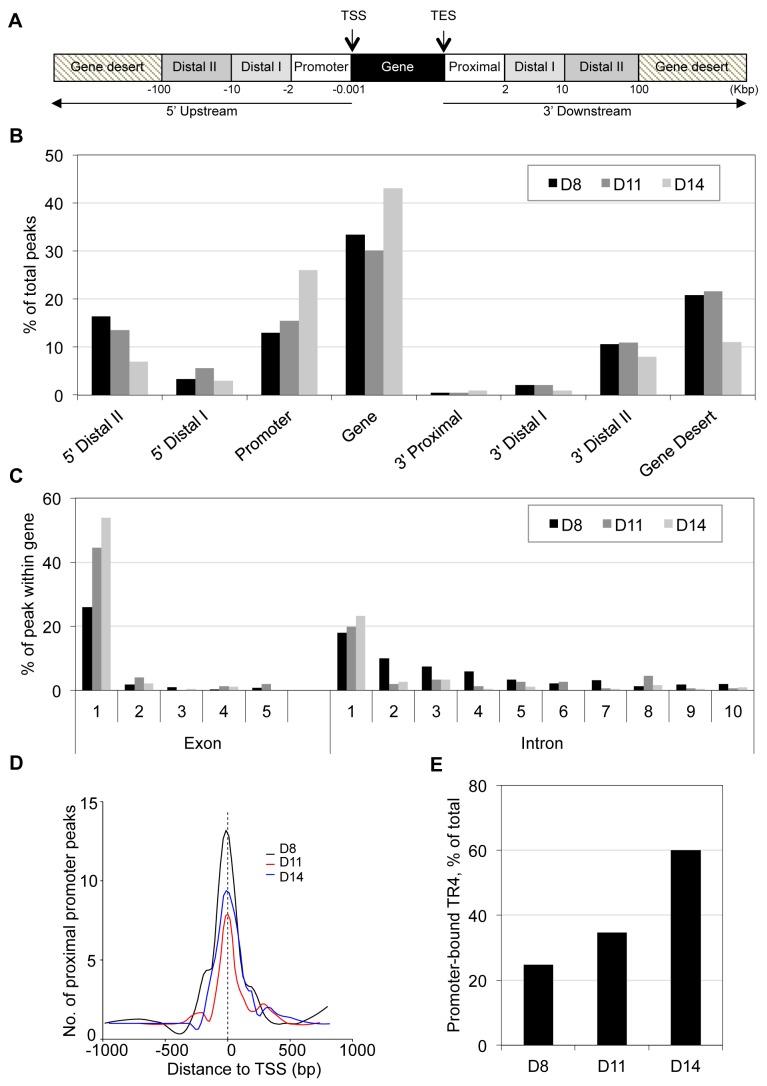
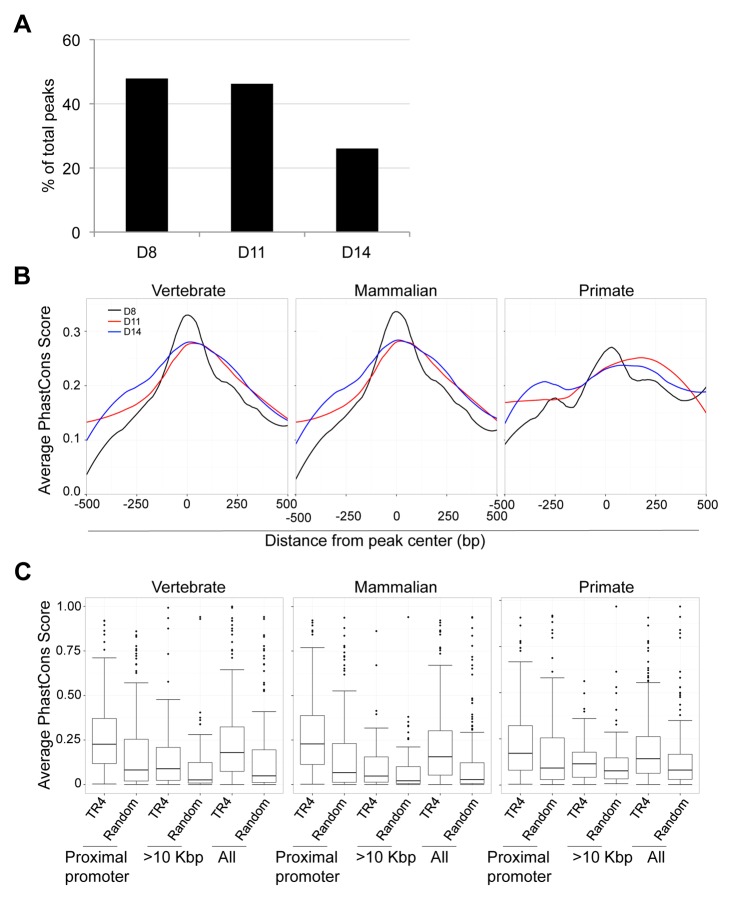
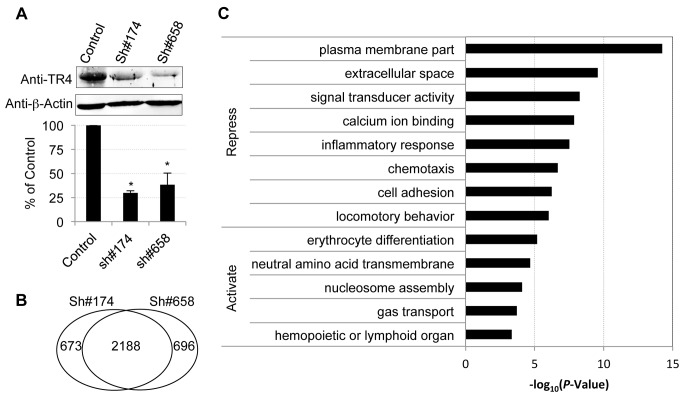
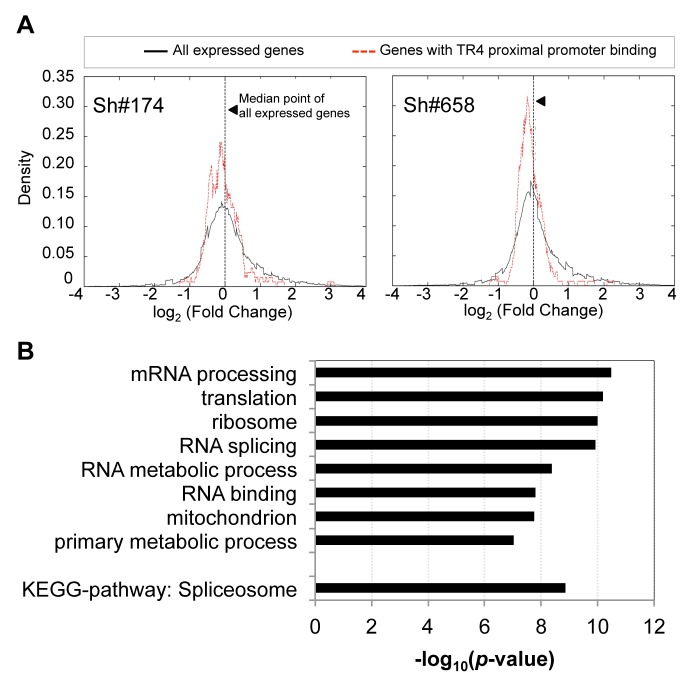
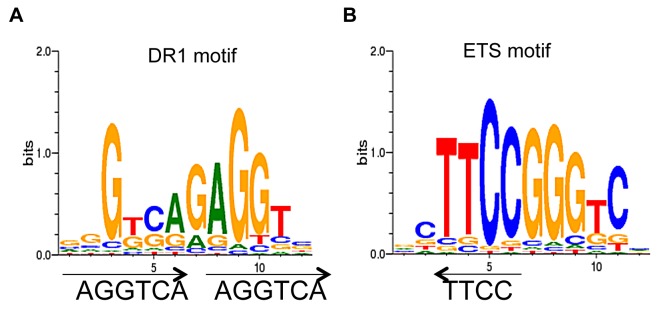
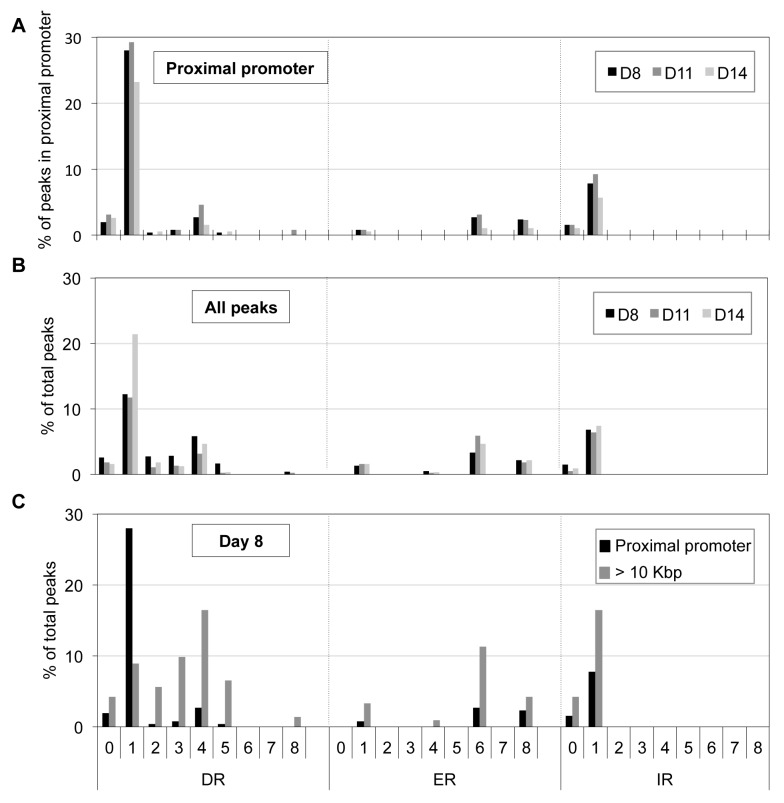
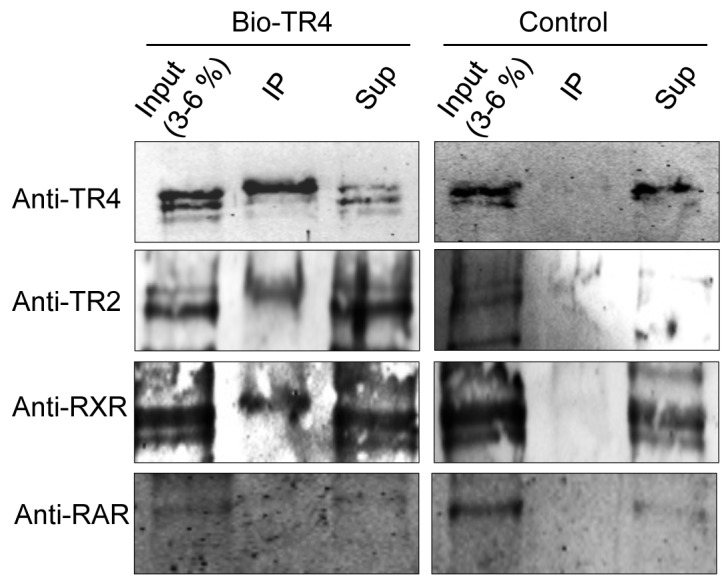
We previously reported that TR2 and TR4 orphan nuclear receptors bind to direct repeat (DR) elements in the ε- and γ-globin promoters, and act as molecular anchors for the recruitment of epigenetic corepressors of the multifaceted DRED complex, thereby leading to ε- and γ-globin transcriptional repression during definitive erythropoiesis. Other than the ε- and γ-globin and the GATA1 genes, TR4-regulated target genes in human erythroid cells remain unknown. Here, we identified TR4 binding sites genome-wide using chromatin immunoprecipitation followed by massively parallel sequencing (ChIP-seq) as human primary CD34(+) hematopoietic progenitors differentiated progressively to late erythroid precursors. We also performed whole transcriptome analyses by RNA-seq to identify TR4 downstream targets after lentiviral-mediated TR4 shRNA knockdown in erythroid cells. Analyses from combined ChIP-seq and RNA-seq datasets indicate that DR1 motifs are more prevalent in the proximal promoters of TR4 direct target genes, which are involved in basic biological functions (e.g., mRNA processing, ribosomal assembly, RNA splicing and primary metabolic processes). In contrast, other non-DR1 repeat motifs (DR4, ER6 and IR1) are more prevalent at gene-distal TR4 binding sites. Of these, approximately 50% are also marked with epigenetic chromatin signatures (such as P300, H3K27ac, H3K4me1 and H3K27me3) associated with enhancer function. Thus, we hypothesize that TR4 regulates gene transcription via gene-proximal DR1 sites as TR4/TR2 heterodimers, while it can associate with novel nuclear receptor partners (such as RXR) to bind to distant non-DR1 consensus sites. In summary, this study reveals that the TR4 regulatory network is far more complex than previously appreciated and that TR4 regulates basic, essential biological processes during the terminal differentiation of human erythroid cells.
我们之前报道过,TR2和TR4孤儿核受体与ε-和γ-珠蛋白启动子中的直接重复(DR)元件结合,并作为分子锚招募多方面的DRED复合物的表观遗传共抑制因子,从而在确定性红细胞生成过程中导致ε-和γ-珠蛋白转录抑制。除了ε-和γ-珠蛋白以及GATA1基因外,人类红系细胞中TR4调控的靶基因仍然未知。在这里,我们使用染色质免疫沉淀结合大规模平行测序(ChIP-seq),在人类原代CD34(+)造血祖细胞逐渐分化为晚期红系前体的过程中,全基因组鉴定了TR4结合位点。我们还通过RNA-seq进行了全转录组分析,以鉴定红系细胞中慢病毒介导的TR4 shRNA敲低后的TR4下游靶标。对ChIP-seq和RNA-seq数据集的联合分析表明,DR1基序在TR4直接靶基因的近端启动子中更为普遍,这些基因参与基本生物学功能(如mRNA加工、核糖体组装、RNA剪接和初级代谢过程)。相比之下,其他非DR1重复基序(DR4、ER6和IR1)在基因远端的TR4结合位点更为普遍。其中,约50%也带有与增强子功能相关的表观遗传染色质特征(如P300、H3K27ac、H3K4me1和H3K27me3)。因此我们推测,TR4作为TR4/TR2异二聚体通过基因近端的DR1位点调控基因转录,而它可以与新的核受体伴侣(如RXR)结合,以结合到远处的非DR1共有位点。总之,这项研究表明,TR4调控网络比之前认为的要复杂得多,并且TR4在人类红系细胞终末分化过程中调控基本的、必不可少的生物学过程。