Kiefersauer Reiner, Grandl Brigitte, Krapp Stephan, Huber Robert
Max-Planck-Institut für Biochemie, Am Klopferspitz 18, 82152 Martinsried, Germany.
Proteros Biostructures GmbH, Bunsenstrasse 7a, 82152 Martinsried, Germany.
Acta Crystallogr D Biol Crystallogr. 2014 May;70(Pt 5):1224-32. doi: 10.1107/S1399004714002223. Epub 2014 Apr 26.
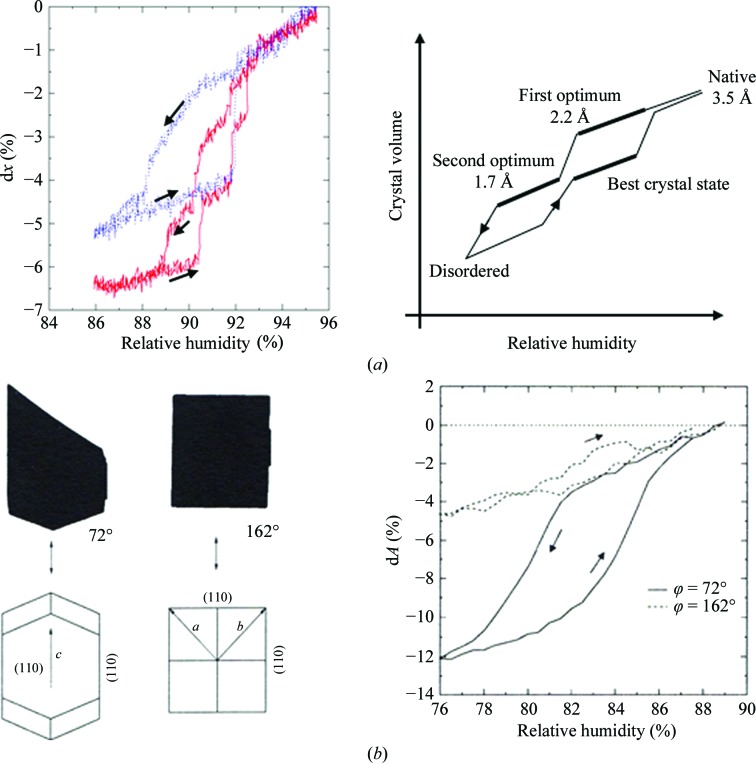
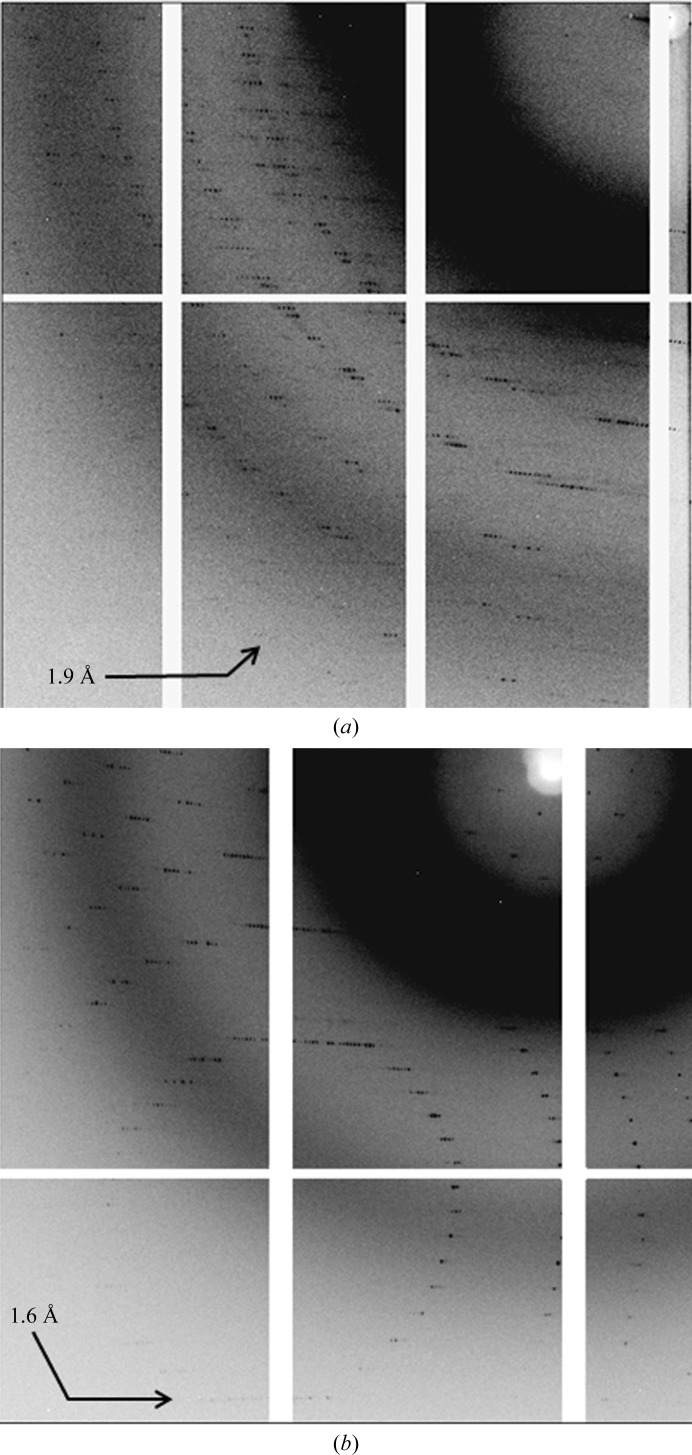
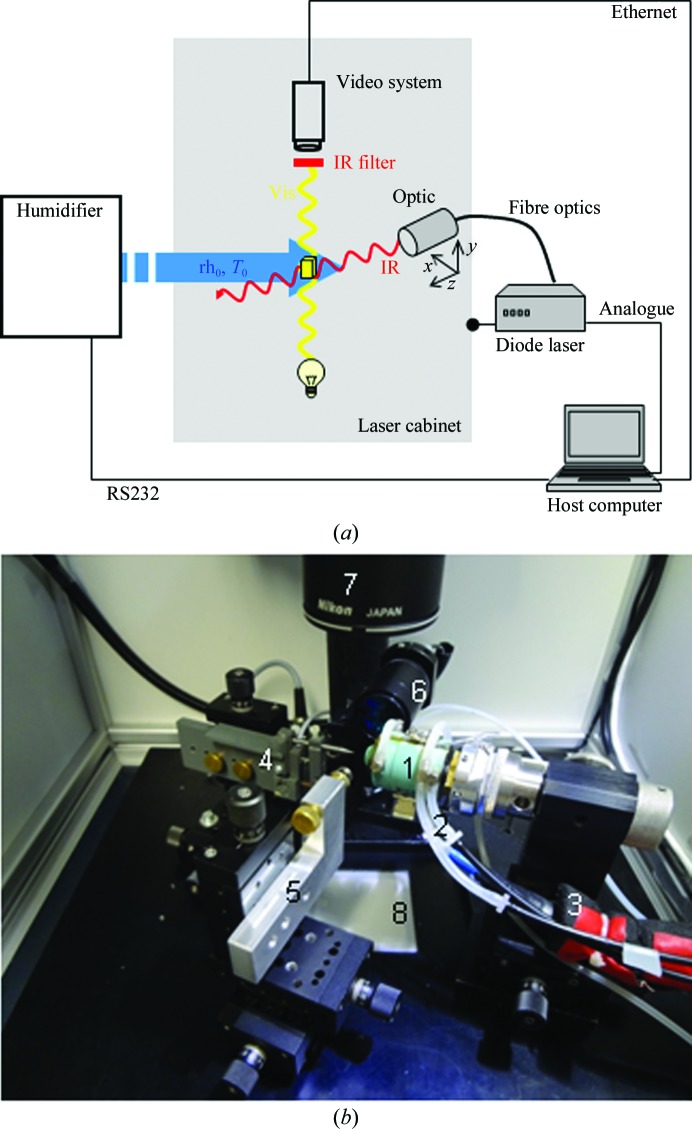
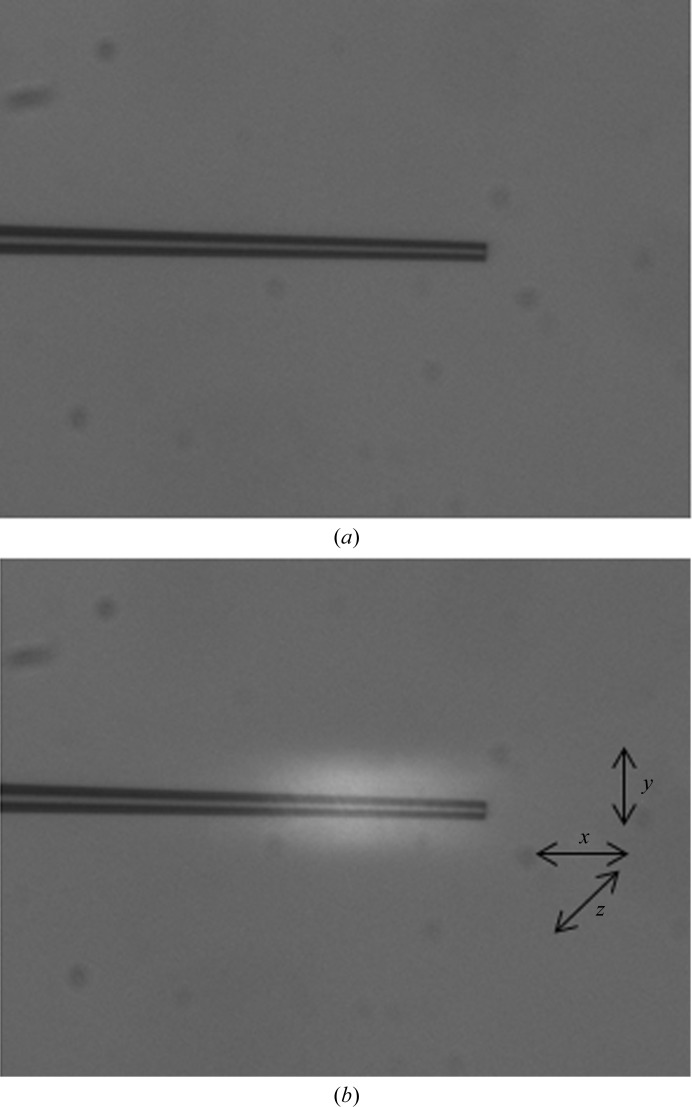
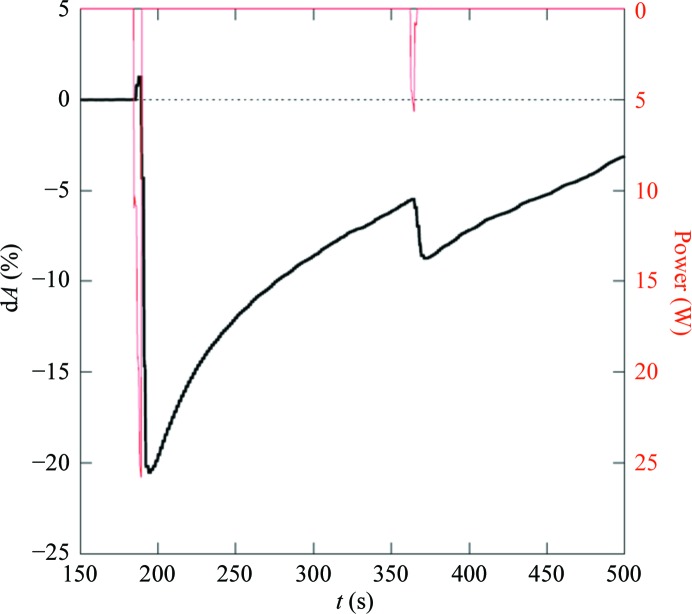
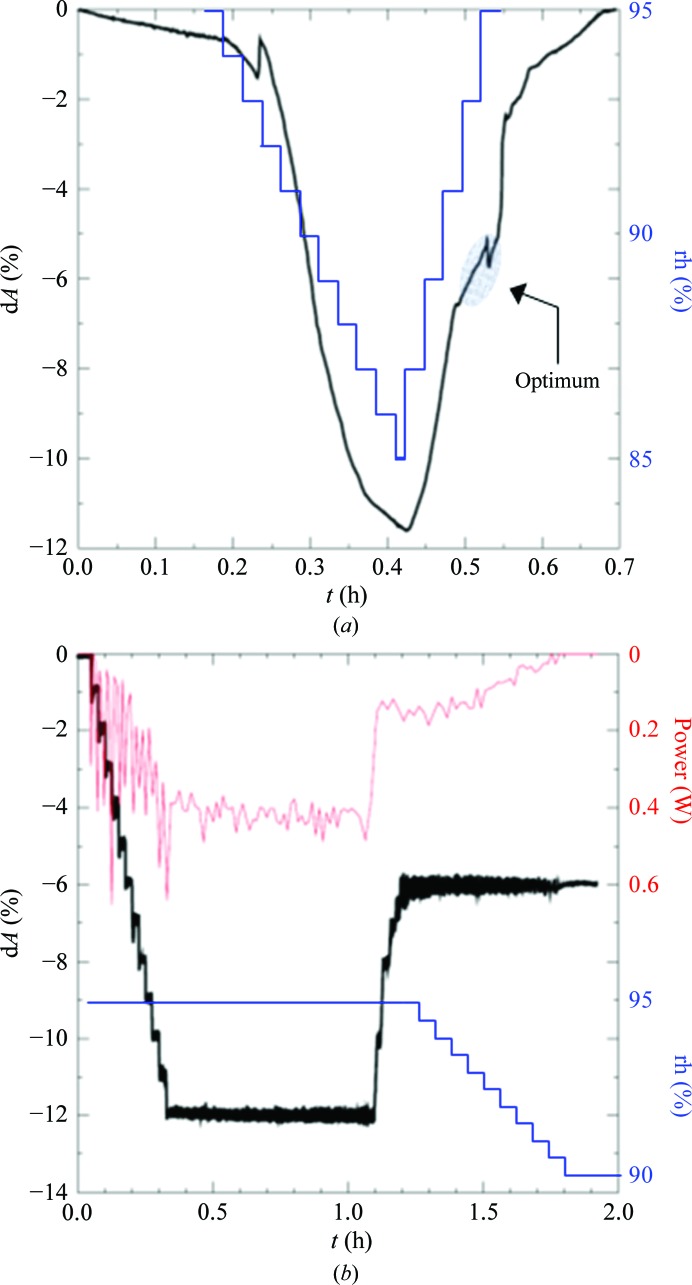
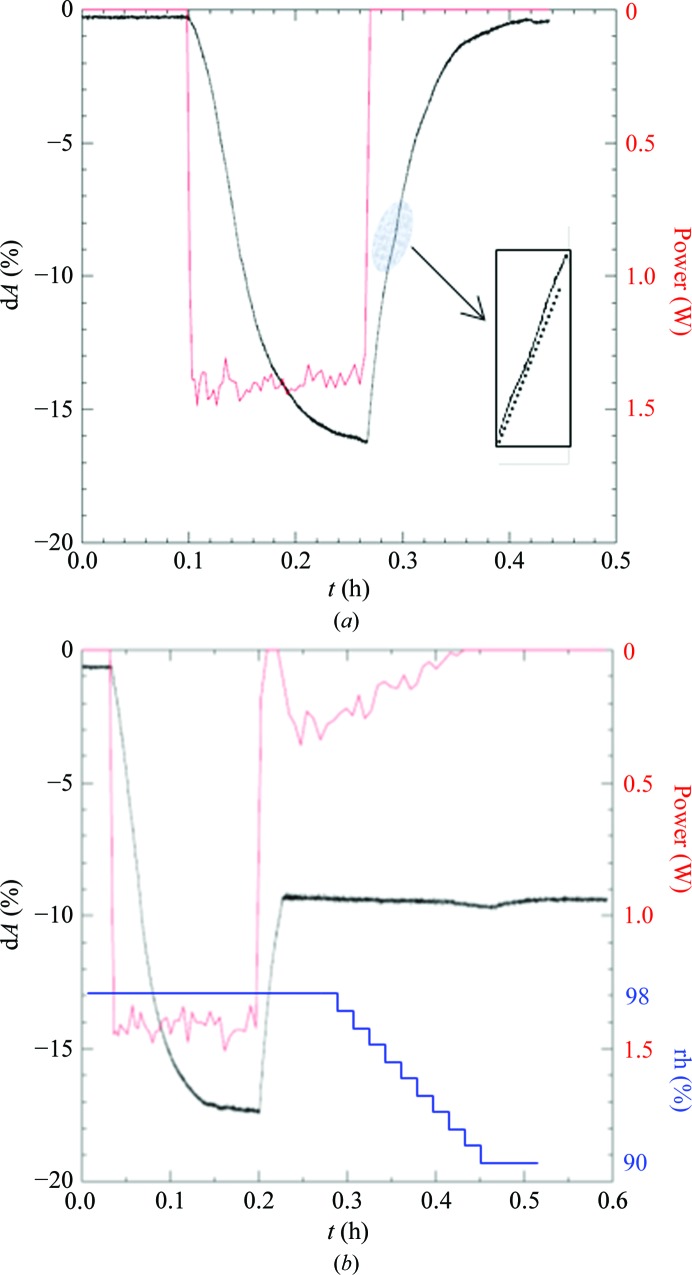
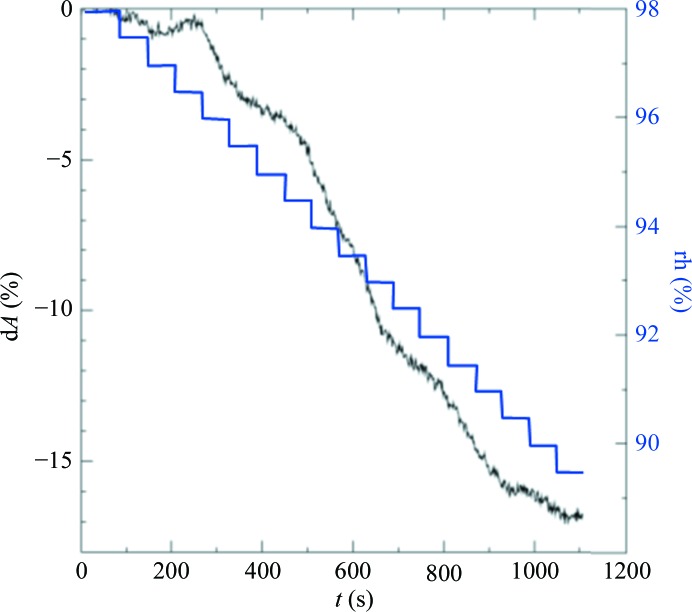
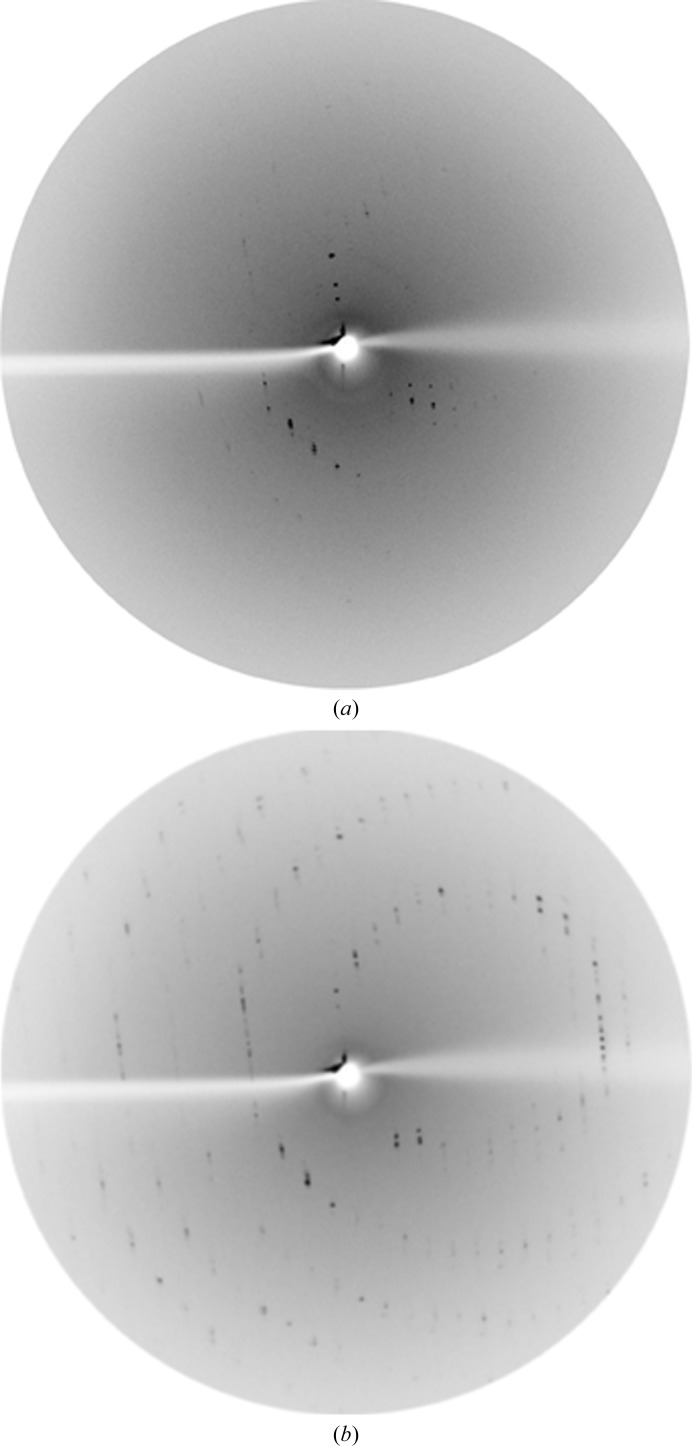
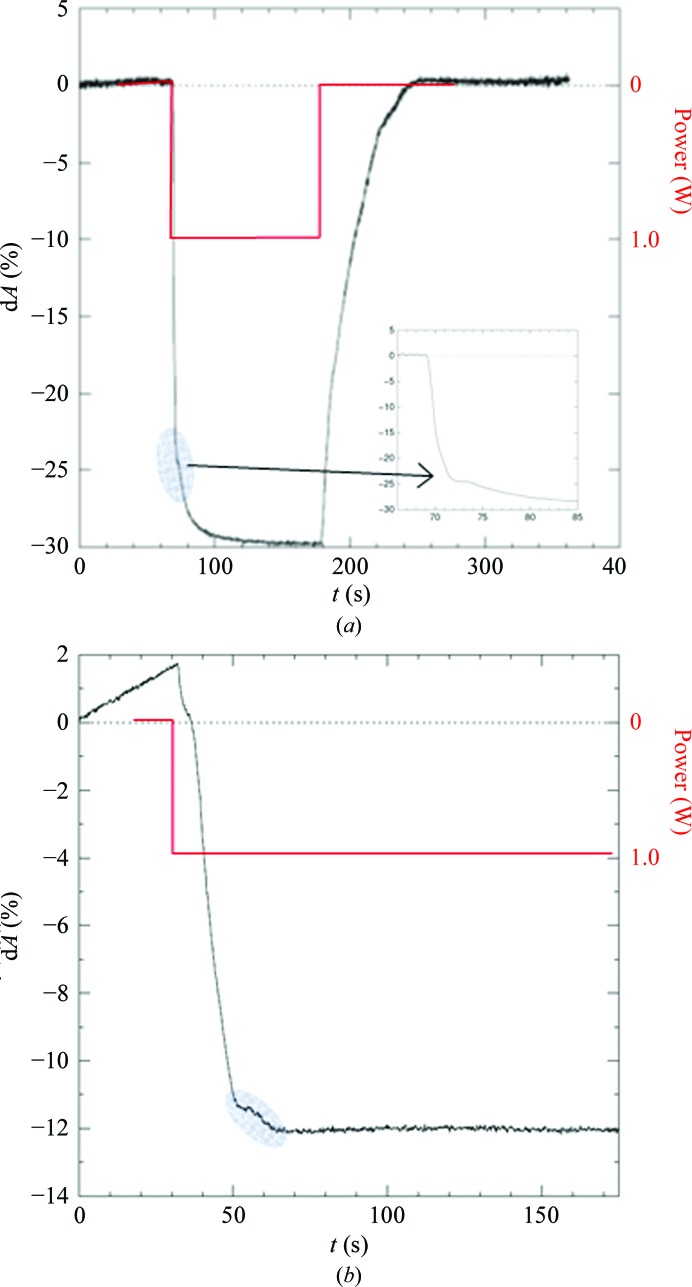
A method and the design of instrumentation, and its preliminary practical realisation, including test experiments, with the object of inducing phase changes of biomolecular crystals by controlled dehydration through heating with infrared (IR) light are described. The aim is to generate and select crystalline phases through transformation in the solid state which have improved order (higher resolution in X-ray diffraction experiments) and reduced mosaic spread (more uniformly aligned mosaic blocks) for diffraction data collection and analysis. The crystal is heated by pulsed and/or constant IR laser irradiation. Loss of crystal water following heating and its reabsorption through equilibration with the environment is measured optically by a video system. Heating proved superior to traditional controlled dehydration by humidity change for the test cases CODH (carbon monoxide dehydrogenase) and CLK2 (a protein kinase). Heating with IR light is experimentally simple and offers an exploration of a much broader parameter space than the traditional method, as it allows the option of varying the rate of phase changes through modification of the IR pulse strength, width and repeat frequency. It impacts the crystal instantaneously, isotropically and homogeneously, and is therefore expected to cause less mechanical stress.
本文描述了一种方法、仪器设计及其初步实际实现,包括测试实验,其目的是通过红外(IR)光加热控制脱水来诱导生物分子晶体的相变。目的是通过固态转变产生并选择具有更高有序度(在X射线衍射实验中具有更高分辨率)和更小镶嵌扩展(镶嵌块排列更均匀)的晶相,用于衍射数据收集和分析。晶体通过脉冲和/或连续红外激光照射加热。加热后晶体水的损失及其通过与环境平衡的再吸收通过视频系统进行光学测量。对于测试案例一氧化碳脱氢酶(CODH)和一种蛋白激酶(CLK2),加热被证明优于传统的通过湿度变化进行的控制脱水。红外光加热在实验上很简单,并且与传统方法相比,它提供了对更广泛参数空间的探索,因为它允许通过改变红外脉冲强度、宽度和重复频率来改变相变速率。它对晶体的影响是即时、各向同性和均匀的,因此预计会产生较小的机械应力。