Ross Breyan, Krapp Stephan, Geiss-Friedlander Ruth, Littmann Walter, Huber Robert, Kiefersauer Reiner
Max Planck Institut für Biochemie, D-82152 Martinsried, Germany.
Proteros Biostructures GmbH, D-82152 Martinsried, Germany.
J Appl Crystallogr. 2021 May 28;54(Pt 3):895-902. doi: 10.1107/S1600576721003551. eCollection 2021 Jun 1.
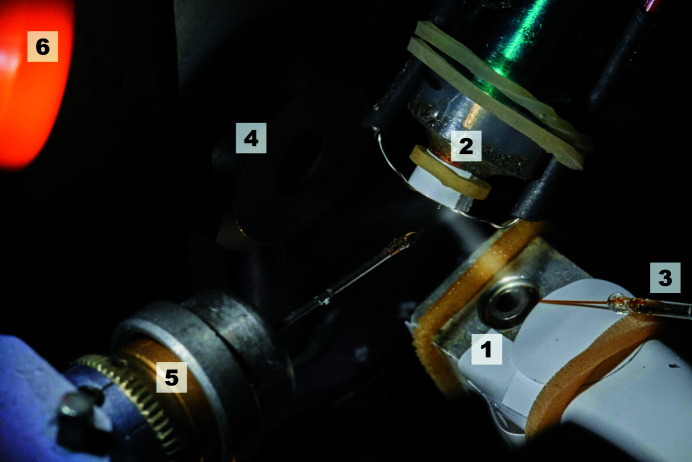
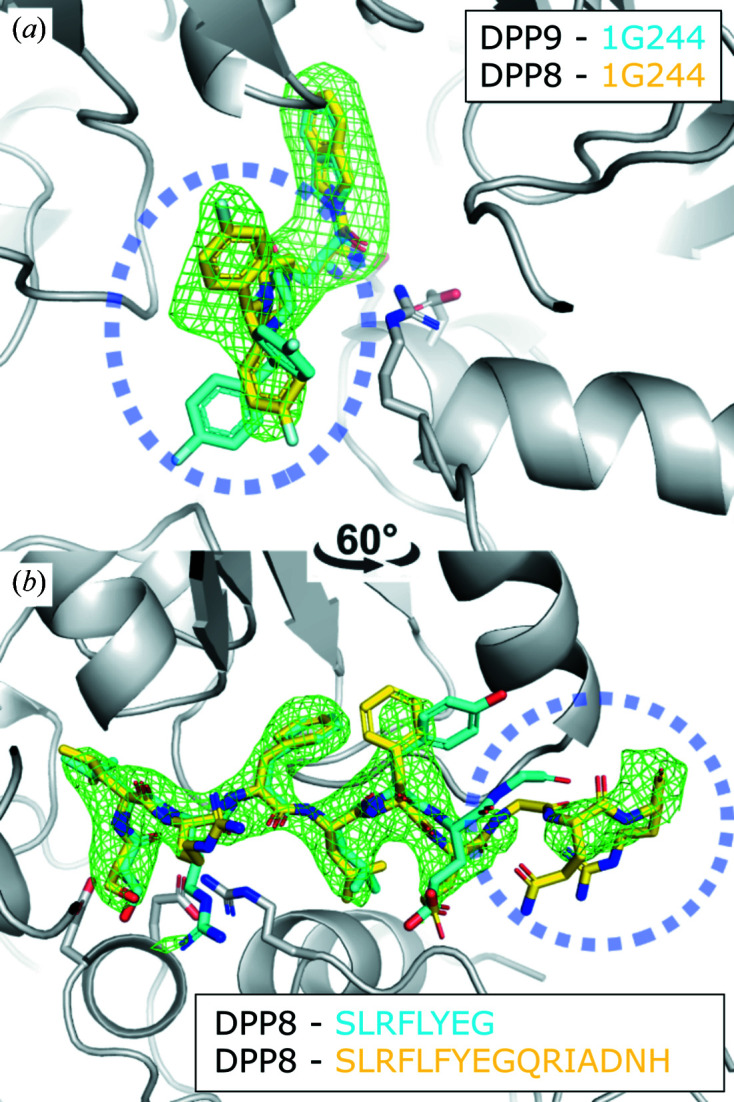
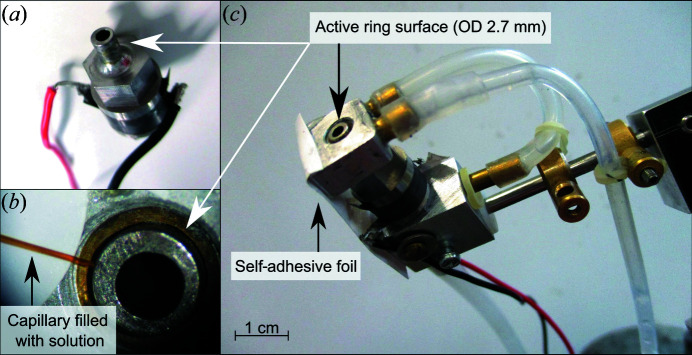
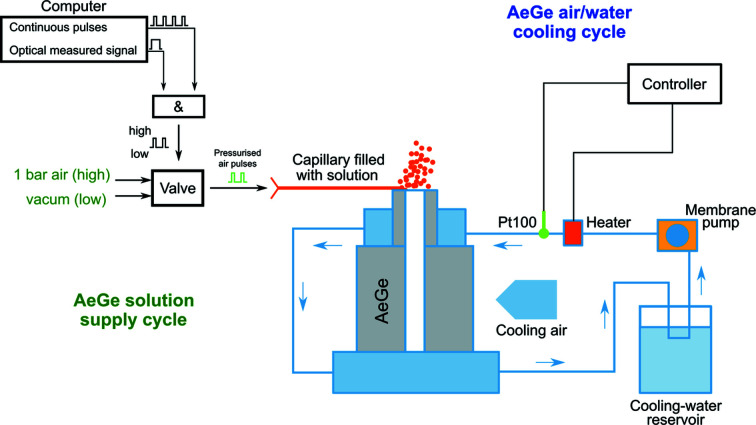
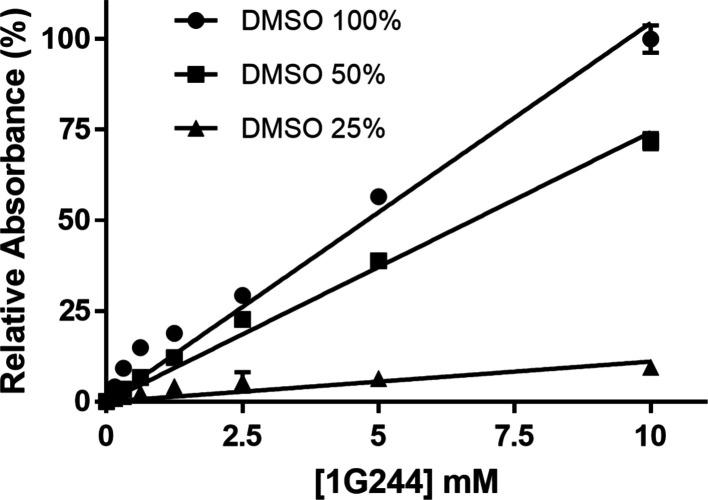
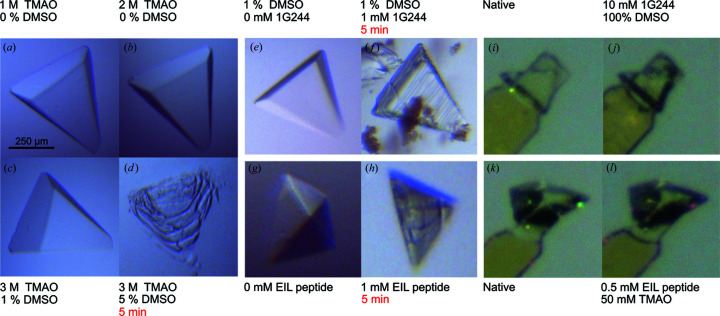
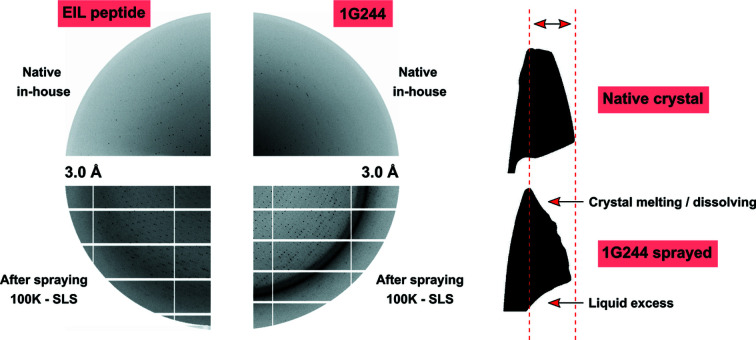
Soaking of macromolecular crystals allows the formation of complexes via diffusion of molecules into a preformed crystal for structural analysis. Soaking offers various advantages over co-crystallization, small samples and high-throughput experimentation. However, this method has disadvantages, such as inducing mechanical stress on crystals and reduced success rate caused by low affinity/solubility of the ligand. To bypass these issues, the Picodropper was previously developed in the authors' laboratory. This technique aimed to deliver small volumes of compound solution in response to crystal dehydration supported by the Free Mounting System humidity control or by IR-laser-induced protein crystal transformation. Herein, a new related soaking development, the Aerosol-Generator, is introduced. This device delivers compounds onto the solution-free surface of protein crystals using an ultrasonic technique. The produced aerosol stream enables an easier and more accurate control of solution volumes, reduced crystal handling, and crystal-size-independent soaking. The Aerosol-Generator has been used to produce complexes of DPP8 crystals, where otherwise regular soaking did not achieve complex formation. These results demonstrate the potential of this device in challenging ligand-binding scenarios and contribute to further understanding of DPP8 inhibitor binding.
浸泡大分子晶体可通过分子扩散到预先形成的晶体中形成复合物,用于结构分析。与共结晶相比,浸泡具有多种优势,如所需样品量小且能进行高通量实验。然而,这种方法也有缺点,比如会对晶体产生机械应力,以及由于配体亲和力/溶解度低导致成功率降低。为了克服这些问题,作者所在实验室此前开发了微量滴管技术。该技术旨在通过自由安装系统湿度控制或红外激光诱导的蛋白质晶体转变所支持的晶体脱水,来递送小体积的化合物溶液。在此,介绍一种新的相关浸泡技术进展——气溶胶发生器。该装置利用超声技术将化合物递送至蛋白质晶体的无溶液表面。产生的气溶胶流能更轻松、准确地控制溶液体积,减少对晶体的操作,且浸泡不受晶体大小的影响。气溶胶发生器已用于生成DPP8晶体的复合物,而常规浸泡无法实现复合物的形成。这些结果证明了该装置在具有挑战性的配体结合情况下的潜力,并有助于进一步了解DPP8抑制剂的结合。