Jaworski Elizabeth, Saifuddin Mohammed, Sampey Gavin, Shafagati Nazly, Van Duyne Rachel, Iordanskiy Sergey, Kehn-Hall Kylene, Liotta Lance, Petricoin Emanuel, Young Mary, Lepene Benjamin, Kashanchi Fatah
National Center for Biodefense & Infectious Diseases, George Mason University, Manassas, Virginia, United States of America.
National Center for Biodefense & Infectious Diseases, George Mason University, Manassas, Virginia, United States of America; Department of Microbiology, Immunology, and Tropical Medicine, George Washington University, Washington, District of Columbia, United States of America.
PLoS One. 2014 May 12;9(5):e96778. doi: 10.1371/journal.pone.0096778. eCollection 2014.
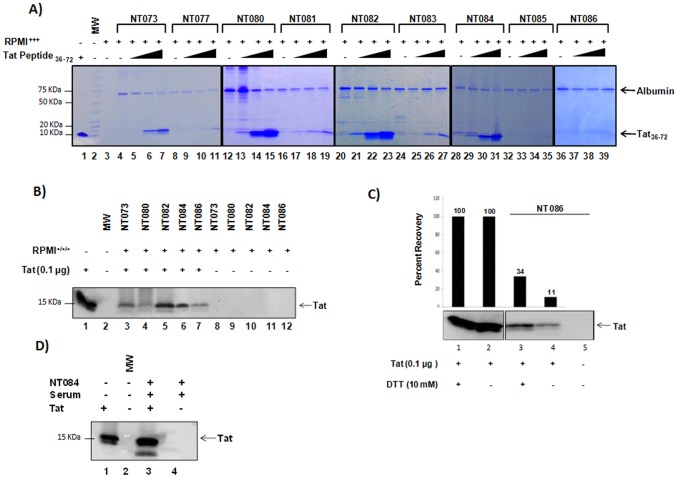
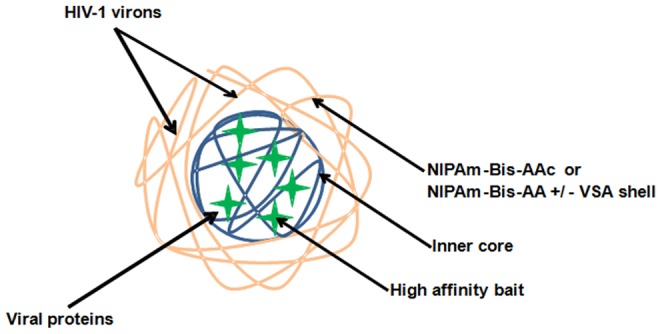
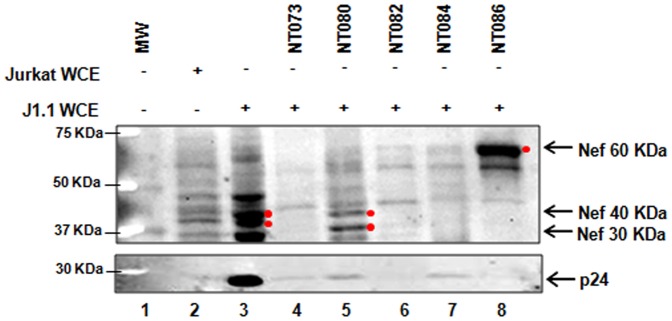
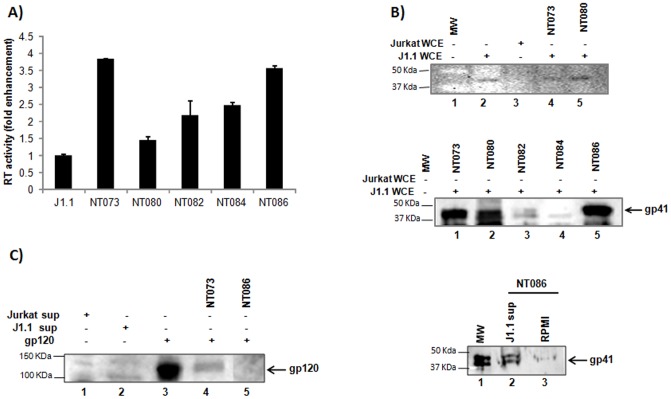
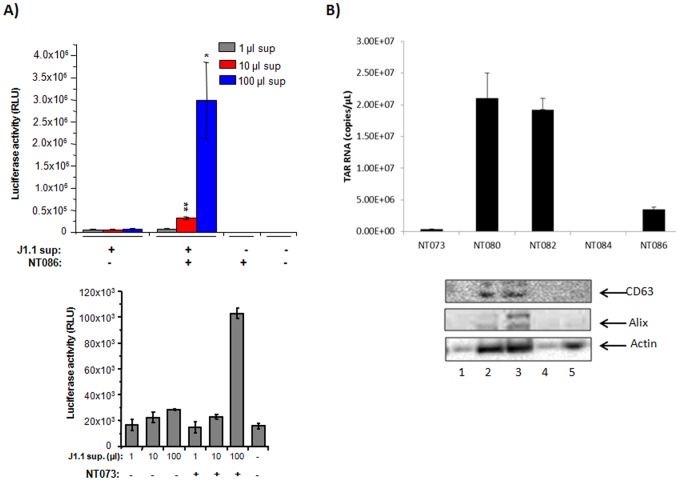
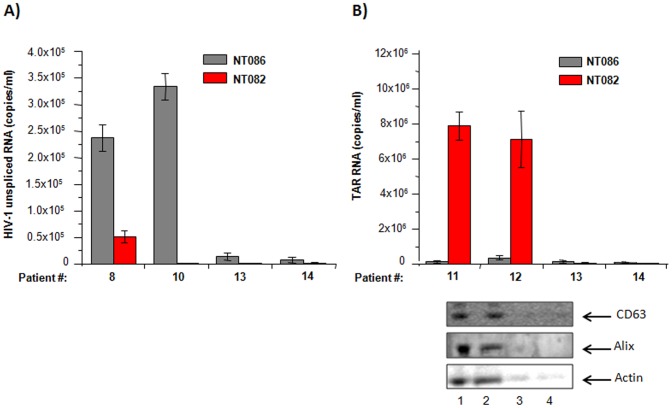
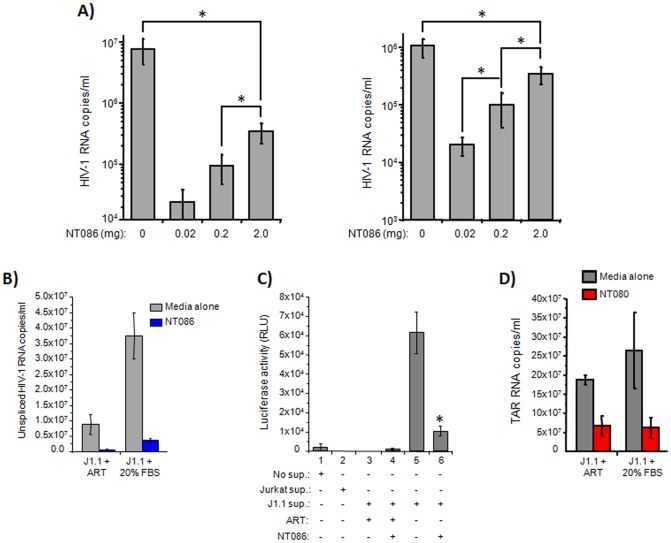
HIV-1 infection results in a chronic but incurable illness since long-term HAART can keep the virus to an undetectable level. However, discontinuation of therapy rapidly increases viral burden. Moreover, patients under HAART frequently develop various metabolic disorders and HIV-associated neuronal disease. Today, the main challenge of HIV-1 research is the elimination of the residual virus in infected individuals. The current HIV-1 diagnostics are largely comprised of serological and nucleic acid based technologies. Our goal is to integrate the nanotrap technology into a standard research tool that will allow sensitive detection of HIV-1 infection. This study demonstrates that majority of HIV-1 virions in culture supernatants and Tat/Nef proteins spiked in culture medium can be captured by nanotrap particles. To determine the binding affinities of different baits, we incubated target molecules with nanotrap particles at room temperature. After short sequestration, materials were either eluted or remained attached to nanotrap particles prior to analysis. The unique affinity baits of nanotrap particles preferentially bound HIV-1 materials while excluded albumin. A high level capture of Tat or Tat peptide by NT082 and NT084 particles was measured by western blot (WB). Intracellular Nef protein was captured by NT080, while membrane-associated Nef was captured by NT086 and also detected by WB. Selective capture of HIV-1 particles by NT073 and NT086 was measured by reverse transcriptase assay, while capture of infectious HIV-1 by these nanoparticles was demonstrated by functional transactivation in TZM-bl cells. We also demonstrated specific capture of HIV-1 particles and exosomes-containing TAR-RNA in patients' serum by NT086 and NT082 particles, respectively, using specific qRT-PCR. Collectively, our data indicate that certain types of nanotrap particles selectively capture specific HIV-1 molecules, and we propose to use this technology as a platform to enhance HIV-1 detection by concentrating viral proteins and infectious virions from infected samples.
由于长期高效抗逆转录病毒疗法(HAART)可将病毒载量维持在检测不到的水平,HIV-1感染会导致一种慢性但无法治愈的疾病。然而,停止治疗会迅速增加病毒载量。此外,接受HAART治疗的患者经常会出现各种代谢紊乱和与HIV相关的神经疾病。如今,HIV-1研究的主要挑战是清除受感染个体中的残余病毒。目前的HIV-1诊断方法主要包括基于血清学和核酸的技术。我们的目标是将纳米陷阱技术整合到一种标准研究工具中,以便能够灵敏地检测HIV-1感染。这项研究表明,培养上清液中的大多数HIV-1病毒粒子以及添加到培养基中的Tat/Nef蛋白都可以被纳米陷阱颗粒捕获。为了确定不同诱饵的结合亲和力,我们在室温下将靶分子与纳米陷阱颗粒孵育。短暂隔离后,在分析之前,将材料洗脱或使其仍附着在纳米陷阱颗粒上。纳米陷阱颗粒独特的亲和诱饵优先结合HIV-1物质,而排除白蛋白。通过蛋白质印迹法(WB)检测到NT082和NT084颗粒对Tat或Tat肽有高水平的捕获。细胞内Nef蛋白被NT080捕获,而膜相关Nef被NT086捕获,并且也通过WB检测到。通过逆转录酶测定法检测到NT073和NT086对HIV-1颗粒的选择性捕获,而这些纳米颗粒对感染性HIV-1的捕获通过TZM-bl细胞中的功能性反式激活得以证明。我们还分别使用特异性定量逆转录聚合酶链反应(qRT-PCR)证明了NT086和NT082颗粒对患者血清中HIV-1颗粒和含TAR-RNA的外泌体的特异性捕获。总体而言,我们的数据表明某些类型的纳米陷阱颗粒选择性地捕获特定的HIV-1分子,并且我们建议将该技术用作一个平台,通过从受感染样本中浓缩病毒蛋白和感染性病毒粒子来增强HIV-1检测。