Ciarleglio Christopher M, Resuehr Holly E S, Axley John C, Deneris Evan S, McMahon Douglas G
Silvio O. Conte Center for Neuroscience Research, Vanderbilt University, Nashville, Tennessee, United States of America; Vanderbilt Brain Institute, Vanderbilt University, Nashville, Tennessee, United States of America.
Silvio O. Conte Center for Neuroscience Research, Vanderbilt University, Nashville, Tennessee, United States of America; Vanderbilt Brain Institute, Vanderbilt University, Nashville, Tennessee, United States of America; Department of Biological Sciences, Vanderbilt University, Nashville, Tennessee, United States of America.
PLoS One. 2014 May 15;9(5):e97412. doi: 10.1371/journal.pone.0097412. eCollection 2014.
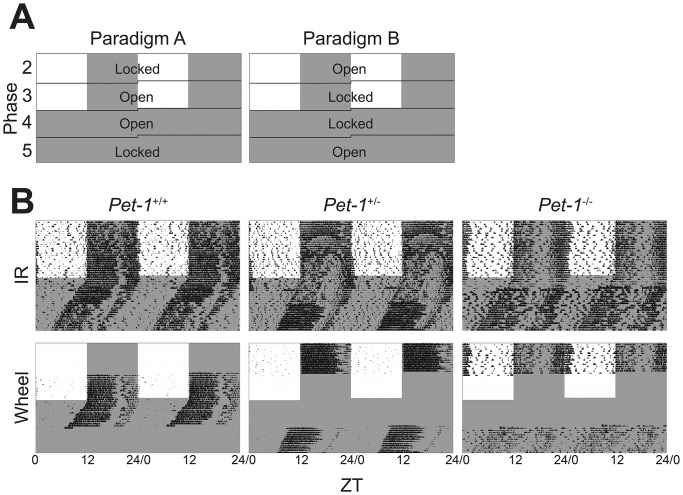
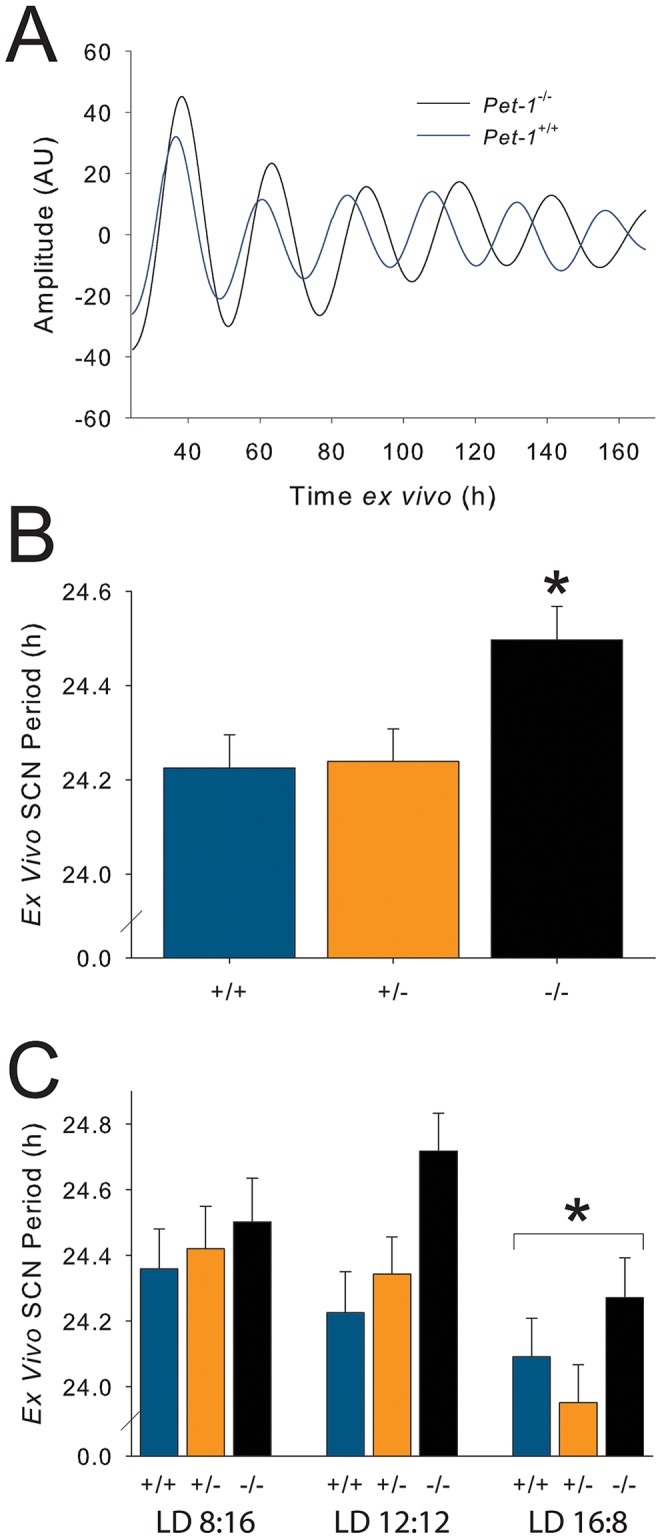
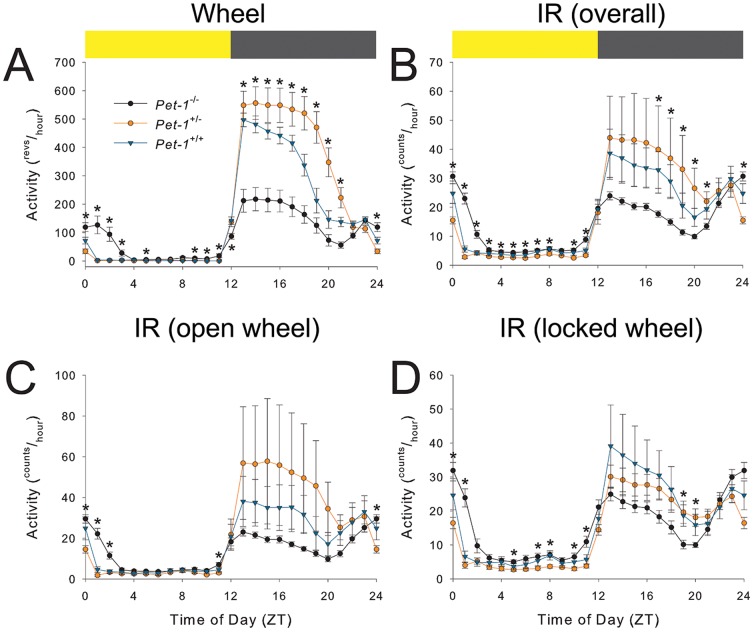
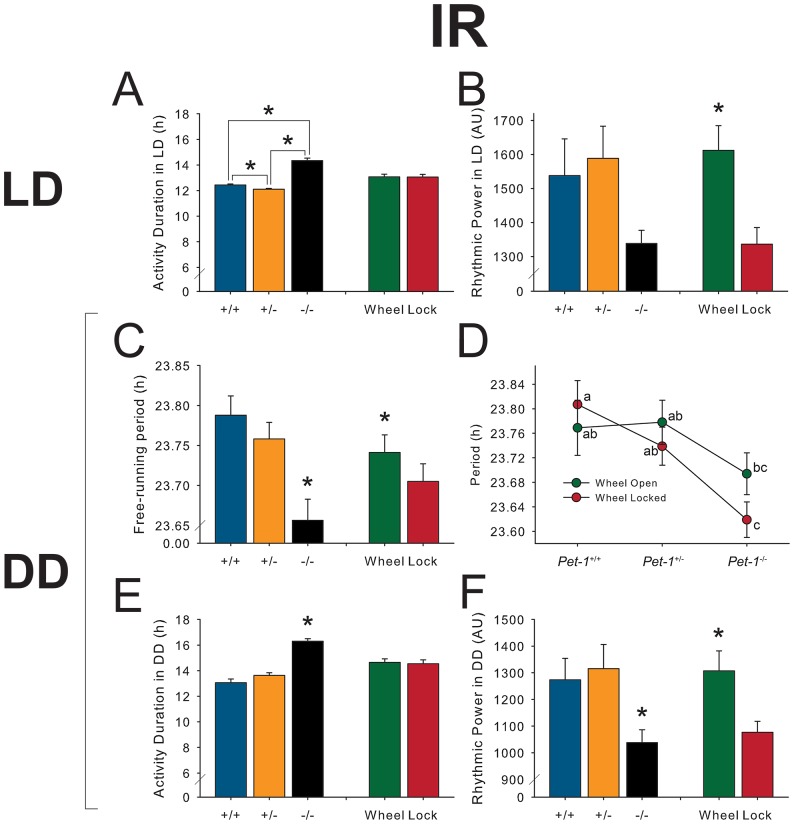
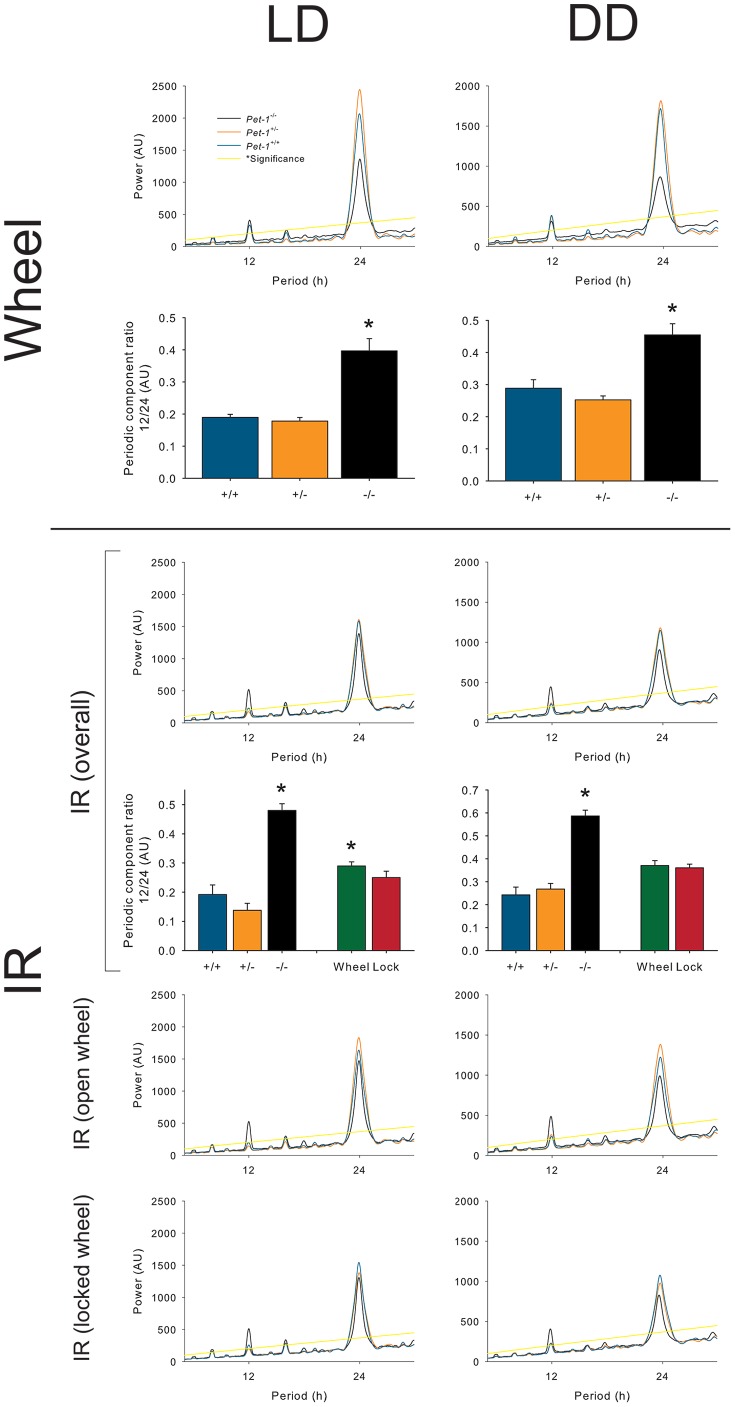
The serotonin and circadian systems are two important interactive regulatory networks in the mammalian brain that regulate behavior and physiology in ways that are known to impact human mental health. Previous work on the interaction between these two systems suggests that serotonin modulates photic input to the central circadian clock (the suprachiasmatic nuclei; SCN) from the retina and serves as a signal for locomotor activity, novelty, and arousal to shift the SCN clock, but effects of disruption of serotonergic signaling from the raphe nuclei on circadian behavior and on SCN function are not fully characterized. In this study, we examined the effects on diurnal and circadian behavior, and on ex vivo molecular rhythms of the SCN, of genetic deficiency in Pet-1, an ETS transcription factor that is necessary to establish and maintain the serotonergic phenotype of raphe neurons. Pet-1⁻/⁻ mice exhibit loss of rhythmic behavioral coherence and an extended daily activity duration, as well as changes in the molecular rhythms expressed by the clock, such that ex vivo SCN from Pet-1⁻/⁻ mice exhibit period lengthening and sex-dependent changes in rhythmic amplitude. Together, our results indicate that Pet-1 regulation of raphe neuron serotonin phenotype contributes to the period, precision and light/dark partitioning of locomotor behavioral rhythms by the circadian clock through direct actions on the SCN clock itself, as well as through non-clock effects.
血清素系统和昼夜节律系统是哺乳动物大脑中两个重要的相互作用调节网络,它们以已知会影响人类心理健康的方式调节行为和生理机能。此前关于这两个系统之间相互作用的研究表明,血清素可调节视网膜向中枢昼夜节律时钟(视交叉上核;SCN)的光信号输入,并作为运动活动、新奇感和唤醒的信号来使SCN时钟发生转变,但是中缝核血清素能信号传导中断对昼夜节律行为和SCN功能的影响尚未完全明确。在本研究中,我们研究了Pet-1基因缺陷对昼夜行为和SCN体外分子节律的影响,Pet-1是一种ETS转录因子,对于建立和维持中缝神经元的血清素能表型是必需的。Pet-1⁻/⁻小鼠表现出节律性行为连贯性丧失、每日活动时长延长,以及时钟所表达的分子节律变化,使得Pet-1⁻/⁻小鼠的体外SCN表现出周期延长以及节律振幅的性别依赖性变化。总之,我们的结果表明,Pet-1对中缝神经元血清素表型的调节通过对SCN时钟本身的直接作用以及非时钟效应,有助于昼夜节律时钟对运动行为节律的周期、精度和光/暗划分。