Department of Chemistry, University of North Carolina at Chapel Hill, Chapel Hill, NC 27599.
Nat Prod Rep. 2014 Jul;31(7):905-23. doi: 10.1039/c3np70106a.
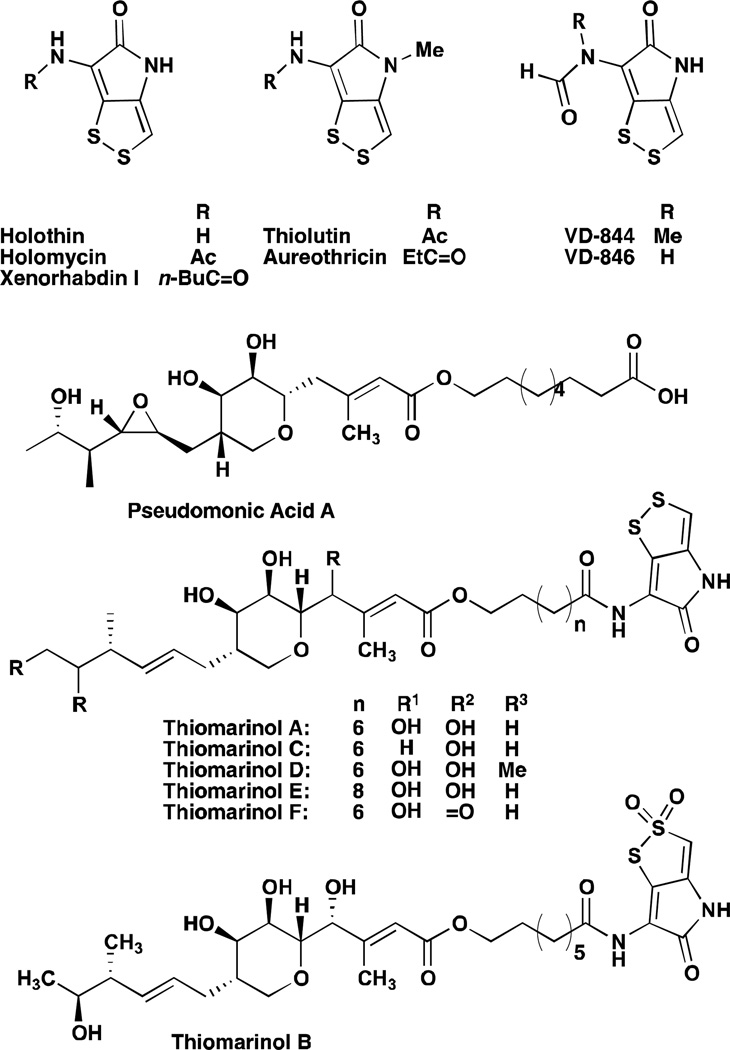
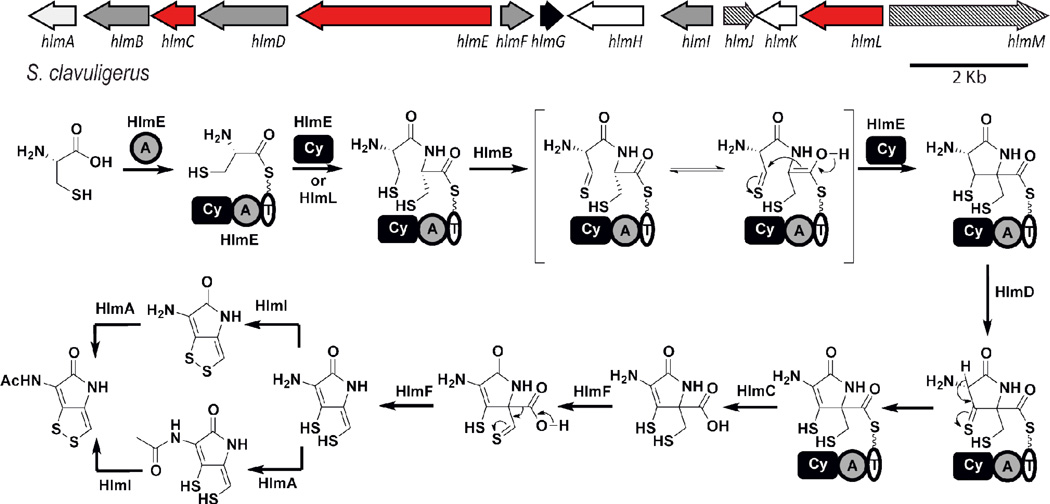
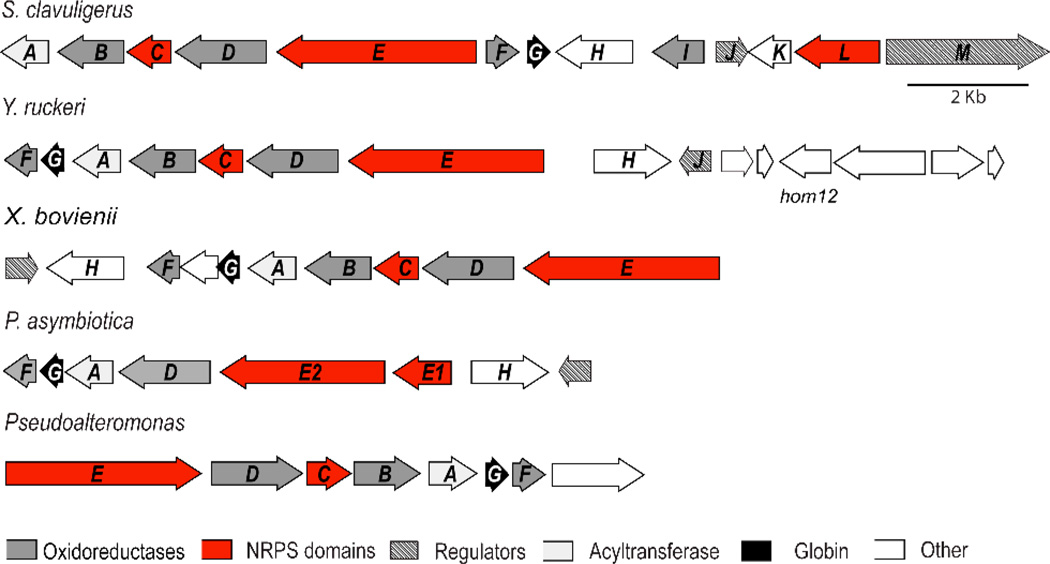
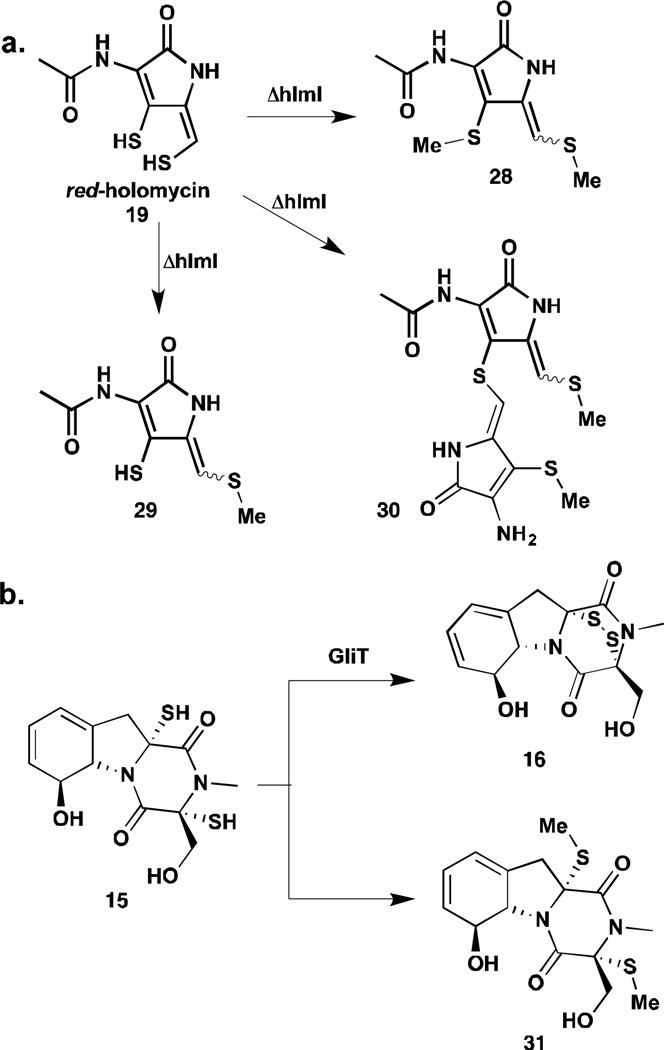
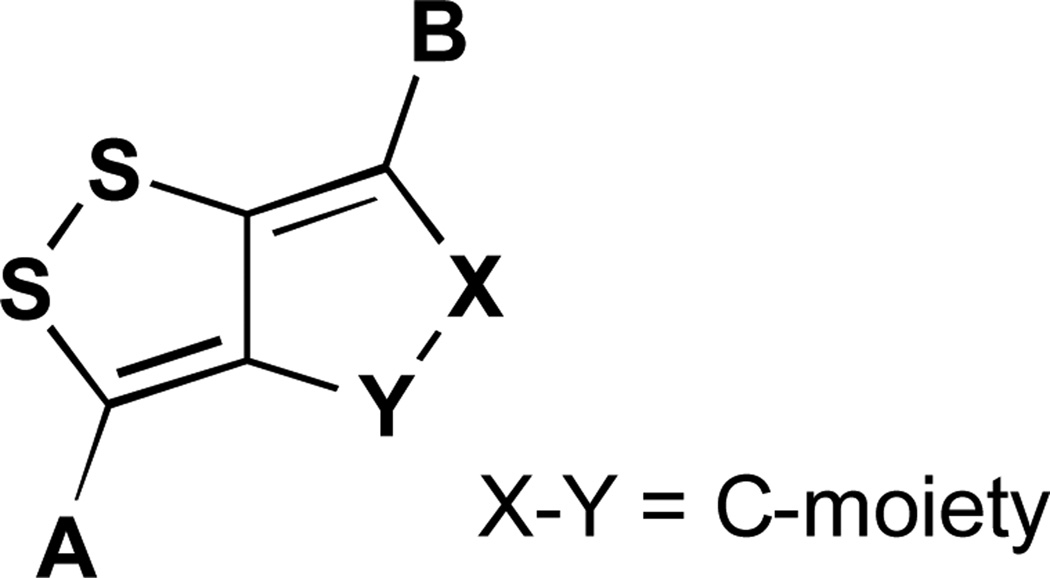
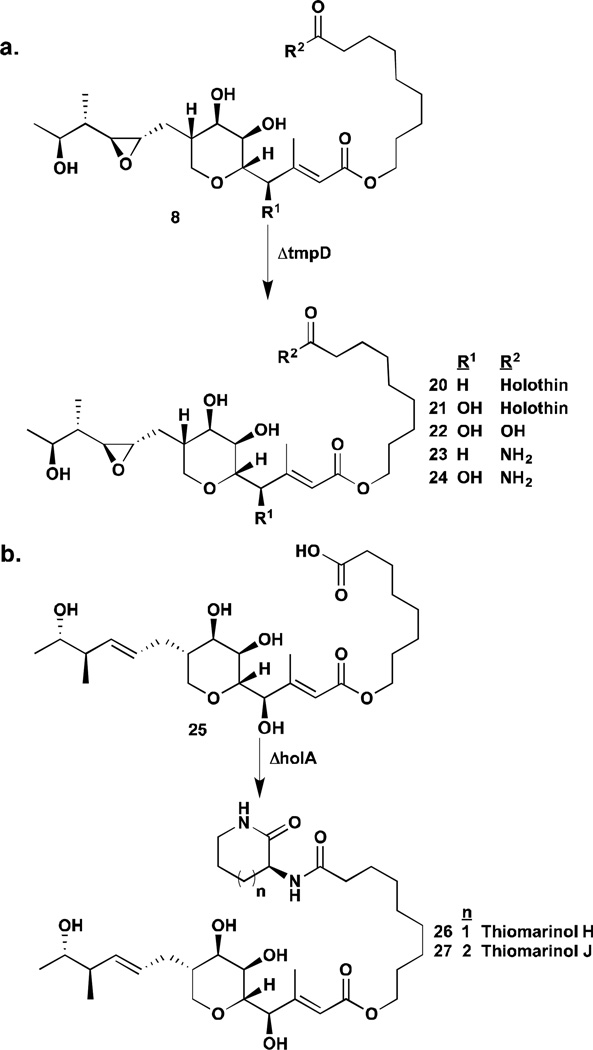
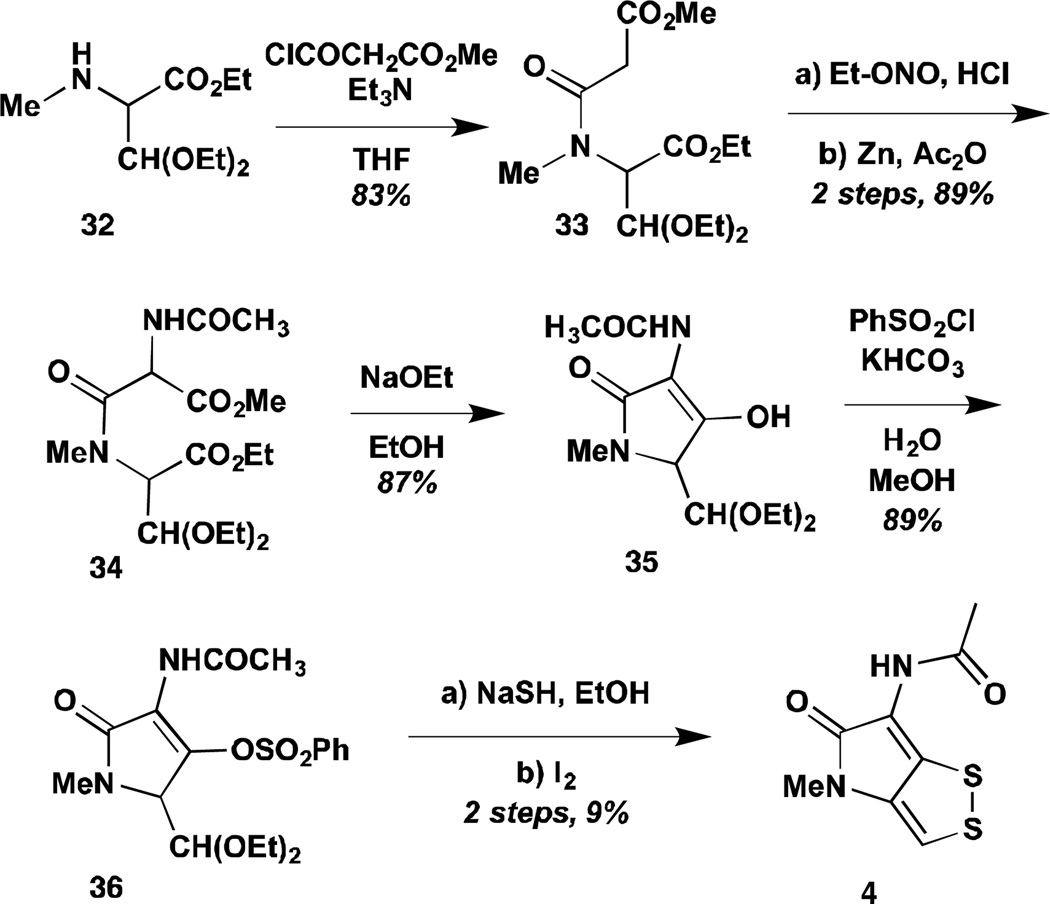
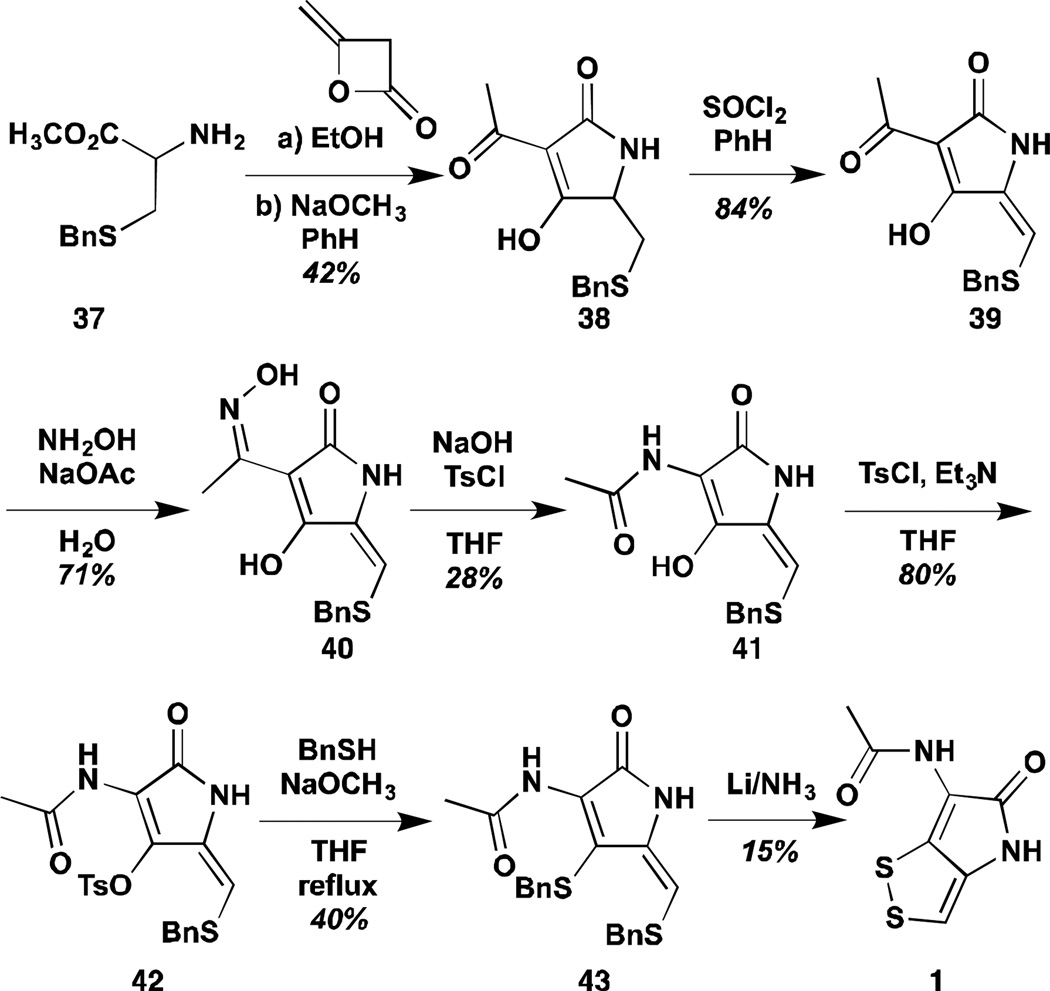
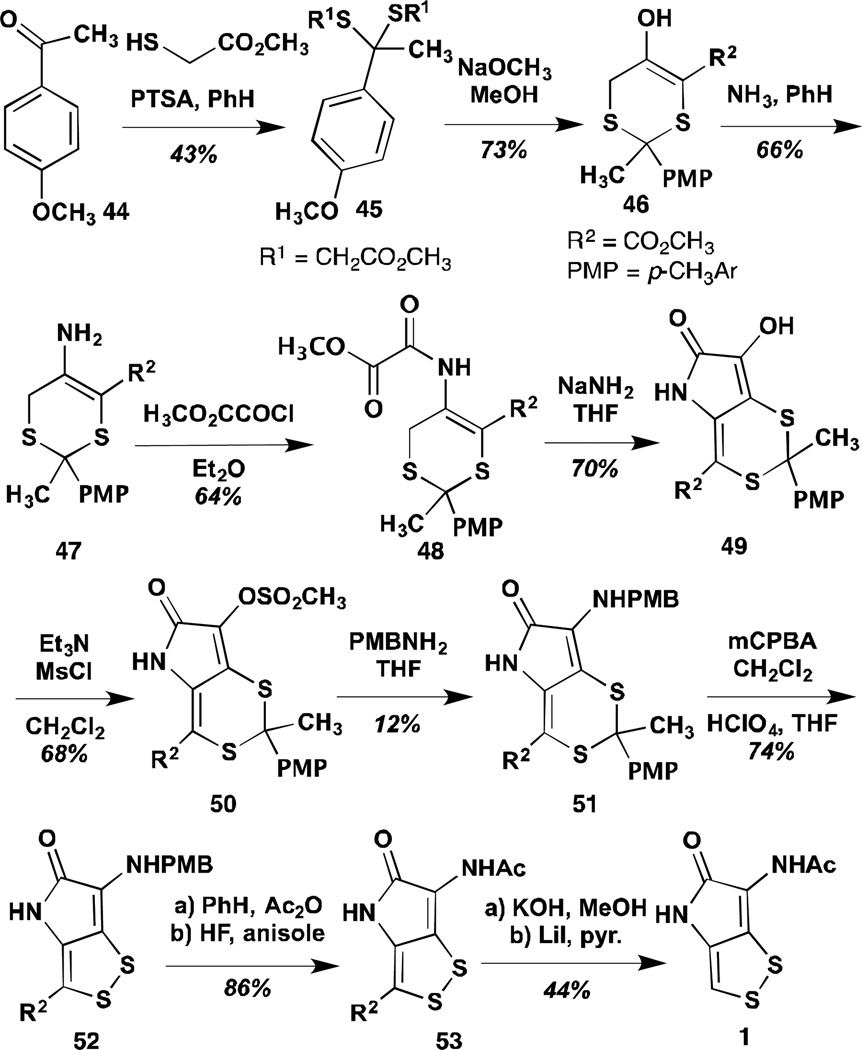
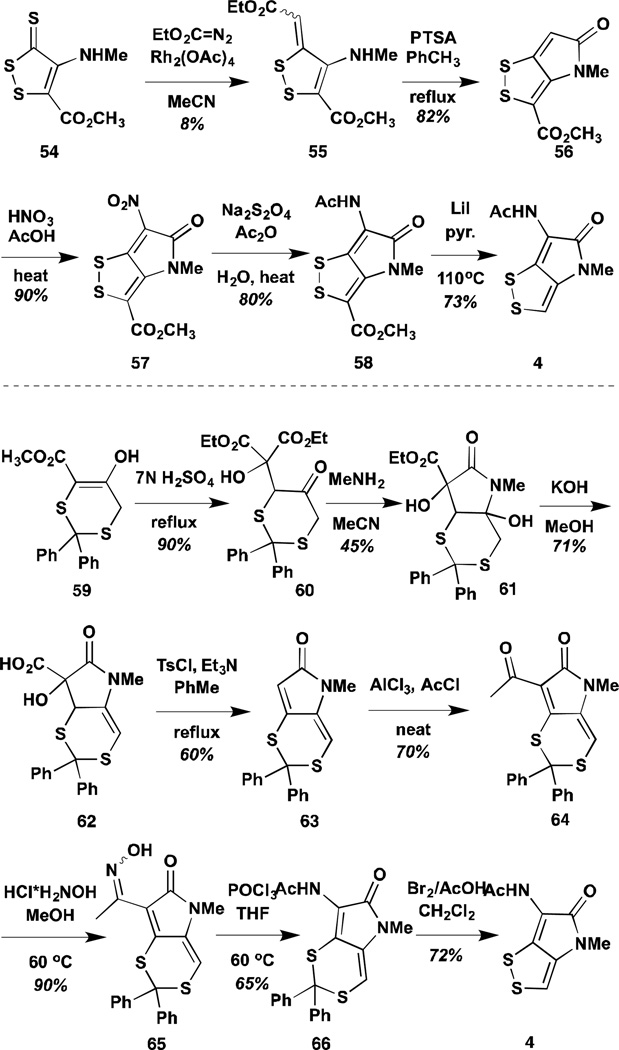
Covering: up to 2014. Dithiolopyrrolone (DTP) group antibiotics were first isolated in the early half of the 20th century, but only recently has research been reawakened by insights gained from the synthesis and biosynthesis of this structurally intriguing class of molecules. DTPs are characterized by an electronically unique bicyclic structure, which contains a compact disulfide bridge between two ene-thiols. Points of diversity within the compound class occur outside of the bicyclic core, at the two amide nitrogens. Such modifications distinguish three of the most well studied members of the class, holomycin, thiolutin, and aureothricin; the DTP core has also more recently been identified in the marine antibiotic thiomarinol, in which it is linked to a marinolic acid moiety, analog of the FDA-approved topical antibiotic Bactroban® (GlaxoSmithKline). Dithiolopyrrolones exhibit relatively broad-spectrum antibiotic activity against many Gram-positive and Gram-negative bacteria, as well as strains of Mycobacterium tuberculosis. Additionally, they have been shown to exhibit potent and selective anti-cancer activity. Despite this promising profile, there is still much unknown about the mechanisms of action for DTPs. Early reports suggested that they inhibit yeast growth at the level of transcription and that this effect is largely responsible for their distinctive microbial static properties; a similar mechanism is supported in bacteria. Elucidation of biosynthetic pathways for holomycin in Streptomyces clavuligerus and Yersinia ruckeri and thiomarinol in Alteromonas rava sp. nov. SANK 73390, have contributed evidence suggesting that multiple mechanisms may be operative in the activity of these compounds. This review will comprehensively cover the history and development of dithiolopyrrolones with particular emphasis on the biosynthesis, synthesis, biological activity and mechanism of action.
截至 2014 年。二硫吡咯酮(DTP)类抗生素于 20 世纪上半叶早期首次被分离出来,但直到最近,通过对该结构有趣的分子的合成和生物合成的深入了解,研究才重新兴起。DTP 的特征是具有独特的电子双环结构,其中包含两个烯硫醇之间的紧凑二硫键。该化合物类别的多样性点发生在双环核心之外,在两个酰胺氮上。该类中研究最深入的三个成员,即霍洛霉素、硫咯菌素和金核菌素,其结构中就具有这样的修饰;最近在海洋抗生素硫马林醇中也发现了 DTP 核心,其中它与马林酸部分相连,马林酸是 FDA 批准的局部抗生素 Bactroban®(葛兰素史克)的类似物。二硫吡咯酮对许多革兰氏阳性和革兰氏阴性细菌以及结核分枝杆菌菌株表现出相对广谱的抗生素活性。此外,它们已被证明具有有效的选择性抗癌活性。尽管具有这种有希望的特性,但对于 DTP 的作用机制仍知之甚少。早期的报告表明,它们在转录水平上抑制酵母的生长,这种作用在很大程度上是导致它们具有独特的微生物静态特性的原因;细菌中也支持类似的机制。阐明棒状链霉菌和鲁氏耶尔森氏菌中霍洛霉素和 Alteromonas rava sp. nov. SANK 73390 中硫马林醇的生物合成途径的研究结果表明,这些化合物的活性可能涉及多种机制。本综述将全面涵盖二硫吡咯酮的历史和发展,特别强调生物合成、合成、生物活性和作用机制。