Ban Jin-Bao, Fan Xiao-Wu, Huang Qi, Li Bin-Feng, Chen Chen, Zhang Hua-Chuan, Xu Shun-Qing
Department of General Thoracic Surgery, Tongji Hospital Attached to Tongji Medical College, Huazhong University of Science and Technology, Wuhan, Hubei, People's Republic of China.
Key Laboratory of Environment and Health, School of Public Health, Tongji Medical College, Huazhong University of Science and Technology, Wuhan, China.
PLoS One. 2014 May 16;9(5):e97607. doi: 10.1371/journal.pone.0097607. eCollection 2014.
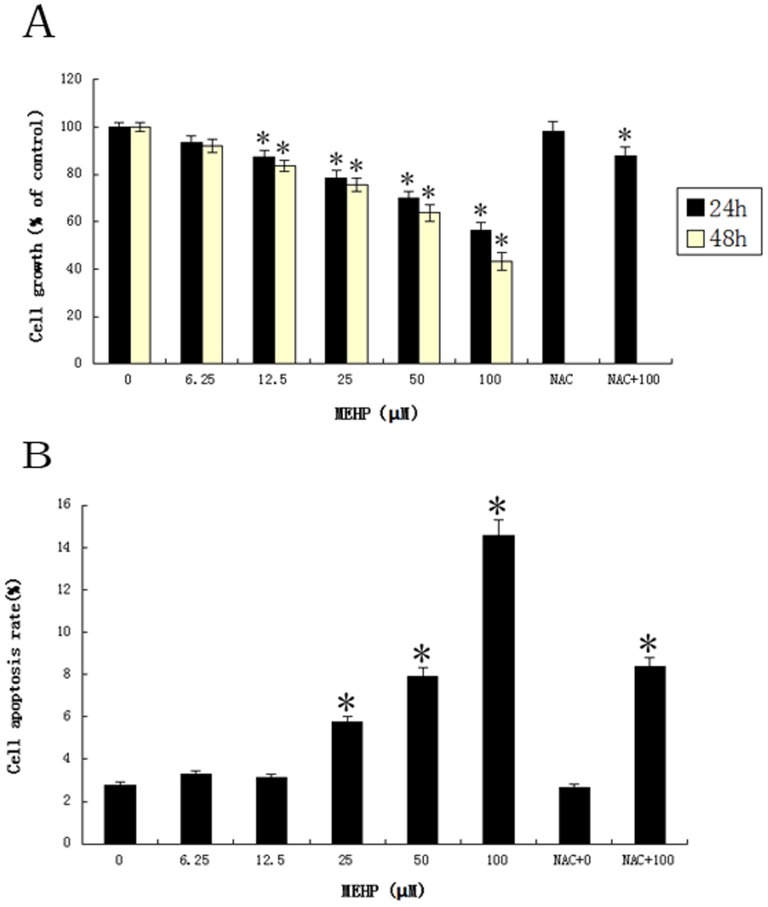
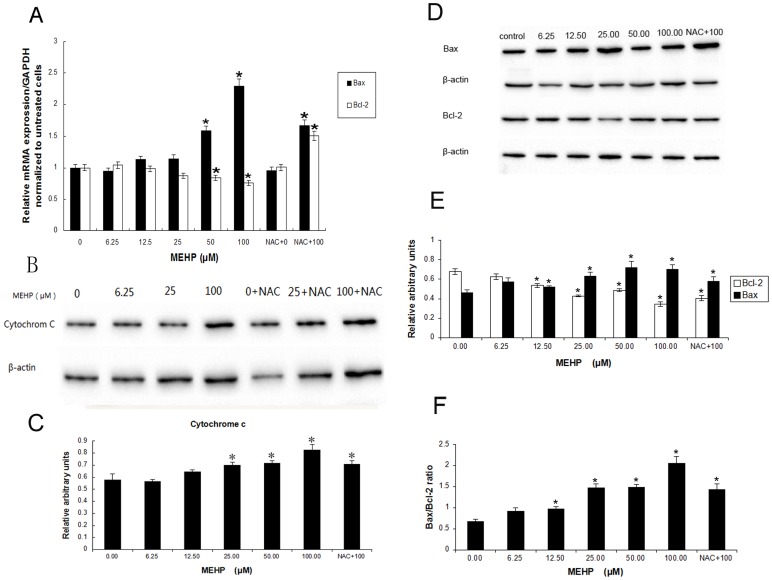
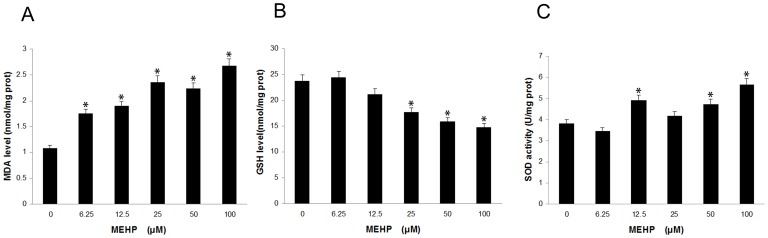
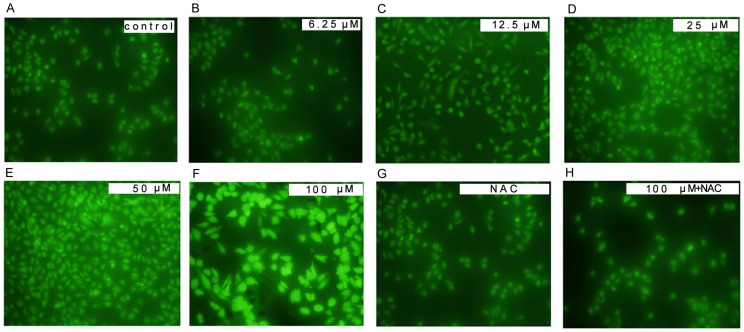
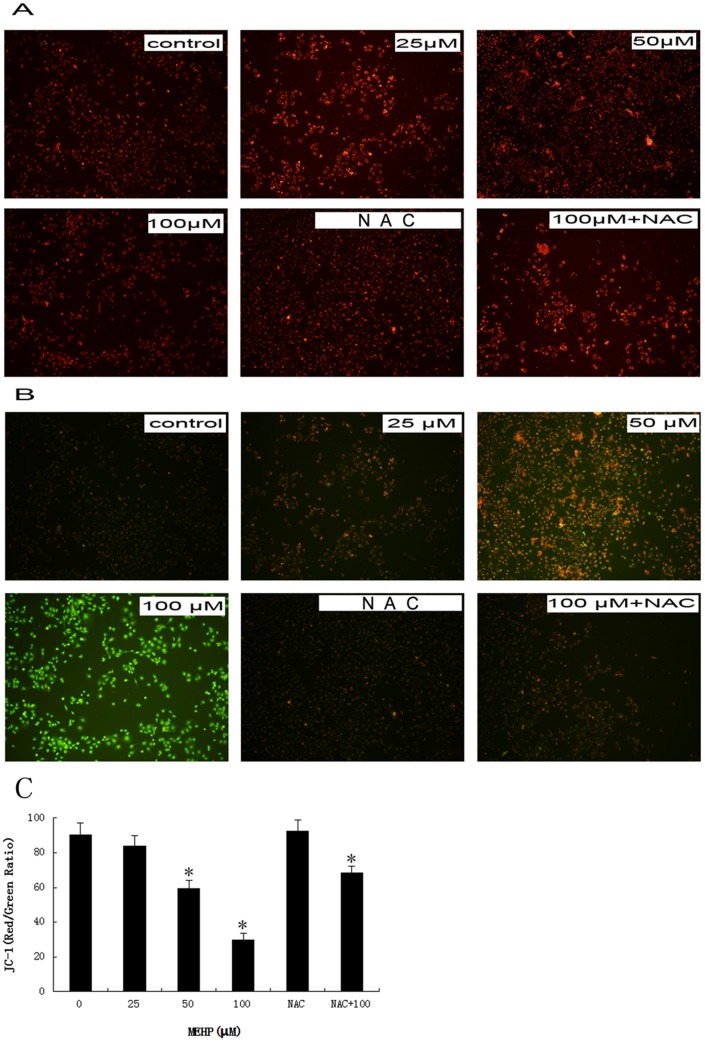
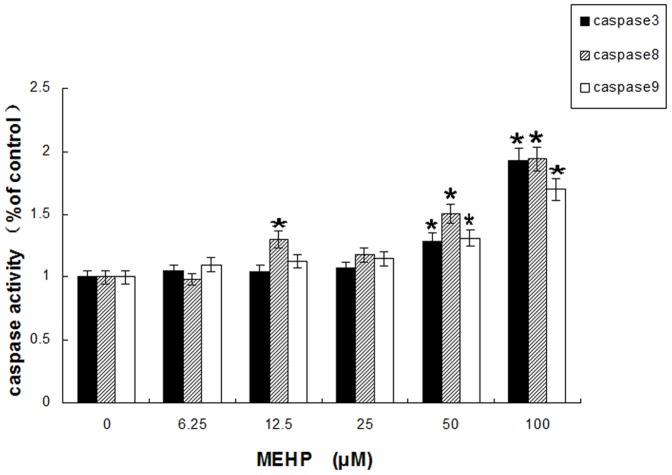
Mono-(2-ethylhexyl) phthalate (MEHP), the active metabolite of di-(2-ethylhexyl) phthalate (DEHP), is a widespread environmental contaminant and has been proved to have potential adverse effects on the reproductive system, carcinogenicity, liver, kidney and developmental toxicities. However, the effect of MEHP on vascular system remains unclear. The main purpose of this study was to evaluate the cytotoxic effects of MEHP on human umbilical endothelial cells (HUVEC) and its possible molecular mechanism. HUVEC cells were treated with MEHP (0, 6.25, 12.5, 25,50 and 100 µM), and the cellular apoptosis and mitochondrial membrane potential as well as intracellular reactive oxygen species were determined. In present study, MEHP induced a dose-dependent cell injury in HUVEC cell via an apoptosis pathway as characterized by increased percentage of sub-G1, activation of caspase-3, -8 and -9, and increased ratio of Bax/bcl-2 mRNA and protein expression as well as cytochrome C releasing. In addition, there was obvious oxidative stress, represented by decreased glutathione level, increased malondialdehyde level and superoxide dismutase activity. N-Acetylcysteine, as an antioxidant that is a direct reactive oxygen species scavenger, could effectively block MEHP-induced reactive oxygen species generation, mitochondrial membrane potential loss and cell apoptosis. These data indicated that MEHP induced apoptosis in HUVEC cells through a reactive oxygen species-mediated mitochondria-dependent pathway.
邻苯二甲酸单(2-乙基己基)酯(MEHP)是邻苯二甲酸二(2-乙基己基)酯(DEHP)的活性代谢产物,是一种广泛存在的环境污染物,已被证明对生殖系统、致癌性、肝脏、肾脏和发育毒性具有潜在的不良影响。然而,MEHP对血管系统的影响仍不清楚。本研究的主要目的是评估MEHP对人脐静脉内皮细胞(HUVEC)的细胞毒性作用及其可能的分子机制。用MEHP(0、6.25、12.5、25、50和100μM)处理HUVEC细胞,并测定细胞凋亡、线粒体膜电位以及细胞内活性氧。在本研究中,MEHP通过凋亡途径在HUVEC细胞中诱导剂量依赖性细胞损伤,其特征为亚G1期百分比增加、caspase-3、-8和-9激活、Bax/bcl-2 mRNA和蛋白表达比率增加以及细胞色素C释放。此外,存在明显的氧化应激,表现为谷胱甘肽水平降低、丙二醛水平升高和超氧化物歧化酶活性增加。N-乙酰半胱氨酸作为一种抗氧化剂,是一种直接的活性氧清除剂,可有效阻断MEHP诱导的活性氧生成、线粒体膜电位丧失和细胞凋亡。这些数据表明,MEHP通过活性氧介导的线粒体依赖性途径诱导HUVEC细胞凋亡。