Singh Sukhvinder, Sharma Aman, Arora Sunil K
Department of Immunopathology, Postgraduate Institute of Medical Education & Research, Chandigarh, India.
Department of Internal Medicine, Postgraduate Institute of Medical Education & Research, Chandigarh, India.
PLoS One. 2014 May 16;9(5):e98020. doi: 10.1371/journal.pone.0098020. eCollection 2014.
The natural history of HIV-1 infection and its progression towards AIDS vary considerably among individuals. Host genetic factors may be one of the possible reasons for variable HIV-1 disease progression. Single nucleotide polymorphisms (SNPs) in the promoter region of TNF-α gene can influence its production. The aim of the present study was to determine the association of functional TNF-α SNPs and its associated parameters related to apoptosis that may influence the rate of HIV-1 disease progression.
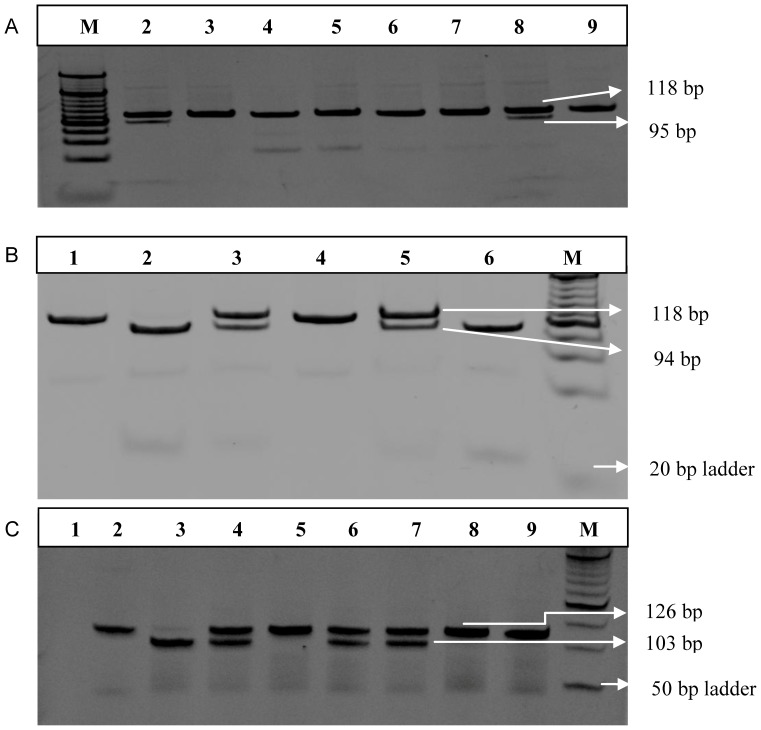
Therapy naive, 100 HIV slow progressors (SPs), 100 HIV fast progressors (FPs), 50 HIV exposed but seronegative individuals (ESNs) and 260 healthy controls from same ethnic origin were recruited. Genotyping of TNF-α variants (-863C/A, -308G/A and -238G/A) was done using PCR-RFLP. CD4 counts were determined by flow cytometry. Plasma viral load was estimated by COBAS AMPLICOR HIV-1 monitor test. Plasma TNF-α concentration was estimated by Human CBA Th1/Th2 cytokine kit. The lymphocyte mitochondrial membrane potential was measured by JC-1 dye by flow cytometry.
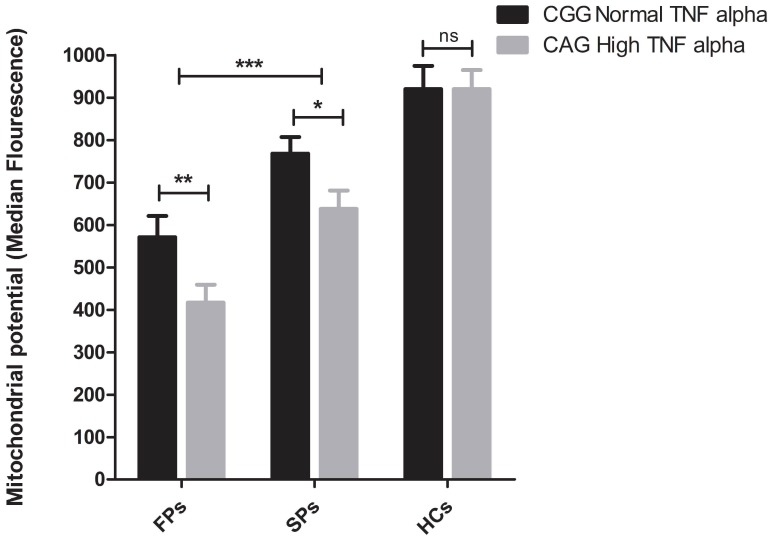
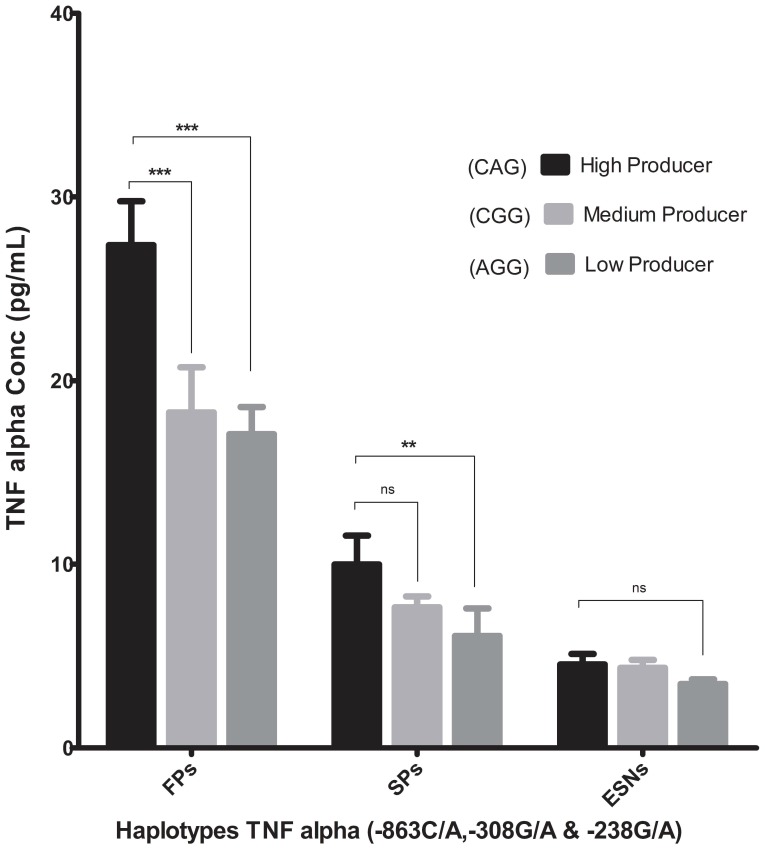
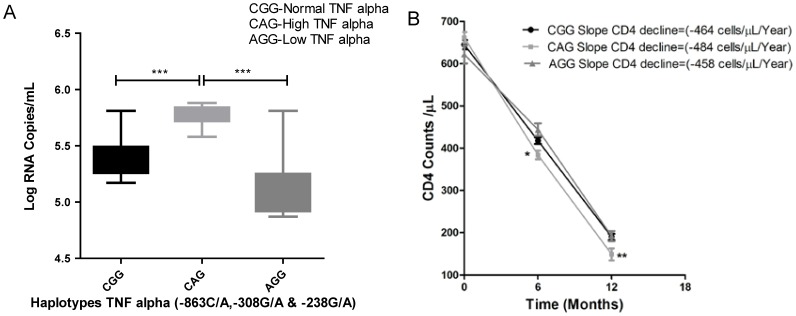
Genotype and allele frequency of TNF-α -238G/A and -863C/A was not significantly different in HIV-1-infected patients when compared to controls, while that of TNF-α -308G/A variant (high TNF-α producer) was significantly higher in FPs compared to SPs (p<0.01, OR = 3.43). Haplotype analyses also showed that carriers of high TNF-α producing haplotype CAG was significantly more common among FPs compared to SPs (p<0.01, OR = 3). The circulating TNF-α levels in blood also correlated well with genotypes. The lymphocyte mitochondrial membrane potential of FPs having CAG haplotype was significantly low as compared to wild type (CGG) haplotype (417±22 vs 571±28, p<0.01).
High producer haplotype, CAG of TNF-α gene associates with enhanced apoptosis of lymphocytes in HIV-1 infected individuals, hence faster progression to AIDS. However, further functional studies are needed to confirm this association and this knowledge may help clinicians to better understand the disease outcome.
HIV-1感染的自然史及其向艾滋病的进展在个体间差异很大。宿主遗传因素可能是HIV-1疾病进展各异的可能原因之一。TNF-α基因启动子区域的单核苷酸多态性(SNP)可影响其产生。本研究的目的是确定功能性TNF-α SNP及其与可能影响HIV-1疾病进展速率的凋亡相关参数之间的关联。
招募了100名未经治疗的HIV慢进展者(SP)、100名HIV快进展者(FP)、50名HIV暴露但血清学阴性个体(ESN)以及260名来自同一族裔的健康对照。使用PCR-RFLP对TNF-α变体(-863C/A、-308G/A和-238G/A)进行基因分型。通过流式细胞术测定CD4细胞计数。通过COBAS AMPLICOR HIV-1监测检测估计血浆病毒载量。使用人CBA Th1/Th2细胞因子试剂盒估计血浆TNF-α浓度。通过流式细胞术用JC-1染料测量淋巴细胞线粒体膜电位。
与对照组相比,HIV-1感染患者中TNF-α -238G/A和-863C/A的基因型和等位基因频率无显著差异,而TNF-α -308G/A变体(高TNF-α产生者)在FP中显著高于SP(p<0.01,OR = 3.43)。单倍型分析还显示,与SP相比,高TNF-α产生单倍型CAG的携带者在FP中更为常见(p<0.01,OR = 3)。血液中循环的TNF-α水平也与基因型密切相关。与野生型(CGG)单倍型相比,具有CAG单倍型的FP的淋巴细胞线粒体膜电位显著较低(417±22对571±28,p<0.01)。
TNF-α基因的高产生单倍型CAG与HIV-1感染个体中淋巴细胞凋亡增加相关,因此向艾滋病的进展更快。然而,需要进一步的功能研究来证实这种关联,这一知识可能有助于临床医生更好地理解疾病结局。