Hui Elaine, Xu Aimin, Bo Yang Hong, Lam Karen S L
Endocrinology and Metabolism Division Department of Medicine the University of Hong Kong Hong Kong China.
Research Centre of Heart, Brain, Hormone and Healthy Aging the University of Hong Kong Hong Kong China.
J Diabetes Investig. 2013 Sep 13;4(5):413-25. doi: 10.1111/jdi.12093. Epub 2013 May 6.
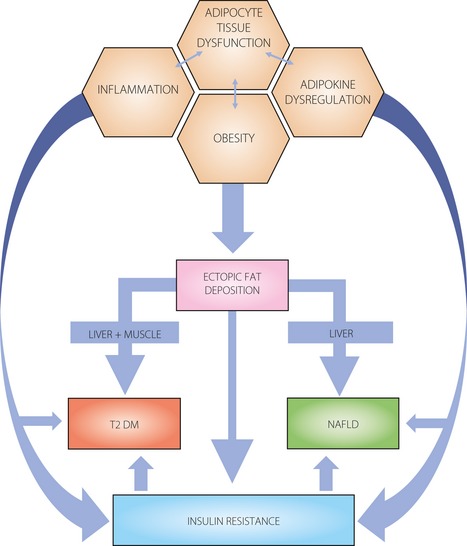
Non-alcoholic fatty liver disease (NAFLD) describes a spectrum of liver conditions from simple steatosis, steatohepatitis to end-stage liver disease. The prevalence of NAFLD has been on the rise in many parts of the world, including Asia, and NAFLD is now the liver disease associated with the highest mortality, consequent to the increased risk of cardiovascular diseases and hepatocellular carcinoma. Whereas NAFLD is an independent risk factor for type 2 diabetes, increased hepatic and peripheral insulin resistance contribute to the pathogenesis of both NAFLD and diabetes, which are associated with enhanced cardiovascular risk. Studies in humans and animal models have suggested obesity as the common link of these two diseases, likely mediated by adipose tissue inflammation and dysregulated adipokine production in obesity. In the present review, we discuss recent advances in our understanding of the role of several novel adipokines (adiponectin, adipocyte fatty acid binding protein and fibroblast growth factor-21) in the pathophysiology of NAFLD and diabetes, as well as their use as potential biomarkers and therapeutic targets for dysglycemia in NAFLD patients.
非酒精性脂肪性肝病(NAFLD)描述了一系列肝脏疾病,从单纯性脂肪变性、脂肪性肝炎到终末期肝病。在世界许多地区,包括亚洲,NAFLD的患病率一直在上升,并且由于心血管疾病和肝细胞癌风险增加,NAFLD现在是与最高死亡率相关的肝脏疾病。虽然NAFLD是2型糖尿病的独立危险因素,但肝脏和外周胰岛素抵抗增加促成了NAFLD和糖尿病的发病机制,这两者都与心血管风险增加有关。对人类和动物模型的研究表明,肥胖是这两种疾病的共同联系,可能是由肥胖中的脂肪组织炎症和脂肪因子产生失调介导的。在本综述中,我们讨论了我们对几种新型脂肪因子(脂联素、脂肪细胞脂肪酸结合蛋白和成纤维细胞生长因子-21)在NAFLD和糖尿病病理生理学中的作用的最新认识,以及它们作为NAFLD患者血糖异常的潜在生物标志物和治疗靶点的用途。