Reddy Pradeep B J, Sehrawat Sharvan, Suryawanshi Amol, Rajasagi Naveen K, Khatri Madhu, Rouse Barry T
Department of Pathobiology, College of Veterinary Medicine, University of Tennessee, Knoxville, Tennessee, United States of America.
PLoS One. 2014 May 20;9(5):e98051. doi: 10.1371/journal.pone.0098051. eCollection 2014.
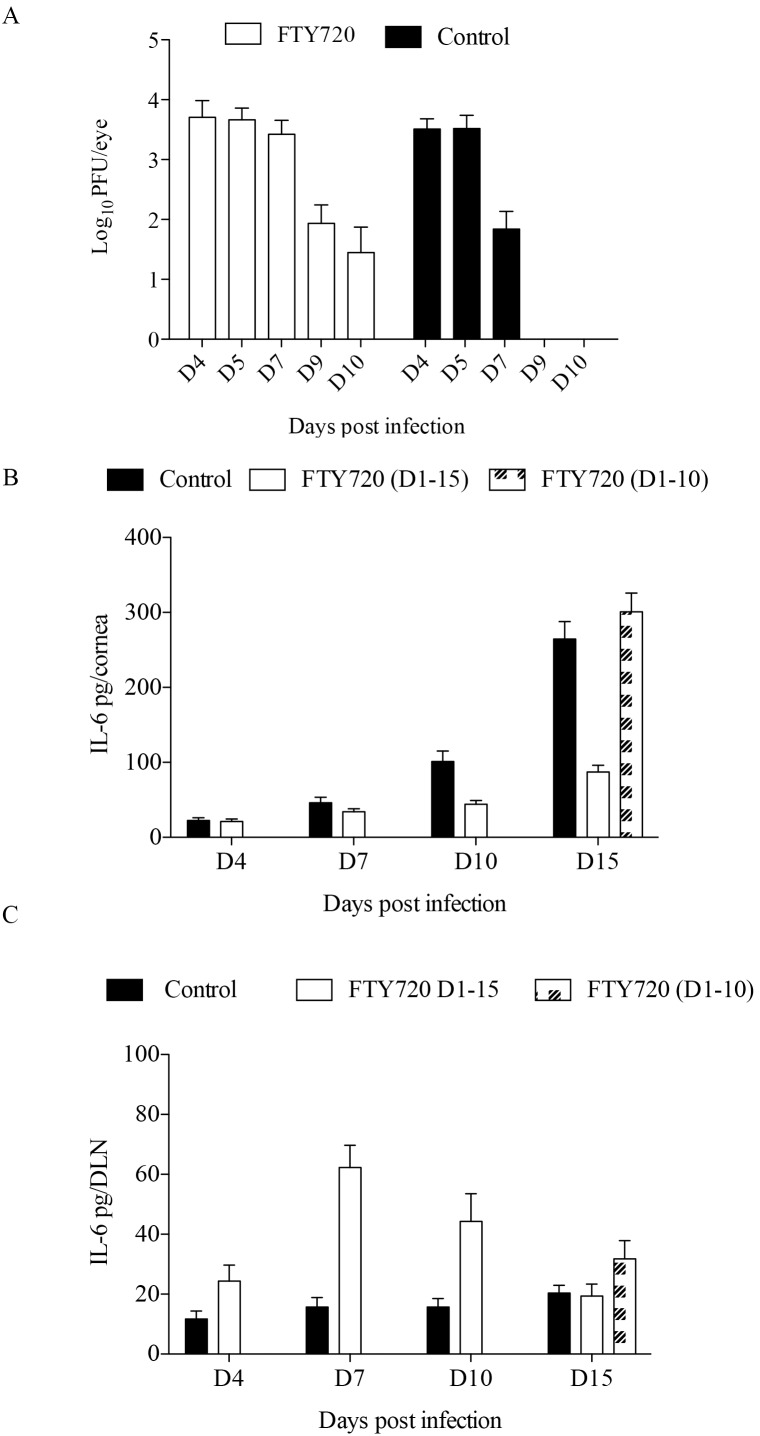
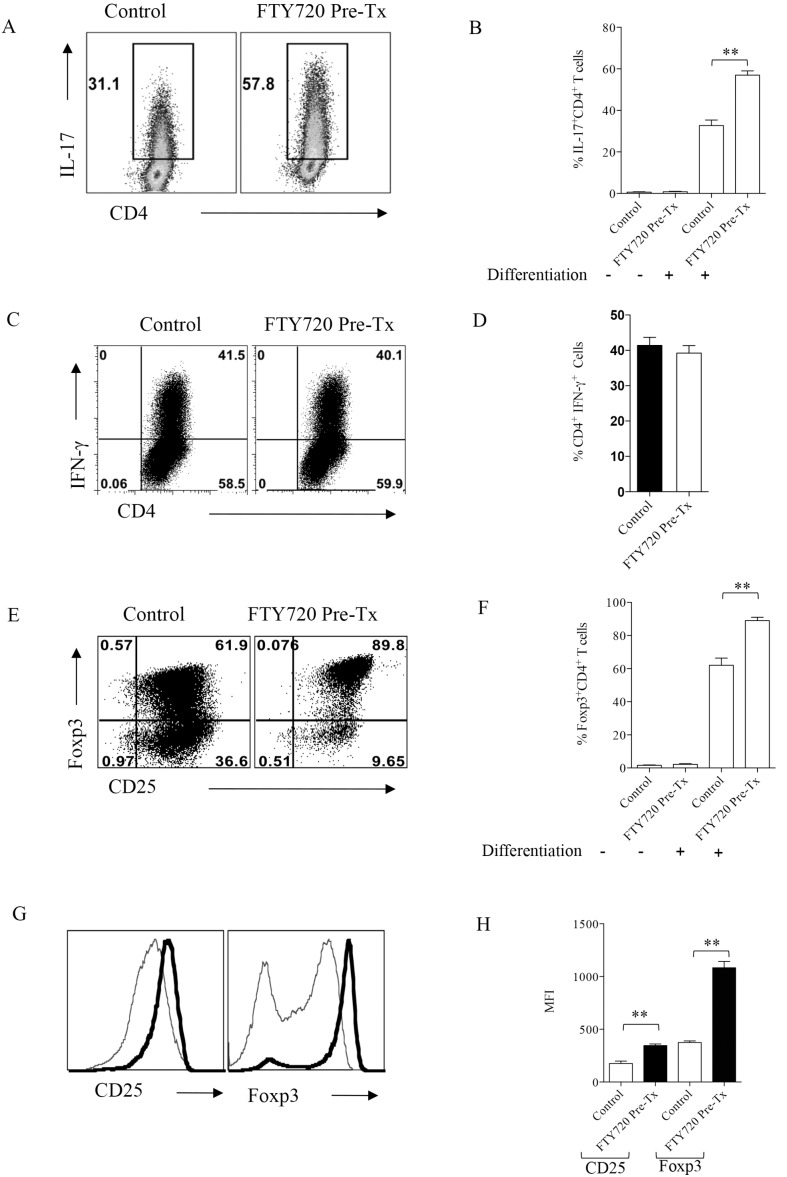
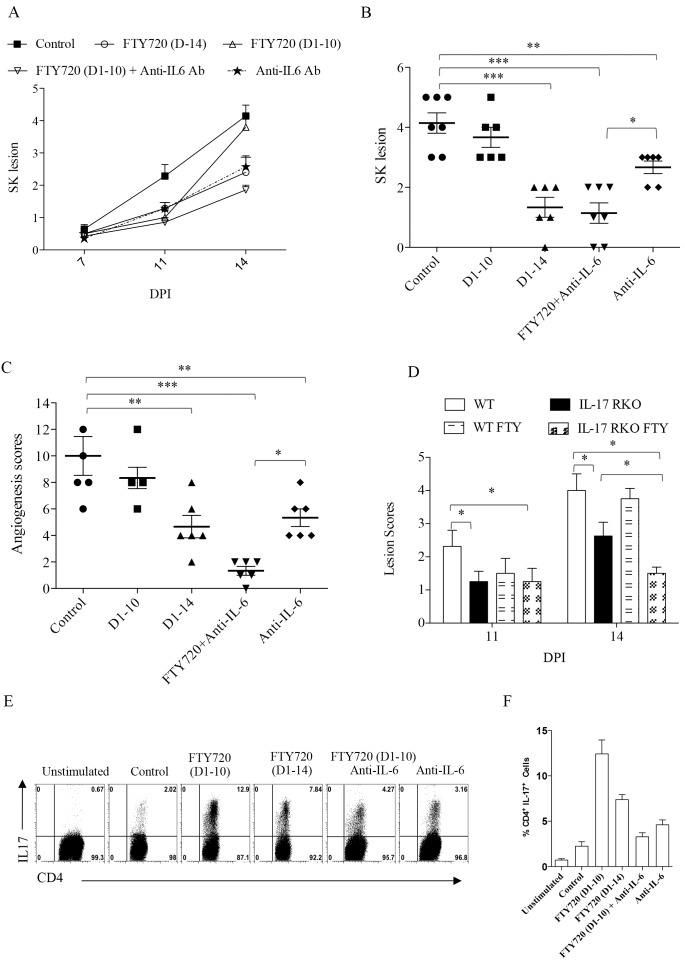
Long-term treatment with the fungal metabolite drug FTY720 (Fingolimod) was shown to be highly effective in controlling viral immunopathological lesions. However, in this report we show that the anti-inflammatory effect of FTY720 in herpes simplex virus-1 (HSV-1) induced ocular inflammation is lost upon the discontinuation of treatment and lesions rapidly recurred. The lesions that developed after FTY720 treatment withdrawal involved mainly Th17 cells rather than Th1 cells explained in part by differential expression of surface CD103, an integrin that permits migration of effector cells to inflammatory sites. The expression of IL-6, a proinflammatory cytokine involved in the generation of Th17 cells, was found to be increased in FTY treated mice as compared to controls and this effect could be abrogated upon administration of neutralizing antibody to IL-6. Furthermore, IL-17RKO mice failed to show the recurrence of stromal keratitis (SK) lesions upon FTY720 withdrawal. These results indicate that approaches such as neutralization of proinflammatory cytokines might be considered along with FTY720 treatment if interruption of drug therapy becomes necessary.
真菌代谢产物药物FTY720(芬戈莫德)的长期治疗被证明在控制病毒免疫病理损伤方面非常有效。然而,在本报告中我们表明,FTY720在单纯疱疹病毒1型(HSV-1)诱导的眼部炎症中的抗炎作用在停药后丧失,并且病变迅速复发。FTY720治疗停药后出现的病变主要涉及Th17细胞而非Th1细胞,部分原因是表面CD103(一种允许效应细胞迁移至炎症部位的整合素)的差异表达。与对照组相比,在接受FTY治疗的小鼠中发现参与Th17细胞生成的促炎细胞因子IL-6的表达增加,并且在给予IL-6中和抗体后这种效应可以被消除。此外,IL-17RKO小鼠在FTY720停药后未出现基质性角膜炎(SK)病变的复发。这些结果表明,如果有必要中断药物治疗,除了FTY720治疗外,还可以考虑中和促炎细胞因子等方法。