Jantsch Jonathan, Binger Katrina J, Müller Dominik N, Titze Jens
Mikrobiologisches Institut - Klinische Mikrobiologie, Immunologie und Hygiene, Universitätsklinikum Erlangen und Friedrich-Alexander-Universität Erlangen-Nürnberg Erlangen, Germany.
Experimental and Clinical Research Center (ECRC), Max-Delbrück Center for Molecular Medicine, Charité Medical Faculty Berlin, Germany.
Front Physiol. 2014 May 5;5:146. doi: 10.3389/fphys.2014.00146. eCollection 2014.
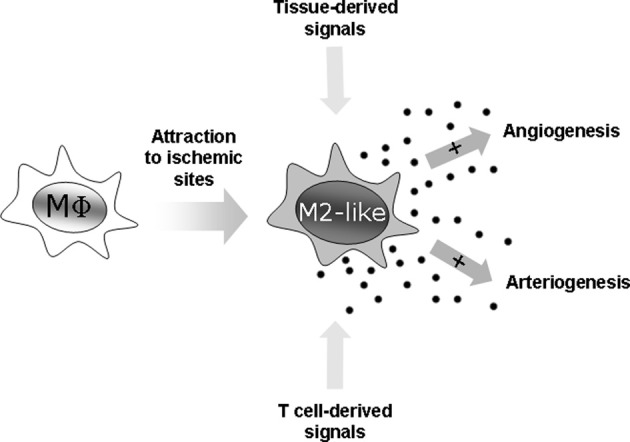
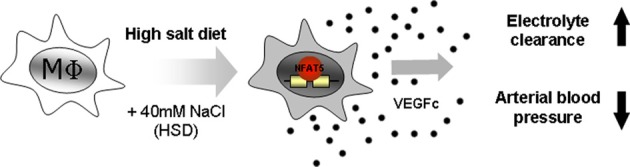
Macrophages are not only involved in inflammatory and anti-infective processes, but also play an important role in maintaining tissue homeostasis. In this review, we summarize recent evidence investigating the role of macrophages in controlling angiogenesis, metabolism as well as salt and water balance. Particularly, we summarize the importance of macrophage tonicity enhancer binding protein (TonEBP, also termed nuclear factor of activated T-cells 5 [NFAT5]) expression in the regulation of salt and water homeostasis. Further understanding of homeostatic macrophage function may lead to new therapeutic approaches to treat ischemia, hypertension and metabolic disorders.
巨噬细胞不仅参与炎症和抗感染过程,还在维持组织稳态中发挥重要作用。在本综述中,我们总结了近期关于巨噬细胞在控制血管生成、代谢以及盐和水平衡方面作用的研究证据。特别地,我们总结了巨噬细胞渗透压增强子结合蛋白(TonEBP,也称为活化T细胞核因子5 [NFAT5])表达在调节盐和水平衡中的重要性。对稳态巨噬细胞功能的进一步了解可能会带来治疗缺血、高血压和代谢紊乱的新治疗方法。