Infrastructure Group Transcript Profiling, Max-Planck-Institute of Molecular Plant Physiology Potsdam, Germany.
Department of Plant Biotechnology, Institute of Biology, University of Stuttgart Stuttgart, Germany.
Front Plant Sci. 2014 May 8;5:182. doi: 10.3389/fpls.2014.00182. eCollection 2014.
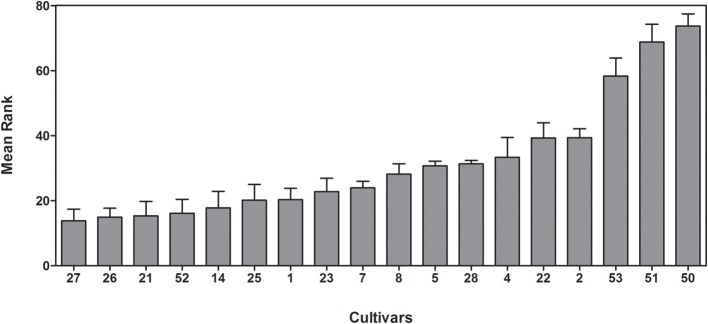
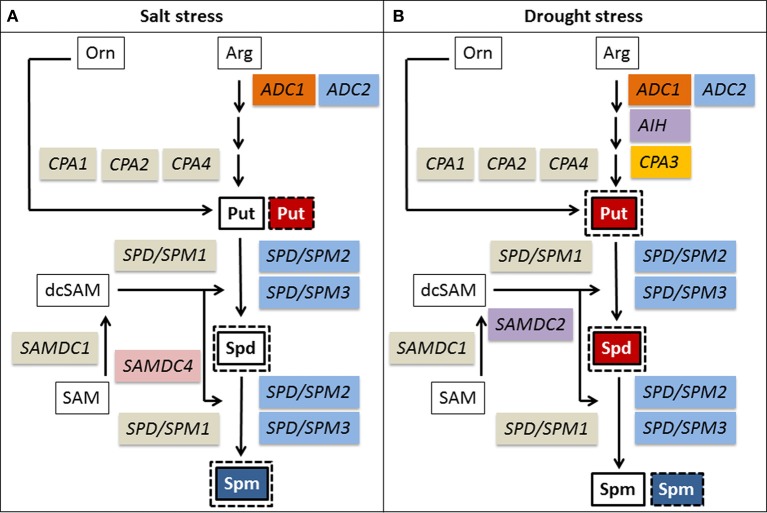
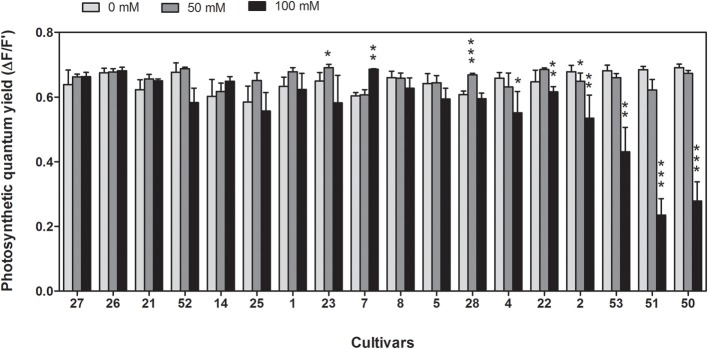
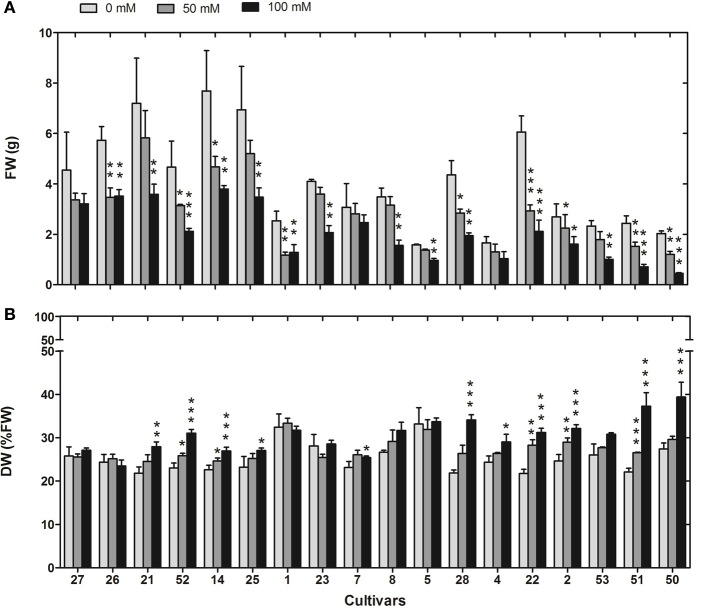
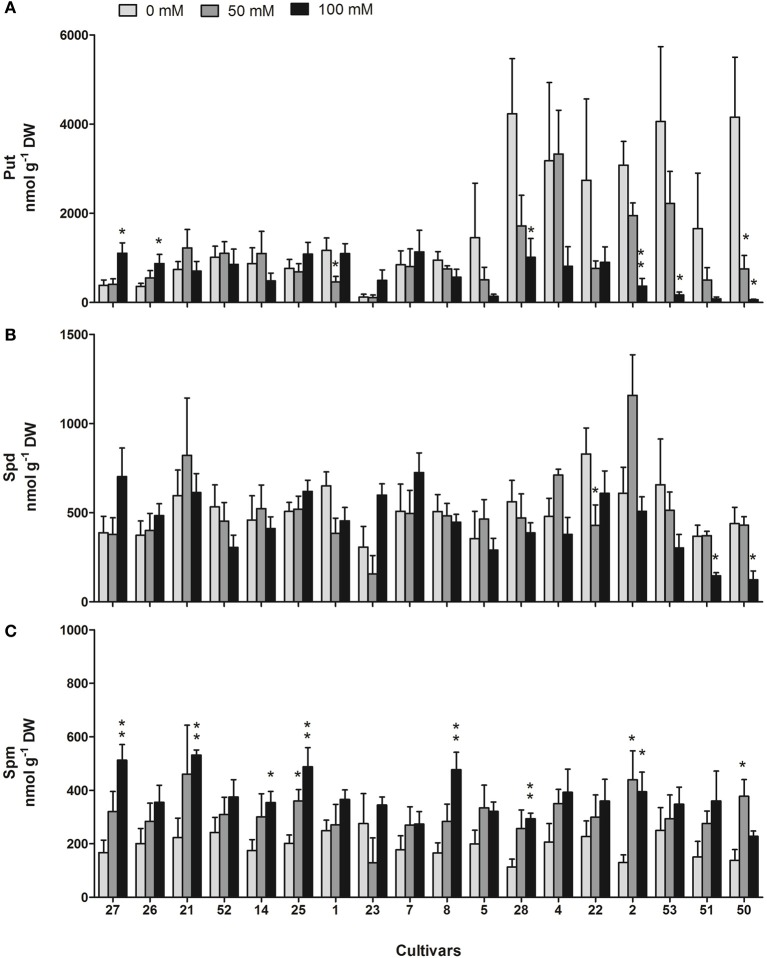
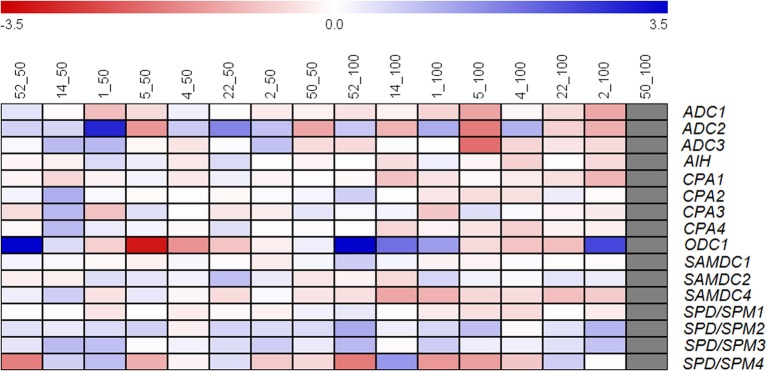
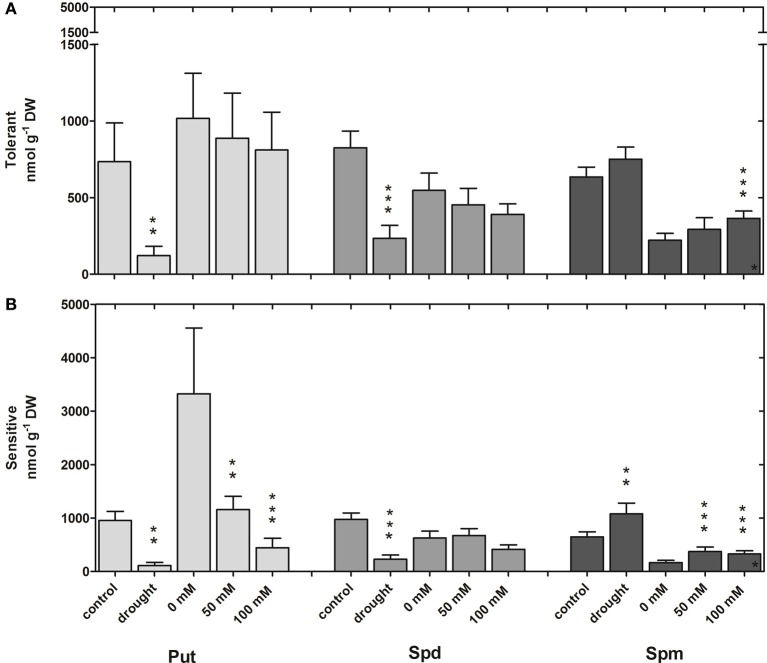
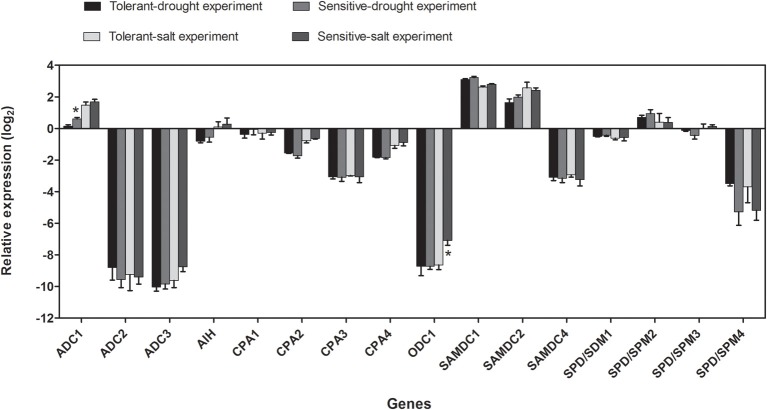
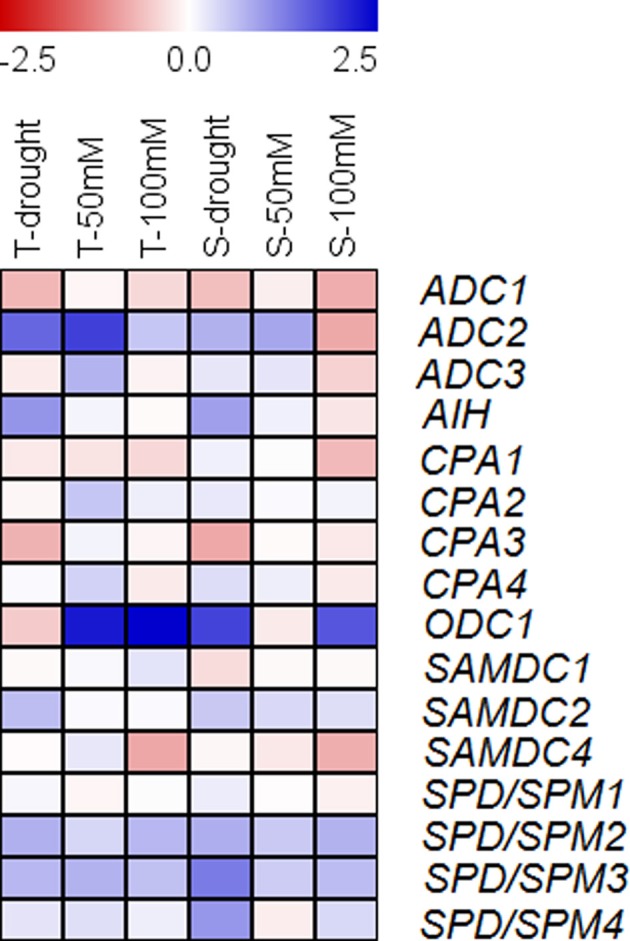
Soil salinity affects a large proportion of rural area and limits agricultural productivity. To investigate differential adaptation to soil salinity, we studied salt tolerance of 18 varieties of Oryza sativa using a hydroponic culture system. Based on visual inspection and photosynthetic parameters, cultivars were classified according to their tolerance level. Additionally, biomass parameters were correlated with salt tolerance. Polyamines have frequently been demonstrated to be involved in plant stress responses and therefore soluble leaf polyamines were measured. Under salinity, putrescine (Put) content was unchanged or increased in tolerant, while dropped in sensitive cultivars. Spermidine (Spd) content was unchanged at lower NaCl concentrations in all, while reduced at 100 mM NaCl in sensitive cultivars. Spermine (Spm) content was increased in all cultivars. A comparison with data from 21 cultivars under long-term, moderate drought stress revealed an increase of Spm under both stress conditions. While Spm became the most prominent polyamine under drought, levels of all three polyamines were relatively similar under salt stress. Put levels were reduced under both, drought and salt stress, while changes in Spd were different under drought (decrease) or salt (unchanged) conditions. Regulation of polyamine metabolism at the transcript level during exposure to salinity was studied for genes encoding enzymes involved in the biosynthesis of polyamines and compared to expression under drought stress. Based on expression profiles, investigated genes were divided into generally stress-induced genes (ADC2, SPD/SPM2, SPD/SPM3), one generally stress-repressed gene (ADC1), constitutively expressed genes (CPA1, CPA2, CPA4, SAMDC1, SPD/SPM1), specifically drought-induced genes (SAMDC2, AIH), one specifically drought-repressed gene (CPA3) and one specifically salt-stress repressed gene (SAMDC4), revealing both overlapping and specific stress responses under these conditions.
土壤盐度影响了很大一部分农村地区,并限制了农业生产力。为了研究对土壤盐度的差异适应,我们使用水培培养系统研究了 18 个水稻品种的耐盐性。根据肉眼观察和光合参数,根据其耐受水平对品种进行分类。此外,生物量参数与耐盐性相关。多胺经常被证明参与植物的应激反应,因此测量了叶片中的可溶性多胺。在盐胁迫下,耐盐品种的腐胺(Put)含量不变或增加,而敏感品种的腐胺含量下降。所有品种在较低的 NaCl 浓度下,亚精胺(Spd)含量不变,而在敏感品种中在 100 mM NaCl 时降低。所有品种的精胺(Spm)含量增加。将这些数据与 21 个品种在长期中度干旱胁迫下的数据进行比较,发现 Spm 在两种胁迫条件下都增加。虽然 Spm 在干旱条件下成为最主要的多胺,但在盐胁迫下三种多胺的水平相对相似。在两种胁迫下,Put 水平降低,而 Spd 的变化在干旱(降低)或盐(不变)条件下不同。研究了暴露于盐胁迫下参与多胺生物合成的酶的基因的转录水平的多胺代谢调控,并与干旱胁迫下的表达进行了比较。根据表达谱,研究的基因分为一般应激诱导基因(ADC2、SPD/SPM2、SPD/SPM3)、一个一般应激抑制基因(ADC1)、组成型表达基因(CPA1、CPA2、CPA4、SAMDC1、SPD/SPM1)、特异性干旱诱导基因(SAMDC2、AIH)、一个特异性干旱抑制基因(CPA3)和一个特异性盐胁迫抑制基因(SAMDC4),揭示了这些条件下的重叠和特定的应激反应。