Acosta Oscar, Solano Luis, Escobar Jorge, Fernandez Miguel, Solano Carlos, Fujita Ricardo
Institute of Tropical Medicine Daniel A. Carrion, Faculty of Medicine, Major National University of San Marcos, Lima, Peru ; Genetics and Molecular Biology Center, Faculty of Medicine, University of San Martin of Porres, Lima, Peru ; Institute of Biological Chemistry, Microbiology and Biotechnology, Faculty of Pharmacy and Biochemistry, Major National University of San Marcos, Lima, Peru.
Institute of Tropical Medicine Daniel A. Carrion, Faculty of Medicine, Major National University of San Marcos, Lima, Peru.
Interdiscip Perspect Infect Dis. 2014;2014:576107. doi: 10.1155/2014/576107. Epub 2014 Mar 31.
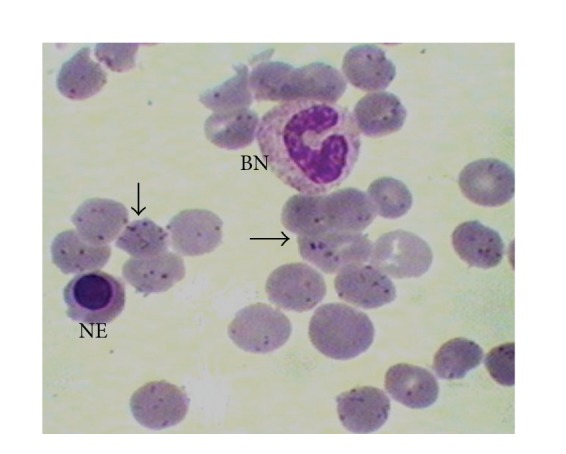
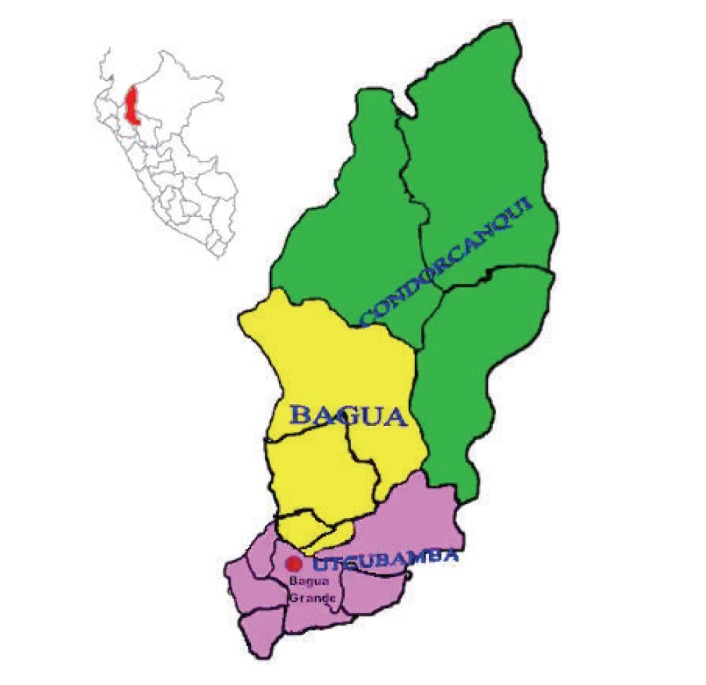
Carrion's disease (CD), is a human bartonellosis, that is, endemic in the Andes of Peru, Ecuador, and Colombia. Bartonella bacilliformis, a native hemotrophic bacteria, is the causative agent of CD, and the interaction with the host could have produced changes in the gene frequencies of erythrocyte antigens. The goal here is to investigate the relationship between allele frequencies of blood group systems MNS, Diego, and Duffy and the clinical phases of CD, within a genetic context. In this associative and analytical study, 76 individuals from Bagua Grande, the province of Utcubamba, and the department of Amazonas in Peru, were enrolled. Forty of them resided in Tomocho-Collicate-Vista Hermosa area (high prevalence of cases in chronic phase, verrucous, or eruptive phase, without previous acute phase). Thirty-six individuals were from the area of Miraflores (high prevalence of cases in acute phase only) and were evaluated for blood group systems MNS, Diego, and Duffy. This study constitutes one of the first attempts at evaluating the genetic factors and clinical phases of CD. No significant statistical differences (P > 0.05) between allele frequencies of blood groups MNS, Diego, and Duffy and the prevalence of chronic and acute phases were detected in the two areas of Amazonas, Peru.
卡里翁病(CD)是一种人类巴尔通体病,即该病在秘鲁、厄瓜多尔和哥伦比亚的安第斯地区流行。本地血营养细菌杆菌状巴尔通体是CD的病原体,其与宿主的相互作用可能导致红细胞抗原基因频率发生变化。本文旨在探讨在遗传背景下,血型系统MNS、迭戈和达菲的等位基因频率与CD临床阶段之间的关系。在这项关联性分析研究中,招募了来自秘鲁乌图班巴省巴瓜格兰德市和亚马孙省的76名个体。其中40人居住在托莫乔-科利卡特-美景地区(慢性期、疣状或爆发期病例高发,无前急性期)。36人来自米拉弗洛雷斯地区(仅急性期病例高发),并对其进行了血型系统MNS、迭戈和达菲的评估。本研究是评估CD遗传因素和临床阶段的首批尝试之一。在秘鲁亚马孙省的两个地区,未检测到血型MNS、迭戈和达菲的等位基因频率与慢性期和急性期患病率之间存在显著统计学差异(P>0.05)。