Comparative Biomedical Sciences (V.C-S., J.E.R., S.R., A.A.K., A.M., A.M.d.M.), The Royal Veterinary College, London NW1 0TU, United Kingdom; Baker Institute for Animal Health (D.F.A.), College of Veterinary Medicine, Cornell University, Ithaca, New York 14853; and Biomedical Sciences (J.E.C.), St George's University of London SW17 0RE, London, United Kingdom.
Endocrinology. 2014 Aug;155(8):3054-64. doi: 10.1210/en.2013-2116. Epub 2014 May 21.
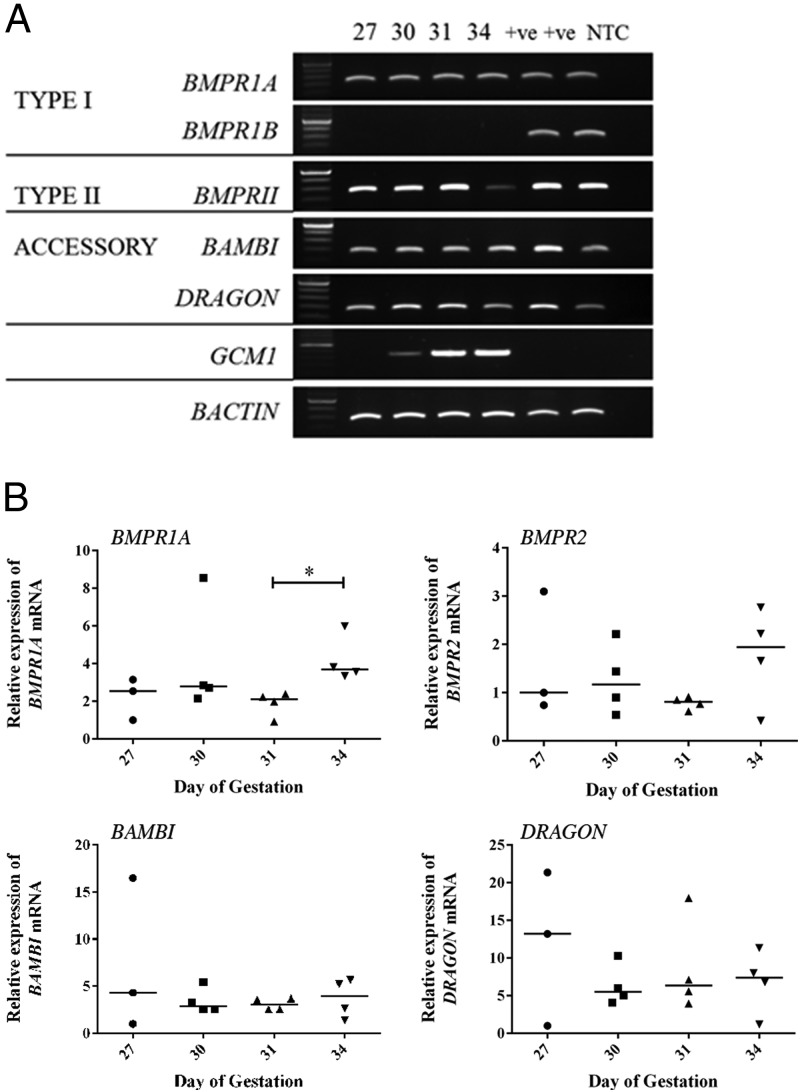
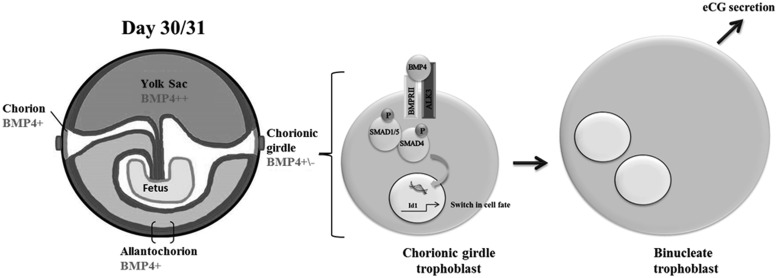
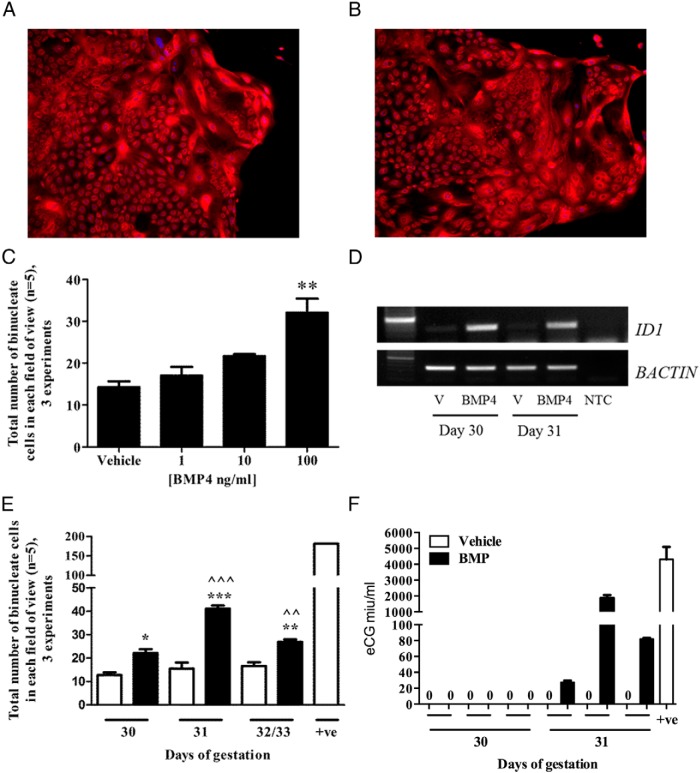
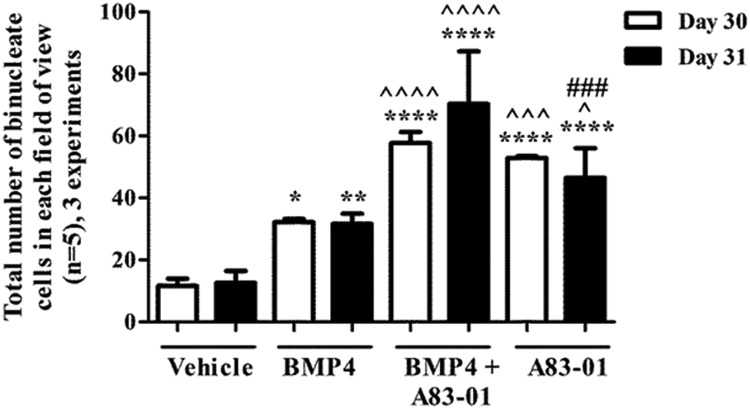
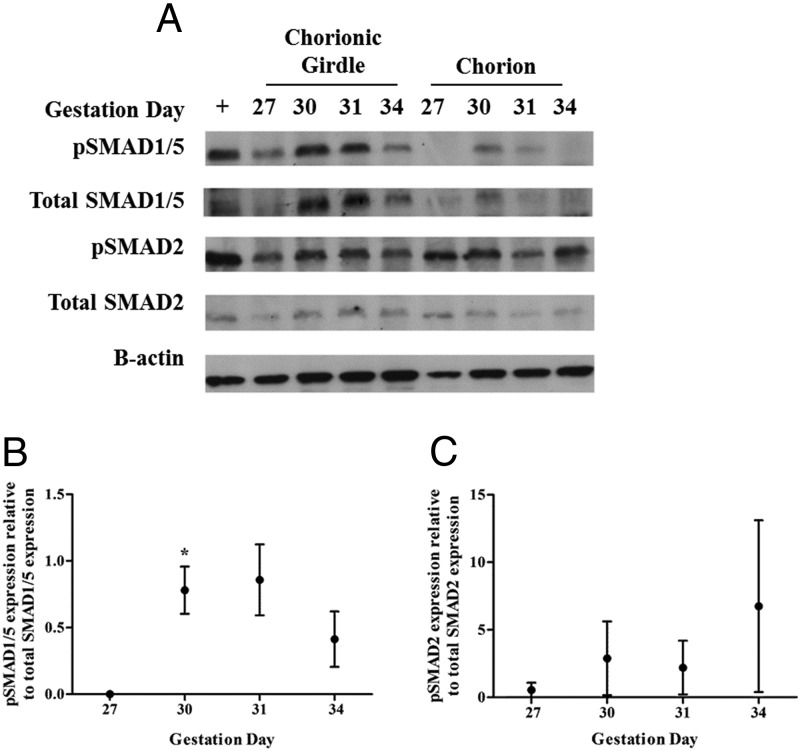
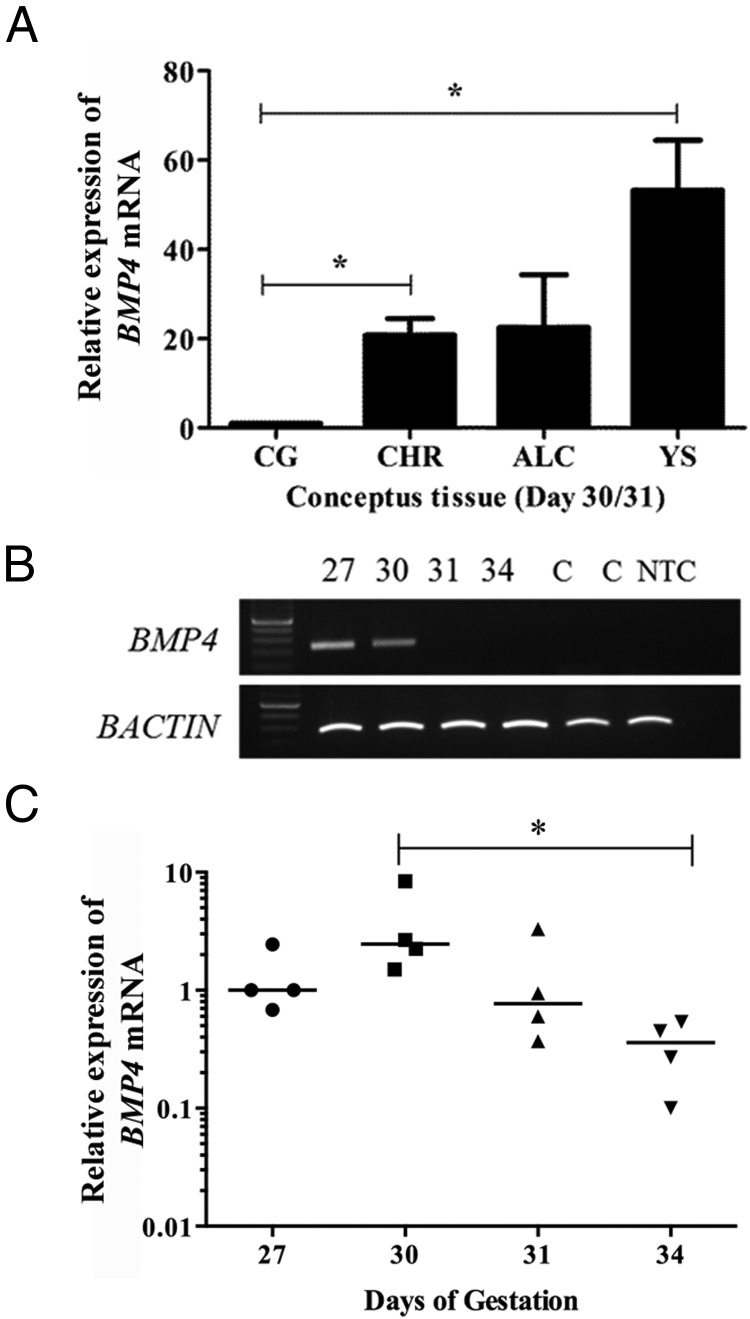
TGFβ superfamily proteins, acting via SMAD (Sma- and Mad-related protein)2/3 pathways, regulate placental function; however, the role of SMAD1/5/8 pathway in the placenta is unknown. This study investigated the functional role of bone morphogenetic protein (BMP)4 signaling through SMAD1/5 in terminal differentiation of primary chorionic gonadotropin (CG)-secreting trophoblast. Primary equine trophoblast cells or placental tissues were isolated from day 27-34 equine conceptuses. Detected by microarray, RT-PCR, and quantitative RT-PCR, equine chorionic girdle trophoblast showed increased gene expression of receptors that bind BMP4. BMP4 mRNA expression was 20- to 60-fold higher in placental tissues adjacent to the chorionic girdle compared with chorionic girdle itself, suggesting BMP4 acts primarily in a paracrine manner on the chorionic girdle. Stimulation of chorionic girdle-trophoblast cells with BMP4 resulted in a dose-dependent and developmental stage-dependent increase in total number and proportion of terminally differentiated binucleate cells. Furthermore, BMP4 treatment induced non-CG-secreting day 31 chorionic girdle trophoblast cells to secrete CG, confirming a specific functional response to BMP4 stimulation. Inhibition of SMAD2/3 signaling combined with BMP4 treatment further enhanced differentiation of trophoblast cells. Phospho-SMAD1/5, but not phospho-SMAD2, expression as determined by Western blotting was tightly regulated during chorionic girdle trophoblast differentiation in vivo, with peak expression of phospho-SMAD1/5 in vivo noted at day 31 corresponding to maximal differentiation response of trophoblast in vitro. Collectively, these experiments demonstrate the involvement of BMP4-dependent pathways in the regulation of equine trophoblast differentiation in vivo and primary trophoblast differentiation in vitro via activation of SMAD1/5 pathway, a previously unreported mechanism of TGFβ signaling in the mammalian placenta.
TGFβ 超家族蛋白通过 SMAD(Sma-和 Mad 相关蛋白)2/3 途径调节胎盘功能;然而,SMAD1/5/8 途径在胎盘中的作用尚不清楚。本研究通过 SMAD1/5 研究了骨形态发生蛋白(BMP)4 信号在初级绒毛膜促性腺激素(CG)分泌滋养细胞终末分化中的功能作用。从马胚第 27-34 天分离原代马绒毛膜滋养层细胞或胎盘组织。通过微阵列、RT-PCR 和定量 RT-PCR 检测,马绒毛膜带滋养层显示与绒毛膜带本身相比,结合 BMP4 的受体基因表达增加。与绒毛膜带本身相比,胎盘组织中 BMP4 mRNA 表达增加了 20-60 倍,表明 BMP4 主要以旁分泌方式作用于绒毛膜带。BMP4 刺激绒毛膜带滋养层细胞导致总核数和终末分化双核细胞比例呈剂量依赖性和发育阶段依赖性增加。此外,BMP4 处理诱导非 CG 分泌的第 31 天绒毛膜带滋养层细胞分泌 CG,证实了对 BMP4 刺激的特异性功能反应。SMAD2/3 信号通路的抑制与 BMP4 处理相结合,进一步增强了滋养层细胞的分化。Western blot 法检测到的磷酸化 SMAD1/5 表达而非磷酸化 SMAD2 表达在体内绒毛膜带滋养层分化过程中受到严格调控,体内磷酸化 SMAD1/5 表达峰值出现在第 31 天,与体外滋养层最大分化反应相对应。总之,这些实验表明 BMP4 依赖性途径参与了体内马滋养层分化和体外原代滋养层分化的调节,通过激活 SMAD1/5 途径,这是 TGFβ 信号在哺乳动物胎盘内的一个以前未报道的机制。