Liu D, Huang Y, Bu D, Liu A D, Holmberg L, Jia Y, Tang C, Du J, Jin H
Department of Pediatrics, Peking University First Hospital, Beijing, People's Republic of China.
Central Laboratory, Peking University First Hospital, Beijing, People's Republic of China.
Cell Death Dis. 2014 May 22;5(5):e1251. doi: 10.1038/cddis.2014.229.
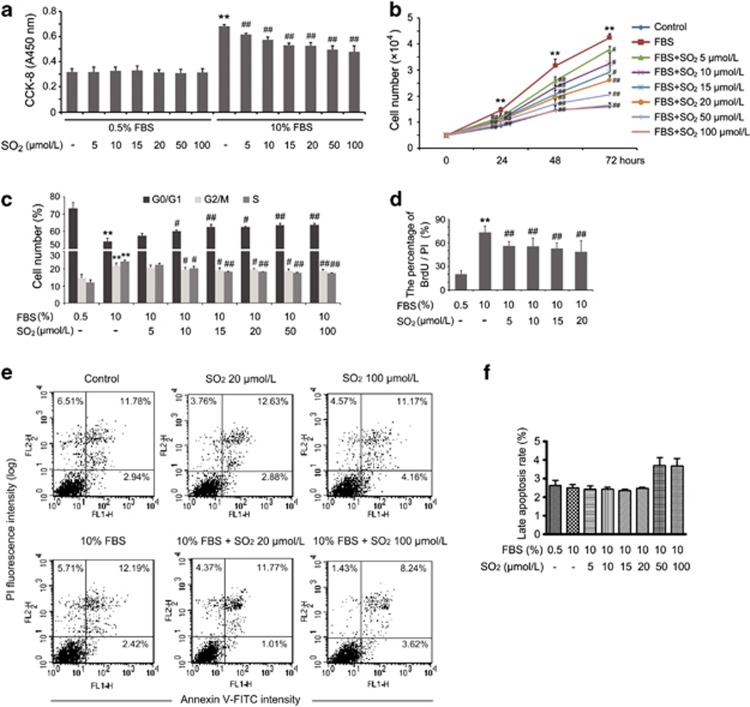
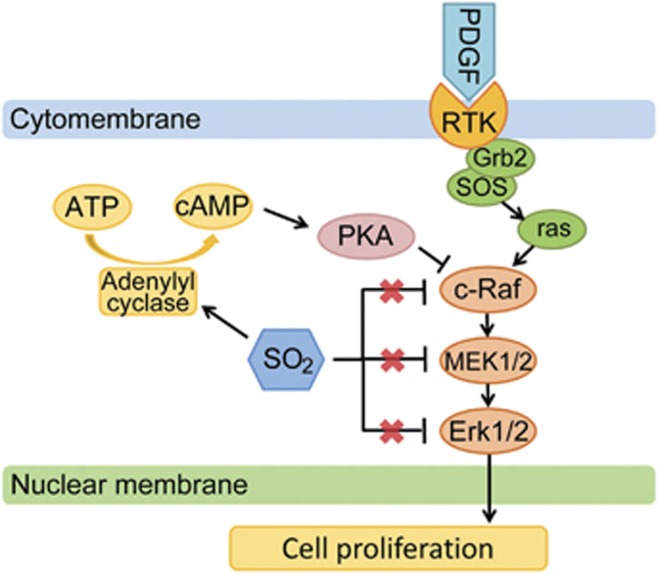
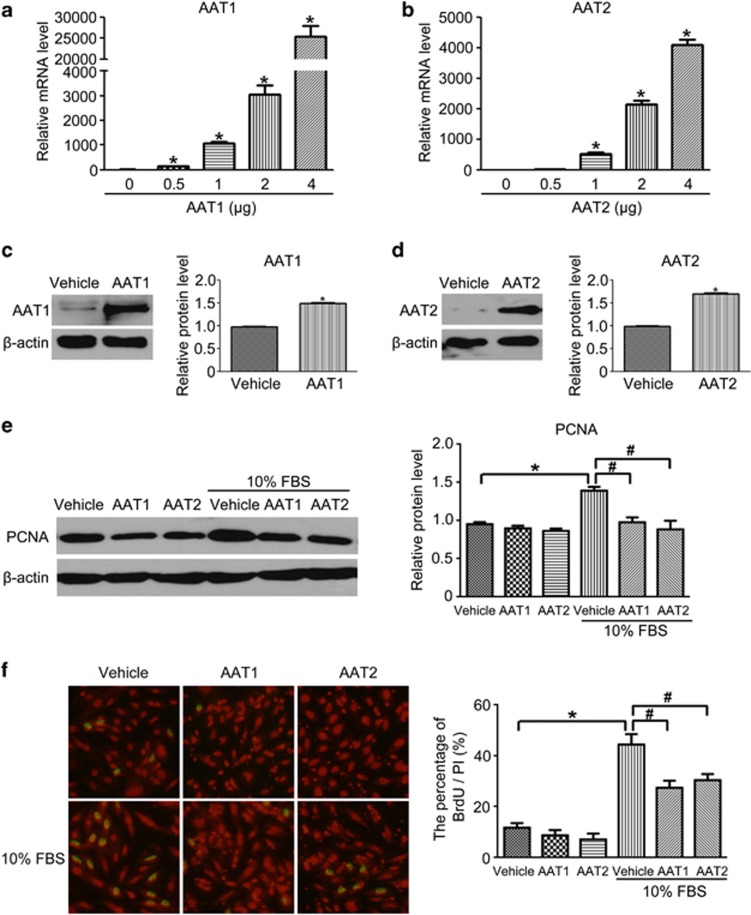
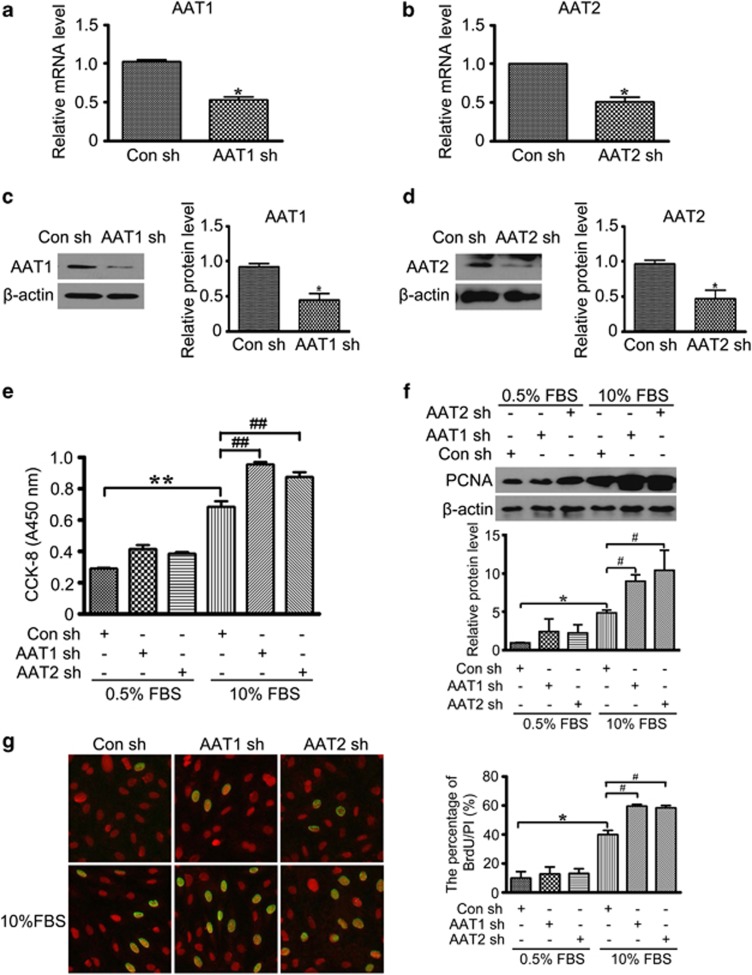
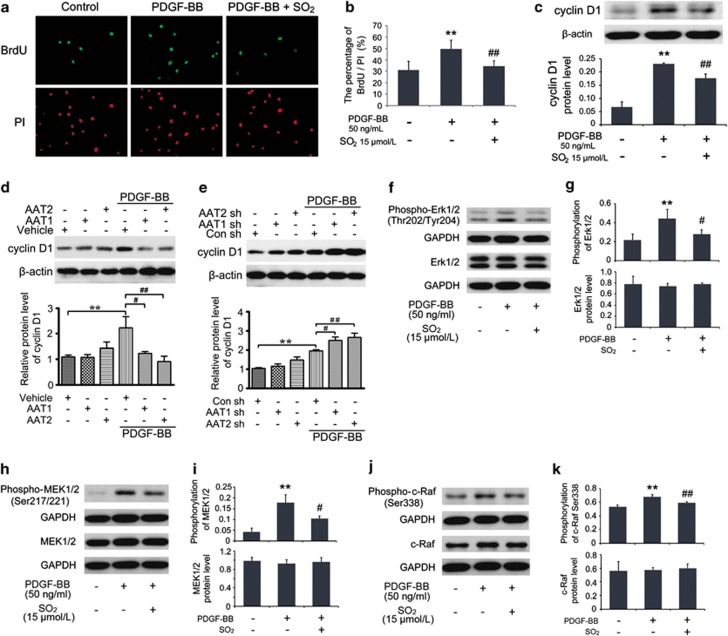
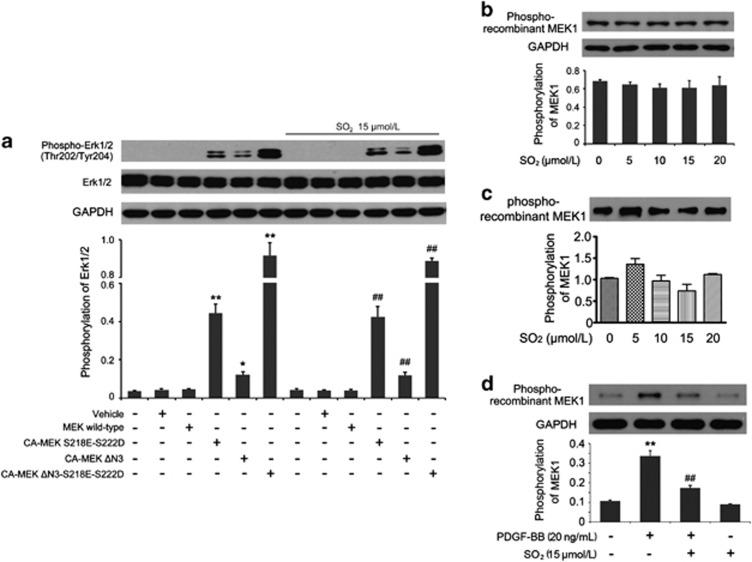
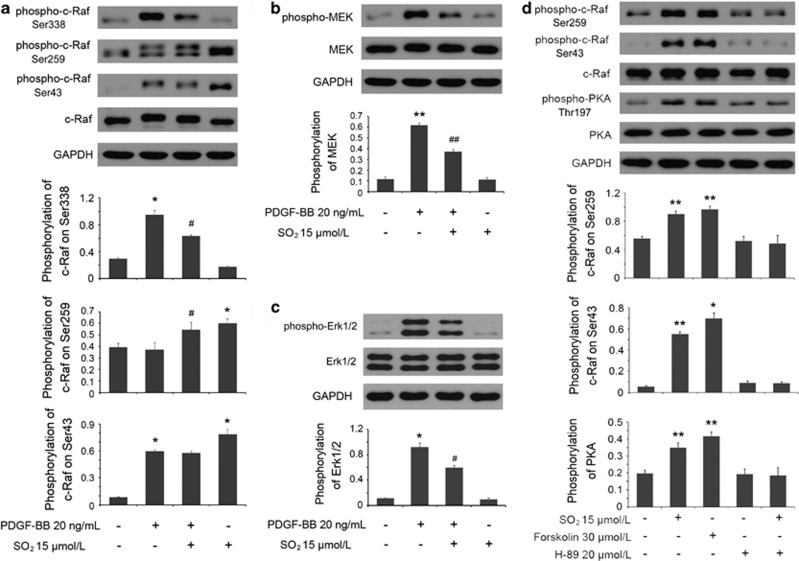
The present study was designed to investigate the role of endogenous sulfur dioxide (SO2) in vascular smooth muscle cell (VSMC) proliferation, and explore the possible role of cross-talk between cyclic adenosine monophosphate (cAMP)/protein kinase A (PKA) and extracellular signal-regulated kinase (Erk)/mitogen-activated protein kinase (MAPK) pathways in this action. By cell counting, growth curve depict, flow cytometry and bromodeoxyuridine (BrdU) labeling assays, we found that SO2 inhibited VSMC proliferation by preventing cell cycle progression from G1 to S phase and by reducing DNA synthesis. SO2 synthase aspartate aminotransferase (AAT1 and AAT2) overexpression significantly inhibited serum-induced proliferating cell nuclear antigen (PCNA) protein expression in VSMCs, demonstrated by western blot analysis. Moreover, overexpression of AAT1 or AAT2 markedly reduced incorporation of BrdU in serum-treated VSMCs. By contrast, either AAT1 or AAT2 knockdown significantly exacerbated serum-stimulated VSMC proliferation. Thus, both exogenous- and endogenous-derived SO2 suppressed serum-induced VSMC proliferation. However, annexin V-propidium iodide (PI) staining and cell cycle analysis demonstrated that SO2 did not influence VSMC apoptosis in the serum-induced proliferation model. In a platelet-derived growth factor (PDGF)-BB-stimulated VSMC proliferation model, SO2 dephosphorylated the active sites of Erk1/2, MAPK kinase 1/2 and RAF proto-oncogene serine/threonine-protein kinase (c-Raf) induced by PDGF-BB. However, the inactivation of the three kinases of the Erk/MAPK pathway was not due to the separate interferences on them by SO2 simultaneously, but a consequence of the influence on the upstream activity of the c-Raf molecule. Hence, we examined the cAMP/PKA pathway, which could inhibit Erk/MAPK transduction in VSMCs. The results showed that SO2 could stimulate the cAMP/PKA pathway to block c-Raf activation, whereas the Ser259 site on c-Raf had an important role in SO2-induced suppression of Erk/MAPK pathway. The present study firstly demonstrated that SO2 exerted a negative regulation of VSMC proliferation via suppressing the Erk/MAPK pathway mediated by cAMP/PKA signaling.
本研究旨在探讨内源性二氧化硫(SO₂)在血管平滑肌细胞(VSMC)增殖中的作用,并探究环磷酸腺苷(cAMP)/蛋白激酶A(PKA)与细胞外信号调节激酶(Erk)/丝裂原活化蛋白激酶(MAPK)通路之间的相互作用在该过程中可能发挥的作用。通过细胞计数、生长曲线描绘、流式细胞术和溴脱氧尿苷(BrdU)标记试验,我们发现SO₂通过阻止细胞周期从G1期进展到S期以及减少DNA合成来抑制VSMC增殖。通过蛋白质印迹分析表明,SO₂合酶天冬氨酸转氨酶(AAT1和AAT2)的过表达显著抑制了血清诱导的VSMC中增殖细胞核抗原(PCNA)蛋白的表达。此外,AAT1或AAT2的过表达显著降低了血清处理的VSMC中BrdU的掺入。相反,AAT1或AAT2的敲低显著加剧了血清刺激的VSMC增殖。因此,外源性和内源性来源的SO₂均抑制血清诱导的VSMC增殖。然而,膜联蛋白V-碘化丙啶(PI)染色和细胞周期分析表明,在血清诱导的增殖模型中,SO₂不影响VSMC凋亡。在血小板衍生生长因子(PDGF)-BB刺激的VSMC增殖模型中,SO₂使PDGF-BB诱导的Erk1/2、MAPK激酶1/2和RAF原癌基因丝氨酸/苏氨酸蛋白激酶(c-Raf)的活性位点去磷酸化。然而,Erk/MAPK通路中这三种激酶的失活并非由于SO₂同时对它们的单独干扰,而是对c-Raf分子上游活性影响的结果。因此,我们研究了可抑制VSMC中Erk/MAPK转导的cAMP/PKA通路。结果表明,SO₂可刺激cAMP/PKA通路以阻断c-Raf激活,而c-Raf上的Ser259位点在SO₂诱导的对Erk/MAPK通路的抑制中起重要作用。本研究首次证明,SO₂通过抑制由cAMP/PKA信号介导的Erk/MAPK通路对VSMC增殖发挥负调控作用。