Wu M-H, Chen Y-A, Chen H-H, Chang K-W, Chang I-S, Wang L-H, Hsu H-L
Institute of Molecular and Genomic Medicine, National Health Research Institutes, Taiwan, ROC.
Institute of Population Health Science, National Health Research Institutes, Taiwan, ROC.
Oncogene. 2014 Oct 23;33(43):5109-20. doi: 10.1038/onc.2014.125. Epub 2014 May 26.
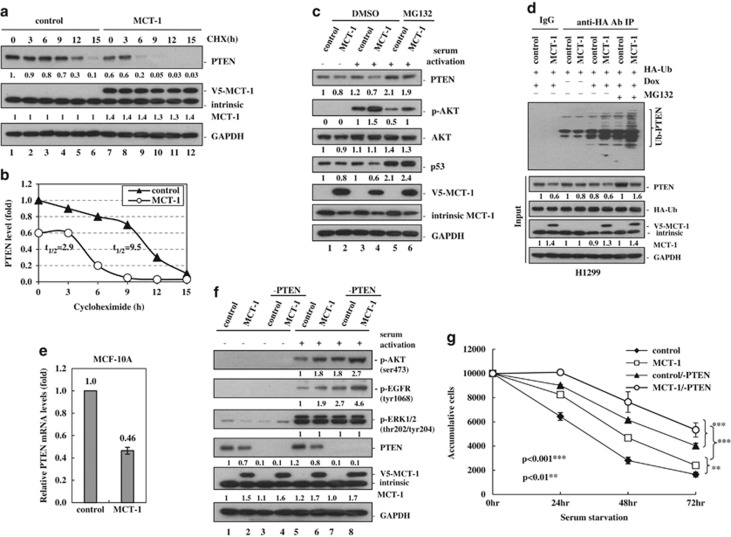
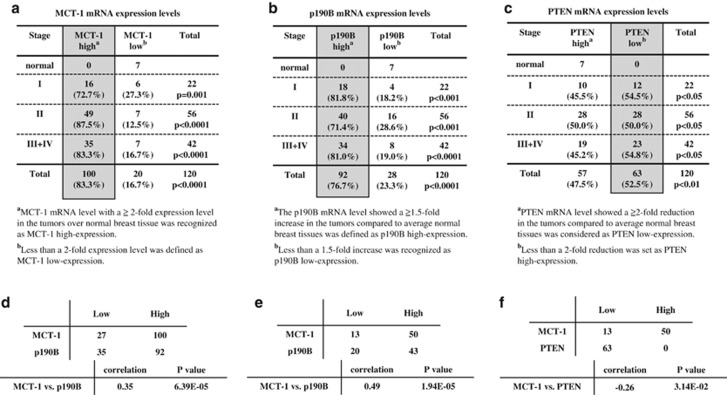
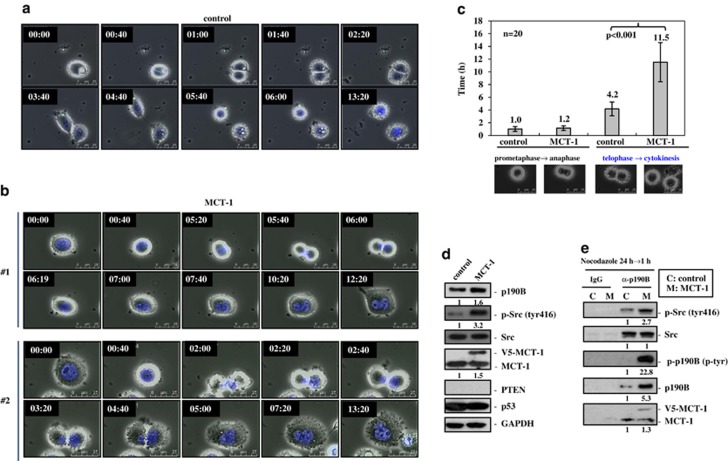
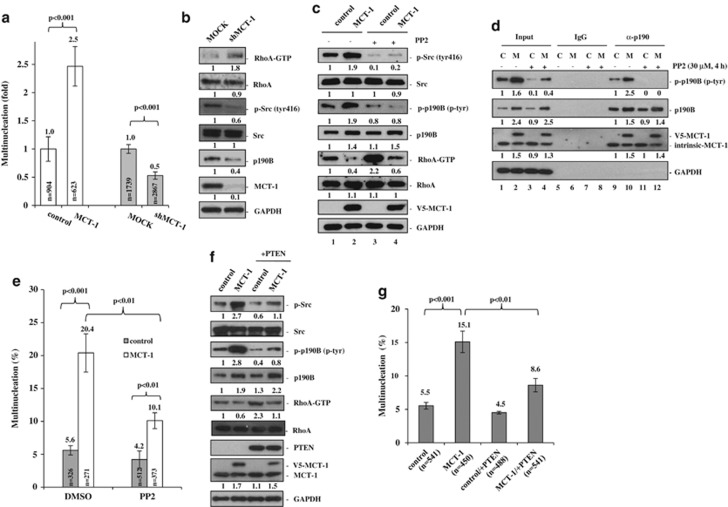
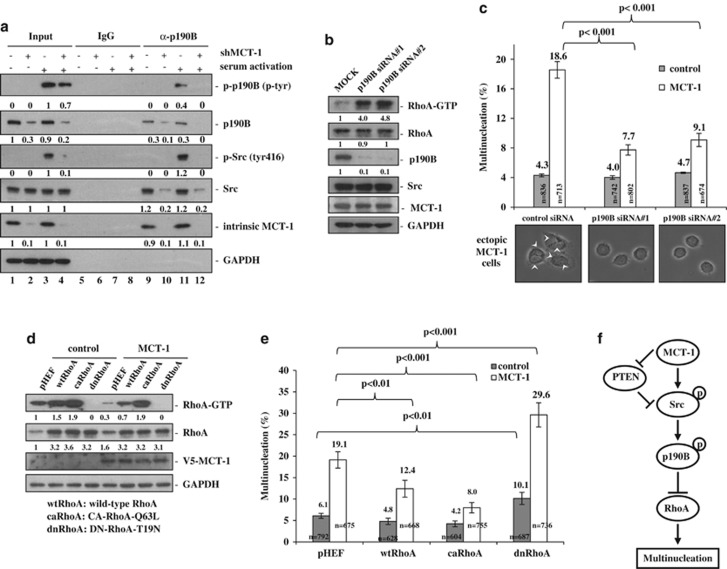
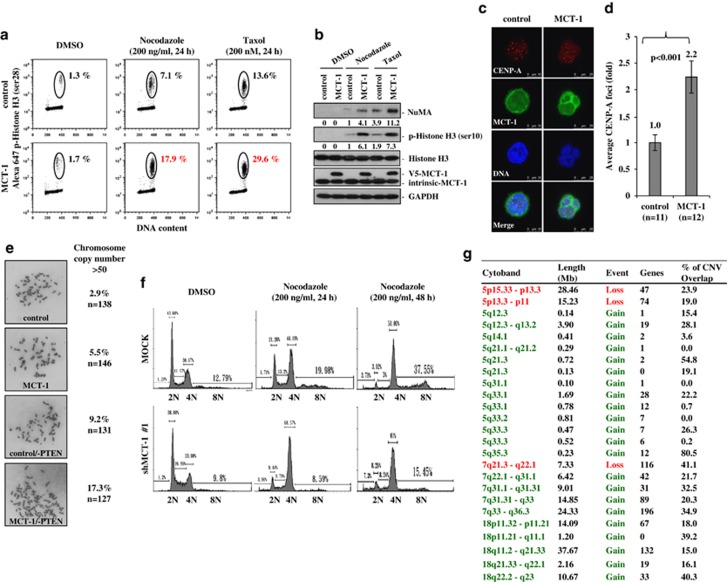
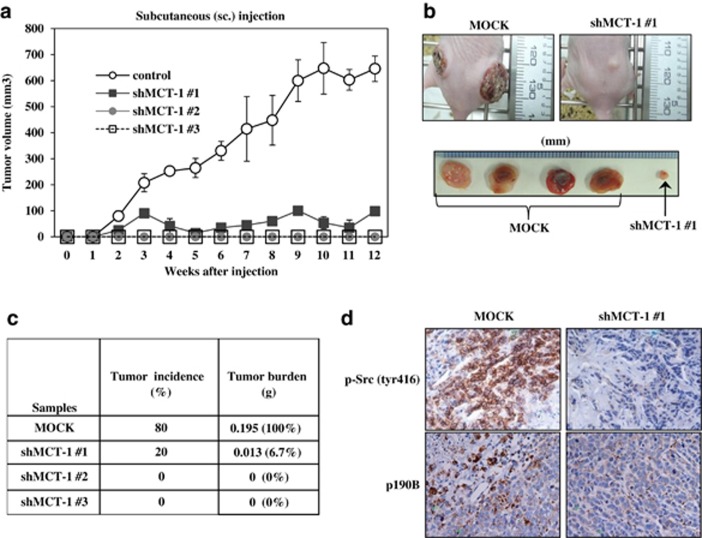
Multinucleation is associated with malignant neoplasms; however, the molecular mechanism underlying the nuclear abnormality remains unclear. Loss or mutation of PTEN promotes the development of malignant tumors. We now demonstrate that increased expression of the oncogene MCT-1 (multiple copies in T-cell malignancy 1) antagonizes PTEN gene presentation, PTEN protein stability and PTEN functional activity, thereby further promoting phosphoinositide 3 kinase/AKT signaling, survival rate and malignancies of the PTEN-deficient cells. In the PTEN-null cancer cells, MCT-1 interacts with p190B and Src in vivo, supporting that they are in proximity of the signaling complexes. MCT-1 overexpression and PTEN loss synergistically augments the Src/p190B signaling function that leads to inhibition of RhoA activity. Under such a condition, the incidence of mitotic catastrophes including spindle multipolarity and cytokinesis failure is enhanced, driving an Src/p190B/RhoA-dependent neoplastic multinucleation. Targeting MCT-1 by the short hairpin RNA markedly represses the Src/p190B function, improves nuclear structures and suppresses xenograft tumorigenicity of the PTEN-null breast cancer cells. Consistent with the oncogenic effects in vitro, clinical evidence has confirmed that MCT-1 gene stimulation is correlated with p190B gene promotion and PTEN gene suppression in human breast cancer. Accordingly, MCT-1 gene induction is recognized as a potential biomarker of breast tumor development. Abrogating MCT-1 function may be a promising stratagem for management of breast cancer involving Src hyperactivation and/or PTEN dysfunction.
多核化与恶性肿瘤相关;然而,这种核异常背后的分子机制仍不清楚。PTEN的缺失或突变会促进恶性肿瘤的发展。我们现在证明,癌基因MCT-1(T细胞恶性肿瘤中的多个拷贝1)表达增加会拮抗PTEN基因表达、PTEN蛋白稳定性和PTEN功能活性,从而进一步促进磷酸肌醇3激酶/AKT信号传导、PTEN缺陷细胞的存活率和恶性程度。在PTEN缺失的癌细胞中,MCT-1在体内与p190B和Src相互作用,支持它们存在于信号复合物附近。MCT-1过表达和PTEN缺失协同增强Src/p190B信号功能,导致RhoA活性受到抑制。在这种情况下,包括纺锤体多极性和胞质分裂失败在内的有丝分裂灾难发生率增加,导致依赖Src/p190B/RhoA的肿瘤性多核化。用短发夹RNA靶向MCT-1可显著抑制Src/p190B功能,改善核结构并抑制PTEN缺失的乳腺癌细胞的异种移植致瘤性。与体外致癌作用一致,临床证据证实,在人类乳腺癌中,MCT-1基因激活与p190B基因促进和PTEN基因抑制相关。因此,MCT-1基因诱导被认为是乳腺肿瘤发展的潜在生物标志物。消除MCT-1功能可能是治疗涉及Src过度激活和/或PTEN功能障碍的乳腺癌的一种有前景的策略。