Cameron Ryan T, Quinn Steven D, Cairns Lynn S, MacLeod Ruth, Samuel Ifor D W, Smith Brian O, Carlos Penedo J, Baillie George S
Institute of Cardiovascular and Medical Science, College of Veterinary, Medical and life sciences, University of Glasgow, Glasgow G128QQ, UK.
SUPA School of Physics and Astronomy, University of St Andrews, North Haugh, Fife KY169SS, UK.
Mol Cell Neurosci. 2014 Jul;61:46-55. doi: 10.1016/j.mcn.2014.05.002. Epub 2014 May 20.
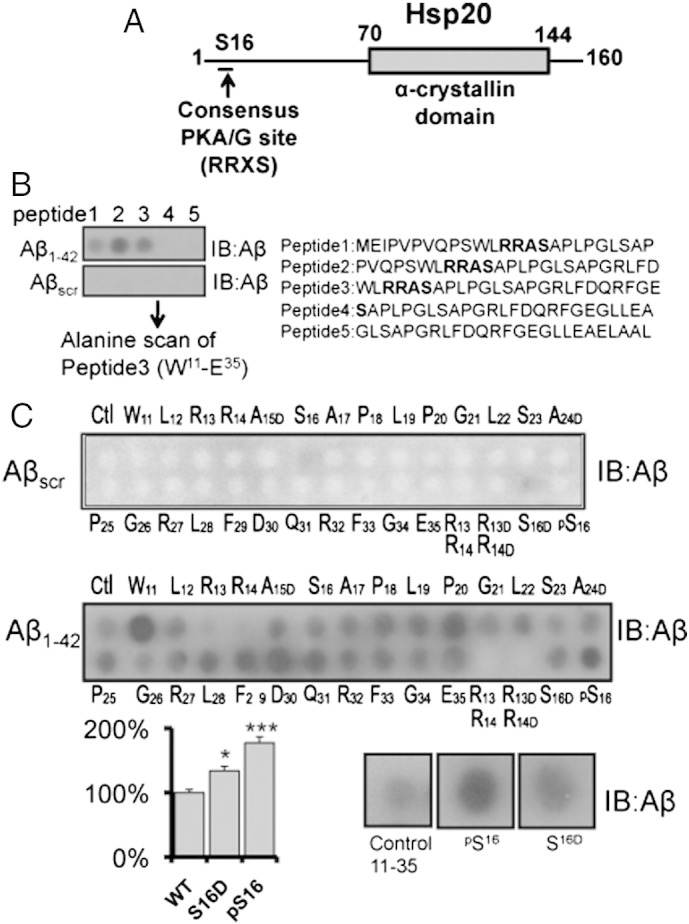
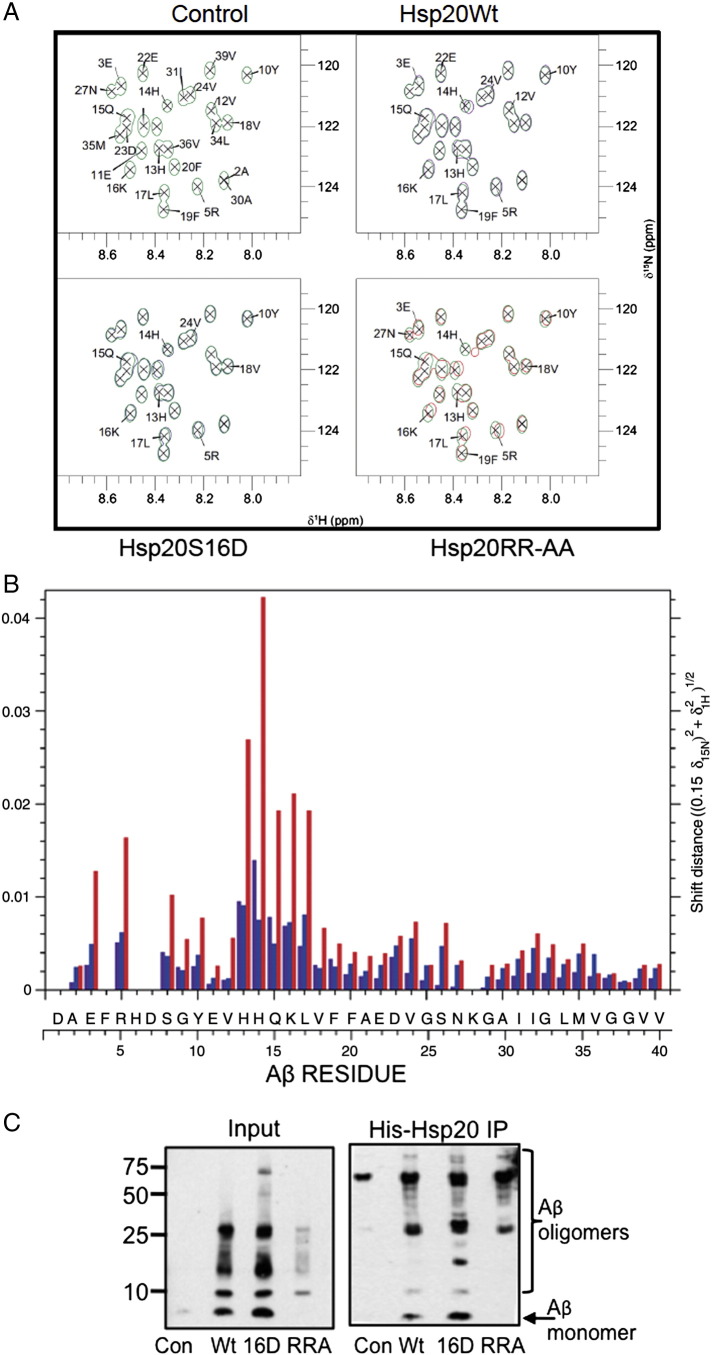
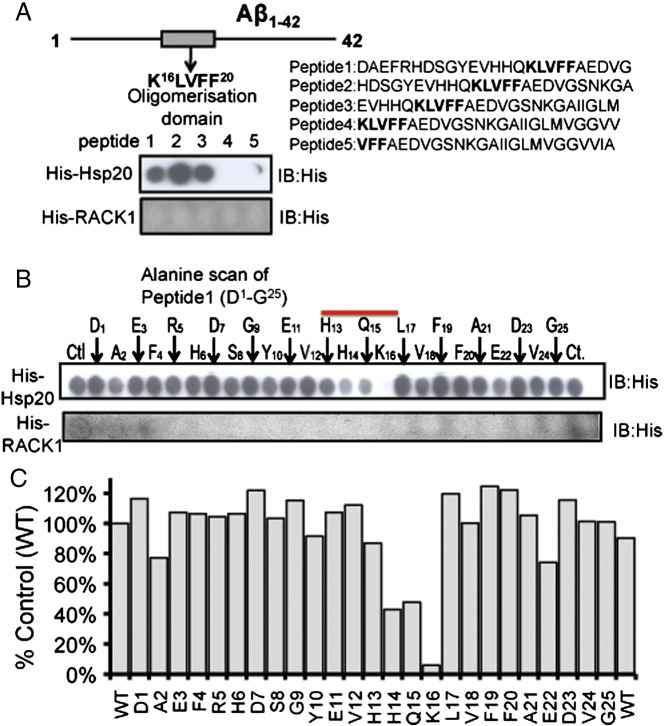
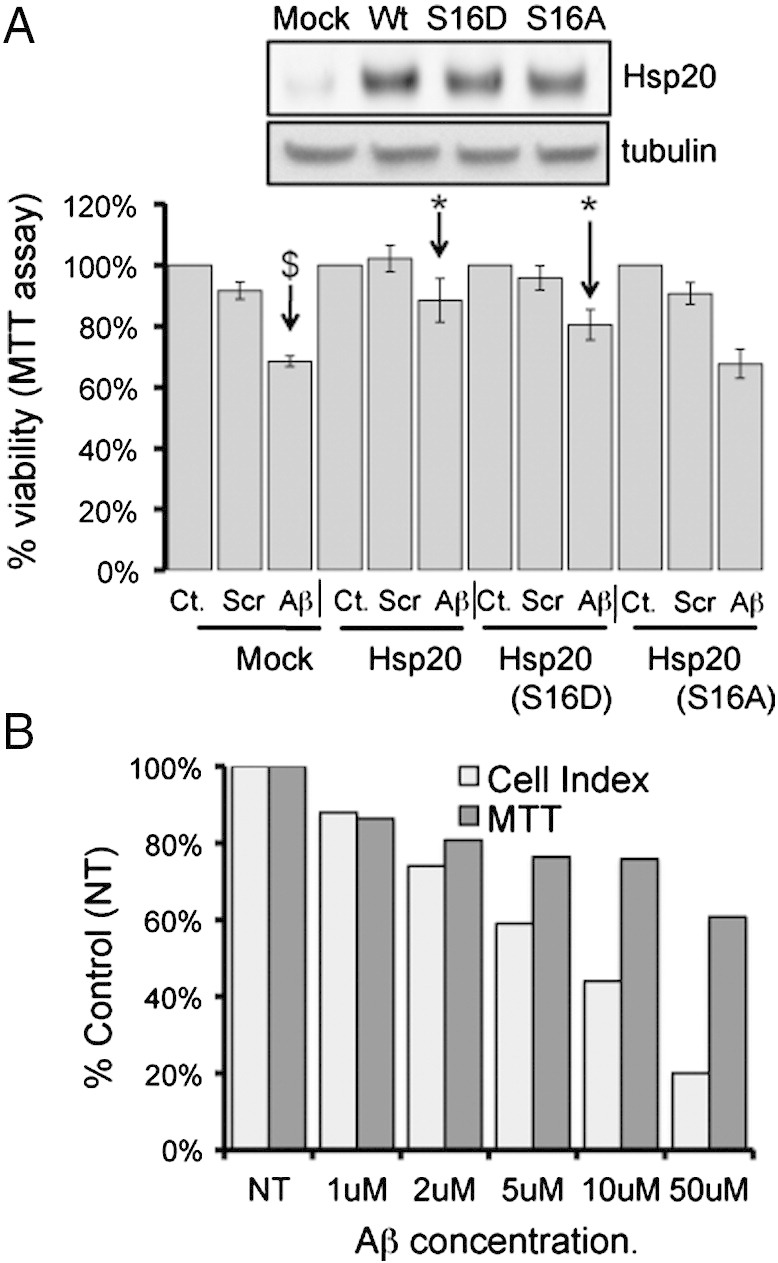
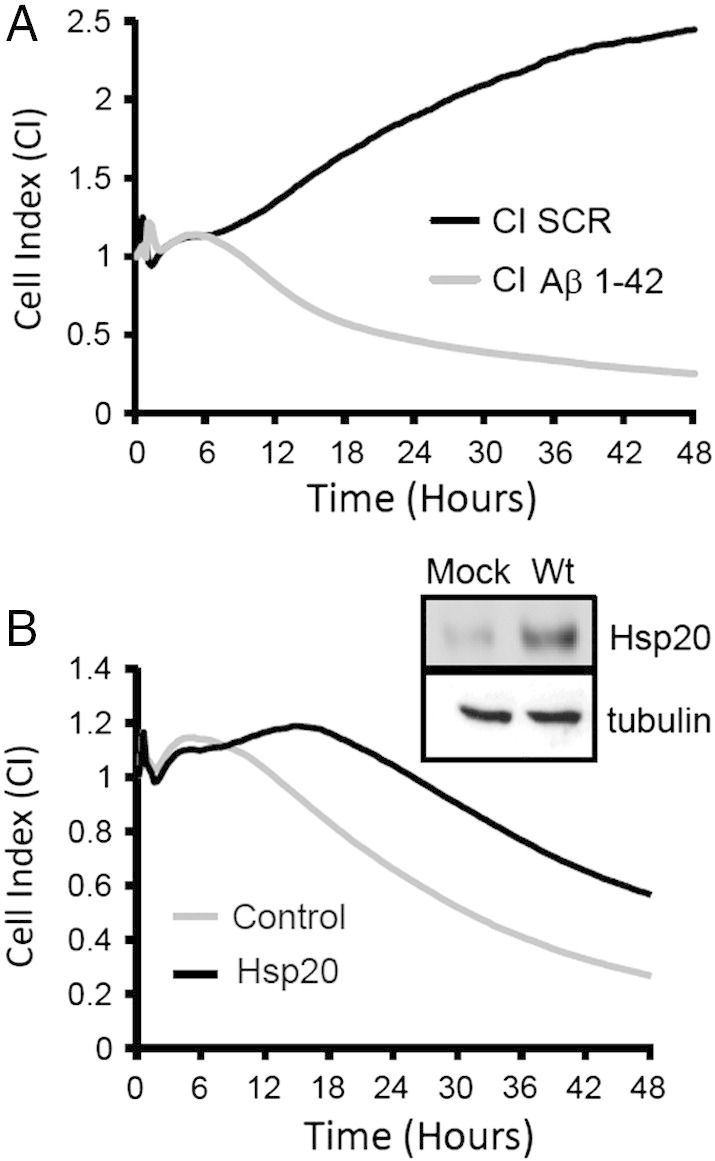
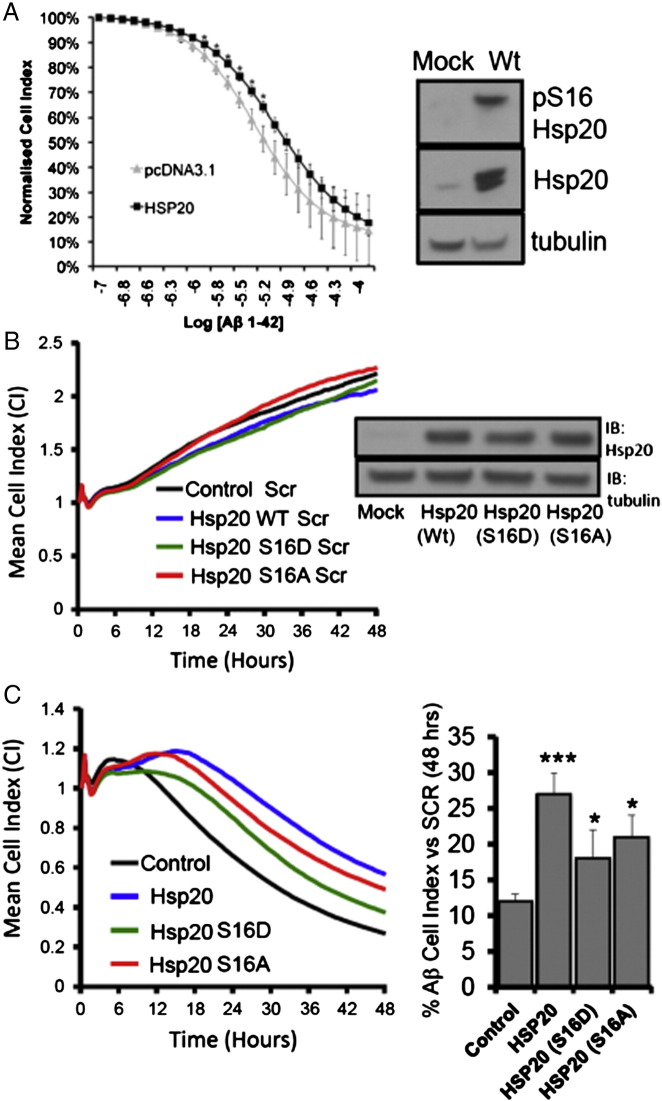
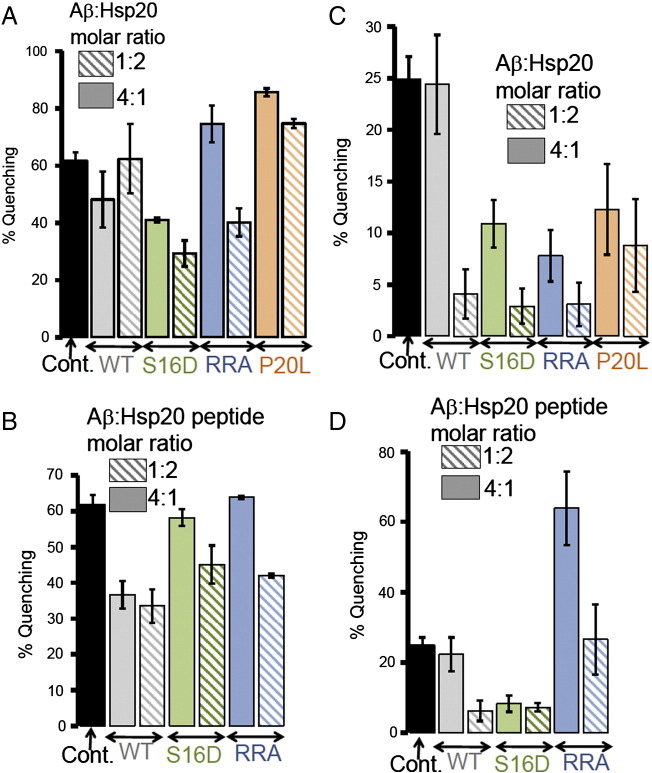
Up-regulation of Hsp20 protein levels in response to amyloid fibril formation is considered a key protective response against the onset of Alzheimer's disease (AD). Indeed, the physical interaction between Hsp20 and Aβ is known to prevent Aβ oligomerisation and protects neuronal cells from Aβ mediated toxicity, however, details of the molecular mechanism and regulatory cell signalling events behind this process have remained elusive. Using both conventional MTT end-point assays and novel real time measurement of cell impedance, we show that Hsp20 protects human neuroblastoma SH-SY5Y cells from the neurotoxic effects of Aβ. In an attempt to provide a mechanism for the neuroprotection afforded by Hsp20, we used peptide array, co-immunoprecipitation analysis and NMR techniques to map the interaction between Hsp20 and Aβ and report a binding mode where Hsp20 binds adjacent to the oligomerisation domain of Aβ, preventing aggregation. The Hsp20/Aβ interaction is enhanced by Hsp20 phosphorylation, which serves to increase association with low molecular weight Aβ species and decrease the effective concentration of Hsp20 required to disrupt the formation of amyloid oligomers. Finally, using a novel fluorescent assay for the real time evaluation of morphology-specific Aβ aggregation, we show that phospho-dependency of this effect is more pronounced for fibrils than for globular Aβ forms and that 25mers corresponding to the Hsp20 N-terminal can be used as Aβ aggregate inhibitors. Our report is the first to provide a molecular model for the Hsp20/Aβ complex and the first to suggest that modulation of the cAMP/cGMP pathways could be a novel route to enhance Hsp20-mediated attenuation of Aβ fibril neurotoxicity.
热休克蛋白20(Hsp20)蛋白水平响应淀粉样原纤维形成而上调,被认为是针对阿尔茨海默病(AD)发病的关键保护反应。事实上,已知Hsp20与β淀粉样蛋白(Aβ)之间的物理相互作用可防止Aβ寡聚化,并保护神经元细胞免受Aβ介导的毒性作用,然而,这一过程背后的分子机制和调节性细胞信号事件的细节仍不清楚。我们使用传统的MTT终点测定法和新型的细胞阻抗实时测量法,证明Hsp20可保护人神经母细胞瘤SH-SY5Y细胞免受Aβ的神经毒性作用。为了探究Hsp20提供神经保护作用的机制,我们使用肽阵列、免疫共沉淀分析和核磁共振技术来描绘Hsp20与Aβ之间的相互作用,并报告了一种结合模式,即Hsp20与Aβ的寡聚化结构域相邻结合,从而防止聚集。Hsp20的磷酸化增强了Hsp20/Aβ相互作用,这有助于增加与低分子量Aβ物种的结合,并降低破坏淀粉样寡聚体形成所需的Hsp20有效浓度。最后,我们使用一种新型荧光测定法实时评估形态特异性Aβ聚集,结果表明这种效应的磷酸化依赖性在原纤维中比在球状Aβ形式中更明显,并且对应于Hsp20 N端的25聚体可作为Aβ聚集抑制剂。我们的报告首次为Hsp20/Aβ复合物提供了分子模型,并且首次表明调节环磷酸腺苷/环磷酸鸟苷(cAMP/cGMP)途径可能是增强Hsp20介导的Aβ原纤维神经毒性减弱的新途径。