Tedesco B, Cristofani R, Ferrari V, Cozzi M, Rusmini P, Casarotto E, Chierichetti M, Mina F, Galbiati M, Piccolella M, Crippa V, Poletti A
Dipartimento di Scienze Farmacologiche e Biomolecolari, Università degli Studi di Milano, Milan, Italy.
Unit of Medical Genetics and Neurogenetics, Fondazione IRCCS Istituto Neurologico Carlo Besta, Milan, Italy.
Front Mol Biosci. 2022 Feb 25;9:842149. doi: 10.3389/fmolb.2022.842149. eCollection 2022.
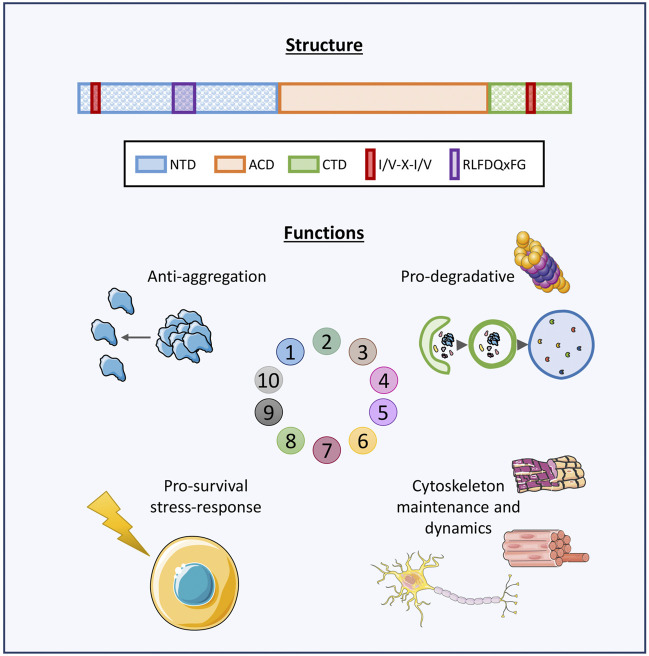
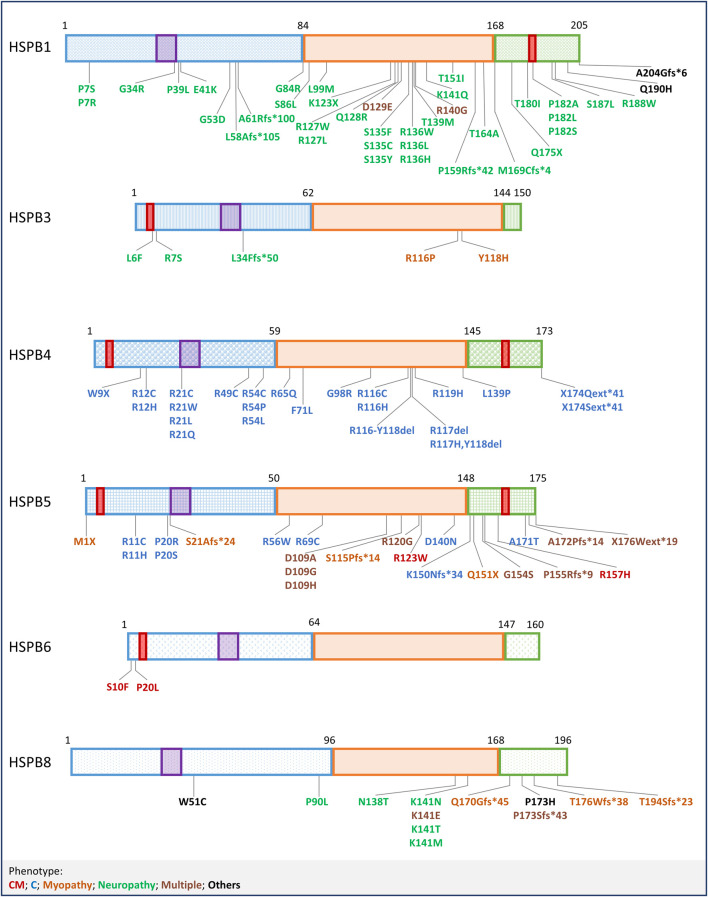
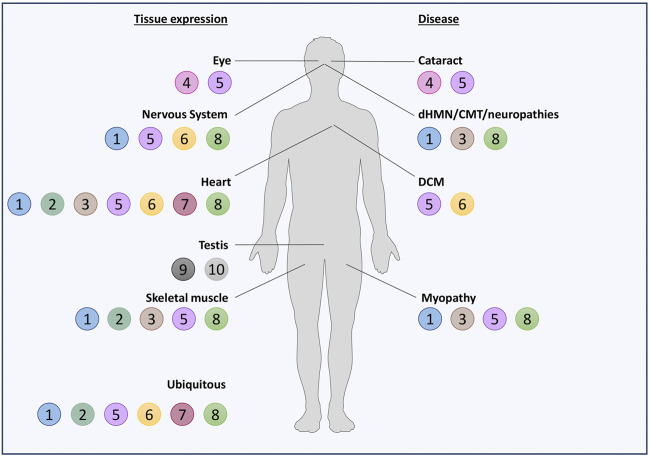
The family of the human small Heat Shock Proteins (HSPBs) consists of ten members of chaperones (HSPB1-HSPB10), characterized by a low molecular weight and capable of dimerization and oligomerization forming large homo- or hetero-complexes. All HSPBs possess a highly conserved centrally located α-crystallin domain and poorly conserved N- and C-terminal domains. The main feature of HSPBs is to exert cytoprotective functions by preserving proteostasis, assuring the structural maintenance of the cytoskeleton and acting in response to cellular stresses and apoptosis. HSPBs take part in cell homeostasis by acting as holdases, which is the ability to interact with a substrate preventing its aggregation. In addition, HSPBs cooperate in substrates refolding driven by other chaperones or, alternatively, promote substrate routing to degradation. Notably, while some HSPBs are ubiquitously expressed, others show peculiar tissue-specific expression. Cardiac muscle, skeletal muscle and neurons show high expression levels for a wide variety of HSPBs. Indeed, most of the mutations identified in HSPBs are associated to cardiomyopathies, myopathies, and motor neuropathies. Instead, mutations in HSPB4 and HSPB5, which are also expressed in lens, have been associated with cataract. Mutations of HSPBs family members encompass base substitutions, insertions, and deletions, resulting in single amino acid substitutions or in the generation of truncated or elongated proteins. This review will provide an updated overview of disease-related mutations in HSPBs focusing on the structural and biochemical effects of mutations and their functional consequences.
人类小分子热休克蛋白(HSPB)家族由十种伴侣蛋白成员(HSPB1 - HSPB10)组成,其特点是分子量低,能够二聚化和寡聚化形成大型同源或异源复合物。所有HSPB都具有位于中心位置的高度保守的α - 晶状体蛋白结构域以及保守性较差的N端和C端结构域。HSPB的主要功能是通过维持蛋白质稳态、确保细胞骨架的结构维持以及对细胞应激和凋亡做出反应来发挥细胞保护作用。HSPB通过作为分子伴侣发挥作用参与细胞稳态,分子伴侣是指与底物相互作用以防止其聚集的能力。此外,HSPB在由其他伴侣蛋白驱动的底物重折叠过程中协同作用,或者促进底物被定向降解。值得注意的是,虽然一些HSPB在全身广泛表达,但其他一些则表现出特定的组织特异性表达。心肌、骨骼肌和神经元中多种HSPB都有高表达水平。事实上,在HSPB中鉴定出的大多数突变都与心肌病、肌病和运动神经病相关。相反,在晶状体中也有表达的HSPB4和HSPB5的突变与白内障有关。HSPB家族成员的突变包括碱基替换、插入和缺失,导致单个氨基酸替换或产生截短或延长的蛋白质。本综述将提供HSPB中与疾病相关突变的最新概述,重点关注突变的结构和生化效应及其功能后果。