Department of Production Animal Clinical Sciences, Norwegian University of Life Sciences, P.O. Box 8146 Dep., Oslo NO-0033, Norway.
Norwegian Veterinary Institute, P.O. Box 750 Sentrum, Oslo NO-0106, Norway.
Vet Rec. 2014 Jul 12;175(2):47. doi: 10.1136/vr.102403. Epub 2014 May 26.
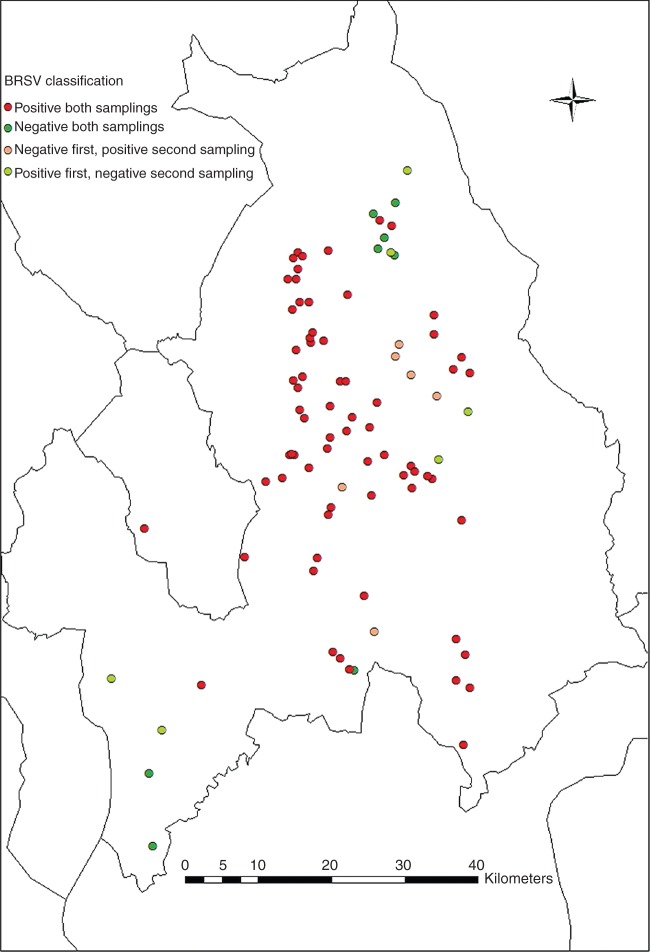
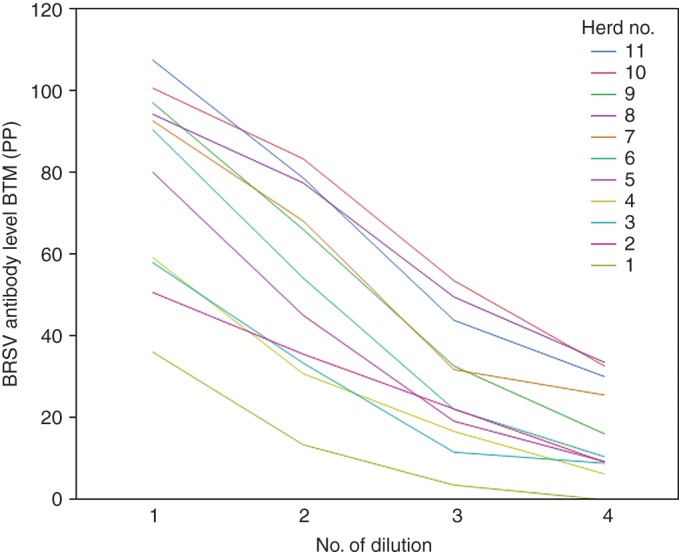
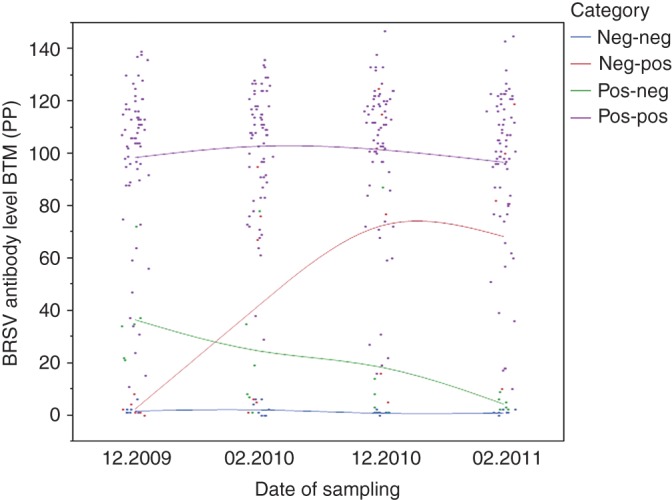
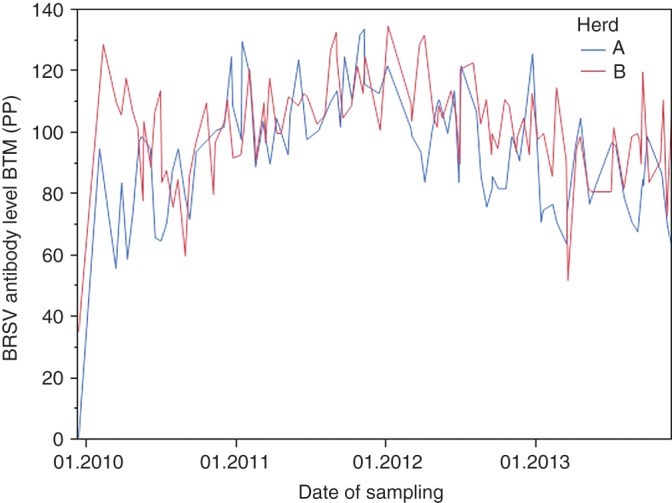
Antibody levels in bulk tank milk (BTM) against bovine respiratory syncytial virus (BRSV) are used to classify BRSV status of herds. The aim of this study was to investigate how these levels correspond with the time at which the herds were infected. Bulk tank milk, individual milk and serum samples from cows and young stock were investigated using an indirect ELISA. Screenings of BTM from 89 dairy herds during two winter seasons revealed a prevalence of positive herds from 82 per cent to 85 per cent. Eleven herds showed a marked increase in antibody levels between two screenings, indicating new infection. However, two of these herds had been free from BRSV for the last five to seven years. Two newly infected herds were monitored for four years and did not appear to get reinfected. Surprisingly, the BTM antibody levels in these herds remained high throughout the study period, but fluctuated significantly. This shows that the levels of antibodies in BTM can remain high for several years, even in herds where reinfection does not occur. BTM serology is a useful tool in the monitoring of infectious diseases in dairy herds, but has limitations as a diagnostic tool for BRSV infections.
牛奶抗体效价(BTM)是用于对牛呼吸道合胞体病毒(BRSV)感染进行分类的一种方法。本研究旨在探讨这些效价与牛群感染时间之间的对应关系。本研究使用间接 ELISA 法对奶牛和小牛的牛奶、血清和个体奶样进行了检测。在两个冬季对 89 个奶牛场的 BTM 进行筛查,发现阳性牛场的流行率从 82%到 85%不等。11 个牛场在两次筛查之间的抗体水平显著增加,表明有新的感染。然而,其中两个牛场在过去的五到七年内已经没有 BRSV 感染。两个新感染的牛场被监测了四年,没有再次感染。令人惊讶的是,这些牛场的 BTM 抗体水平在整个研究期间一直保持高位,但波动很大。这表明即使在没有再次感染的情况下,BTM 中的抗体水平也可以在几年内保持高位。BTM 血清学是监测奶牛场传染病的有用工具,但作为 BRSV 感染的诊断工具存在局限性。