Department of Molecular Genetics, Lerner Research Institute, Cleveland Clinic Foundation, Cleveland, Ohio 44195, USA.
RNA. 2014 Jul;20(7):1078-89. doi: 10.1261/rna.045187.114. Epub 2014 May 27.
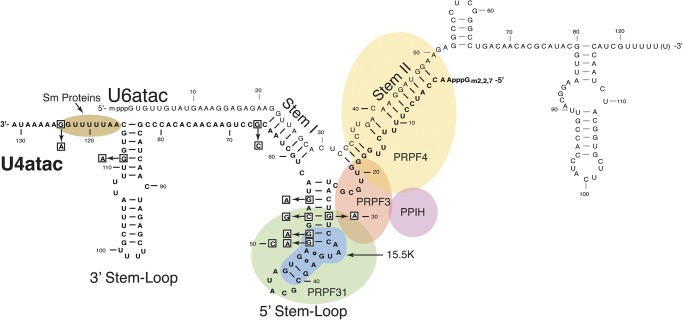
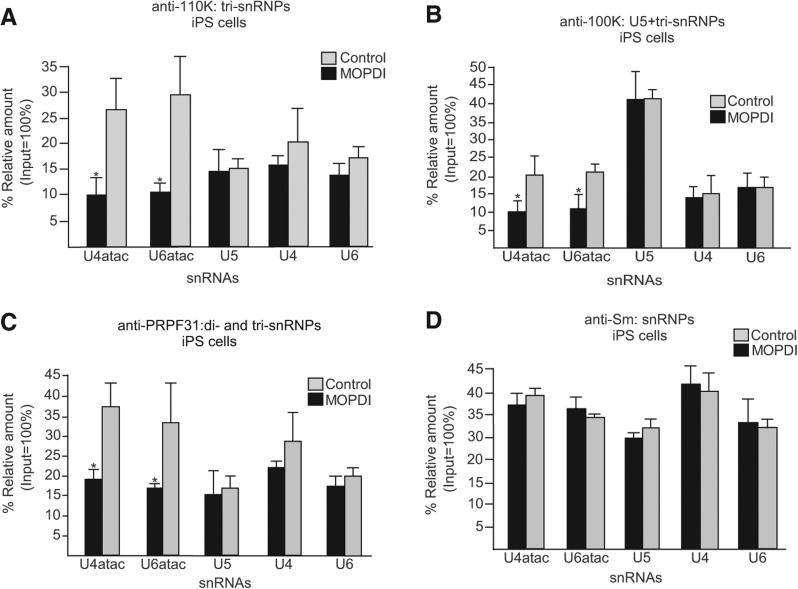
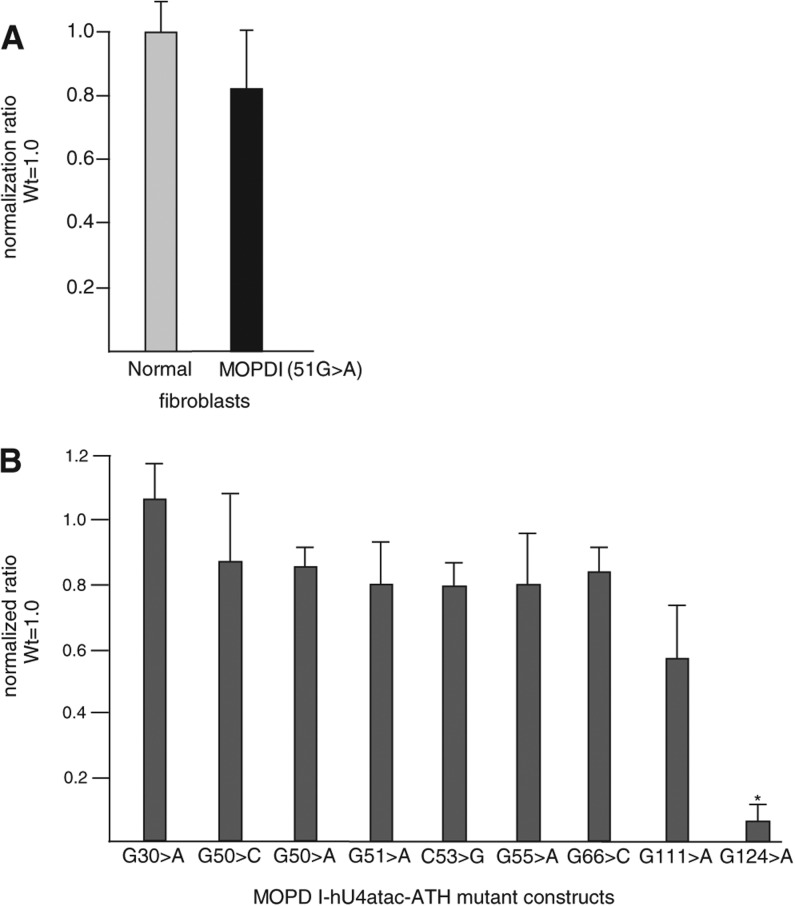
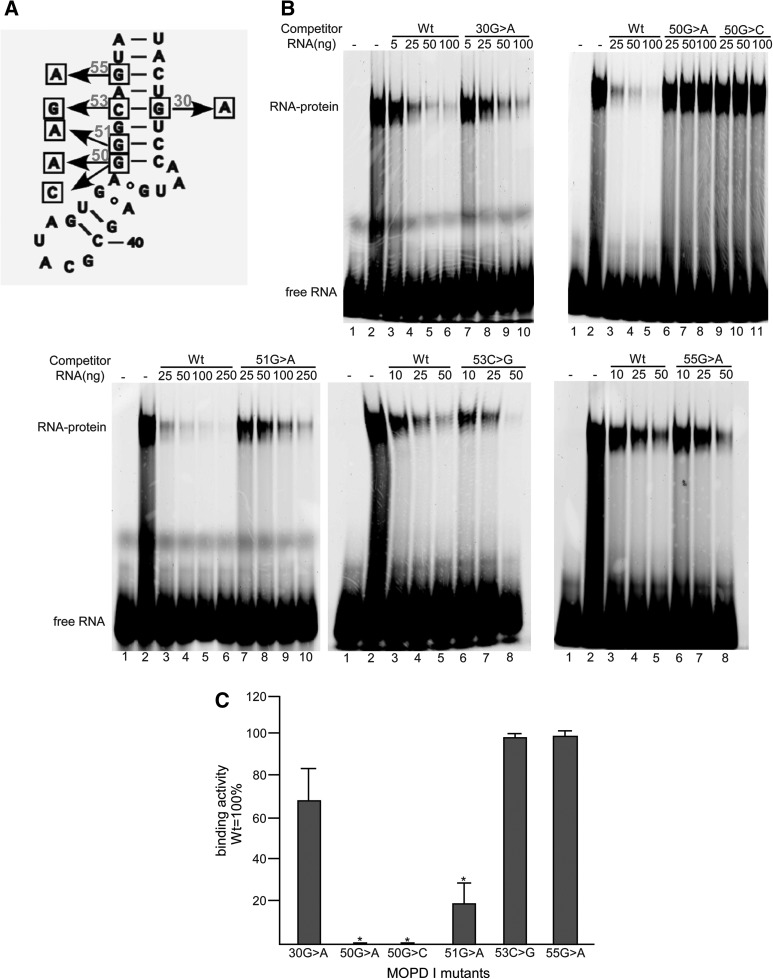
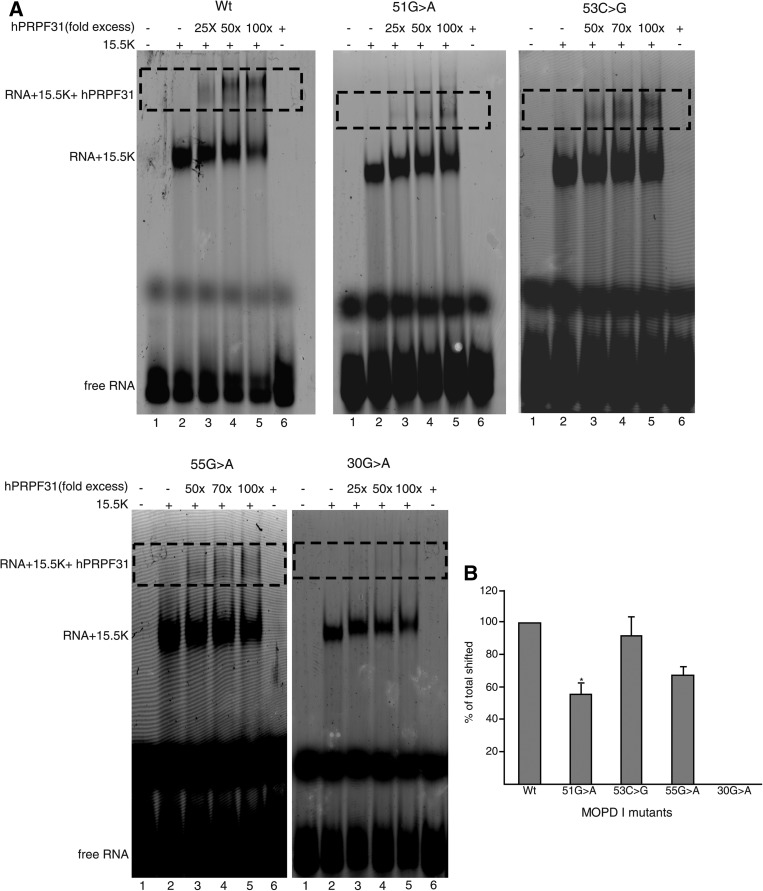
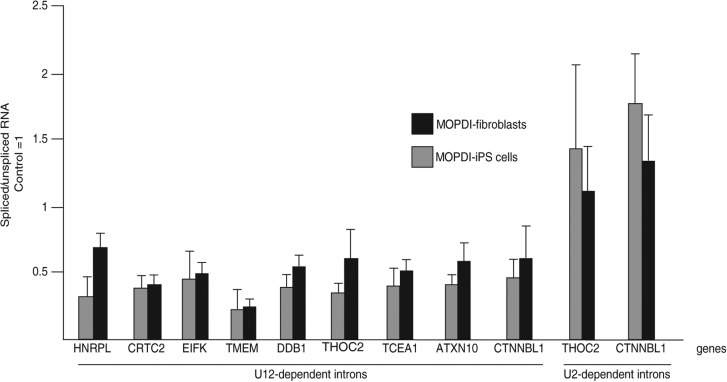
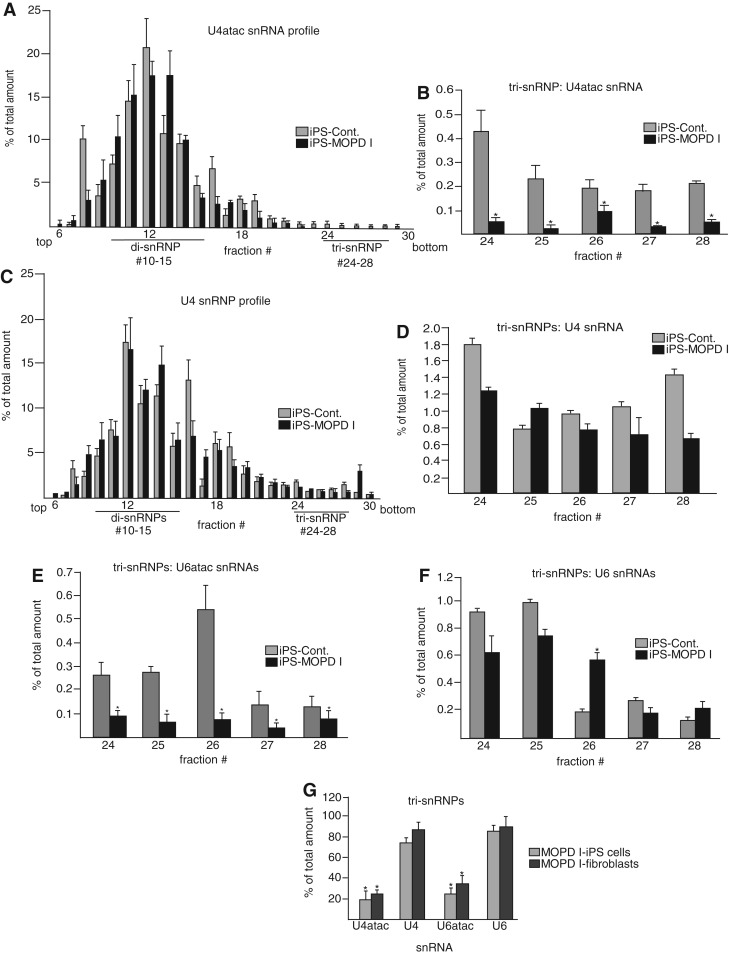
Biallelic mutations of the human RNU4ATAC gene, which codes for the minor spliceosomal U4atac snRNA, cause the developmental disorder, MOPD I/TALS. To date, nine separate mutations in RNU4ATAC have been identified in MOPD I patients. Evidence suggests that all of these mutations lead to abrogation of U4atac snRNA function and impaired minor intron splicing. However, the molecular basis of these effects is unknown. Here, we use a variety of in vitro and in vivo assays to address this question. We find that only one mutation, 124G>A, leads to significantly reduced expression of U4atac snRNA, whereas four mutations, 30G>A, 50G>A, 50G>C and 51G>A, show impaired binding of essential protein components of the U4atac/U6atac di-snRNP in vitro and in vivo. Analysis of MOPD I patient fibroblasts and iPS cells homozygous for the most common mutation, 51G>A, shows reduced levels of the U4atac/U6atac.U5 tri-snRNP complex as determined by glycerol gradient sedimentation and immunoprecipitation. In this report, we establish a mechanistic basis for MOPD I disease and show that the inefficient splicing of genes containing U12-dependent introns in patient cells is due to defects in minor tri-snRNP formation, and the MOPD I-associated RNU4ATAC mutations can affect multiple facets of minor snRNA function.
人类 RNU4ATAC 基因的双等位基因突变,该基因编码小核核糖体 RNA U4atac,导致发育障碍 MOPD I/TALS。迄今为止,在 MOPD I 患者中已发现 RNU4ATAC 的九个单独突变。有证据表明,所有这些突变都导致 U4atac snRNA 功能丧失和次要内含子剪接受损。然而,这些影响的分子基础尚不清楚。在这里,我们使用各种体外和体内测定来解决这个问题。我们发现只有一个突变,124G>A,导致 U4atac snRNA 的表达显著降低,而四个突变,30G>A、50G>A、50G>C 和 51G>A,在体外和体内显示出与 U4atac/U6atac 双 snRNP 的必需蛋白成分结合受损。对 MOPD I 患者成纤维细胞和纯合最常见突变 51G>A 的 iPS 细胞的分析表明,通过甘油梯度沉淀和免疫沉淀测定,U4atac/U6atac.U5 三 snRNP 复合物的水平降低。在本报告中,我们建立了 MOPD I 疾病的机制基础,并表明含有 U12 依赖性内含子的基因在患者细胞中的低效剪接是由于小核三 snRNP 形成缺陷所致,并且与 MOPD I 相关的 RNU4ATAC 突变可以影响小核 RNA 功能的多个方面。