Pearson Timothy, Kabayo Tabitha, Ng Rainer, Chamberlain Jeffrey, McArdle Anne, Jackson Malcolm J
Institute of Ageing and Chronic Disease, University of Liverpool, Liverpool, United Kingdom.
Department of Neurology, University of Washington, Seattle, Washington, United States of America.
PLoS One. 2014 May 29;9(5):e96378. doi: 10.1371/journal.pone.0096378. eCollection 2014.
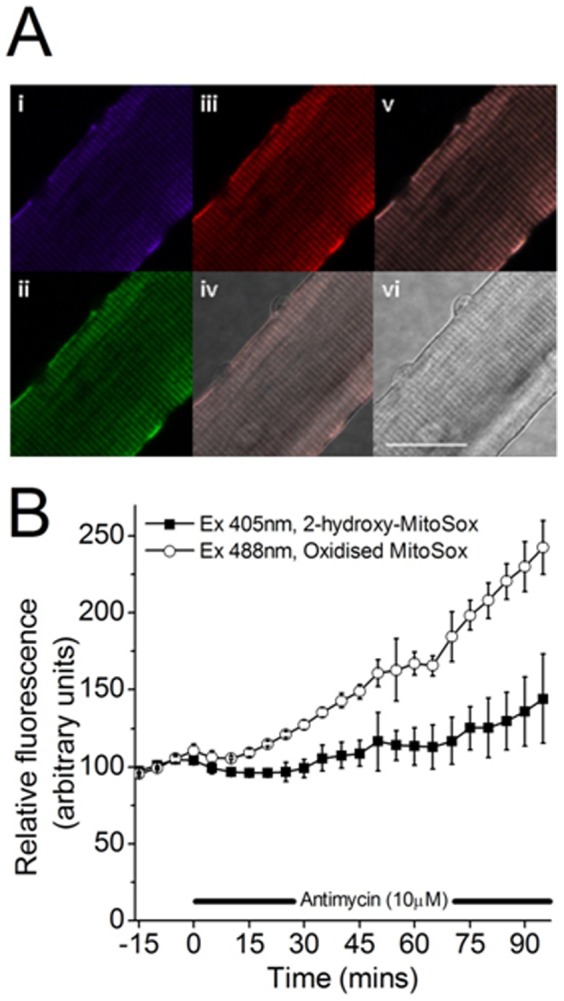
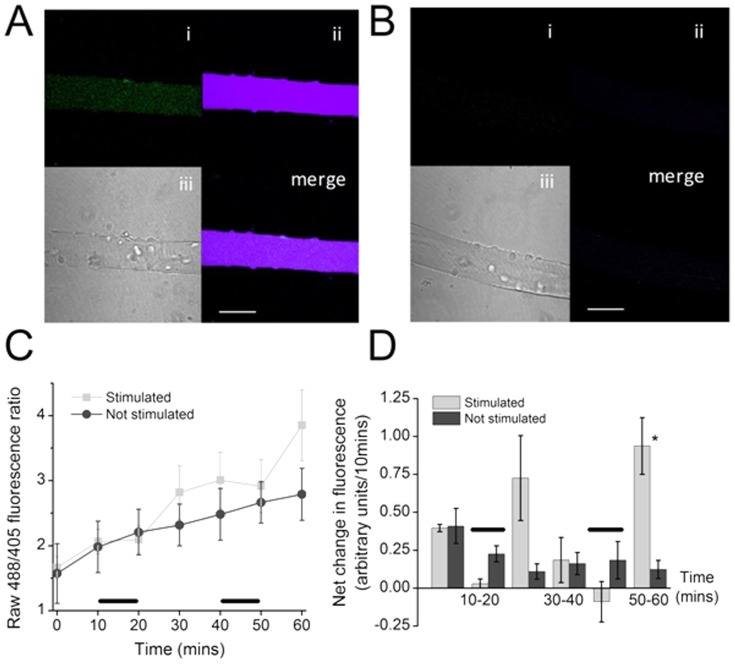
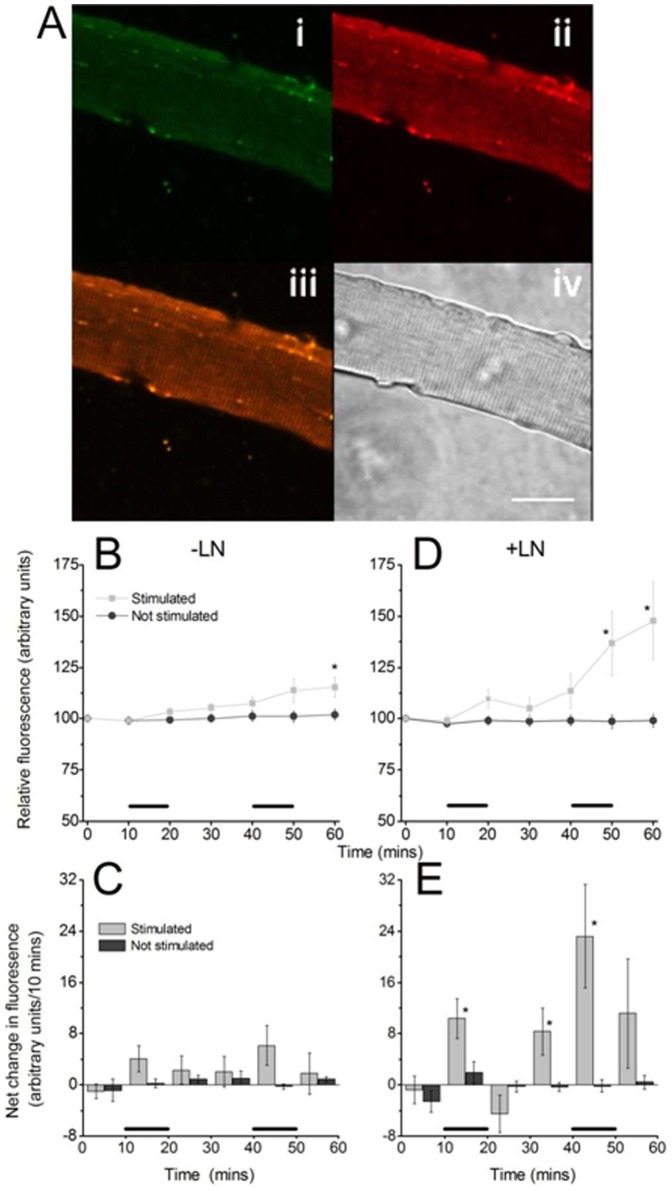
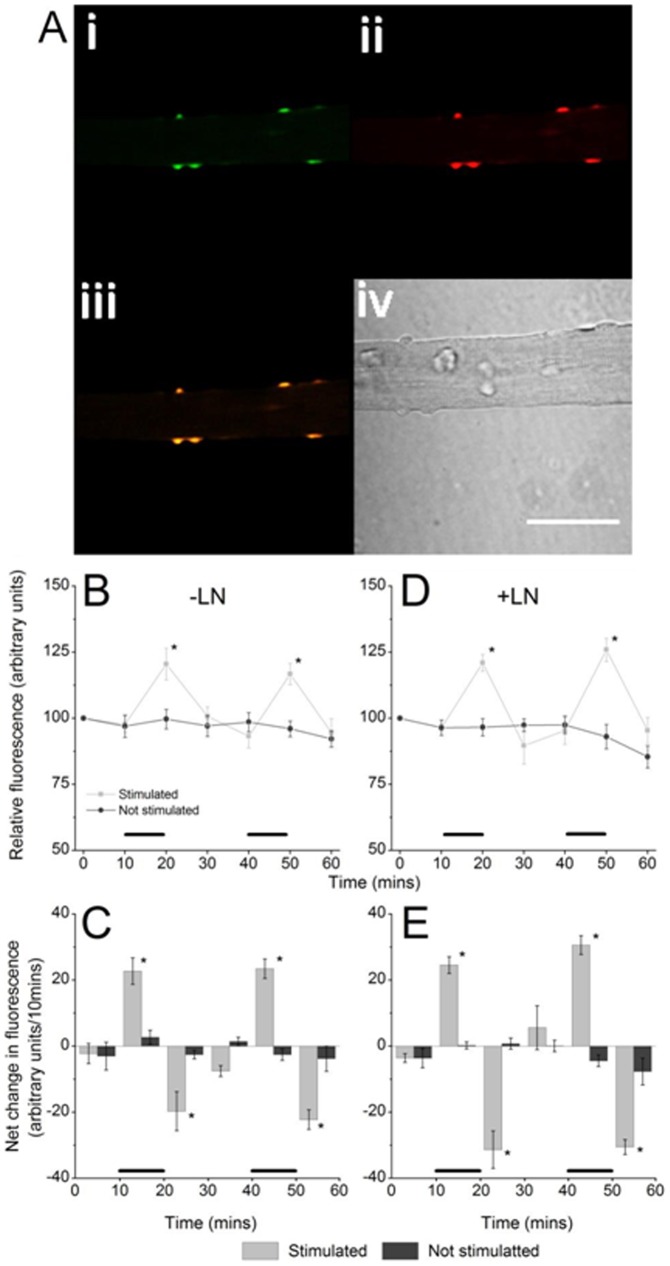
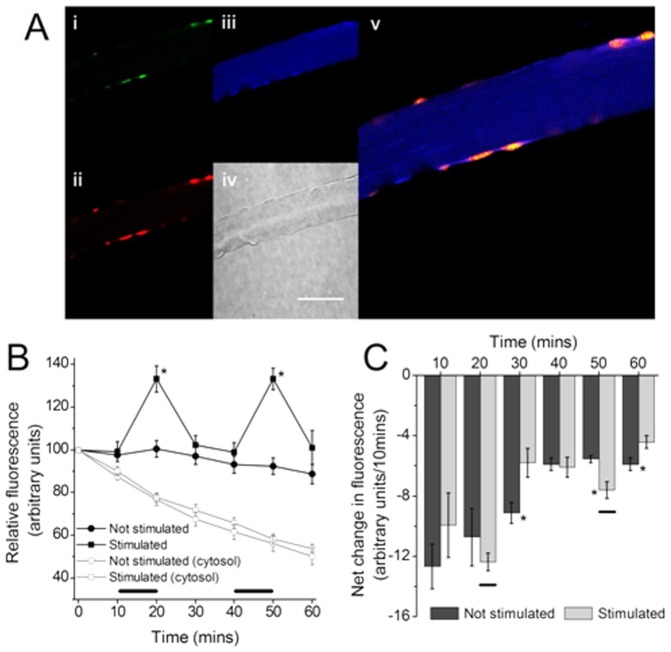
Skeletal muscle generation of reactive oxygen species (ROS) is increased following contractile activity and these species interact with multiple signaling pathways to mediate adaptations to contractions. The sources and time course of the increase in ROS during contractions remain undefined. Confocal microscopy with specific fluorescent probes was used to compare the activities of superoxide in mitochondria and cytosol and the hydrogen peroxide content of the cytosol in isolated single mature skeletal muscle (flexor digitorum brevis) fibers prior to, during, and after electrically stimulated contractions. Superoxide in mitochondria and cytoplasm were assessed using MitoSox red and dihydroethidium (DHE) respectively. The product of superoxide with DHE, 2-hydroxyethidium (2-HE) was acutely increased in the fiber cytosol by contractions, whereas hydroxy-MitoSox showed a slow cumulative increase. Inhibition of nitric oxide synthases increased the contraction-induced formation of hydroxy-MitoSox only with no effect on 2-HE formation. These data indicate that the acute increases in cytosolic superoxide induced by contractions are not derived from mitochondria. Data also indicate that, in muscle mitochondria, nitric oxide (NO) reduces the availability of superoxide, but no effect of NO on cytosolic superoxide availability was detected. To determine the relationship of changes in superoxide to hydrogen peroxide, an alternative specific approach was used where fibers were transduced using an adeno-associated viral vector to express the hydrogen peroxide probe, HyPer within the cytoplasmic compartment. HyPer fluorescence was significantly increased in fibers following contractions, but surprisingly followed a relatively slow time course that did not appear directly related to cytosolic superoxide. These data demonstrate for the first time temporal and site specific differences in specific ROS that occur in skeletal muscle fibers during and after contractile activity.
收缩活动后,骨骼肌中活性氧(ROS)的生成增加,这些物质与多种信号通路相互作用,以介导对收缩的适应性变化。收缩过程中ROS增加的来源和时间进程仍不明确。利用共聚焦显微镜和特定荧光探针,比较了电刺激收缩前、收缩期间和收缩后分离的单个成熟骨骼肌(趾短屈肌)纤维中线粒体和细胞质中超氧化物的活性以及细胞质中过氧化氢的含量。分别使用MitoSox red和二氢乙锭(DHE)评估线粒体和细胞质中的超氧化物。收缩使纤维细胞质中DHE与超氧化物的产物2-羟基乙锭(2-HE)急剧增加,而羟基-MitoSox则呈现缓慢的累积增加。一氧化氮合酶的抑制仅增加了收缩诱导的羟基-MitoSox的形成,而对2-HE的形成没有影响。这些数据表明,收缩诱导的细胞质中超氧化物的急性增加并非源自线粒体。数据还表明,在肌肉线粒体中,一氧化氮(NO)降低了超氧化物的可用性,但未检测到NO对细胞质中超氧化物可用性的影响。为了确定超氧化物变化与过氧化氢的关系,采用了另一种特定方法,即使用腺相关病毒载体转导纤维,以在细胞质区室中表达过氧化氢探针HyPer。收缩后纤维中的HyPer荧光显著增加,但令人惊讶的是,其时间进程相对较慢,似乎与细胞质超氧化物没有直接关系。这些数据首次证明了收缩活动期间和之后骨骼肌纤维中特定ROS在时间和位点上的特异性差异。