Chen Feng, Hong Hao, Shi Sixiang, Goel Shreya, Valdovinos Hector F, Hernandez Reinier, Theuer Charles P, Barnhart Todd E, Cai Weibo
1] Department of Radiology, University of Wisconsin - Madison, WI, USA [2].
Materials Science Program, University of Wisconsin - Madison, WI, USA.
Sci Rep. 2014 May 30;4:5080. doi: 10.1038/srep05080.
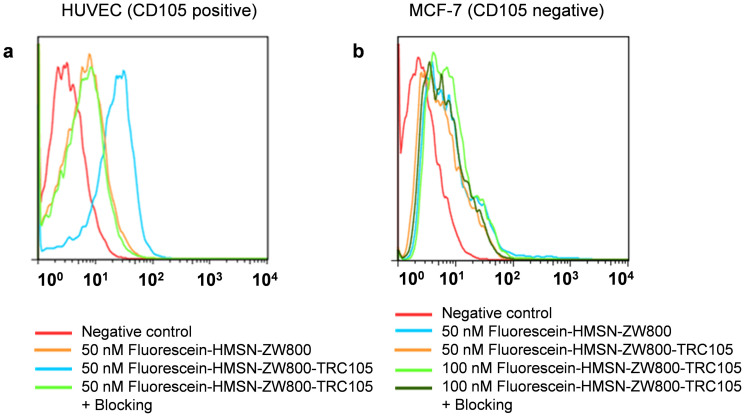
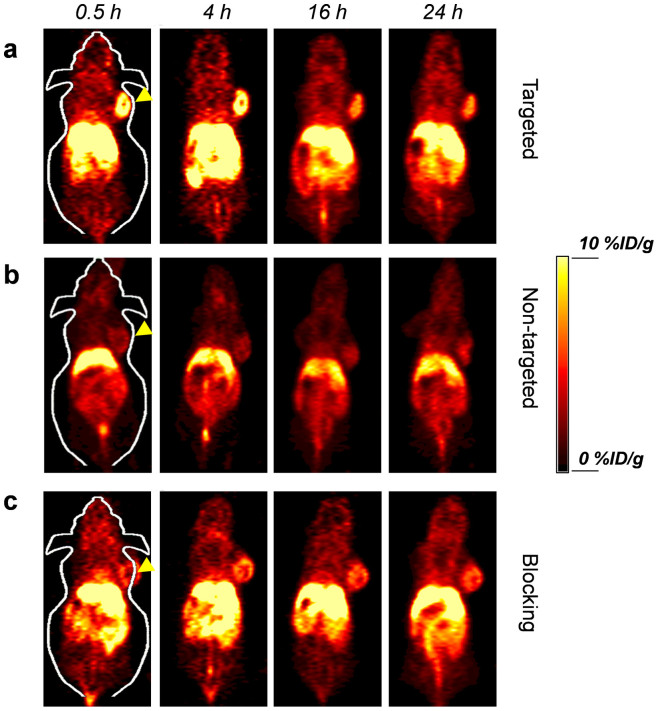
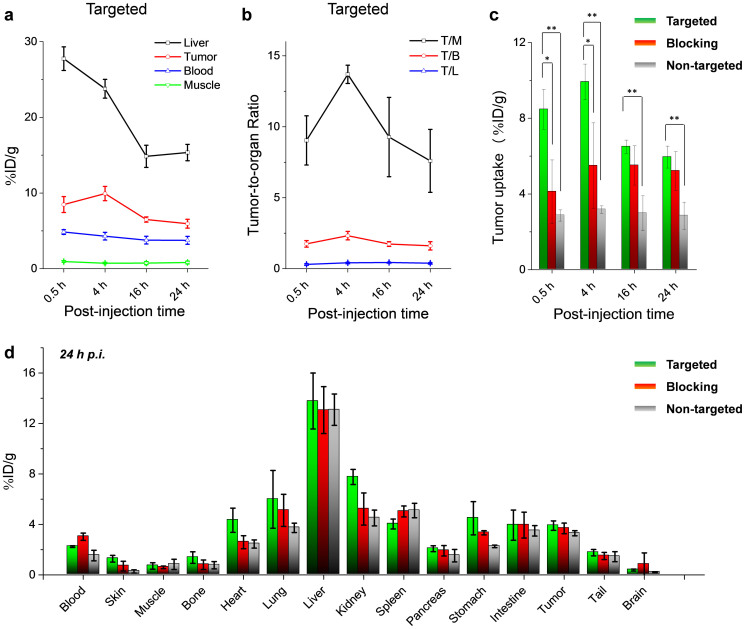
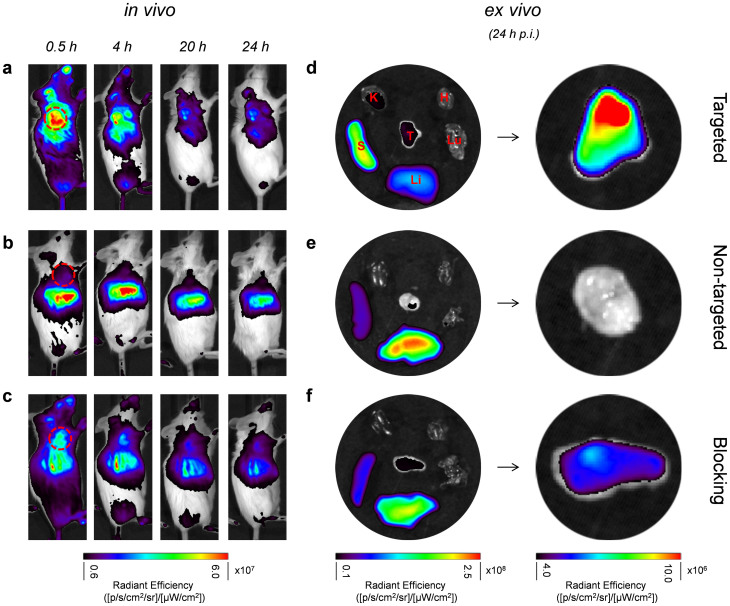
Hollow mesoporous silica nanoparticle (HMSN) has recently gained increasing interests due to their tremendous potential as an attractive nano-platform for cancer imaging and therapy. However, possibly due to the lack of efficient in vivo targeting strategy and well-developed surface engineering techniques, engineering of HMSN for in vivo active tumor targeting, quantitative tumor uptake assessment, multimodality imaging, biodistribution and enhanced drug delivery have not been achieved to date. Here, we report the in vivo tumor targeted positron emission tomography (PET)/near-infrared fluorescence (NIRF) dual-modality imaging and enhanced drug delivery of HMSN using a generally applicable surface engineering technique. Systematic in vitro and in vivo studies have been performed to investigate the stability, tumor targeting efficacy and specificity, biodistribution and drug delivery capability of well-functionalized HMSN nano-conjugates. The highest uptake of TRC105 (which binds to CD105 on tumor neovasculature) conjugated HMSN in the 4T1 murine breast cancer model was ~10%ID/g, 3 times higher than that of the non-targeted group, making surface engineered HMSN a highly attractive drug delivery nano-platform for future cancer theranostics.
中空介孔二氧化硅纳米粒子(HMSN)因其作为癌症成像和治疗的有吸引力的纳米平台具有巨大潜力,近来受到越来越多的关注。然而,可能由于缺乏有效的体内靶向策略和完善的表面工程技术,迄今为止尚未实现用于体内主动肿瘤靶向、定量肿瘤摄取评估、多模态成像、生物分布和增强药物递送的HMSN工程。在此,我们报告了使用一种普遍适用的表面工程技术对HMSN进行体内肿瘤靶向正电子发射断层扫描(PET)/近红外荧光(NIRF)双模态成像和增强药物递送。已经进行了系统的体外和体内研究,以研究功能良好的HMSN纳米缀合物的稳定性、肿瘤靶向功效和特异性、生物分布和药物递送能力。在4T1小鼠乳腺癌模型中,与TRC105(与肿瘤新血管上的CD105结合)缀合的HMSN的最高摄取量约为10%ID/g,比非靶向组高3倍,这使得表面工程化的HMSN成为未来癌症诊疗的极具吸引力的药物递送纳米平台。