• 文献检索
  • 文档翻译
  • 深度研究
  • 学术资讯
  • Suppr Zotero 插件Zotero 插件
  • 邀请有礼
  • 套餐&价格
  • 历史记录
应用&插件
Suppr Zotero 插件Zotero 插件浏览器插件Mac 客户端Windows 客户端微信小程序
定价
高级版会员购买积分包购买API积分包
服务
文献检索文档翻译深度研究API 文档MCP 服务
关于我们
关于 Suppr公司介绍联系我们用户协议隐私条款
关注我们

Suppr 超能文献

核心技术专利:CN118964589B侵权必究
粤ICP备2023148730 号-1Suppr @ 2026

文献检索

告别复杂PubMed语法,用中文像聊天一样搜索,搜遍4000万医学文献。AI智能推荐,让科研检索更轻松。

立即免费搜索

文件翻译

保留排版,准确专业,支持PDF/Word/PPT等文件格式,支持 12+语言互译。

免费翻译文档

深度研究

AI帮你快速写综述,25分钟生成高质量综述,智能提取关键信息,辅助科研写作。

立即免费体验

社会环境对互动式虚拟人类模拟学习和认知需求的影响。

The impact of social context on learning and cognitive demands for interactive virtual human simulations.

机构信息

Department of Psychology, Institute for Simulation and Training, University of Central Florida , Orlando, FL , USA.

University of Central Florida College of Medicine, Health Sciences Campus at Lake Nona , Lake Nona, FL , USA.

出版信息

PeerJ. 2014 May 13;2:e372. doi: 10.7717/peerj.372. eCollection 2014.

DOI:10.7717/peerj.372
PMID:24883241
原文链接:https://pmc.ncbi.nlm.nih.gov/articles/PMC4034626/
Abstract

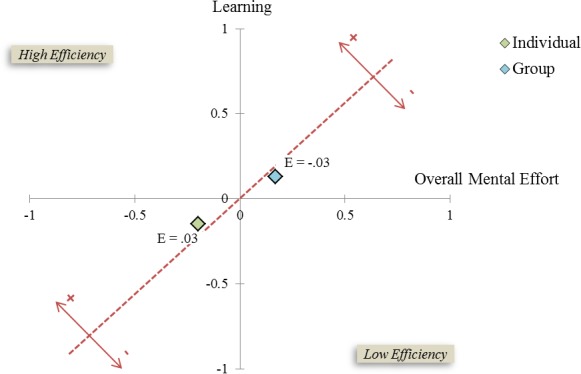
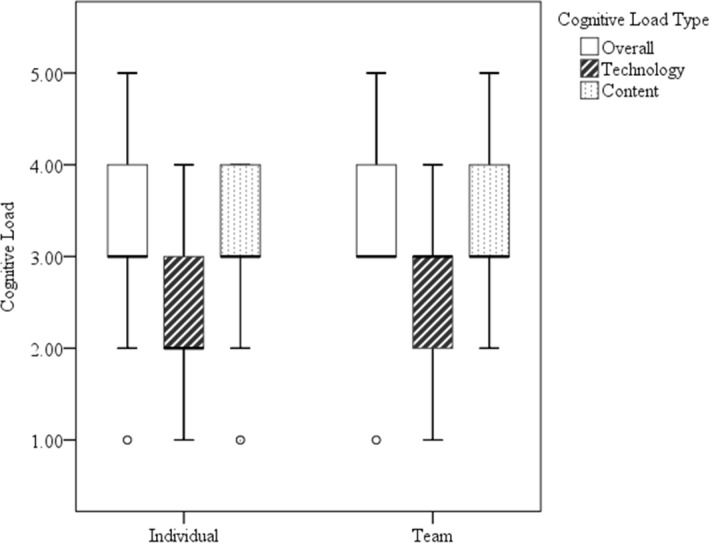
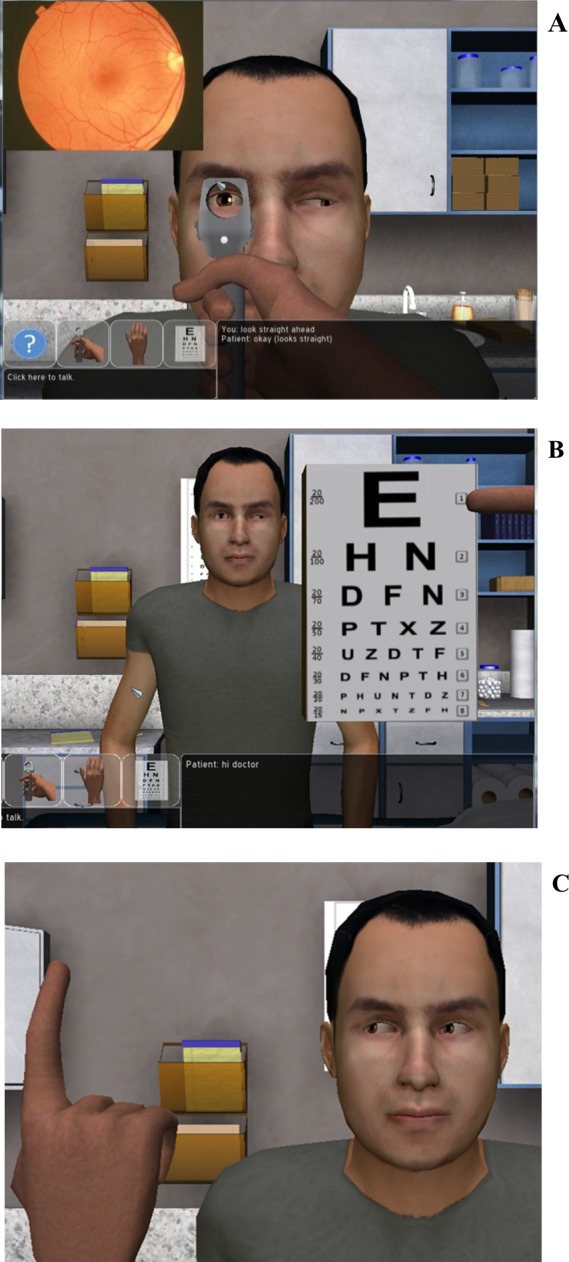
Interactive virtual human (IVH) simulations offer a novel method for training skills involving person-to-person interactions. This article examines the effectiveness of an IVH simulation for teaching medical students to assess rare cranial nerve abnormalities in both individual and small-group learning contexts. Individual (n = 26) and small-group (n = 30) interaction with the IVH system was manipulated to examine the influence on learning, learner engagement, perceived cognitive demands of the learning task, and instructional efficiency. Results suggested the IVH activity was an equally effective and engaging instructional tool in both learning structures, despite learners in the group learning contexts having to share hands-on access to the simulation interface. Participants in both conditions demonstrated a significant increase in declarative knowledge post-training. Operation of the IVH simulation technology imposed moderate cognitive demand but did not exceed the demands of the task content or appear to impede learning.

摘要

互动式虚拟人(IVH)模拟为培训涉及人际互动的技能提供了一种新方法。本文研究了 IVH 模拟在教授医学生评估个体和小组学习环境中罕见颅神经异常方面的效果。通过操纵个体(n = 26)和小组(n = 30)与 IVH 系统的交互作用,研究了学习、学习者参与度、对学习任务认知需求的感知以及教学效率的影响。结果表明,尽管小组学习环境中的学习者必须共享对模拟界面的实际访问权限,但 IVH 活动在这两种学习结构中都是一种同样有效和吸引人的教学工具。在培训后,两组参与者的陈述性知识都显著增加。IVH 模拟技术的操作带来了适度的认知需求,但没有超过任务内容的需求,也没有表现出对学习的阻碍。
https://cdn.ncbi.nlm.nih.gov/pmc/blobs/776e/4034626/ea81fa0bc5b0/peerj-02-372-g004.jpg
https://cdn.ncbi.nlm.nih.gov/pmc/blobs/776e/4034626/114141052318/peerj-02-372-g001.jpg
https://cdn.ncbi.nlm.nih.gov/pmc/blobs/776e/4034626/483d80f16317/peerj-02-372-g002.jpg
https://cdn.ncbi.nlm.nih.gov/pmc/blobs/776e/4034626/4d5c1c759775/peerj-02-372-g003.jpg
https://cdn.ncbi.nlm.nih.gov/pmc/blobs/776e/4034626/ea81fa0bc5b0/peerj-02-372-g004.jpg
https://cdn.ncbi.nlm.nih.gov/pmc/blobs/776e/4034626/114141052318/peerj-02-372-g001.jpg
https://cdn.ncbi.nlm.nih.gov/pmc/blobs/776e/4034626/483d80f16317/peerj-02-372-g002.jpg
https://cdn.ncbi.nlm.nih.gov/pmc/blobs/776e/4034626/4d5c1c759775/peerj-02-372-g003.jpg
https://cdn.ncbi.nlm.nih.gov/pmc/blobs/776e/4034626/ea81fa0bc5b0/peerj-02-372-g004.jpg

相似文献

1
The impact of social context on learning and cognitive demands for interactive virtual human simulations.社会环境对互动式虚拟人类模拟学习和认知需求的影响。
PeerJ. 2014 May 13;2:e372. doi: 10.7717/peerj.372. eCollection 2014.
2
The effectiveness of internet-based e-learning on clinician behavior and patient outcomes: a systematic review protocol.基于互联网的电子学习对临床医生行为和患者结局的有效性:一项系统评价方案。
JBI Database System Rev Implement Rep. 2015 Jan;13(1):52-64. doi: 10.11124/jbisrir-2015-1919.
3
Distributed interactive virtual environments for collaborative experiential learning and training independent of distance over Internet2.用于协作体验式学习和培训的分布式交互式虚拟环境,可通过Internet2实现远程独立操作。
Stud Health Technol Inform. 2004;98:7-12.
4
Engagement: what is it good for? The role of learner engagement in healthcare simulation contexts.参与:对什么有益?学习者参与在医疗模拟情境中的作用。
Adv Health Sci Educ Theory Pract. 2019 Oct;24(4):811-825. doi: 10.1007/s10459-018-9865-7. Epub 2018 Nov 19.
5
Virtual patient simulations and optimal social learning context: a replication of an aptitude-treatment interaction effect.虚拟患者模拟与最佳社会学习情境:能力-治疗交互效应的复制
Med Teach. 2014 Jun;36(6):486-94. doi: 10.3109/0142159X.2014.890702. Epub 2014 Apr 16.
6
The effectiveness of using non-traditional teaching methods to prepare student health care professionals for the delivery of mental state examination: a systematic review.使用非传统教学方法培养学生医护专业人员进行精神状态检查的有效性:一项系统综述。
JBI Database System Rev Implement Rep. 2015 Aug 14;13(7):177-212. doi: 10.11124/jbisrir-2015-2263.
7
The micro revolution: effect of Bite-Sized Teaching (BST) on learner engagement and learning in postgraduate medical education.微革命:Bite-Sized Teaching(BST)对研究生医学教育中学生参与度和学习效果的影响。
BMC Med Educ. 2021 Jan 21;21(1):69. doi: 10.1186/s12909-021-02496-z.
8
Limitations of subjective cognitive load measures in simulation-based procedural training.基于模拟的程序训练中主观认知负荷测量的局限性。
Med Educ. 2015 Aug;49(8):805-14. doi: 10.1111/medu.12732.
9
Optimal learning in a virtual patient simulation of cranial nerve palsies: the interaction between social learning context and student aptitude.颅神经麻痹虚拟患者模拟中的最佳学习:社会学习环境与学生能力之间的相互作用。
Med Teach. 2013;35(1):e876-84. doi: 10.3109/0142159X.2012.714884. Epub 2012 Sep 3.
10
Medical Student and Tutor Perceptions of Video Versus Text in an Interactive Online Virtual Patient for Problem-Based Learning: A Pilot Study.基于问题学习的交互式在线虚拟患者中,医学生和导师对视频与文本的看法:一项初步研究。
J Med Internet Res. 2015 Jun 18;17(6):e151. doi: 10.2196/jmir.3922.

引用本文的文献

1
Participatory medicine: model based tools for engaging and empowering the individual.参与式医疗:用于促使个体参与并赋予其权力的基于模型的工具。
Interface Focus. 2016 Apr 6;6(2):20150092. doi: 10.1098/rsfs.2015.0092.

本文引用的文献

1
On the effectiveness of self-paced learning.关于自主学习的有效性。
J Mem Lang. 2011 Feb 1;64(2):109-118. doi: 10.1016/j.jml.2010.11.002.
2
Patient safety and simulation-based medical education.患者安全与基于模拟的医学教育。
Med Teach. 2000;22(5):489-95. doi: 10.1080/01421590050110777.
3
Computerized virtual patients in health professions education: a systematic review and meta-analysis.计算机化虚拟患者在健康职业教育中的应用:系统评价和荟萃分析。
Acad Med. 2010 Oct;85(10):1589-602. doi: 10.1097/ACM.0b013e3181edfe13.
4
Practica continua: Connecting and combining simulation modalities for integrated teaching, learning and assessment.持续实践:连接和整合模拟模式,实现综合教学、学习和评估。
Med Teach. 2009 Aug;31(8):725-31. doi: 10.1080/01421590903124716.
5
Objective structured clinical interview training using a virtual human patient.使用虚拟人类患者进行客观结构化临床访谈培训。
Stud Health Technol Inform. 2008;132:357-62.
6
The use of virtual patients to teach medical students history taking and communication skills.使用虚拟患者来教授医学生病史采集和沟通技巧。
Am J Surg. 2006 Jun;191(6):806-11. doi: 10.1016/j.amjsurg.2006.03.002.
7
Design of interactive and dynamic anatomical visualizations: the implication of cognitive load theory.交互式和动态解剖可视化设计:认知负荷理论的启示
Anat Rec B New Anat. 2005 Sep;286(1):15-20. doi: 10.1002/ar.b.20078.
8
Team-based learning in a medical gross anatomy and embryology course.医学大体解剖学与胚胎学课程中的基于团队的学习
Clin Anat. 2005 Jan;18(1):56-63. doi: 10.1002/ca.20040.