Environmental Technologies, Cawthron Institute , Nelson , New Zealand.
University of Hawaii, Hawaii Institute of Marine Biology , Kaneohe, HI , USA.
PeerJ. 2014 May 20;2:e394. doi: 10.7717/peerj.394. eCollection 2014.
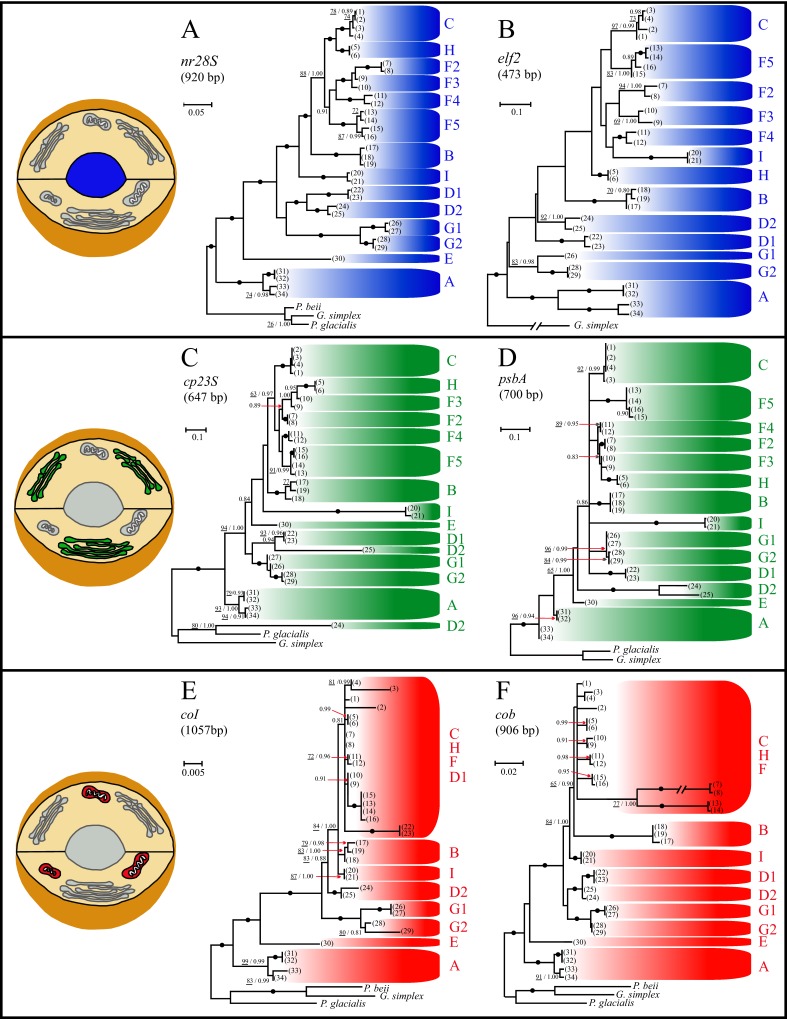
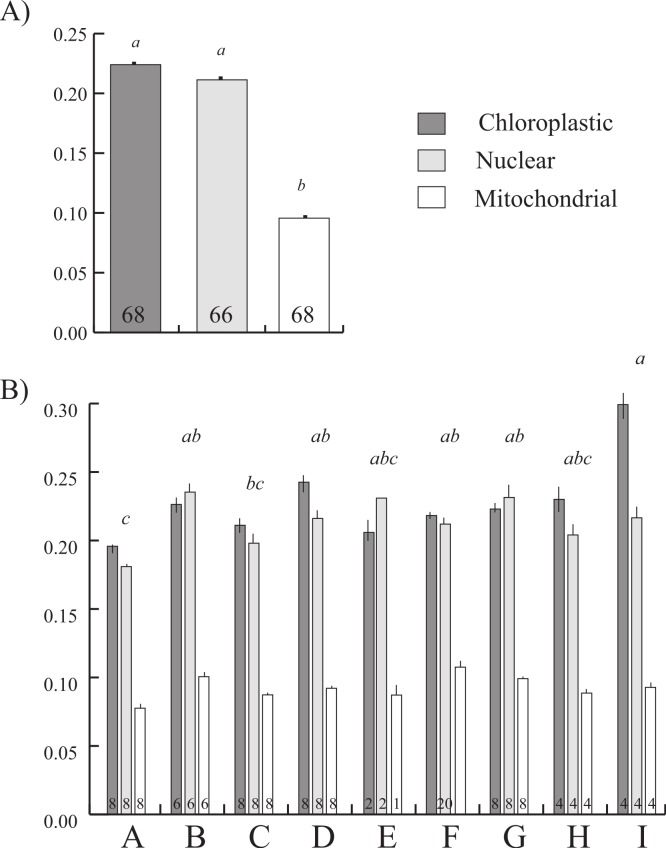
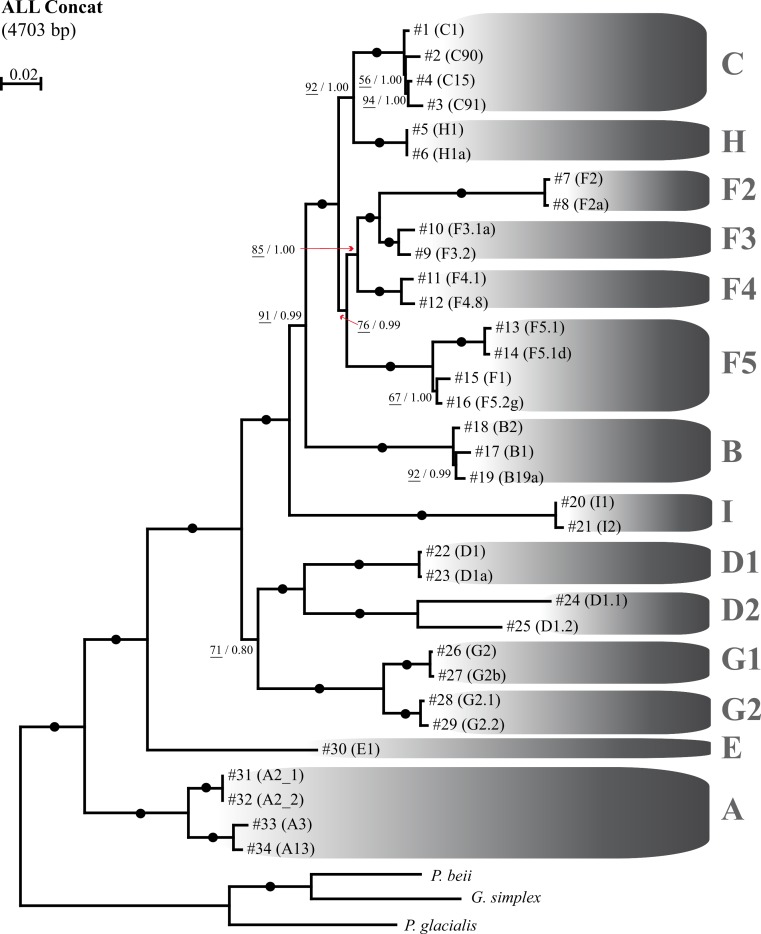
Symbiodinium, a large group of dinoflagellates, live in symbiosis with marine protists, invertebrate metazoans, and free-living in the environment. Symbiodinium are functionally variable and play critical energetic roles in symbiosis. Our knowledge of Symbiodinium has been historically constrained by the limited number of molecular markers available to study evolution in the genus. Here we compare six functional genes, representing three cellular compartments, in the nine known Symbiodinium lineages. Despite striking similarities among the single gene phylogenies from distinct organelles, none were evolutionarily identical. A fully concatenated reconstruction, however, yielded a well-resolved topology identical to the current benchmark nr28S gene. Evolutionary rates differed among cellular compartments and clades, a pattern largely driven by higher rates of evolution in the chloroplast genes of Symbiodinium clades D2 and I. The rapid rates of evolution observed amongst these relatively uncommon Symbiodinium lineages in the functionally critical chloroplast may translate into potential innovation for the symbiosis. The multi-gene analysis highlights the potential power of assessing genome-wide evolutionary patterns using recent advances in sequencing technology and emphasizes the importance of integrating ecological data with more comprehensive sampling of free-living and symbiotic Symbiodinium in assessing the evolutionary adaptation of this enigmatic dinoflagellate.
共生藻属是一大类甲藻,与海洋原生生物、无脊椎后生动物共生,并在环境中自由生活。共生藻属具有功能变异性,在共生关系中起着至关重要的能量作用。由于历史上可用的分子标记数量有限,我们对共生藻属的了解受到了限制。在这里,我们比较了 9 种已知共生藻属的 6 种功能基因,代表三个细胞区室。尽管来自不同细胞器的单个基因系统发育之间存在惊人的相似性,但没有一个是进化上相同的。然而,一个完全连接的重建产生了一个与当前基准 nr28S 基因相同的良好分辨率拓扑结构。细胞区室和进化枝之间的进化率不同,这种模式主要是由共生藻属 D2 和 I 进化枝的叶绿体基因的较高进化率驱动的。在这些相对罕见的共生藻属进化枝中,观察到的快速进化速度可能会转化为共生关系的潜在创新。多基因分析突出了使用测序技术的最新进展评估全基因组进化模式的潜力,并强调了将生态数据与更全面的自由生活和共生共生藻属的采样相结合,以评估这种神秘甲藻的进化适应的重要性。