Liu Yang, Liu Yuanyuan, Sun Chao, Gan Lu, Zhang Luwei, Mao Aihong, Du Yuting, Zhou Rong, Zhang Hong
Department of Radiation Medicine, Institute of Modern physics, Chinese Academy of Sciences, Lanzhou, China; Key Laboratory of Heavy Ion Radiation Biology and Medicine of Chinese Academy of Sciences, Lanzhou, China; Key Laboratory of Heavy Ion Radiation Medicine of Gansu Province, Lanzhou, China.
Department of Radiation Medicine, Institute of Modern physics, Chinese Academy of Sciences, Lanzhou, China; Key Laboratory of Heavy Ion Radiation Biology and Medicine of Chinese Academy of Sciences, Lanzhou, China; Key Laboratory of Heavy Ion Radiation Medicine of Gansu Province, Lanzhou, China; Graduate School of Chinese Academy of Sciences, Beijing, China.
PLoS One. 2014 Jun 3;9(6):e98448. doi: 10.1371/journal.pone.0098448. eCollection 2014.
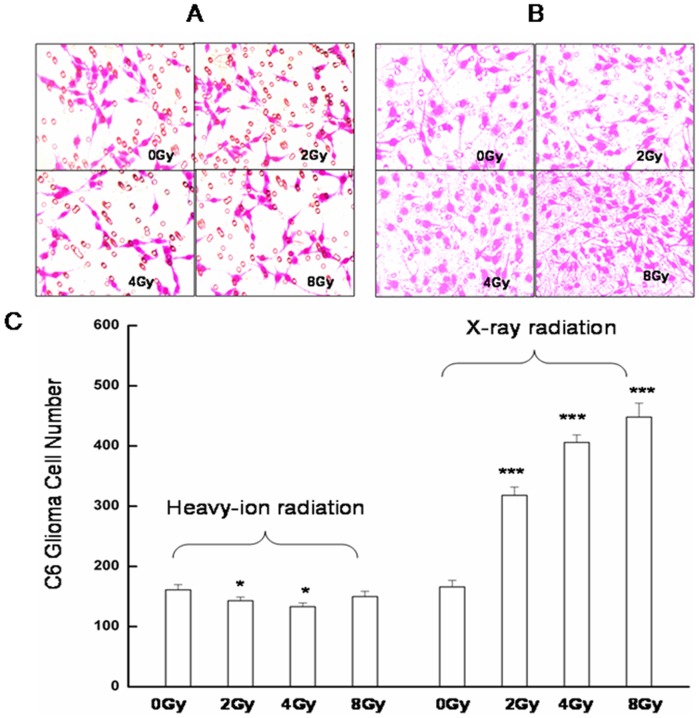
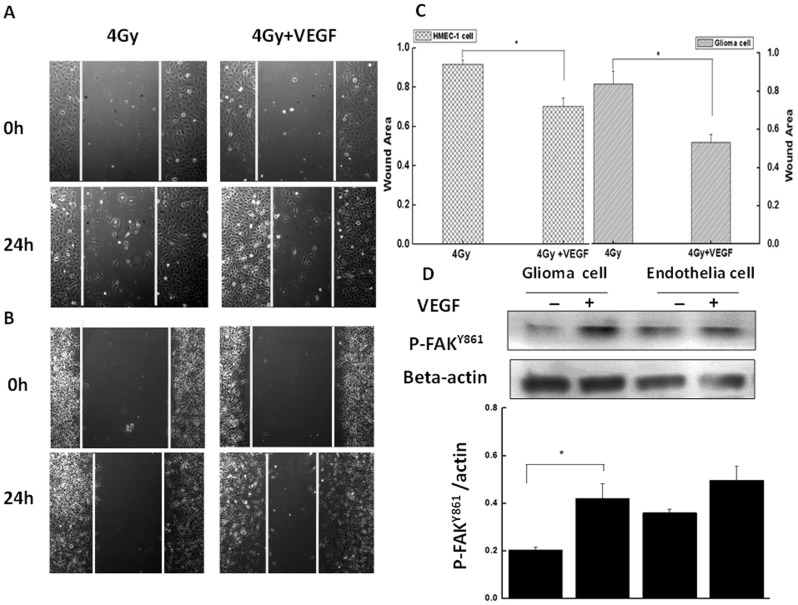
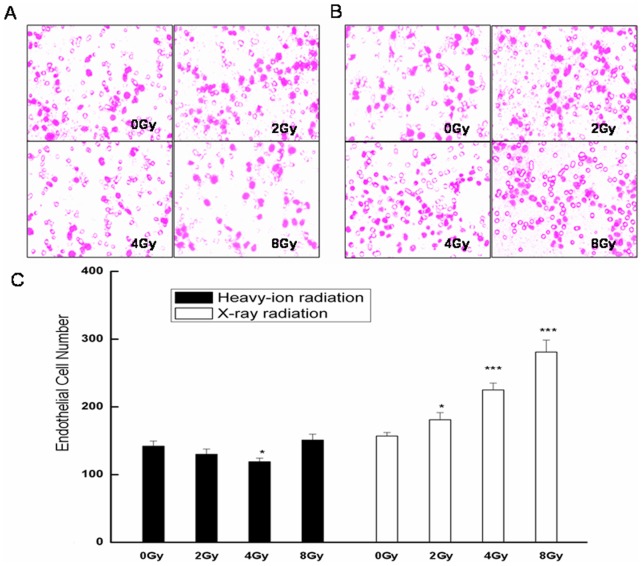
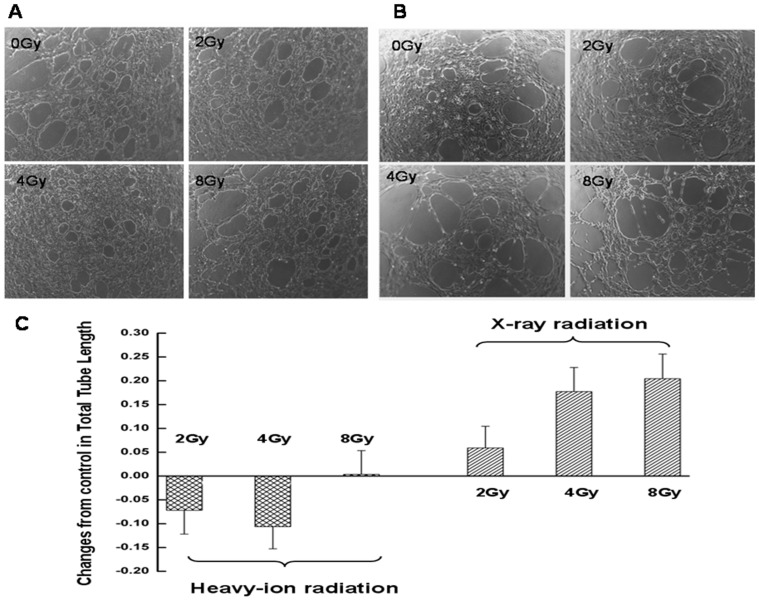
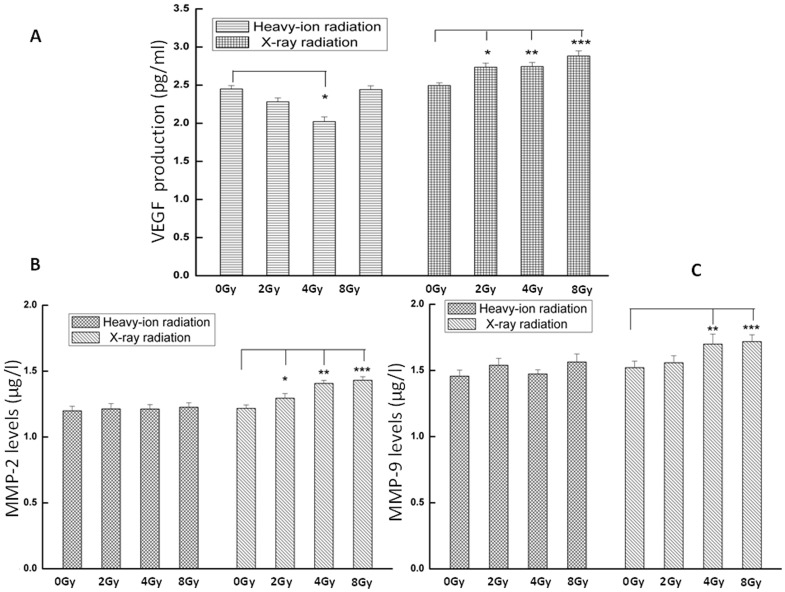
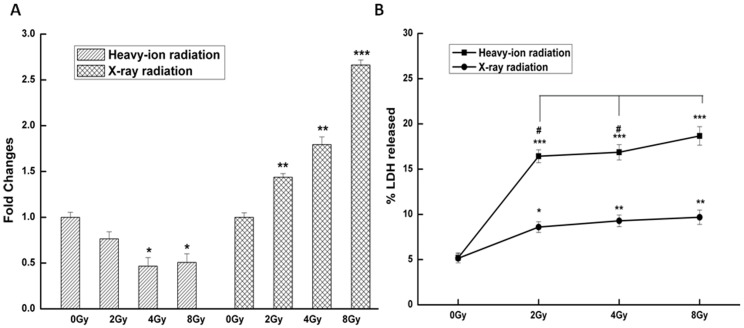
This study evaluated the effects of carbon ion and X-ray radiation and the tumor microenvironment on the migration of glioma and endothelial cells, a key process in tumorigenesis and angiogenesis during cancer progression. C6 glioma and human microvascular endothelial cells were treated with conditioned medium from cultures of glioma cells irradiated at a range of doses and the migration of both cell types, tube formation by endothelial cells, as well as the expression and secretion of migration-related proteins were evaluated. Exposure to X-ray radiation-conditioned medium induced dose-dependent increases in cell migration and tube formation, which were accompanied by an upregulation of vascular endothelial growth factor (VEGF) and matrix metalloproteinase (MMP)-2 and -9 expression. However, glioma cells treated with conditioned medium of cells irradiated at a carbon ion dose of 4.0 Gy showed a marked decrease in migratory potential and VEGF secretion relative to non-irradiated cells. The application of recombinant VEGF165 stimulated migration in glioma and endothelial cells, which was associated with increased FAK phosphorylation at Tyr861, suggesting that the suppression of cell migration by carbon ion radiation could be via VEGF-activated FAK signaling. Taken together, these findings indicate that carbon ion may be superior to X-ray radiation for inhibiting tumorigenesis and angiogenesis through modulation of VEGF level in the glioma microenvironment.
本研究评估了碳离子和X射线辐射以及肿瘤微环境对神经胶质瘤和内皮细胞迁移的影响,神经胶质瘤和内皮细胞迁移是癌症进展过程中肿瘤发生和血管生成的关键过程。用不同剂量照射的神经胶质瘤细胞培养的条件培养基处理C6神经胶质瘤细胞和人微血管内皮细胞,并评估两种细胞类型的迁移、内皮细胞的管形成以及迁移相关蛋白的表达和分泌。暴露于X射线辐射条件培养基会导致细胞迁移和管形成呈剂量依赖性增加,同时伴有血管内皮生长因子(VEGF)以及基质金属蛋白酶(MMP)-2和-9表达上调。然而,相对于未照射细胞,用4.0 Gy碳离子剂量照射的细胞的条件培养基处理的神经胶质瘤细胞迁移潜能和VEGF分泌显著降低。重组VEGF165的应用刺激了神经胶质瘤和内皮细胞的迁移,这与Tyr861处FAK磷酸化增加有关,表明碳离子辐射对细胞迁移的抑制可能是通过VEGF激活的FAK信号传导实现的。综上所述,这些发现表明,通过调节神经胶质瘤微环境中的VEGF水平,碳离子在抑制肿瘤发生和血管生成方面可能优于X射线辐射。