Saito Yoshiro
Systems Life Sciences Laboratory, Department of Medical Life Systems, Faculty of Medical and Life Sciences, Doshisha University, Kyotanabe, Kyoto 610-0394, Japan.
J Clin Biochem Nutr. 2014 May;54(3):138-44. doi: 10.3164/jcbn.13-108. Epub 2014 Apr 9.
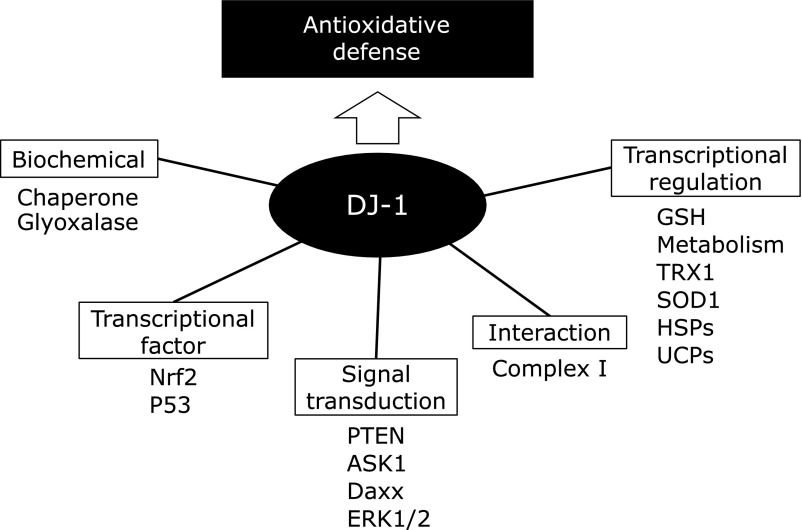
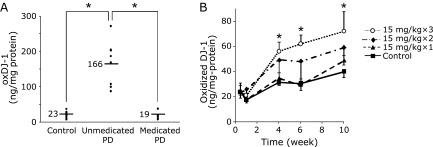
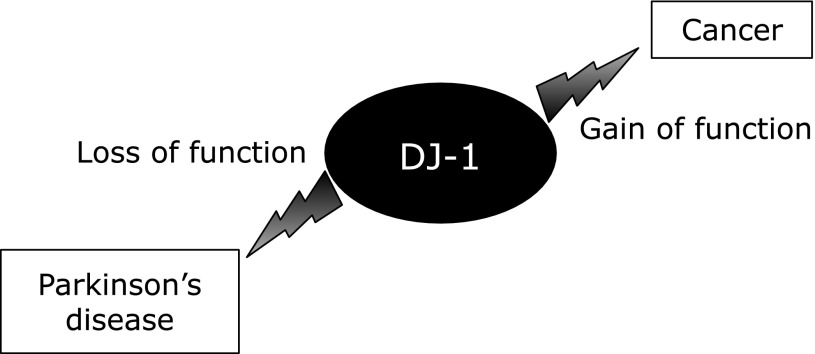
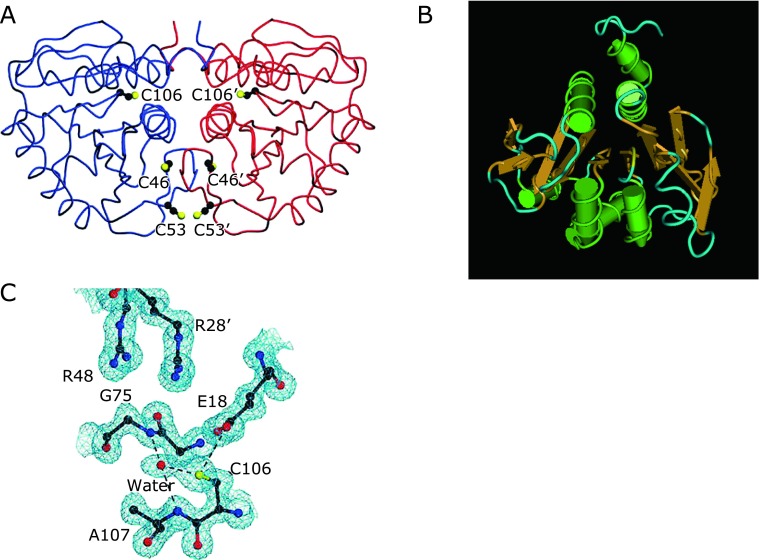
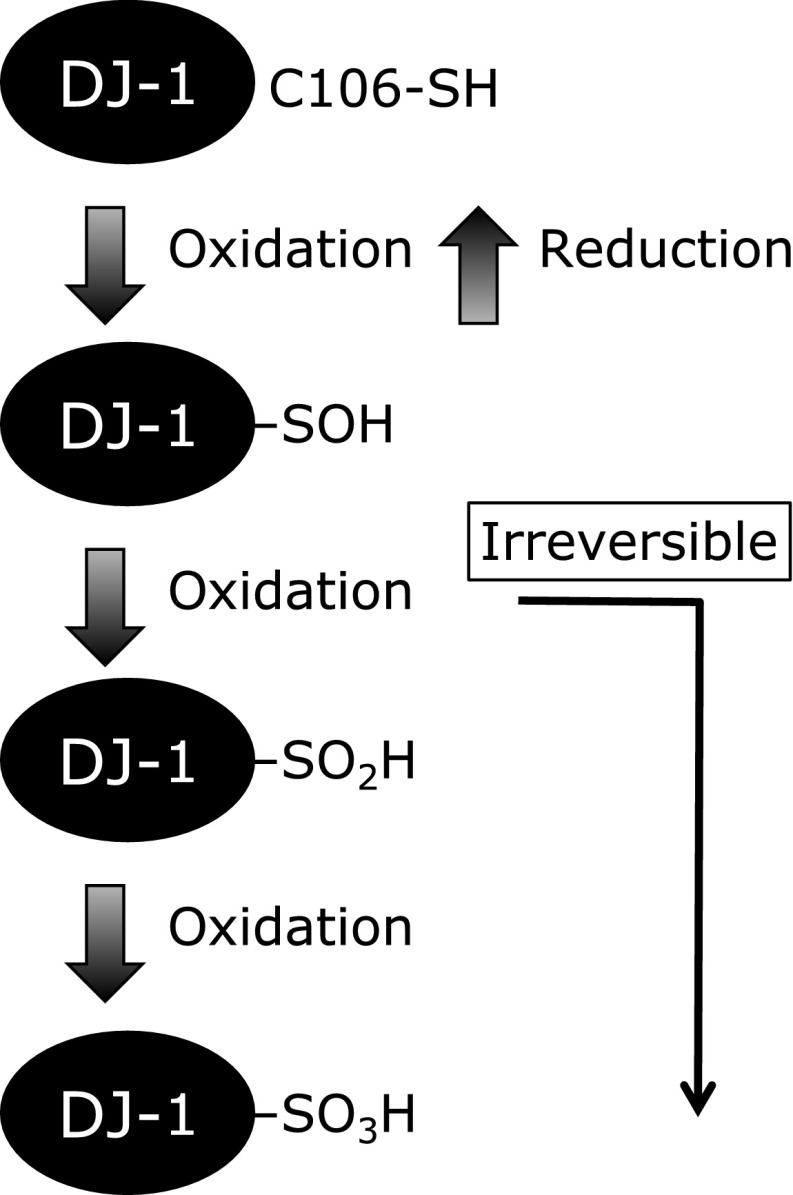
Parkinson's disease is a progressive, age-related, neurodegenerative disorder, and oxidative stress is an important mediator in its pathogenesis. DJ-1 is a causative gene of a familial form of Parkinson's disease, namely PARK7, and plays a significant role in antioxidative defense to protect the cells from oxidative stress. DJ-1 undergoes preferential oxidation at the cysteine residue at position 106, Cys-106, under oxidative stress. The critical role of Cys-106 in the biological function of DJ-1 has been demonstrated, and recent studies indicate that DJ-1 acts as a sensor of oxidative stress by regulating the gene expression of antioxidative defense. Specific antibodies against Cys-106-oxidized DJ-1 have been developed, and the generation of oxidized DJ-1 in cellular and animal models of Parkinson's disease has been investigated. This review focuses on the role of DJ-1 in antioxidative defense and the importance of oxidizable Cys-106 in its function. The significance of the identification of early-phase Parkinson's disease biomarkers and the nature of oxidized DJ-1 as a biomarker for Parkinson's disease are discussed here.
帕金森病是一种与年龄相关的进行性神经退行性疾病,氧化应激是其发病机制中的重要介质。DJ-1是家族性帕金森病的致病基因,即PARK7,在抗氧化防御中发挥重要作用,保护细胞免受氧化应激。在氧化应激下,DJ-1在第106位的半胱氨酸残基(Cys-106)处优先发生氧化。Cys-106在DJ-1生物学功能中的关键作用已得到证实,最近的研究表明,DJ-1通过调节抗氧化防御的基因表达作为氧化应激的传感器。已开发出针对Cys-106氧化型DJ-1的特异性抗体,并对帕金森病细胞和动物模型中氧化型DJ-1的产生进行了研究。本综述重点关注DJ-1在抗氧化防御中的作用以及可氧化的Cys-106在其功能中的重要性。本文讨论了早期帕金森病生物标志物鉴定的意义以及氧化型DJ-1作为帕金森病生物标志物的性质。