Li B, Yadav R K, Jeong G S, Kim H-R, Chae H-J
(H.-R. Kim) Department of Dental Pharmacology, School of Dentistry, Wonkwang University, Iksan, 570-749, Republic of Korea.
Curr Mol Med. 2014;14(5):603-15. doi: 10.2174/1566524014666140603101113.
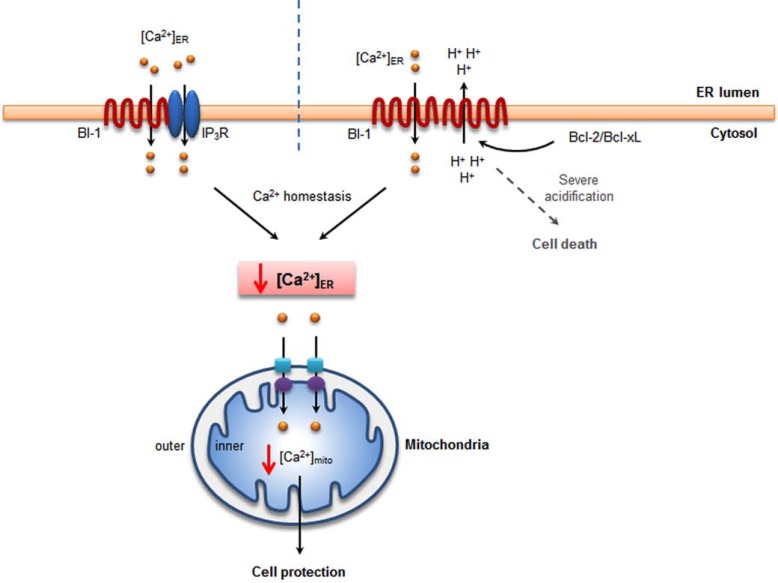
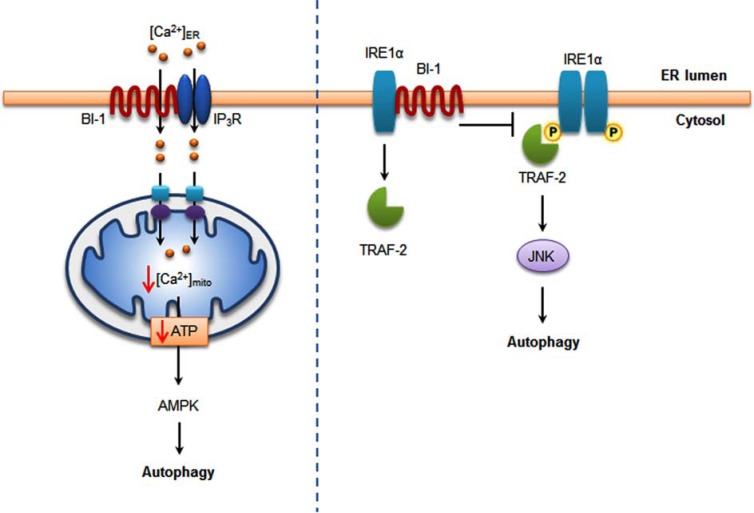
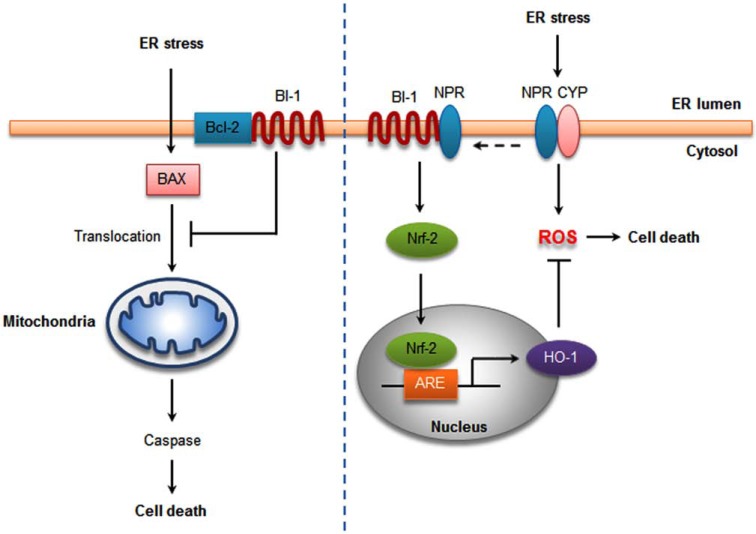
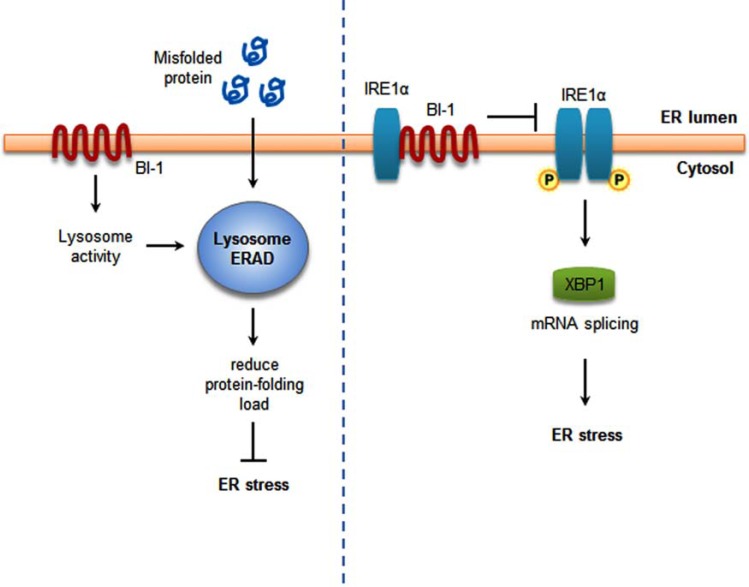
Bax inhibitor-1 (BI-1) is an evolutionarily-conserved endoplasmic reticulum protein. The expression of BI-1 in mammalian cells suppresses apoptosis induced by Bax, a pro-apoptotic member of the Bcl-2 family. BI-1 has been shown to be associated with calcium (Ca(2+)) levels, reactive oxygen species (ROS) production, cytosolic acidification, and autophagy as well as endoplasmic reticulum stress signaling pathways. According to both in vitro and clinical studies, BI-1 promotes the characteristics of cancers. In other diseases, BI-1 has also been shown to regulate insulin resistance, adipocyte differentiation, hepatic dysfunction and depression. However, the roles of BI-1 in these disease conditions are not fully consistent among studies. Until now, the molecular mechanisms of BI-1 have not directly explained with regard to how these conditions can be regulated. Therefore, this review investigates the physiological role of BI-1 through molecular mechanism studies and its application in various diseases.
Bax抑制因子-1(BI-1)是一种在进化上保守的内质网蛋白。BI-1在哺乳动物细胞中的表达可抑制由Bax(Bcl-2家族的促凋亡成员)诱导的细胞凋亡。研究表明,BI-1与钙(Ca(2+))水平、活性氧(ROS)生成、胞质酸化、自噬以及内质网应激信号通路有关。根据体外研究和临床研究,BI-1促进癌症的特征。在其他疾病中,BI-1也被证明可调节胰岛素抵抗、脂肪细胞分化、肝功能障碍和抑郁症。然而,BI-1在这些疾病状态中的作用在研究中并不完全一致。到目前为止,关于BI-1如何调节这些病症的分子机制尚未得到直接解释。因此,本综述通过分子机制研究探讨了BI-1的生理作用及其在各种疾病中的应用。