Ahlstrand Erik, Hellmark Bengt, Svensson Karolina, Söderquist Bo
Department of Medicine, Division of Hematology, Örebro University Hospital, Örebro, Sweden; Faculty of Medicine and Health, Örebro University, Örebro, Sweden.
Department of Laboratory Medicine, Clinical Microbiology, Örebro University Hospital, Örebro, Sweden.
PLoS One. 2014 Jun 4;9(6):e99045. doi: 10.1371/journal.pone.0099045. eCollection 2014.
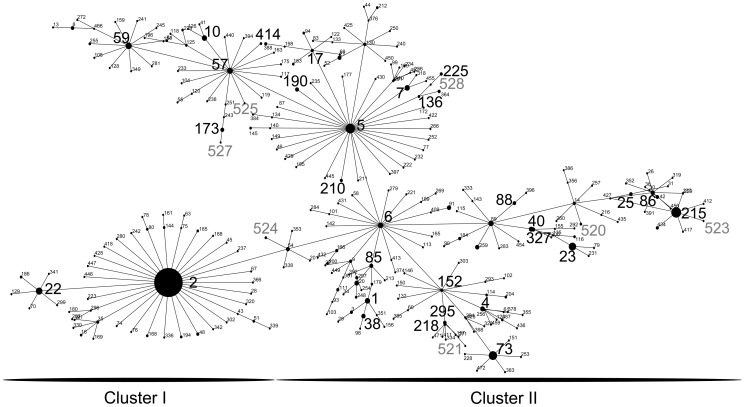
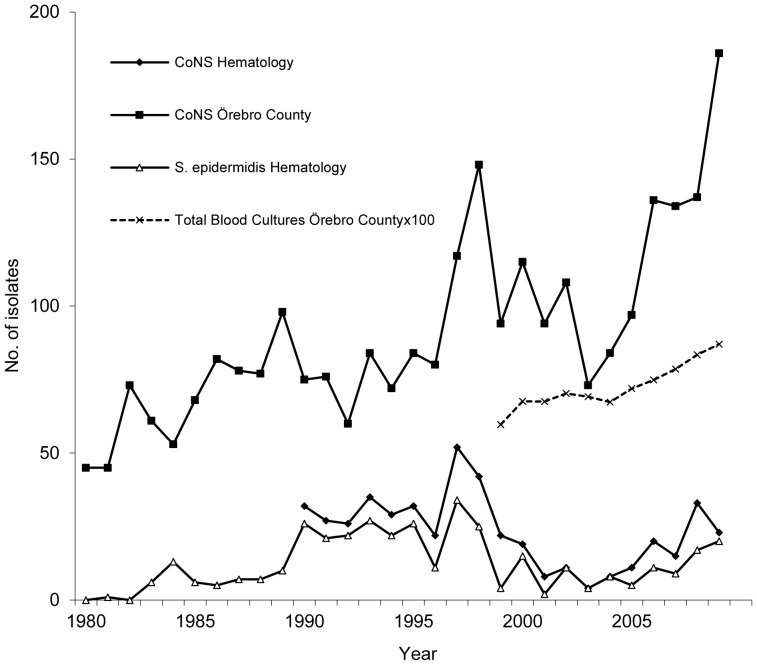
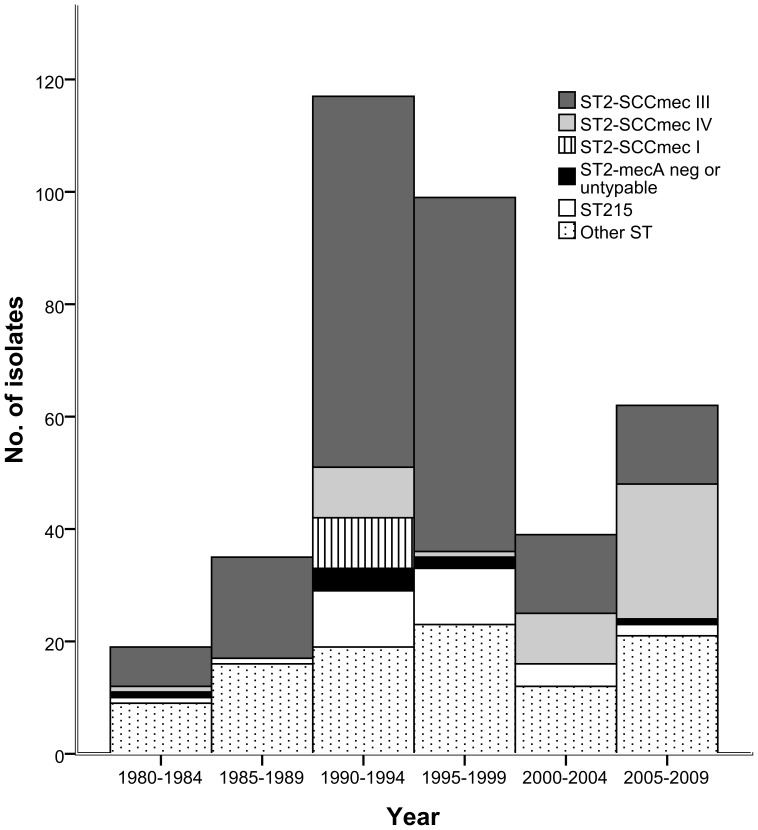
Staphylococcus epidermidis is an important cause of bloodstream infections in patients with hematological malignancies. Knowledge of the long-term epidemiology of these infections is limited. We surveyed all S. epidermidis blood culture isolates from patients treated for hematological malignancies at the University Hospital of Örebro, Sweden from 1980 to 2009. A total of 373 S. epidermidis isolates were identified and multilocus sequence typing, staphylococcal chromosome cassette mec (SCCmec) typing and standard antibiotic susceptibility testing were employed to characterize these isolates. The majority of the isolates 361/373 (97%) belonged to clonal complex 2, and the 373 isolates were divided into 45 sequence types (STs); Simpson's Diversity Index was 0.56. The most prevalent STs were ST2 (243/373, 65%) and ST215 (28/373, 8%). Ninety three percent (226/243) of the ST2 isolates displayed either SCCmec type III or IV. ST2 and 215 were isolated during the entire study period, and together these STs caused temporal peaks in the number of positive blood cultures of S. epidermidis. Methicillin resistance was detected in 213/273 (78%) of all isolates. In the two predominating STs, ST2 and ST215, methicillin resistance was detected in 256/271 isolates (95%), compared with 34/100 (34%) in other STs (p<0.001). In conclusion, in this long-term study of patients with hematological malignancies, we demonstrate a predominance of methicillin-resistant ST2 among S. epidermidis blood culture isolates.
表皮葡萄球菌是血液系统恶性肿瘤患者血流感染的重要病因。关于这些感染的长期流行病学知识有限。我们调查了1980年至2009年在瑞典厄勒布鲁大学医院接受血液系统恶性肿瘤治疗的患者的所有表皮葡萄球菌血培养分离株。共鉴定出373株表皮葡萄球菌分离株,并采用多位点序列分型、葡萄球菌染色体盒式mec(SCCmec)分型和标准药敏试验对这些分离株进行特征分析。大多数分离株361/373(97%)属于克隆复合体2,373株分离株分为45个序列类型(STs);辛普森多样性指数为0.56。最常见的STs是ST2(243/373,65%)和ST215(28/373,8%)。93%(226/243)的ST2分离株显示为SCCmec III型或IV型。ST2和215在整个研究期间均有分离,这些STs共同导致了表皮葡萄球菌血培养阳性数量的时间高峰。在所有分离株中,213/273(78%)检测到耐甲氧西林。在两个主要的STs,即ST2和ST215中,256/271株分离株(95%)检测到耐甲氧西林,而其他STs中为34/100(34%)(p<0.001)。总之,在这项对血液系统恶性肿瘤患者的长期研究中,我们证明了在表皮葡萄球菌血培养分离株中耐甲氧西林的ST2占主导地位。