Li Ling, Lian Baofeng, Li Chao, Li Wei, Li Jing, Zhang Yuannv, He Xianghuo, Li Yixue, Xie Lu
School of Life Sciences and Technology, Tongji University, Shanghai, P.R.China; Shanghai Center for Bioinformation Technology, Shanghai Academy of Science and Technology, Shanghai, P.R.China.
Shanghai Center for Bioinformation Technology, Shanghai Academy of Science and Technology, Shanghai, P.R.China; School of Life Sciences and Technology, Shanghai Jiaotong University, Shanghai, P.R.China.
PLoS One. 2014 Jun 4;9(6):e98653. doi: 10.1371/journal.pone.0098653. eCollection 2014.
Transcriptional regulatory network (TRN) is used to study conditional regulatory relationships between transcriptional factors and genes. However few studies have tried to integrate genomic variation information such as copy number variation (CNV) with TRN to find causal disturbances in a network. Intrahepatic cholangiocarcinoma (ICC) is the second most common hepatic carcinoma with high malignancy and poor prognosis. Research about ICC is relatively limited comparing to hepatocellular carcinoma, and there are no approved gene therapeutic targets yet.
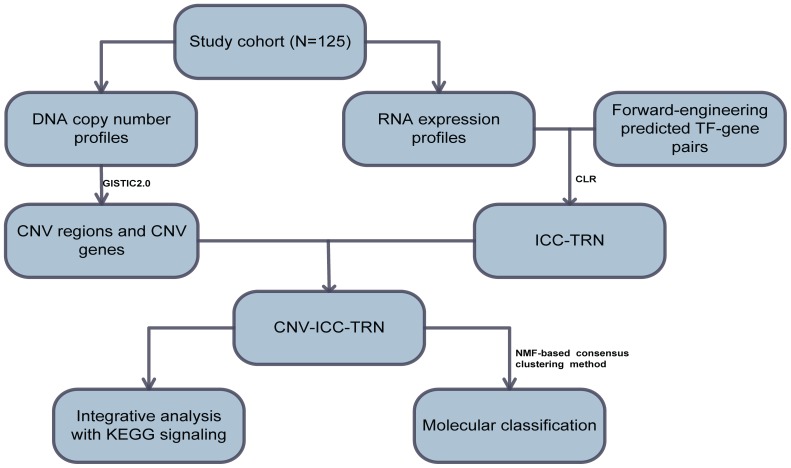
We first constructed TRN of ICC (ICC-TRN) using forward-and-reverse combined engineering method, and then integrated copy number variation information with ICC-TRN to select CNV-related modules and constructed CNV-ICC-TRN. We also integrated CNV-ICC-TRN with KEGG signaling pathways to investigate how CNV genes disturb signaling pathways. At last, unsupervised clustering method was applied to classify samples into distinct classes.
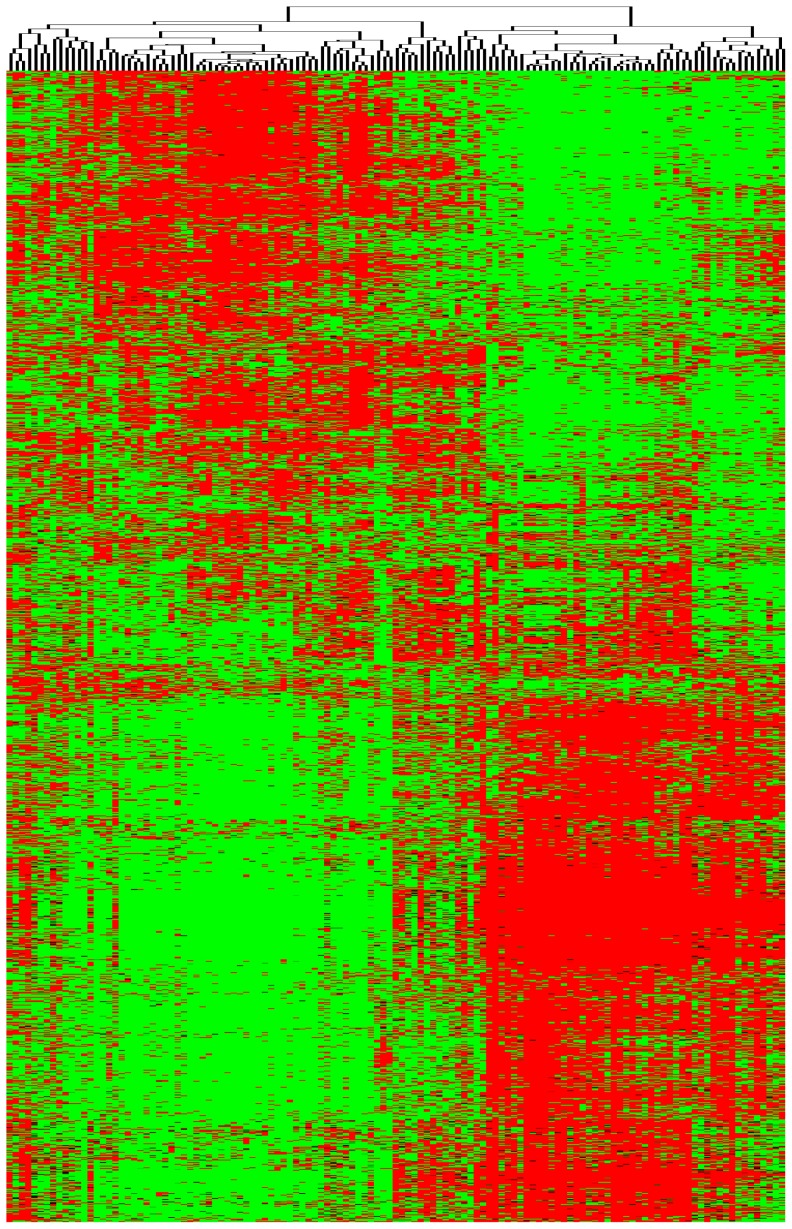
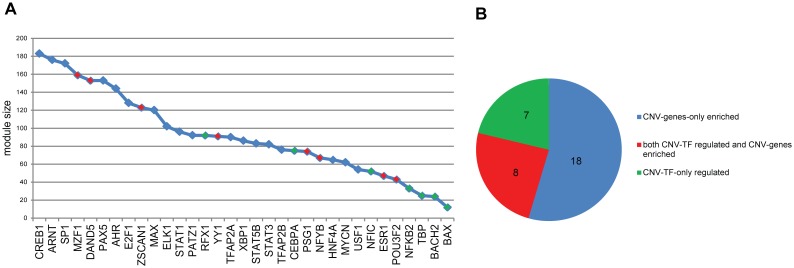
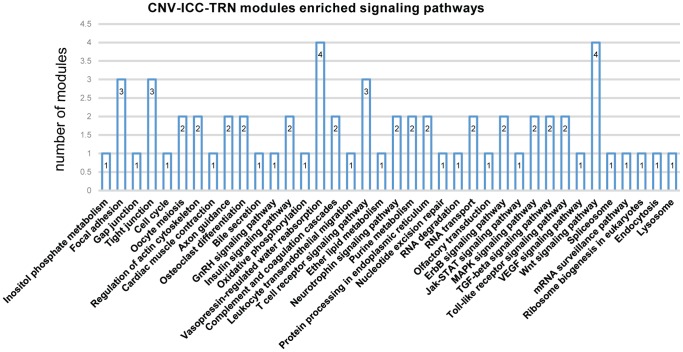
We obtained CNV-ICC-TRN containing 33 modules which were enriched in ICC-related signaling pathways. Integrated analysis of the regulatory network and signaling pathways illustrated that CNV might interrupt signaling through locating on either genomic sites of nodes or regulators of nodes in a signaling pathway. In the end, expression profiles of nodes in CNV-ICC-TRN were used to cluster the ICC patients into two robust groups with distinct biological function features.
Our work represents a primary effort to construct TRN in ICC, also a primary effort to try to identify key transcriptional modules based on their involvement of genetic variations shown by gene copy number variations (CNV). This kind of approach may bring the traditional studies of TRN based only on expression data one step further to genetic disturbance. Such kind of approach can easily be extended to other disease samples with appropriate data.
转录调控网络(TRN)用于研究转录因子与基因之间的条件调控关系。然而,很少有研究尝试将诸如拷贝数变异(CNV)等基因组变异信息与TRN整合,以发现网络中的因果干扰。肝内胆管癌(ICC)是第二常见的肝癌,具有高恶性和预后差的特点。与肝细胞癌相比,关于ICC的研究相对有限,并且尚未有批准的基因治疗靶点。
我们首先使用正反结合工程方法构建了ICC的TRN(ICC-TRN),然后将拷贝数变异信息与ICC-TRN整合以选择与CNV相关的模块并构建CNV-ICC-TRN。我们还将CNV-ICC-TRN与KEGG信号通路整合,以研究CNV基因如何干扰信号通路。最后,应用无监督聚类方法将样本分类为不同的类别。
我们获得了包含33个模块的CNV-ICC-TRN,这些模块在与ICC相关的信号通路中富集。调控网络和信号通路的综合分析表明,CNV可能通过位于信号通路中节点的基因组位点或节点的调节因子上而中断信号传导。最后,使用CNV-ICC-TRN中节点的表达谱将ICC患者聚类为两个具有不同生物学功能特征的稳健组。
我们的工作是在ICC中构建TRN的初步尝试,也是基于基因拷贝数变异(CNV)所显示的遗传变异参与情况来识别关键转录模块的初步尝试。这种方法可能使仅基于表达数据的传统TRN研究向遗传干扰迈进了一步。这种方法可以很容易地扩展到具有适当数据的其他疾病样本。