Ganta Srinivas, Singh Amit, Rawal Yashesh, Cacaccio Joseph, Patel Niravkumar R, Kulkarni Praveen, Ferris Craig F, Amiji Mansoor M, Coleman Timothy P
a Nemucore Medical Innovations, Inc. , Worcester , MA , USA .
b Department of Pharmaceutical Sciences , School of Pharmacy, Northeastern University , Boston , MA , USA .
Drug Deliv. 2016;23(3):968-80. doi: 10.3109/10717544.2014.923068. Epub 2014 Jun 5.
Ovarian cancer is a highly lethal disease in which the majority of patients eventually demonstrate multidrug resistance. Develop a novel active targeted theranostic nanomedicine designed to overcome drug efflux mechanisms, using a Generally Regarded As Safe (GRAS) grade nanoemulsion (NE) as a clinically relevant platform.
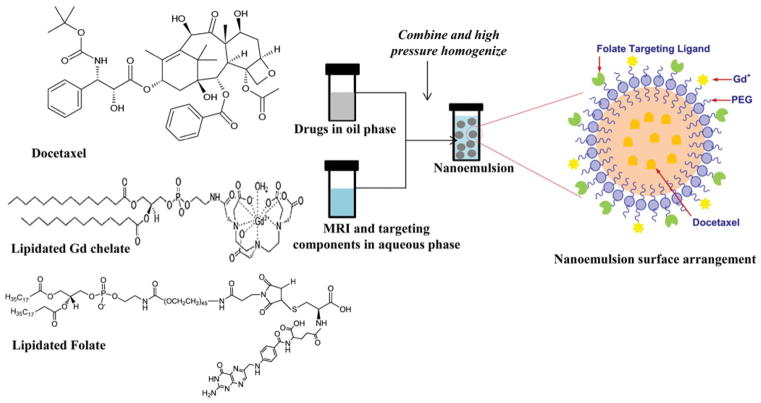
The NEs surface-functionalized with folate and gadolinium, were made using GRAS grade excipients and a high-shear microfluidization process. Efficacy was evaluated in ovarian cancer cells, SKOV3 and SKOV3TR. The NE accumulation in tumors was evaluated in SKOV3 tumor-bearing mice by magnetic resonance imaging (MRI).
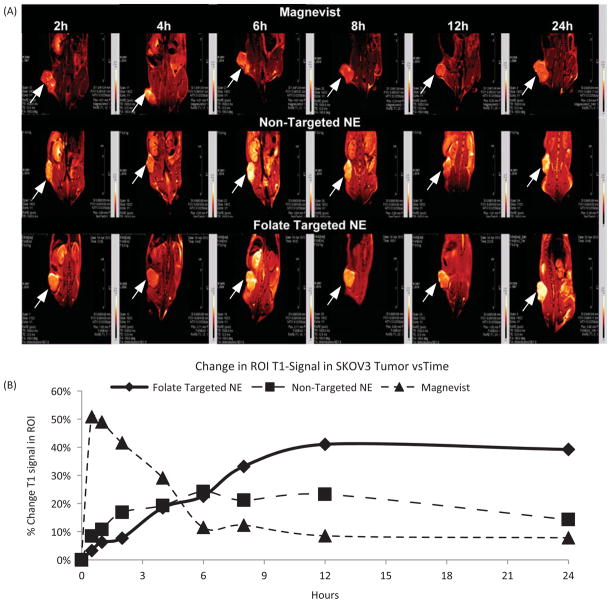
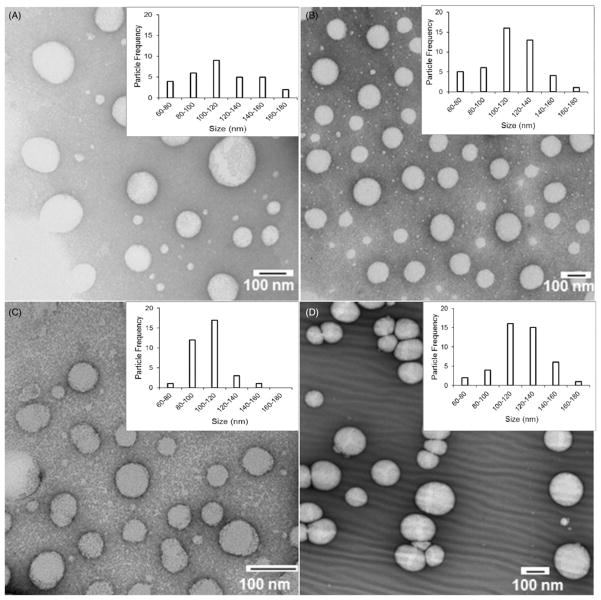
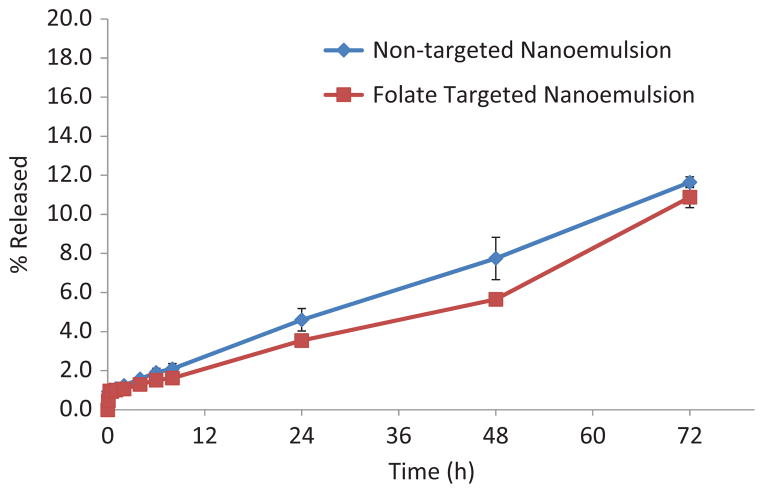
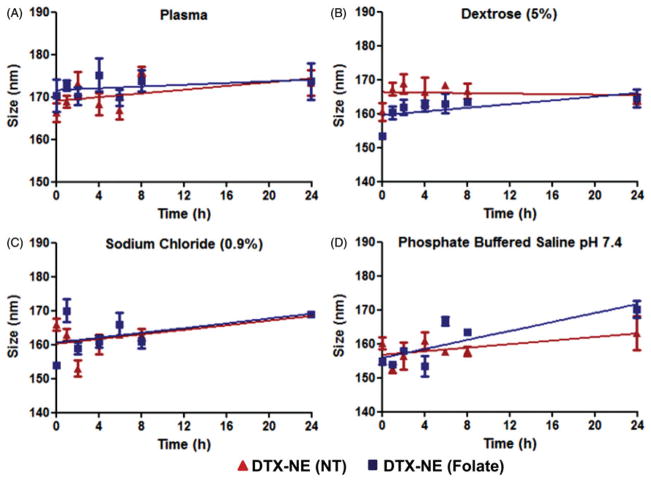
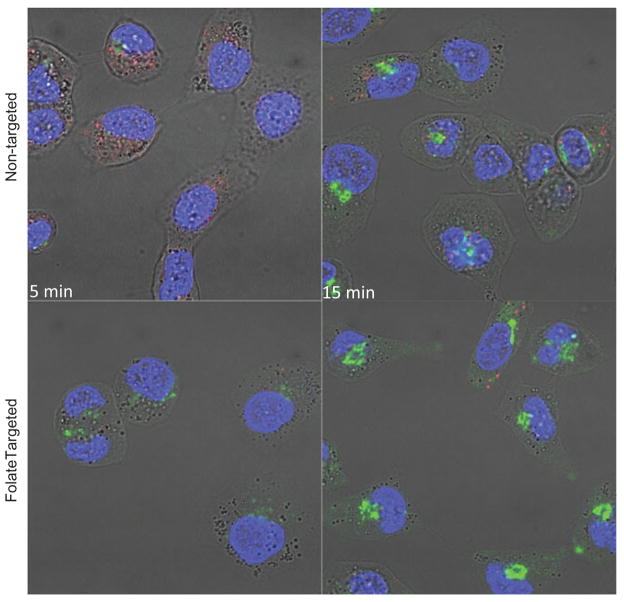
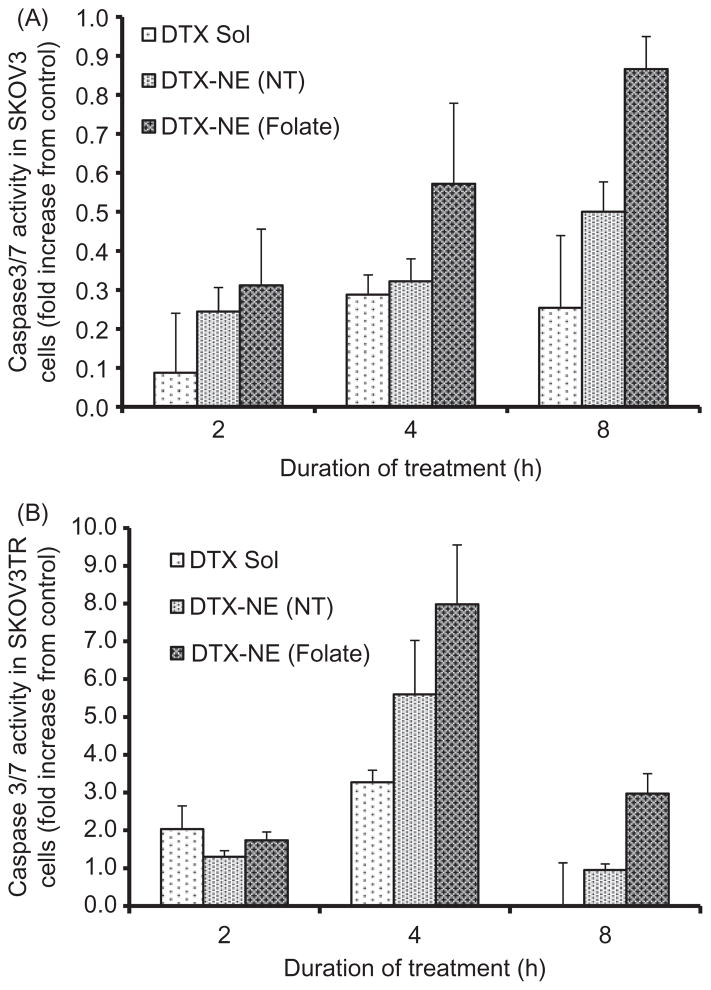
The NE with particle size < 150 nm were stable in plasma and parenteral fluids for 24 h. Ovarian cancer cells in vitro efficiently took up the non-targeted and folate-targeted NEs; improved cytotoxicity was observed for the folate-targeted NEs showing a 270-fold drop in the IC50 in SKOV3TR cells as compared to docetaxel alone. The addition of gadolinium did not affect cell viability in vitro, but showed relaxation times comparable to Magnevist®. Folate-targeted NEs accumulated in tumors for prolonged period of time compared to Magnevist® and showed enhanced contrast compared to non-targeted NEs with MRI in SKOV3 tumor-bearing mice suggesting active targeting of NEs due to folate modification.
A folate-targeted, theranostic NE delivers docetaxel by receptor mediated endocytosis that shows enhanced cytotoxicity capable of overcoming ABC transporter mediated taxane resistance. The diagnostic capability of the targeted nanomedicine showed enhanced contrast in tumors compared to clinically relevant MRI contrast agent Magnevist®.
卵巢癌是一种致死率很高的疾病,大多数患者最终会表现出多药耐药性。利用公认为安全(GRAS)等级的纳米乳剂(NE)作为临床相关平台,开发一种新型的主动靶向治疗诊断纳米药物,旨在克服药物外排机制。
使用GRAS等级的辅料和高剪切微流控工艺制备表面用叶酸和钆功能化的纳米乳剂。在卵巢癌细胞SKOV3和SKOV3TR中评估其疗效。通过磁共振成像(MRI)在荷SKOV3肿瘤的小鼠中评估纳米乳剂在肿瘤中的蓄积情况。
粒径<150nm的纳米乳剂在血浆和肠胃外液体中24小时内保持稳定。体外卵巢癌细胞能有效摄取非靶向和叶酸靶向的纳米乳剂;观察到叶酸靶向纳米乳剂的细胞毒性有所改善,与单独使用多西他赛相比,SKOV3TR细胞中的IC50下降了270倍。添加钆不影响体外细胞活力,但显示出与马根维显相当的弛豫时间。与马根维显相比,叶酸靶向纳米乳剂在肿瘤中蓄积的时间更长,并且在荷SKOV3肿瘤的小鼠中通过MRI显示,与非靶向纳米乳剂相比对比度增强,表明由于叶酸修饰纳米乳剂具有主动靶向性。
一种叶酸靶向的治疗诊断纳米乳剂通过受体介导的内吞作用递送多西他赛,显示出增强的细胞毒性,能够克服ABC转运蛋白介导的紫杉烷耐药性。与临床相关的MRI造影剂马根维显相比,这种靶向纳米药物的诊断能力在肿瘤中显示出增强的对比度。