Beard Philippa M, Griffiths Samantha J, Gonzalez Orland, Haga Ismar R, Pechenick Jowers Tali, Reynolds Danielle K, Wildenhain Jan, Tekotte Hille, Auer Manfred, Tyers Mike, Ghazal Peter, Zimmer Ralf, Haas Jürgen
The Roslin Institute and Royal (Dick) School of Veterinary Studies, University of Edinburgh, Edinburgh, Midlothian, United Kingdom.
Division of Pathway Medicine, University of Edinburgh, Edinburgh, Midlothian, United Kingdom.
PLoS One. 2014 Jun 5;9(6):e98431. doi: 10.1371/journal.pone.0098431. eCollection 2014.
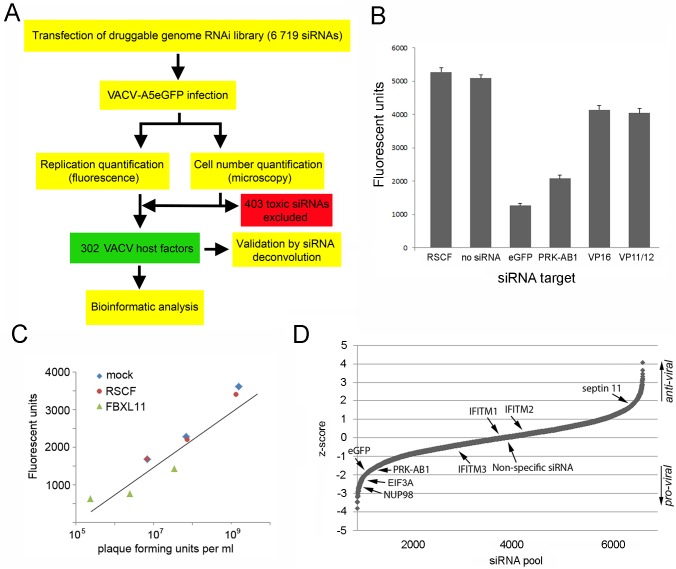
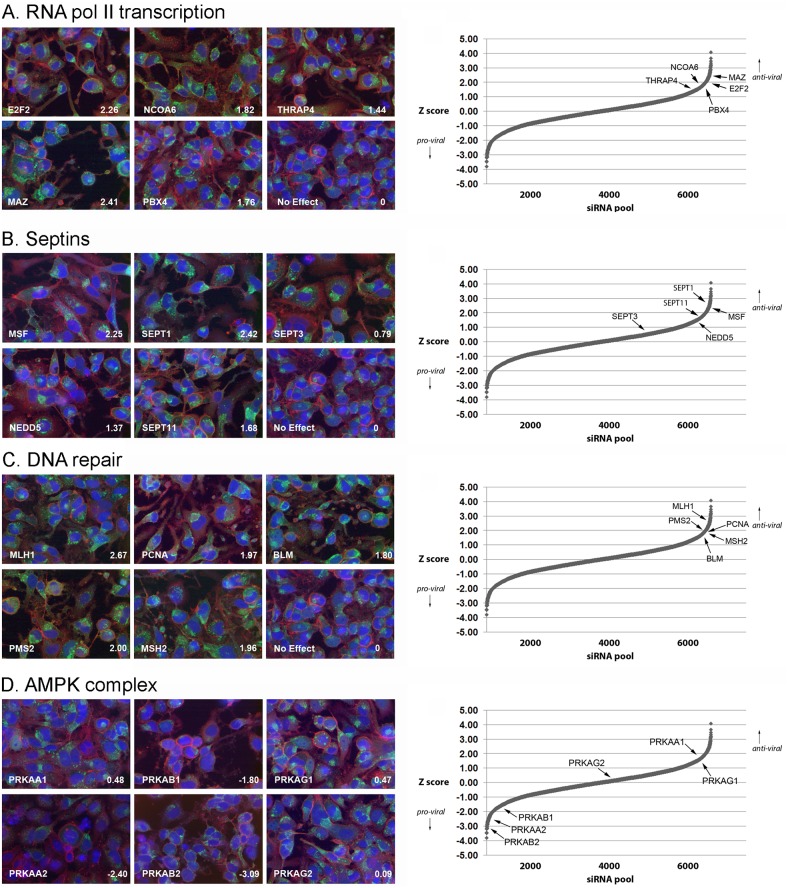
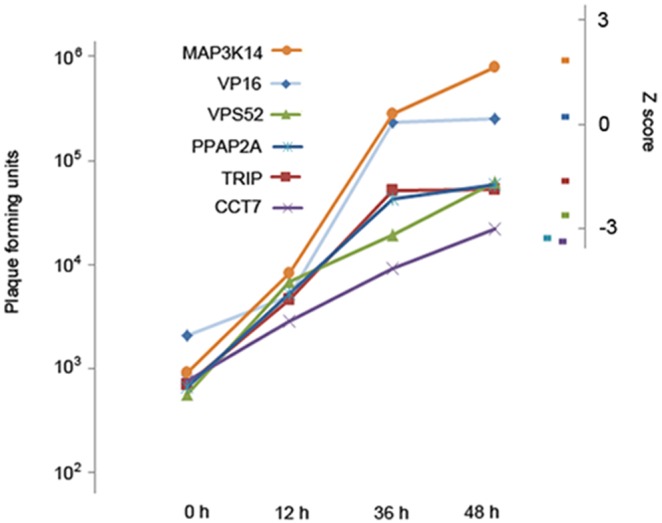
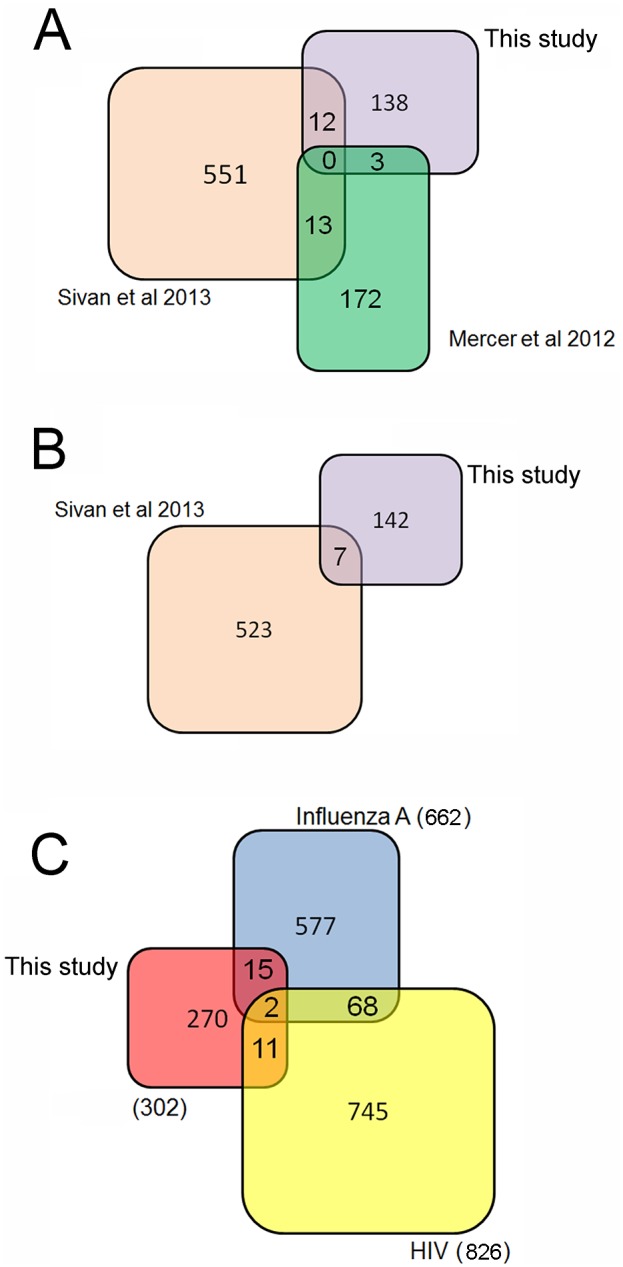
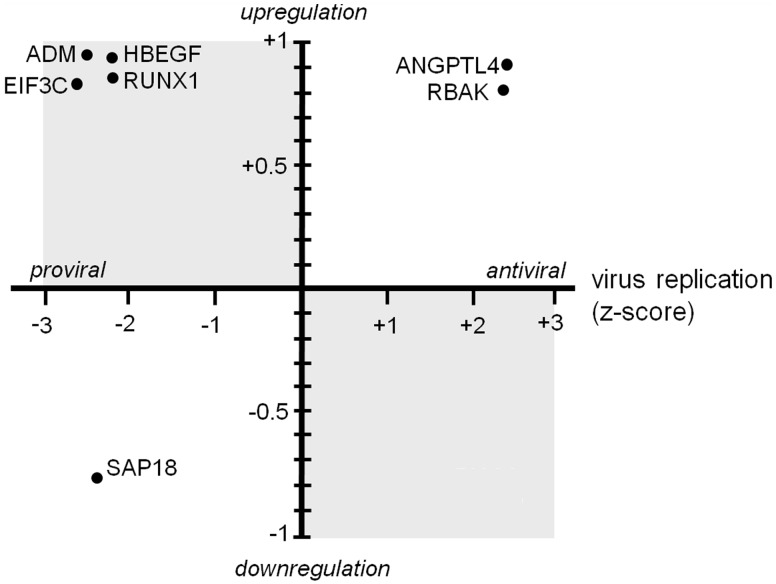
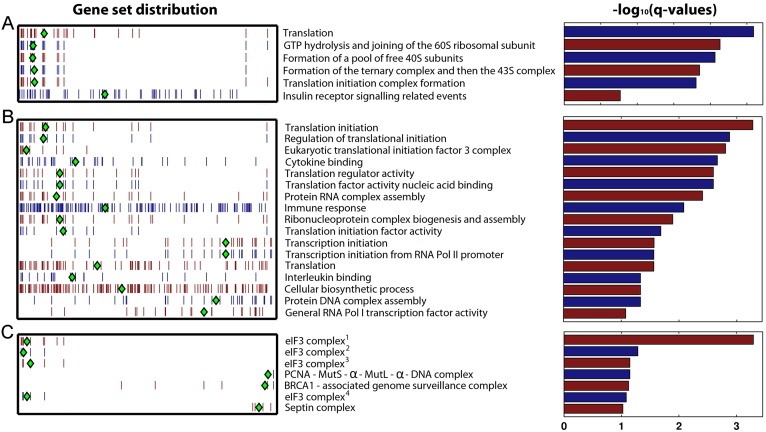
Vaccinia virus (VACV) is a large, cytoplasmic, double-stranded DNA virus that requires complex interactions with host proteins in order to replicate. To explore these interactions a functional high throughput small interfering RNA (siRNA) screen targeting 6719 druggable cellular genes was undertaken to identify host factors (HF) influencing the replication and spread of an eGFP-tagged VACV. The experimental design incorporated a low multiplicity of infection, thereby enhancing detection of cellular proteins involved in cell-to-cell spread of VACV. The screen revealed 153 pro- and 149 anti-viral HFs that strongly influenced VACV replication. These HFs were investigated further by comparisons with transcriptional profiling data sets and HFs identified in RNAi screens of other viruses. In addition, functional and pathway analysis of the entire screen was carried out to highlight cellular mechanisms involved in VACV replication. This revealed, as anticipated, that many pro-viral HFs are involved in translation of mRNA and, unexpectedly, suggested that a range of proteins involved in cellular transcriptional processes and several DNA repair pathways possess anti-viral activity. Multiple components of the AMPK complex were found to act as pro-viral HFs, while several septins, a group of highly conserved GTP binding proteins with a role in sequestering intracellular bacteria, were identified as strong anti-viral VACV HFs. This screen has identified novel and previously unexplored roles for cellular factors in poxvirus replication. This advancement in our understanding of the VACV life cycle provides a reliable knowledge base for the improvement of poxvirus-based vaccine vectors and development of anti-viral theraputics.
痘苗病毒(VACV)是一种大型的细胞质双链DNA病毒,其复制需要与宿主蛋白进行复杂的相互作用。为了探索这些相互作用,我们进行了一项针对6719个可成药细胞基因的功能性高通量小干扰RNA(siRNA)筛选,以鉴定影响eGFP标记的VACV复制和传播的宿主因子(HF)。实验设计采用了低感染复数,从而增强了对参与VACV细胞间传播的细胞蛋白的检测。该筛选揭示了153个促进和149个抗病毒的宿主因子,它们对VACV复制有强烈影响。通过与转录谱数据集以及在其他病毒的RNAi筛选中鉴定出的宿主因子进行比较,对这些宿主因子进行了进一步研究。此外,对整个筛选进行了功能和通路分析,以突出参与VACV复制的细胞机制。如预期的那样,这揭示了许多促进病毒的宿主因子参与mRNA的翻译,并且出乎意料的是,表明一系列参与细胞转录过程的蛋白质和几种DNA修复途径具有抗病毒活性。发现AMPK复合物的多个组分作为促进病毒的宿主因子起作用,而几种septin(一组高度保守的GTP结合蛋白,在隔离细胞内细菌中起作用)被鉴定为强大的抗病毒VACV宿主因子。该筛选确定了细胞因子在痘病毒复制中的新的和以前未探索的作用。我们对VACV生命周期理解的这一进展为改进基于痘病毒疫苗载体和开发抗病毒治疗提供了可靠的知识库。